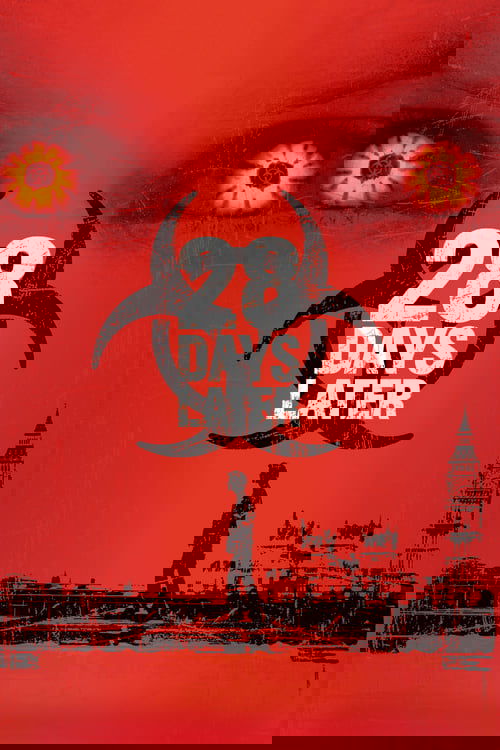
28 Days Later - Review
28 Days Later: A Raw and Relentless Vision of Apocalypse
Danny Boyle's 28 Days Later, released in 2002, isn't just another zombie movie; it's a visceral, terrifying, and surprisingly poignant exploration of humanity pushed to its absolute breaking point. It's a film that redefined the zombie genre, injecting it with a frenetic energy and a chilling realism that continues to resonate decades later. Forget the shuffling hordes; Boyle presents us with something far more terrifying: the "Rage Virus," a pathogen that transforms its victims into sprinting, screaming embodiments of pure, unadulterated fury. This isn't a slow burn of societal collapse; it's a sprint into the abyss.
Plot Summary and Analysis
The film opens with Jim (Cillian Murphy), a bicycle courier, waking up in a deserted London hospital. He's disoriented, confused, and utterly alone. The eerie silence is quickly shattered as he ventures into the city, discovering a landscape of utter devastation. Empty streets, abandoned cars, and a pervasive sense of dread hang heavy in the air. His initial encounter with the infected – the "Ragers" – is a baptism by fire, a terrifying introduction to the new reality. He's rescued by Selena (Naomie Harris) and Mark (Noah Huntley), two survivors who quickly demonstrate the brutal pragmatism required to survive in this world.
The first act is a masterclass in building suspense and dread. Boyle uses the emptiness of London to great effect, creating a palpable sense of isolation and vulnerability. The sudden, shocking bursts of violence are incredibly effective, amplified by the speed and ferocity of the infected. We witness the raw, immediate consequences of the outbreak, and the film doesn't shy away from the brutality of survival. Mark's eventual death, a sudden and shocking event, reinforces the precariousness of their existence and the constant threat lurking around every corner.
The group eventually makes their way to a fortified military base after hearing a radio broadcast promising sanctuary. Here, they meet Major Henry West (Christopher Eccleston) and his soldiers. Initially, the base seems like a haven, a place of order and security. However, the film takes a dark turn as West's true nature is revealed. He's not interested in rebuilding society or offering genuine help; he's interested in power and control, seeing the women in the group, Selena and Hannah (Megan Burns), as objects to be possessed. This shift in focus, from the external threat of the infected to the internal threat of human depravity, is a crucial element of the film's thematic complexity.
Jim, Selena, and Hannah are forced to fight not only for their survival against the Ragers but also against the predatory desires of West and his men. The climax of the film is a brutal and visceral showdown, with Jim unleashing his own inner rage to protect the women. He becomes a force of nature, a mirror image of the infected, driven by a primal need to survive and protect those he cares about. The film concludes with the three survivors living in a remote cottage, signaling for help from a passing airplane, offering a glimmer of hope amidst the devastation.
Character Analysis
Jim (Cillian Murphy): Jim's journey is the heart of the film. He begins as an ordinary man, disoriented and vulnerable in the face of unimaginable horror. He's forced to adapt quickly, learning to kill and survive in a world where compassion is a liability. His transformation is gradual but profound. By the end, he's willing to embrace violence to protect those he cares about, blurring the lines between victim and perpetrator. Murphy delivers a captivating performance, conveying Jim's fear, confusion, and eventual determination with remarkable nuance.
Selena (Naomie Harris): Selena is the pragmatic survivor. She's hardened by the horrors she's witnessed and is fiercely protective of herself and those she chooses to trust. She's a realist, understanding the brutal necessities of survival. She's not afraid to make difficult decisions, even if they're morally ambiguous. Harris portrays Selena with a quiet strength and unwavering resolve, making her a compelling and believable character.
Major Henry West (Christopher Eccleston): West represents the darkest aspects of human nature. He embodies the idea that in times of crisis, some people will prioritize power and control over compassion and morality. He sees the apocalypse as an opportunity to assert his dominance and indulge his basest desires. Eccleston delivers a chilling performance, portraying West as a charismatic but ultimately terrifying figure. He's not a cartoonish villain; he's a believable representation of the potential for evil that exists within us all.
Hannah (Megan Burns): Hannah, the young girl rescued by Jim and Selena, represents innocence and hope in a world consumed by darkness. She's initially traumatized by the events she's witnessed but gradually finds strength and resilience. Her presence serves as a reminder of what's worth fighting for and provides a counterpoint to the brutality and despair that pervade the film.
Direction and Cinematography
Danny Boyle's direction is nothing short of masterful. He creates a sense of urgency and immediacy that is both exhilarating and terrifying. He uses a variety of techniques to heighten the tension, including handheld camera work, rapid editing, and a haunting score. The film's visual style is gritty and realistic, adding to the sense of authenticity. The use of digital video, which was relatively new at the time, gives the film a raw and unpolished look that perfectly complements the chaotic nature of the story.
The cinematography, by Anthony Dod Mantle, is equally impressive. The desolate landscapes of London are beautifully captured, emphasizing the scale of the devastation. The use of natural light and shadows creates a sense of realism and enhances the film's atmosphere of dread. The fast-paced action sequences are expertly choreographed and shot, immersing the viewer in the heart of the chaos. The film's visual style is a key element of its success, contributing significantly to its overall impact.
One particularly memorable aspect of the film's cinematography is the use of time-lapse photography to depict the deserted cityscapes. These shots are both visually stunning and emotionally powerful, conveying the sheer scale of the disaster and the profound sense of loss.
Performances
The performances in 28 Days Later are uniformly excellent. Cillian Murphy delivers a breakout performance as Jim, capturing the character's transformation from ordinary man to hardened survivor with remarkable skill. Naomie Harris is equally impressive as Selena, conveying her character's strength and resilience with quiet dignity. Christopher Eccleston is chillingly effective as Major West, embodying the dark side of human nature with unnerving realism. Megan Burns provides a welcome dose of innocence and hope as Hannah, adding a layer of emotional depth to the film. The supporting cast is also strong, contributing to the overall sense of realism and authenticity.
The actors effectively convey the emotional toll of living in a post-apocalyptic world. Their performances are raw, believable, and deeply affecting, drawing the viewer into the heart of the story and making them truly care about the characters' fate.
Themes and Messages
28 Days Later explores a number of complex themes, including the nature of humanity, the fragility of civilization, and the importance of hope in the face of despair. The film questions what it means to be human in a world where the rules have changed, and survival is the only imperative. It examines the potential for both good and evil that exists within us all, and the choices we make when faced with extreme circumstances.
The film also serves as a commentary on the dangers of unchecked power and the potential for abuse within institutions like the military. Major West represents the corrupting influence of power, demonstrating how easily individuals can succumb to their basest desires when given the opportunity. The film suggests that the real threat to humanity may not be the infected, but rather the darkness that lurks within our own hearts.
Despite its bleak subject matter, 28 Days Later also offers a glimmer of hope. The bond between Jim, Selena, and Hannah represents the enduring power of human connection and the importance of finding meaning and purpose even in the face of unimaginable adversity. The film's ending, while ambiguous, suggests that survival is possible and that even in the darkest of times, there is always the potential for renewal and rebirth.
Comparison to Other Films and Works
28 Days Later is often credited with revitalizing the zombie genre, moving away from the slow-moving hordes of George A. Romero's classic films and introducing the concept of fast, aggressive infected. This innovation had a significant impact on subsequent zombie films and television shows, including Dawn of the Dead (2004) and The Walking Dead.
The film also shares thematic similarities with other post-apocalyptic films, such as The Road Warrior (1981) and Children of Men (2006), exploring the breakdown of society and the struggle for survival in a world ravaged by disaster. However, 28 Days Later distinguishes itself through its unique visual style, its emphasis on psychological horror, and its exploration of the human cost of the apocalypse.
In terms of Danny Boyle's other works, 28 Days Later shares a similar sense of energy and visual flair with films like Trainspotting (1996) and Slumdog Millionaire (2008). However, it's arguably his darkest and most visceral film, exploring themes of violence, depravity, and the fragility of human existence in a way that is both disturbing and thought-provoking.
Positive Aspects
- Fast-Paced and Thrilling: The film's relentless pace and intense action sequences make it a truly gripping and immersive experience.
- Excellent Performances: The cast delivers outstanding performances, bringing the characters to life with depth and realism.
- Masterful Direction: Danny Boyle's direction is superb, creating a sense of urgency and dread that permeates the entire film.
- Thought-Provoking Themes: The film explores complex themes about humanity, survival, and the nature of good and evil.
- Innovative Visual Style: The film's gritty and realistic visual style adds to its overall impact and helps to create a truly believable post-apocalyptic world.
- Revitalized the Zombie Genre: 28 Days Later redefined the zombie genre, introducing the concept of fast-moving infected and influencing countless subsequent films and television shows.
Constructive Criticism
- Third Act Pacing: Some critics have argued that the film's third act, which focuses on the military base, loses some of the momentum and suspense of the first two acts. While the shift in focus to human depravity is thematically important, it can feel somewhat jarring after the relentless terror of the infected.
- Unresolved Plot Points: The film leaves some plot points unresolved, such as the origin of the Rage Virus and the fate of the rest of the world. While this ambiguity adds to the film's sense of realism, it may leave some viewers wanting more closure.
- Cillian Murphy's Transformation: While Murphy's performance is excellent, Jim's transformation from ordinary man to hardened killer can feel somewhat rushed and unconvincing at times. More development of this transformation would have added more weight to the film's climax.
Conclusion
28 Days Later is a landmark film in the horror genre, a visceral and thought-provoking exploration of humanity pushed to its absolute limit. Danny Boyle's masterful direction, combined with excellent performances and a gripping storyline, makes for a truly unforgettable cinematic experience. While the film has some minor flaws, its strengths far outweigh its weaknesses. It's a film that stays with you long after the credits roll, prompting you to consider the fragility of civilization and the potential for both good and evil that exists within us all. It's not just a zombie movie; it's a powerful and unsettling reflection of the human condition.
Rating: 9.5/10