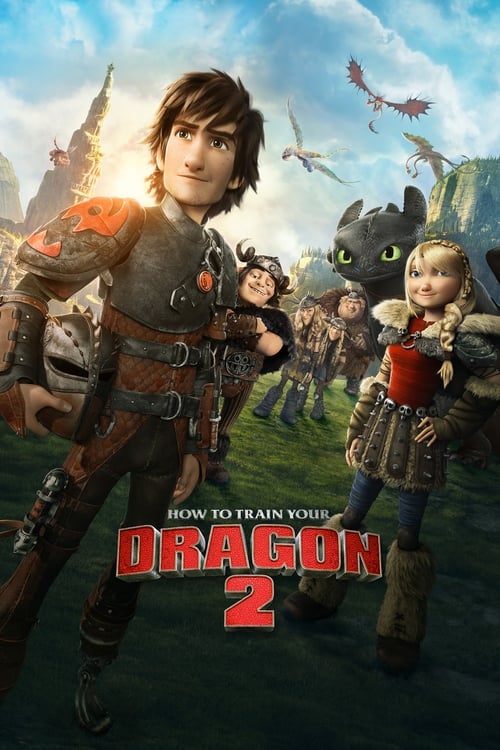
How to Train Your Dragon 2 - Review
How to Train Your Dragon 2: A Soaring Sequel that Ignites the Heart
Five years after the groundbreaking How to Train Your Dragon, DreamWorks Animation dared to return to Berk, not just to rehash a winning formula, but to expand upon it, to deepen its emotional core, and to raise the stakes to truly epic proportions. How to Train Your Dragon 2, released in 2014, isn't just a good animated sequel; it's a masterclass in character development, world-building, and thematic resonance. It's a film that understands the power of consequence, the bittersweet nature of growth, and the enduring strength of family, both biological and chosen. Prepare to have your heart soar, and then be brutally ripped apart, only to be pieced back together again, stronger than before. This is not just a kids' movie; it's a film that speaks to the universal human experience.
Plot: A Journey of Discovery and Devastation
The plot of How to Train Your Dragon 2 picks up five years after the events of the first film. Berk is thriving, a vibrant utopia where Vikings and dragons live in harmony. Hiccup, now 20, is restless, yearning for adventure beyond the familiar shores of his home. He and Toothless spend their days charting unexplored territories, a testament to their bond and Hiccup's insatiable curiosity. This initial sense of idyllic peace is, however, a carefully constructed façade, soon to be shattered.
During one of their aerial explorations, Hiccup and Toothless stumble upon a fortified ice cave, home to hundreds of wild dragons being corralled and controlled by Drago Bludvist, a ruthless warlord who believes that dragons are weapons to be conquered, not companions to be befriended. This discovery throws Hiccup's world into turmoil, forcing him to confront a threat far greater than anything he's ever faced.
The plot thickens when Hiccup unexpectedly reunites with his long-lost mother, Valka, a dragon rider who has spent the last two decades living in a hidden sanctuary, protecting dragons from Drago's clutches. This reunion is both joyous and complicated, as Hiccup grapples with the realization that his mother is not the person he imagined her to be. Valka's presence introduces a new layer of complexity to Hiccup's understanding of dragons and the world beyond Berk.
The central conflict revolves around Drago's ambition to build a dragon army and conquer the world. He's a formidable antagonist, driven by a deep-seated hatred for dragons stemming from a traumatic childhood experience. Drago's motivations are explored, though perhaps not as deeply as one might hope, but his sheer ruthlessness and unwavering conviction make him a truly terrifying villain.
The climax of the film is a devastating battle between Berk's dragon riders and Drago's forces. This sequence is visually stunning and emotionally charged, culminating in a tragic loss that forever changes Hiccup's life and propels him towards his destiny as a leader. The plot, while seemingly straightforward, is layered with themes of family, loss, and the responsibility that comes with power.
Characters: Growth, Loss, and Leadership
The strength of How to Train Your Dragon 2 lies in its richly developed characters. Hiccup, voiced with earnest vulnerability by Jay Baruchel, is no longer the awkward teenager from the first film. He's a young man grappling with the weight of expectation, struggling to find his place in the world, and wrestling with the legacy of his father. His journey from hesitant heir to confident leader is the emotional backbone of the film.
Toothless, Hiccup's loyal Night Fury companion, remains the heart and soul of the series. His expressive eyes and playful demeanor convey a range of emotions that transcend language. The bond between Hiccup and Toothless is even stronger in this film, a testament to their shared experiences and unwavering loyalty. Toothless's arc in the film is particularly poignant, as he is forced to confront his own instincts and make difficult choices.
Valka, voiced by Cate Blanchett, is a compelling addition to the cast. She's a strong, independent woman who has dedicated her life to protecting dragons. Her reunion with Hiccup is fraught with emotion, as they both navigate the complexities of their shared past and forge a new relationship. Valka's expertise in dragon training provides Hiccup with valuable knowledge and helps him to understand the true potential of his connection with Toothless.
Stoick the Vast, voiced by Gerard Butler, is no longer just the gruff Viking chieftain. He's a father who is immensely proud of his son but struggles to understand his unconventional approach to leadership. His character arc is particularly heartbreaking, as he finally reconnects with his long-lost wife only to have his happiness tragically cut short. Stoick's death serves as a pivotal moment in the film, forcing Hiccup to step up and embrace his destiny.
The supporting characters, including Astrid, Snotlout, Fishlegs, Ruffnut, and Tuffnut, provide comic relief and offer valuable support to Hiccup. Astrid, voiced by America Ferrera, is a strong and capable warrior who serves as Hiccup's confidante and partner. The other members of the dragon riders are more developed than in the first film, each with their own distinct personalities and quirks.
Drago Bludvist, voiced by Djimon Hounsou, is a formidable antagonist. He's a complex character, driven by a deep-seated hatred for dragons stemming from a traumatic childhood experience. While his motivations could have been explored in greater depth, his sheer ruthlessness and unwavering conviction make him a truly terrifying villain. He is a dark mirror to Hiccup, showcasing what can happen when fear and hatred consume a person.
Direction and Cinematography: A Visual Masterpiece
Dean DeBlois, returning as writer and director, elevates the How to Train Your Dragon franchise to new heights with How to Train Your Dragon 2. His vision is evident in every frame, from the breathtaking aerial sequences to the intimate character moments. He masterfully balances action, humor, and emotion, creating a film that is both thrilling and deeply moving.
The cinematography is nothing short of stunning. The aerial sequences are particularly breathtaking, with the camera soaring through the clouds, capturing the majesty of the dragons and the vastness of the world. The lighting is used to great effect, creating a sense of atmosphere and depth. The visual design of the film is also exceptional, with each location meticulously crafted to create a believable and immersive world.
The animation is a significant improvement over the first film, with more detailed character models and more fluid movements. The dragons are particularly impressive, with each species possessing its own unique characteristics and behaviors. The textures and details of the environments are also incredibly realistic, adding to the overall sense of immersion.
DeBlois's direction allows for moments of quiet reflection amidst the chaos, giving the audience time to connect with the characters and absorb the emotional weight of the story. He understands the power of visual storytelling, using imagery and symbolism to convey complex emotions and ideas.
Performances: Bringing the Characters to Life
The voice acting in How to Train Your Dragon 2 is uniformly excellent. Jay Baruchel delivers a nuanced and compelling performance as Hiccup, capturing his vulnerability, his determination, and his growing confidence. His performance is particularly moving during the film's emotional climax.
Cate Blanchett shines as Valka, bringing a sense of strength, wisdom, and compassion to the character. Her voice is both powerful and soothing, perfectly capturing Valka's dual nature as a fierce protector and a loving mother.
Gerard Butler delivers a powerful and emotional performance as Stoick the Vast. His voice is full of gravitas and warmth, conveying Stoick's love for his son and his dedication to his people. His performance is particularly heartbreaking during Stoick's final moments.
Djimon Hounsou brings a chilling intensity to the role of Drago Bludvist. His voice is deep and menacing, conveying Drago's hatred and his unwavering conviction. He is a truly terrifying villain, and Hounsou's performance is a key reason why.
The supporting cast also delivers strong performances, with America Ferrera as Astrid, Jonah Hill as Snotlout, Christopher Mintz-Plasse as Fishlegs, Kristen Wiig as Ruffnut, and T.J. Miller as Tuffnut all bringing their unique personalities to their respective roles.
Themes and Messages: Family, Loss, and Responsibility
How to Train Your Dragon 2 explores a number of important themes, including family, loss, and responsibility. The film emphasizes the importance of family, both biological and chosen. Hiccup's relationship with his parents, Stoick and Valka, is central to the story, as is his bond with Toothless, who is essentially his brother.
The film also deals with the theme of loss. Stoick's death is a devastating moment that forces Hiccup to confront the reality of mortality and the fragility of life. This loss serves as a catalyst for Hiccup's growth, pushing him to embrace his destiny as a leader.
The film also explores the theme of responsibility. Hiccup is forced to confront the weight of leadership and the consequences of his actions. He learns that being a leader means making difficult choices and taking responsibility for the well-being of others.
Another important theme is the power of understanding and empathy. Hiccup's ability to connect with dragons is based on his willingness to understand them and to see them as individuals, rather than as monsters. This message is particularly relevant in today's world, where understanding and empathy are more important than ever.
Finally, the film touches upon the dangers of fear and hatred. Drago's hatred for dragons is rooted in fear, and his desire for power is driven by a desire to control that fear. The film suggests that fear and hatred can be destructive forces that lead to violence and oppression.
Comparison to Similar Films and Previous Works
How to Train Your Dragon 2 can be compared to other animated sequels that attempt to deepen the emotional core of their predecessors, such as Toy Story 2 and The Empire Strikes Back. Like those films, How to Train Your Dragon 2 takes its characters on a journey of growth and self-discovery, while also raising the stakes and introducing new conflicts.
Compared to the first How to Train Your Dragon film, the sequel is darker and more mature. It deals with more complex themes and features a more nuanced villain. The animation is also significantly improved, with more detailed character models and more fluid movements.
Dean DeBlois's direction in How to Train Your Dragon 2 is more confident and assured than in the first film. He is able to balance action, humor, and emotion more effectively, creating a film that is both thrilling and deeply moving. His previous work on films like Lilo & Stitch also demonstrates his ability to create heartwarming and emotionally resonant stories.
The voice acting in How to Train Your Dragon 2 is also a step up from the first film. The addition of Cate Blanchett and Djimon Hounsou adds gravitas and depth to the cast. Jay Baruchel's performance as Hiccup is particularly noteworthy, as he captures the character's growth and maturity with remarkable skill.
Positive Aspects
- Stunning Visuals: The animation is breathtaking, with detailed character models, fluid movements, and stunning aerial sequences.
- Compelling Characters: The characters are richly developed and emotionally resonant, with each possessing their own unique personalities and motivations.
- Powerful Themes: The film explores important themes such as family, loss, and responsibility in a thoughtful and engaging way.
- Excellent Voice Acting: The voice acting is uniformly excellent, with Jay Baruchel, Cate Blanchett, Gerard Butler, and Djimon Hounsou delivering particularly strong performances.
- Masterful Direction: Dean DeBlois's direction is confident and assured, balancing action, humor, and emotion with remarkable skill.
Constructive Criticism
- Drago's Motivations: While Drago is a formidable antagonist, his motivations could have been explored in greater depth. His backstory is touched upon, but it feels somewhat underdeveloped.
- Pacing Issues: The film's pacing is occasionally uneven, with some scenes feeling rushed while others drag on a bit too long.
- Predictable Plot Points: While the plot is generally engaging, some of the plot points are predictable, particularly the tragic loss that occurs during the climax.
- Slightly Over-the-Top Humor: While the humor is generally well-placed, some of the jokes feel a bit too over-the-top and detract from the film's emotional impact.
Conclusion and Rating
How to Train Your Dragon 2 is a remarkable achievement in animated filmmaking. It's a film that is both visually stunning and emotionally resonant, with compelling characters, powerful themes, and excellent voice acting. While it's not without its flaws, the film's strengths far outweigh its weaknesses. It's a sequel that not only lives up to the original but surpasses it in many ways. It's a film that will stay with you long after the credits roll, prompting you to reflect on the importance of family, the inevitability of loss, and the responsibility that comes with power. This is a must-see for fans of animation, fantasy, and adventure films alike.
Rating: 9.5/10