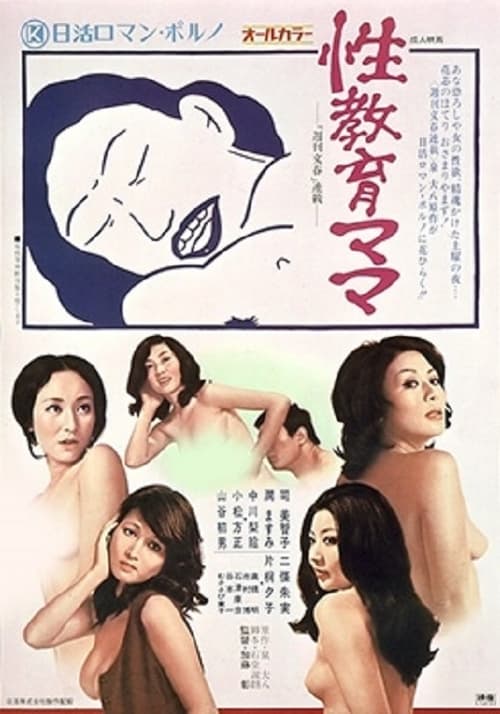
Sex Education Mistresses - Review
Sex Education Mistresses (1973): A Retro Review of a Risqué Comedy
Few films from the early 1970s manage to both titillate and bemuse modern audiences quite like "Sex Education Mistresses," released on November 20, 1973. A product of its time, this erotic comedy explores the sexual frustrations and adventures of a group of young wives residing in a single apartment complex. While the title might conjure images of sophisticated pedagogy, the film is far more interested in the pursuit of pleasure and the comedic complications that arise when marital expectations clash with individual desires. Buckle up, because we're diving deep into the world of swinging '70s suburbanites and their quest for sexual fulfillment, or at least, a good laugh.
Plot: A Suburban Sexcapade
The plot, while seemingly straightforward, is a tangled web of interconnected relationships and escalating comedic misunderstandings. The film centers around several young wives, each grappling with their own unique set of marital woes. We have Brenda, the bored housewife seeking excitement beyond her predictable husband; Carol, the newlywed discovering that married life isn't quite the erotic paradise she envisioned; and Susan, the seemingly demure woman harboring a secret desire for more adventurous encounters. These women, and others in the complex, find themselves increasingly dissatisfied with the limitations of their domestic lives. This dissatisfaction manifests as a series of affairs, flirtations, and comedic near-misses, all fueled by a shared desire for sexual liberation, or at least, a brief escape from marital monotony.
The narrative unfolds through a series of vignettes, each focusing on a different couple and their respective sexual escapades. These vignettes are often interconnected, with characters crossing paths and inadvertently complicating each other's lives. The humor derives primarily from the characters' attempts to conceal their affairs from their husbands, leading to a series of farcical situations involving mistaken identities, hidden lovers, and strategically timed lies. The plot is less concerned with deep character development and more focused on delivering a series of lighthearted, often risqué, comedic set pieces.
However, the film's plot isn't without its flaws. The episodic nature can feel somewhat disjointed at times, lacking a strong central narrative thread to tie everything together. The pacing can also be uneven, with some vignettes dragging on longer than necessary, while others feel rushed and underdeveloped. Furthermore, the reliance on predictable comedic tropes, such as the clueless husband and the scheming wife, can feel somewhat stale by modern standards.
Characters: Stereotypes with a Touch of Humanity
The characters in "Sex Education Mistresses" are, for the most part, broad stereotypes of the era. The husbands are often portrayed as oblivious, preoccupied with their careers, and sexually unimaginative. The wives, on the other hand, are presented as sexually repressed, yearning for more excitement and fulfillment than their marriages provide. While these characters may lack depth and complexity, they are not entirely devoid of humanity.
Brenda, the bored housewife, is perhaps the most relatable character. Her desire for excitement stems from a genuine feeling of dissatisfaction with her mundane life. She seeks not just sexual gratification, but also a sense of adventure and autonomy. Carol, the naive newlywed, represents the disillusionment that often follows the initial excitement of marriage. She learns that love and passion are not always synonymous, and that maintaining a fulfilling relationship requires effort and compromise. Susan, the seemingly demure woman, subverts expectations by revealing a hidden desire for more adventurous encounters. Her character challenges the prevailing societal norms that dictated women should be passive and submissive in their relationships.
Despite their potential, the characters are often underdeveloped, their motivations remaining somewhat superficial. The film relies heavily on caricature, sacrificing nuance for comedic effect. While this approach may have been acceptable in the 1970s, it can feel somewhat limiting by modern standards. A deeper exploration of the characters' inner lives and motivations would have added greater depth and resonance to the film.
Direction and Cinematography: A Product of its Time
The direction of "Sex Education Mistresses" is competent but unremarkable. The film relies on standard cinematic techniques of the era, with little in the way of innovative or experimental filmmaking. The director focuses primarily on capturing the comedic action, employing a straightforward, no-frills approach.
The cinematography is equally uninspired. The film is shot in a typical 1970s style, with bright colors, soft lighting, and a generally unpolished aesthetic. The camera work is functional, serving primarily to document the action rather than to create a visually compelling experience. The film lacks the visual flair and artistic ambition that would elevate it beyond its genre conventions.
However, it's important to consider the film within the context of its time. In the 1970s, erotic comedies were often produced quickly and cheaply, with limited resources and artistic ambition. "Sex Education Mistresses" is a product of this environment, reflecting the prevailing cinematic trends and budgetary constraints of the era. While the direction and cinematography may not be groundbreaking, they are adequate for the film's intended purpose.
Performances: Earnest Efforts within Limitations
The performances in "Sex Education Mistresses" are generally earnest, considering the limitations of the script and characters. The actors commit to their roles with enthusiasm, delivering believable portrayals of their respective characters. While none of the performances are particularly memorable or award-worthy, they are competent and contribute to the overall comedic effect of the film.
The actresses portraying the wives bring a certain charm and vulnerability to their roles, despite the often-stereotypical nature of their characters. They manage to convey a sense of genuine dissatisfaction and longing, making their characters somewhat relatable despite their questionable choices. The actors playing the husbands, on the other hand, are often relegated to playing clueless buffoons, their performances relying heavily on comedic timing and physical humor.
Overall, the performances in "Sex Education Mistresses" are adequate but unremarkable. The actors do their best with the material they are given, but the lack of depth and complexity in the script ultimately limits their ability to deliver truly compelling performances.
Themes and Messages: Sexual Liberation or Exploitation?
"Sex Education Mistresses" attempts to explore themes of sexual liberation, marital dissatisfaction, and the changing roles of women in society. However, its exploration of these themes is often superficial and problematic.
The film seems to advocate for sexual liberation, suggesting that women should be free to explore their desires and seek fulfillment outside of traditional marital structures. However, this message is often undermined by the film's exploitative portrayal of women and its reliance on sexist stereotypes. The women are often depicted as objects of male desire, their agency limited to their pursuit of sexual gratification. The film fails to address the complex social and economic factors that contribute to women's oppression, reducing their struggles to mere sexual frustration.
Furthermore, the film's portrayal of marital dissatisfaction is often simplistic and unsympathetic. The husbands are often presented as clueless and insensitive, while the wives are portrayed as scheming and unfaithful. The film fails to explore the underlying reasons for marital breakdown, such as communication problems, financial stress, or differing expectations. Instead, it resorts to simplistic stereotypes and comedic tropes, trivializing the complexities of human relationships.
Ultimately, "Sex Education Mistresses" fails to deliver a meaningful or nuanced exploration of its intended themes. Its attempts at sexual liberation are undermined by its exploitative portrayal of women, and its portrayal of marital dissatisfaction is often simplistic and unsympathetic.
Comparison to Similar Films: A Product of the Sexual Revolution
"Sex Education Mistresses" fits squarely within the genre of erotic comedies that proliferated during the sexual revolution of the 1970s. Films like "Bob & Carol & Ted & Alice" (1969) and "Deep Throat" (1972), though vastly different in execution, explored similar themes of sexual experimentation and changing social mores. Compared to these films, "Sex Education Mistresses" is relatively tame, lacking the satirical bite of "Bob & Carol & Ted & Alice" and the explicit content of "Deep Throat."
However, "Sex Education Mistresses" shares certain similarities with other erotic comedies of the era, such as its focus on suburban life, its reliance on comedic misunderstandings, and its exploitative portrayal of women. These films often reflected the anxieties and desires of a society grappling with changing sexual norms, but they also often reinforced harmful stereotypes and perpetuated sexist attitudes.
Compared to more recent films that explore similar themes, such as "American Pie" (1999) or "Bridesmaids" (2011), "Sex Education Mistresses" feels decidedly dated. These more recent films are often more sophisticated in their humor, more nuanced in their character development, and more progressive in their portrayal of gender and sexuality.
Positive Aspects: Nostalgic Charm and Campy Humor
Despite its flaws, "Sex Education Mistresses" possesses a certain nostalgic charm and campy humor that may appeal to some viewers. The film's over-the-top performances, its predictable plot, and its dated aesthetic contribute to its overall camp value. It's a film that's best enjoyed as a lighthearted, if somewhat problematic, romp through the sexual landscape of the 1970s.
The film also offers a glimpse into the social and cultural attitudes of the era. It reflects the changing roles of women in society, the growing acceptance of sexual experimentation, and the anxieties surrounding marital fidelity. While its portrayal of these issues is often superficial, it provides a valuable historical context for understanding the evolution of sexual norms and attitudes.
Constructive Criticism: Exploitation and Stereotypes
The most significant criticism of "Sex Education Mistresses" lies in its exploitative portrayal of women and its reliance on sexist stereotypes. The film often reduces women to objects of male desire, limiting their agency and perpetuating harmful stereotypes. Its portrayal of marital dissatisfaction is also simplistic and unsympathetic, failing to address the complexities of human relationships.
The film's lack of depth and nuance in its character development is also a significant weakness. The characters are often broad caricatures, lacking the complexity and relatability that would make them truly compelling. A deeper exploration of their inner lives and motivations would have added greater depth and resonance to the film.
Furthermore, the film's direction and cinematography are unremarkable, lacking the visual flair and artistic ambition that would elevate it beyond its genre conventions. A more innovative and visually engaging approach would have enhanced the overall viewing experience.
Conclusion: A Dated but Curiously Compelling Relic
"Sex Education Mistresses" is a product of its time, reflecting the sexual anxieties and comedic sensibilities of the 1970s. While it suffers from exploitative portrayals, shallow character development, and unremarkable direction, it possesses a certain nostalgic charm and campy humor that may appeal to some viewers. It's a film best viewed as a historical artifact, offering a glimpse into the social and cultural attitudes of a bygone era. However, its problematic content and lack of depth make it difficult to recommend wholeheartedly.
Overall, "Sex Education Mistresses" is a flawed but curiously compelling film. It's a reminder of how far we've come in terms of gender equality and sexual representation, but also a testament to the enduring power of campy humor and nostalgic charm.
Rating: 4/10