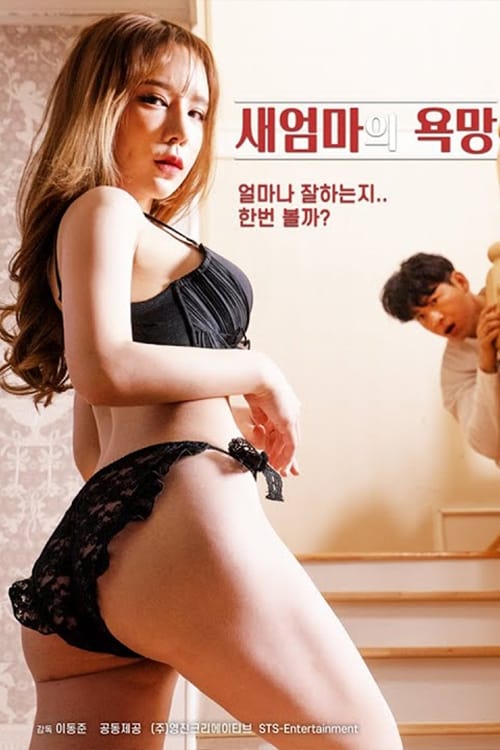
Stepmom's Desire - Review
Stepmom's Desire (2020): A Review of Forbidden Desires and Moral Ambiguity
Stepmom's Desire, released in 2020, ventures into the murky waters of illicit desires and familial transgression. This Korean drama/romance film, directed (though director information is often obscured in these types of productions), explores the complex web of relationships within a seemingly ordinary household, unraveling secrets and exposing the raw, often uncomfortable, truths about human desire and the pursuit of fleeting happiness. While the premise might raise eyebrows, the execution delves into the psychological motivations of its characters, making it more than just a titillating spectacle. This review will dissect the film's plot, characters, direction, cinematography, performances, themes, and overall impact, offering a balanced perspective on its strengths and weaknesses.
Plot and Narrative Structure
The film centers around Sang-jin, a man consumed by envy after witnessing his neighbor's seemingly perfect life with a younger, attractive wife. This envy fuels a chain of events that throws his own family into turmoil. He arranges for Ji-an, a friend of his wife, Jin-hee, to become his son's extracurricular tutor. However, an accidental encounter – Sang-jin witnessing Ji-an showering – ignites a forbidden desire within him. Meanwhile, the son, Bin-jin, harbors his own attraction towards his young stepmother, Jin-hee. Ji-an and Jin-hee, both disillusioned with their current situations and motivated by financial needs, find themselves entangled in this complex web of desires and manipulations. The plot unfolds through a series of encounters, escalating tensions, and moral compromises, ultimately leading to a climax where the characters are forced to confront the consequences of their actions.
The narrative structure is relatively straightforward, relying heavily on character interactions and dialogue to reveal the underlying motivations and hidden desires. While the film doesn't employ complex flashbacks or nonlinear storytelling, it uses subtle cues and suggestive imagery to build suspense and anticipation. However, the pacing can feel uneven at times, with certain scenes lingering longer than necessary, while others feel rushed and underdeveloped. The film relies heavily on suggestive scenes and implied actions rather than explicit depictions, which, depending on the viewer, can either enhance the intrigue or feel like a missed opportunity for deeper exploration of the characters' emotions.
Character Analysis
The characters in Stepmom's Desire are far from perfect, each grappling with their own flaws, insecurities, and desires. Their motivations are often driven by selfish impulses, leading to questionable decisions and moral compromises.
Sang-jin
Sang-jin is the catalyst for the unfolding drama. His envy and desire for a younger woman drive him to make increasingly reckless decisions. He's portrayed as a man struggling with his own insecurities and a mid-life crisis, seeking validation through forbidden desires. While his actions are reprehensible, the film attempts to portray him as a flawed human being rather than a purely villainous character. His internal conflict, though not always explicitly stated, is subtly conveyed through his expressions and interactions with the other characters.
Jin-hee
Jin-hee, the stepmother, is portrayed as a woman trapped in a loveless marriage. She's younger than her husband and feels neglected and unappreciated. This vulnerability makes her susceptible to the advances of her stepson, Bin-jin. While her actions are morally ambiguous, the film suggests that she's seeking affection and attention that she's not receiving from her husband. Her internal struggle between her moral obligations and her desire for connection is a central theme in the film.
Ji-an
Ji-an, the tutor, is motivated by financial needs. She's willing to compromise her morals to alleviate her financial burdens. Her involvement with Sang-jin stems from a desire for financial security, but as the story progresses, it becomes evident that she also craves attention and validation. She's a complex character, torn between her desire for money and her growing feelings for Sang-jin.
Bin-jin
Bin-jin, the son, represents youthful desire and rebellion. He's attracted to his stepmother and actively pursues her. His actions are driven by a sense of entitlement and a lack of respect for boundaries. While his character might be seen as purely opportunistic, the film also portrays him as a young man struggling with his own identity and searching for connection.
The character development, while present, is not always consistent. Some characters, like Sang-jin, receive more nuanced portrayals, while others, like Bin-jin, remain somewhat underdeveloped. The film relies heavily on the actors' performances to convey the characters' internal conflicts and motivations.
Direction and Cinematography
The direction of Stepmom's Desire is functional, focusing primarily on capturing the characters' interactions and emotions. The director (whose name is often intentionally obscured in these types of productions) relies on close-ups and medium shots to emphasize the characters' expressions and body language. The pacing, as mentioned earlier, can be uneven, with some scenes feeling drawn out while others feel rushed.
The cinematography is generally unremarkable, with a focus on natural lighting and simple camera movements. The film doesn't employ any particularly innovative or visually striking techniques. However, the use of color is subtle but effective, with warmer tones used to depict moments of intimacy and desire, and cooler tones used to convey feelings of isolation and despair. The visual style serves the story adequately but doesn't elevate it to a higher artistic level.
The film's editing is also relatively straightforward, with clear transitions and a logical flow of scenes. However, the editing could have been more dynamic in certain sequences to enhance the tension and suspense.
Performances
The performances in Stepmom's Desire are a mixed bag. Some actors deliver compelling and nuanced portrayals, while others fall flat. The success of the performances largely depends on the individual actor's ability to convey the characters' internal conflicts and motivations.
The actor playing Sang-jin delivers a solid performance, capturing the character's insecurities and desires. His portrayal is believable and sympathetic, even though his actions are often reprehensible. The actress playing Jin-hee also delivers a strong performance, conveying the character's vulnerability and desperation. Her portrayal is nuanced and sympathetic, making it easier to understand her motivations.
The performances of the actors playing Ji-an and Bin-jin are less consistent. While they both deliver adequate performances, they lack the depth and nuance of the other two leads. Their portrayals are somewhat one-dimensional, making it difficult to fully connect with their characters.
Overall, the performances are adequate but not exceptional. The actors do a decent job of bringing the characters to life, but the performances are not strong enough to elevate the film to a higher level.
Themes and Messages
Stepmom's Desire explores several complex themes, including:
- Forbidden Desire: The film delves into the allure of forbidden relationships and the consequences of pursuing them. It examines the psychological motivations behind these desires and the impact they have on individuals and families.
- Moral Ambiguity: The characters in the film are morally ambiguous, making questionable decisions and compromising their values. The film challenges the audience to consider the complexities of human nature and the blurred lines between right and wrong.
- The Pursuit of Happiness: The characters are all searching for happiness, but they often pursue it in destructive ways. The film suggests that true happiness cannot be found in fleeting pleasures or forbidden relationships.
- The Breakdown of Family: The film portrays the breakdown of a family unit due to infidelity, deceit, and a lack of communication. It highlights the importance of trust and honesty in maintaining healthy relationships.
- Financial Desperation: The film touches upon the theme of financial desperation and how it can drive people to make morally questionable choices. Ji-an's character, in particular, highlights the lengths to which people will go to alleviate their financial burdens.
The film's message is not explicitly stated, but it suggests that pursuing forbidden desires and compromising one's values ultimately leads to unhappiness and destruction. It emphasizes the importance of honesty, communication, and respect in maintaining healthy relationships and building a fulfilling life.
Comparison to Other Films
Stepmom's Desire shares thematic similarities with other films that explore forbidden relationships and familial transgression. Films like Damage (1992) and American Beauty (1999) also delve into the complexities of desire and the consequences of pursuing them. However, Stepmom's Desire is arguably less sophisticated and nuanced than these films, relying more on suggestive imagery and melodrama than on deep character exploration.
Compared to other Korean dramas and romances, Stepmom's Desire occupies a specific niche that often focuses on taboo relationships and adult themes. It's less focused on the typical romantic tropes found in mainstream K-dramas and more interested in exploring the darker side of human desire.
Positive Aspects
- The film explores complex and taboo themes in a thought-provoking way.
- The performances of the actors playing Sang-jin and Jin-hee are compelling and nuanced.
- The film's use of color and suggestive imagery is effective in conveying the characters' emotions and desires.
- The film raises questions about morality, desire, and the pursuit of happiness.
Constructive Criticism
- The pacing of the film is uneven, with some scenes feeling drawn out while others feel rushed.
- The characters of Ji-an and Bin-jin are underdeveloped.
- The cinematography is generally unremarkable.
- The film relies too heavily on suggestive imagery and melodrama, rather than deep character exploration.
- The director's vision is not particularly distinct or innovative.
Conclusion and Rating
Stepmom's Desire is a provocative and thought-provoking film that explores the complexities of forbidden desires and familial transgression. While the film has its flaws, it offers a glimpse into the darker side of human nature and raises important questions about morality, desire, and the pursuit of happiness. The performances of the lead actors are compelling, and the film's use of color and suggestive imagery is effective in conveying the characters' emotions. However, the film's uneven pacing, underdeveloped characters, and unremarkable cinematography prevent it from reaching its full potential.
Overall, Stepmom's Desire is a decent watch for those interested in exploring taboo themes and complex characters. However, viewers should be aware that the film relies heavily on suggestive imagery and melodrama, and it may not appeal to those seeking a more sophisticated or nuanced exploration of these themes.
Rating: 6/10