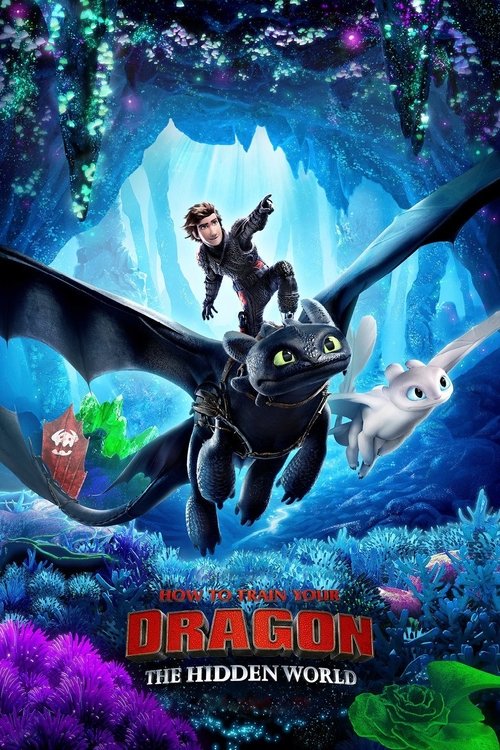
How to Train Your Dragon: The Hidden World - Review
How to Train Your Dragon: The Hidden World: A Farewell to Berk, A Flight to Adulthood
The "How to Train Your Dragon" trilogy has always been more than just a series of animated films; it's been a masterclass in character development, world-building, and emotional storytelling. Concluding the epic saga, How to Train Your Dragon: The Hidden World soars into theaters, promising a visually stunning and emotionally resonant finale. Does it stick the landing? For the most part, yes. But like any long journey, there are a few bumps along the way. This review delves deep into the film's strengths and weaknesses, exploring its plot, characters, themes, and overall impact.
Plot: A Necessary Separation, A Difficult Choice
The film picks up a year after the events of How to Train Your Dragon 2. Hiccup, now the chieftain of Berk, has successfully created a dragon utopia. Dragons and Vikings live together in relative harmony, rescuing captured dragons from poachers and bringing them back to their ever-growing island. However, this success comes at a cost. Berk is overcrowded, attracting unwanted attention from dragon hunters, most notably the ruthless Grimmel the Grisly. Grimmel, a master strategist and dragon slayer, represents a significant threat to Berk and its dragon population. He's essentially the antithesis of Hiccup, believing that dragons are dangerous beasts that must be eradicated.
Toothless, meanwhile, discovers a Light Fury, a dragon of the same species as himself but with shimmering white scales. His infatuation with her becomes a central plot point, pushing him towards his own journey of self-discovery and independence. This newfound connection with the Light Fury leads Hiccup and the rest of Berk to search for the Hidden World, a legendary sanctuary where dragons can live safely and free from human interference. The Hidden World is a breathtaking visual spectacle, a bioluminescent paradise teeming with dragons of all shapes and sizes.
The central conflict revolves around Hiccup's struggle to protect his people and his dragons, while simultaneously grappling with the realization that the best way to ensure their survival might be to let them go. This creates a compelling internal conflict for Hiccup, forcing him to confront his own limitations and make a heartbreaking decision. The plot, while generally well-paced, occasionally feels slightly rushed, especially in the initial setup and the resolution of some secondary storylines. However, the emotional core of the story remains strong, driven by the deeply established relationship between Hiccup and Toothless.
Characters: Growth, Loss, and Letting Go
The strength of the "How to Train Your Dragon" trilogy has always been its characters, and The Hidden World continues this tradition. Hiccup, voiced once again by Jay Baruchel, has evolved from a clumsy teenager into a confident and responsible leader. He's still prone to moments of self-doubt, but his unwavering commitment to his people and his dragon is truly inspiring. Baruchel delivers a nuanced performance, capturing Hiccup's growth and maturity while retaining the character's inherent vulnerability.
Toothless, the Night Fury, remains a lovable and expressive character. His relationship with the Light Fury adds a new dimension to his personality, showcasing his playful and romantic side. The animation team does an exceptional job of conveying Toothless's emotions through his eyes and body language, creating a truly believable and endearing character. The dynamic between Hiccup and Toothless is, as always, the heart of the film.
Astrid, voiced by America Ferrera, continues to be a strong and supportive partner for Hiccup. She provides him with valuable advice and unwavering loyalty, acting as his anchor in times of crisis. Her role is slightly less prominent in this film compared to the previous installments, but she remains a crucial part of the team. The other members of the Viking gang – Snotlout, Fishlegs, Ruffnut, and Tuffnut – provide comic relief, although their antics occasionally feel repetitive and less impactful than in previous films.
The antagonist, Grimmel the Grisly, voiced by F. Murray Abraham, is a formidable and menacing villain. He's a cunning strategist and a skilled dragon hunter, posing a significant threat to Berk. While his motivations are somewhat simplistic – he believes dragons are inherently dangerous and must be eliminated – he serves as an effective foil to Hiccup's ideals. However, Grimmel's character feels somewhat underdeveloped compared to previous villains, lacking the depth and complexity of, say, Drago Bludvist from How to Train Your Dragon 2.
The Light Fury, while visually stunning and crucial to the plot, is perhaps the least developed of the main characters. She's primarily a catalyst for Toothless's growth and independence, and her personality remains somewhat ambiguous. Her motivations for initially being wary of humans are understandable, but her eventual acceptance of Toothless and his bond with Hiccup feels somewhat rushed.
Direction and Cinematography: A Visual Feast
Dean DeBlois, who has directed all three "How to Train Your Dragon" films, delivers another visually stunning and emotionally resonant experience. His direction is confident and assured, guiding the story with a steady hand. He understands the characters and the world he has created, and he brings them to life with remarkable detail and nuance.
The cinematography is breathtaking, showcasing the beauty and grandeur of Berk, the Hidden World, and the vast skies above. The animation is top-notch, with incredibly detailed character models, realistic textures, and fluid movements. The flight sequences are particularly impressive, capturing the exhilaration and freedom of soaring through the air on the back of a dragon. The Hidden World itself is a visual masterpiece, a bioluminescent wonderland filled with exotic dragons and breathtaking landscapes.
The use of color and lighting is also noteworthy. The film utilizes a vibrant color palette to bring the world to life, with rich greens and blues dominating the landscapes of Berk, and dazzling shades of purple, pink, and blue illuminating the Hidden World. The lighting is used effectively to create mood and atmosphere, enhancing the emotional impact of key scenes.
Performances: Voices That Breathe Life
The voice acting in The Hidden World is exceptional. Jay Baruchel delivers a heartfelt and nuanced performance as Hiccup, capturing the character's growth and maturity. America Ferrera provides a strong and supportive voice for Astrid, while Cate Blanchett lends her gravitas to the role of Valka. F. Murray Abraham is suitably menacing as Grimmel the Grisly, although his performance lacks the depth and complexity of some of the other voice actors.
The supporting cast, including Jonah Hill, Kristen Wiig, and Christopher Mintz-Plasse, provide ample comic relief. However, their performances occasionally feel a bit too broad, relying on familiar tropes and catchphrases. Still, their contributions add to the overall entertainment value of the film.
The non-verbal performances of the dragons are equally impressive. The animation team does an excellent job of conveying the dragons' emotions through their eyes, body language, and vocalizations. Toothless, in particular, is a master of non-verbal communication, expressing a wide range of emotions with remarkable clarity and nuance.
Themes and Messages: Letting Go, Growing Up, and Finding Your Place
How to Train Your Dragon: The Hidden World explores several important themes, including letting go, growing up, finding your place in the world, and the importance of preserving nature. The film emphasizes the idea that sometimes the best way to protect something you love is to let it go. Hiccup must learn to accept that Toothless needs to be with his own kind, even if it means separating from his best friend.
The film also explores the theme of growing up. Hiccup must transition from a young, idealistic leader into a mature and responsible chieftain. He must learn to make difficult decisions, even when they are painful, and to prioritize the needs of his people over his own desires. Toothless, too, undergoes a process of growth, learning to embrace his own identity and to lead his own kind.
Another important theme is the importance of finding your place in the world. The dragons ultimately find their sanctuary in the Hidden World, where they can live safely and free from human interference. Hiccup, too, finds his place as the leader of Berk, guiding his people towards a more peaceful and sustainable future. The film suggests that everyone has a place in the world, and that it is important to find that place and to embrace it.
Finally, the film promotes the importance of preserving nature and protecting endangered species. The dragons are portrayed as intelligent and sentient beings who deserve to be treated with respect and compassion. The film highlights the devastating consequences of human greed and exploitation, and it encourages viewers to take action to protect the environment and the creatures that inhabit it.
Comparison to Other Films and Works
The "How to Train Your Dragon" trilogy stands out as a particularly strong example of character-driven animated storytelling. Compared to other animated franchises, such as "Shrek" or "Ice Age," "How to Train Your Dragon" offers a more nuanced and emotionally resonant experience. The films are not afraid to tackle complex themes and to explore the darker aspects of human nature.
In terms of visual style, the "How to Train Your Dragon" films are reminiscent of other DreamWorks Animation productions, such as "Kung Fu Panda" and "The Croods." However, the "How to Train Your Dragon" films have a distinct aesthetic, characterized by their detailed character models, realistic textures, and stunning landscapes. The flight sequences are particularly impressive, surpassing those in many other animated films.
Dean DeBlois's direction is consistent throughout the trilogy, maintaining a high level of quality and emotional depth. His ability to balance action, humor, and heart is a key factor in the success of the films. Compared to other directors of animated films, DeBlois demonstrates a greater willingness to take risks and to explore complex themes.
Positive Aspects
- Stunning visuals and animation
- Heartfelt and emotionally resonant story
- Excellent voice acting performances
- Strong character development
- Exploration of important themes
Constructive Criticism
- Grimmel the Grisly is a somewhat underdeveloped villain
- The Light Fury's character is somewhat ambiguous
- The comic relief from the Viking gang occasionally feels repetitive
- The plot occasionally feels slightly rushed
Conclusion and Rating
How to Train Your Dragon: The Hidden World is a fitting conclusion to a beloved trilogy. While it may not be perfect, it offers a visually stunning and emotionally resonant experience that will leave audiences feeling satisfied and moved. The film's exploration of themes such as letting go, growing up, and finding your place in the world is particularly poignant, and the voice acting performances are exceptional. Despite some minor flaws, How to Train Your Dragon: The Hidden World is a must-see for fans of the franchise and for anyone who appreciates high-quality animated storytelling. It's a bittersweet farewell to Berk, but a necessary one, allowing both humans and dragons to forge their own paths towards a brighter future.
Rating: 9/10