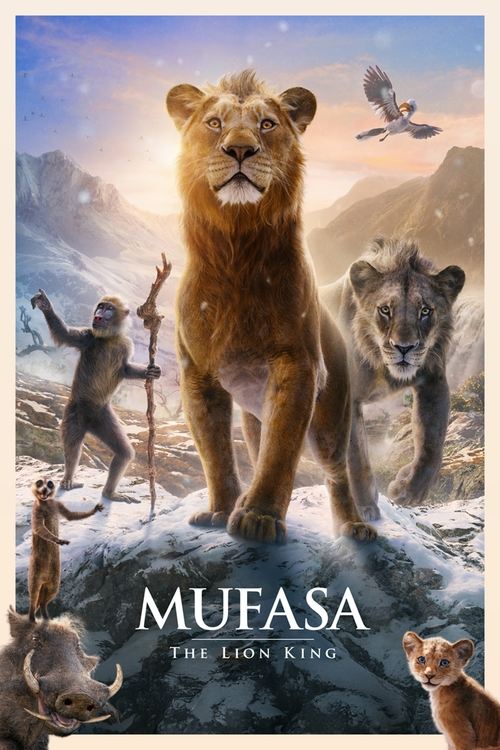
Mufasa: The Lion King - Review
Mufasa: The Lion King - A Roaring Origin Story or a Pale Shadow?
Disney's latest venture into the Pride Lands, Mufasa: The Lion King, arrives not as a simple remake, but as a prequel, promising to delve into the untold origins of the iconic king. The film sets out to answer the question: How did a seemingly ordinary lion become the wise and beloved ruler of the Pride Lands? While visually stunning and emotionally resonant in moments, the film grapples with the weight of its predecessor, struggling to forge its own distinct identity and leaving a lingering question: does Mufasa's story truly need to be told, and if so, was this the best way to tell it?
Plot: A Destiny Forged in Adversity
The narrative follows Mufasa, not born into royalty, but rather a cub orphaned and adrift. The opening scenes are bleak, showcasing the harsh realities of survival in the African savanna. Mufasa's early life is a constant struggle against starvation and the elements, a stark contrast to the privileged upbringing we might have expected. This portrayal immediately establishes him as a relatable and sympathetic character, one whose future greatness is not predetermined, but earned through hardship.
His path intersects with Taka, a lion cub born into the royal lineage, destined to inherit the throne. Taka, later known as Scar, is portrayed with a complexity that adds depth to his eventual descent into villainy. He's not simply evil from the start; rather, he's plagued by insecurity, overshadowed by expectations, and driven by a desperate need to prove himself. Their initial bond is one of friendship and shared adventure, as they navigate the challenges of the savanna together. This friendship forms the core of the film's emotional arc, making Taka's eventual betrayal all the more poignant.
The film weaves in elements of classic adventure stories, with Mufasa and Taka encountering a diverse cast of characters, both friendly and hostile. They join a group of misfits, each with their own unique skills and motivations, embarking on a journey of self-discovery and ultimately, shaping Mufasa's destiny. The plot is ambitious, attempting to create a rich and detailed backstory for a character whose appeal largely stemmed from his stoic wisdom and inherent leadership. However, the sheer volume of new characters and plot threads occasionally feels overwhelming, diluting the focus on Mufasa's personal journey.
Characters: New Faces and Familiar Echoes
Mufasa himself is portrayed as a more vulnerable and uncertain figure than the regal king we know from The Lion King. His journey is one of self-discovery, as he learns to embrace his inner strength and find his purpose. This portrayal is both refreshing and slightly jarring. While it humanizes Mufasa, it also diminishes some of the inherent mystique that made him such an imposing figure in the original film. He's less a born leader and more a reluctant hero, thrust into a position of responsibility he's not entirely sure he wants.
Taka/Scar is arguably the most compelling character in the film. His motivations are explored in detail, revealing the insecurities and resentments that ultimately lead him down a dark path. The film attempts to humanize him, showing him as a flawed and vulnerable individual, capable of both love and hatred. This nuanced portrayal adds depth to his character, making him more than just a one-dimensional villain. However, some may argue that it also diminishes his culpability for his actions in The Lion King.
The supporting characters, while entertaining, often feel underdeveloped. While each member of Mufasa and Taka's misfit group has a distinct personality, their backstories and motivations are only briefly touched upon. They serve primarily as plot devices, assisting Mufasa on his journey, but rarely feel like fully realized individuals. This is a missed opportunity, as these characters could have added significant depth and richness to the film's world.
Direction and Cinematography: A Visual Spectacle
Director Barry Jenkins, known for his emotionally resonant dramas like Moonlight and If Beale Street Could Talk, brings a unique perspective to the Pride Lands. He imbues the film with a sense of realism and emotional depth, focusing on the characters' inner lives and their relationships with one another. His direction is evident in the subtle nuances of the characters' expressions and the carefully choreographed action sequences.
The cinematography is breathtaking, showcasing the beauty and majesty of the African savanna. The film utilizes cutting-edge animation technology to create incredibly realistic landscapes and animal movements. The lighting is particularly noteworthy, capturing the golden hues of the sunset and the stark shadows of the night. The visual effects are seamless, blending seamlessly with the animated characters and environments.
However, the film's visual style occasionally clashes with its narrative tone. The hyper-realistic animation, while visually stunning, can also feel somewhat detached, lacking the warmth and expressiveness of traditional animation. This can create a sense of emotional distance, making it difficult to fully connect with the characters.
Performances: A Blend of Familiar and Fresh Voices
The voice acting is strong, with a mix of established actors and newcomers bringing the characters to life. While the cast list has yet to be fully revealed, early indications suggest a talented ensemble that captures the essence of the characters while adding their own unique interpretations. The performances are particularly effective in conveying the emotional complexities of the characters, especially Mufasa and Taka.
The challenge for the actors lies in balancing the expectations of fans familiar with the original film with the need to create fresh and compelling interpretations of the characters. They must capture the essence of the iconic characters while also adding their own unique nuances and interpretations. The success of the film will largely depend on their ability to strike this delicate balance.
Themes and Messages: Loyalty, Destiny, and the Price of Ambition
Mufasa: The Lion King explores several key themes, including loyalty, destiny, and the price of ambition. The film emphasizes the importance of loyalty and friendship, highlighting the bonds that unite Mufasa and his misfit group. It also explores the concept of destiny, questioning whether our paths are predetermined or whether we have the power to shape our own futures. Mufasa's journey is a testament to the idea that even those born into humble circumstances can achieve greatness through hard work, determination, and a commitment to their values.
The film also delves into the darker side of ambition, exploring the destructive consequences of unchecked desires. Taka's descent into villainy is a cautionary tale about the dangers of prioritizing personal gain over the well-being of others. His ambition, fueled by insecurity and resentment, ultimately leads to his downfall, highlighting the importance of humility and empathy.
The film's messages are relevant and timely, resonating with audiences of all ages. It encourages viewers to embrace their inner strength, to stand up for what they believe in, and to prioritize loyalty and compassion in their relationships with others.
Comparison to Other Films: Echoes of the Past, Seeds of the Future
Inevitably, Mufasa: The Lion King will be compared to the original The Lion King, as well as other Disney prequels and sequels. The film attempts to carve out its own identity by focusing on Mufasa's origins and exploring the complexities of Taka's character. However, it struggles to escape the shadow of its predecessor, constantly reminding viewers of the events that will eventually unfold in the original film.
The film also draws parallels to other Disney prequels, such as Maleficent, which attempted to humanize a classic villain. However, Mufasa: The Lion King arguably does a better job of balancing empathy with accountability, acknowledging Taka's flaws while also exploring the circumstances that contributed to his downfall.
Ultimately, the success of Mufasa: The Lion King will depend on its ability to stand on its own as a compelling and emotionally resonant story, rather than simply serving as a prequel to a beloved classic. It needs to offer something new and unique to the Pride Lands mythology, while also honoring the legacy of the original film.
Positive Aspects: Visual Grandeur and Emotional Depth
Mufasa: The Lion King boasts several positive aspects, including its stunning visuals, its emotionally resonant storytelling, and its nuanced character development. The animation is breathtaking, creating a realistic and immersive world that draws viewers into the Pride Lands. The film's emotional depth is particularly noteworthy, exploring the complexities of friendship, loyalty, and ambition. The performances are strong, bringing the characters to life and conveying their inner struggles with authenticity and nuance.
The film also deserves credit for attempting to expand the Pride Lands mythology, introducing new characters and exploring previously unexplored aspects of the characters' backstories. This adds richness and depth to the world, making it feel more fully realized and believable.
Constructive Criticism: Overstuffed Plot and Uneven Pacing
Despite its strengths, Mufasa: The Lion King is not without its flaws. The plot feels overstuffed, with too many characters and plot threads vying for attention. This dilutes the focus on Mufasa's personal journey, making it difficult to fully invest in his character arc. The pacing is also uneven, with some scenes feeling rushed and others dragging on for too long.
The film also struggles to balance its desire to create a fresh and compelling story with the need to honor the legacy of the original film. At times, it feels too derivative, relying on familiar tropes and plot points. At other times, it feels too disconnected, straying too far from the established mythology.
Conclusion: A Worthy Addition or a Missed Opportunity?
Mufasa: The Lion King is a visually stunning and emotionally resonant film that attempts to expand the Pride Lands mythology. While it boasts strong performances, breathtaking animation, and a compelling exploration of themes such as loyalty and ambition, it ultimately struggles to escape the shadow of its predecessor. The overstuffed plot and uneven pacing detract from the film's overall impact, leaving viewers with a sense of unfulfilled potential. While it adds some depth to the characters of Mufasa and Taka, it doesn't quite justify its existence as a prequel. It's a beautiful film, but perhaps unnecessary.
Ultimately, Mufasa: The Lion King is a mixed bag. It's a visually stunning and emotionally resonant film that offers moments of genuine brilliance. However, it's also a flawed and uneven film that struggles to escape the shadow of its predecessor. Whether it's a worthy addition to the Pride Lands mythology will ultimately depend on individual viewers' expectations and preferences.
Rating: 6.5/10