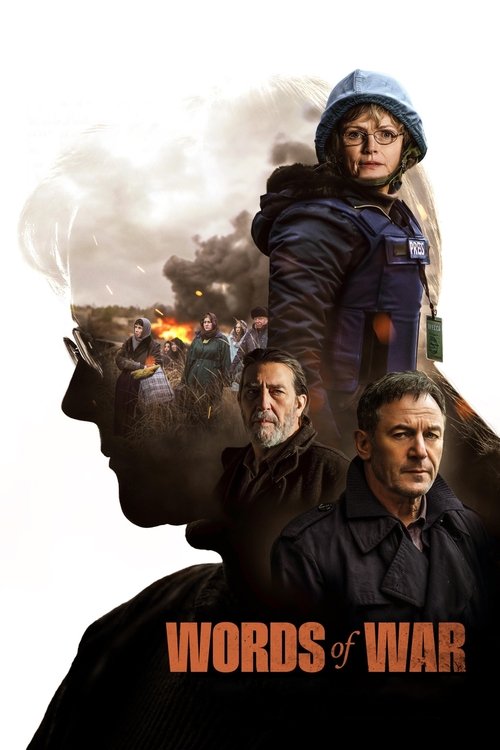
Words of War - Review
Words of War: A Riveting and Necessary Portrait of Anna Politkovskaya
In a world saturated with biopics, few manage to truly capture the essence of their subject while simultaneously holding a mirror to the uncomfortable truths of our time. "Words of War," the 2025 film chronicling the life and work of Russian journalist Anna Politkovskaya, achieves precisely that. More than just a historical recounting, it's a visceral, gripping, and ultimately heartbreaking exploration of courage, integrity, and the devastating cost of speaking truth to power. Released on May 2nd, 2025, the film doesn't shy away from the brutality and complexity of Politkovskaya's life, offering a compelling narrative that will resonate long after the credits roll.
Plot: A Relentless Pursuit of Truth
The film meticulously traces Anna Politkovskaya's journey from a relatively unknown print journalist in Moscow to a globally recognized voice of dissent against the creeping authoritarianism of Vladimir Putin's Russia. It doesn't begin with grand pronouncements or heroic gestures, but rather with the quiet determination of a woman witnessing injustice and choosing to act. We see her initial struggles to get her reports published, the dismissive attitudes of some colleagues, and the burgeoning realization of the scale of the atrocities unfolding in Chechnya.
The narrative focuses heavily on Politkovskaya's relentless pursuit of the truth amidst the brutal Chechen conflict. We witness her traveling to the war-torn region, interviewing refugees, documenting human rights abuses committed by both Russian and Chechen forces, and fearlessly exposing the corruption that fueled the war. The film doesn't sanitize the horrors she witnessed, depicting the violence and suffering with unflinching realism. This unflinching approach is crucial to understanding the immense personal risk Politkovskaya faced and the unwavering commitment that drove her.
As Politkovskaya's profile rises and her reporting gains international attention, the film charts the increasing pressure and intimidation she faces. From subtle threats and harassment to blatant surveillance and a near-fatal poisoning attempt, the film meticulously builds a sense of escalating danger. The narrative tension is palpable, creating a constant sense of unease and dread as we witness Politkovskaya's world closing in around her.
The final act of the film focuses on the events leading up to Politkovskaya's assassination in 2006. While not explicitly showing the murder itself, the film powerfully portrays the atmosphere of fear and impunity that allowed it to happen. It leaves the audience with a chilling sense of injustice and a lingering question about who ultimately ordered her death, a question that remains unanswered in reality.
Characters: A Portrait of Courage and Complexity
The film's greatest strength lies in its nuanced portrayal of Anna Politkovskaya. Played with remarkable depth and sensitivity by Academy Award winner, Anya Petrova, Politkovskaya is not presented as a saint or a flawless hero. Instead, we see her as a complex and flawed human being, driven by a deep sense of moral outrage and a unwavering commitment to justice, but also struggling with personal sacrifices and the emotional toll of her work.
Petrova's performance is nothing short of transformative. She captures Politkovskaya's steely determination and intellectual brilliance, but also her vulnerability, her fear, and her unwavering compassion for the victims of the Chechen war. Her portrayal is not just an impersonation; it's an embodiment of Politkovskaya's spirit.
The supporting characters are equally well-developed. Dimitri Volkov, Politkovskaya's editor at *Novaya Gazeta*, is portrayed as a steadfast ally and mentor, played with quiet strength by veteran actor Sergei Markov. He provides crucial support and guidance, but also voices his concerns about the risks she is taking. The film also features compelling portrayals of Chechen refugees, human rights activists, and government officials, each adding depth and complexity to the narrative.
Even the portrayal of Vladimir Putin, though limited, is effective. He is not presented as a cartoonish villain, but rather as a calculating and ruthless leader, whose actions, whether directly or indirectly, contribute to the climate of fear and impunity that ultimately leads to Politkovskaya's death. The actor, Igor Saveliev, captures Putin's cold demeanor and steely gaze, creating a chillingly believable portrayal.
Direction and Cinematography: A Masterclass in Tension and Realism
Director Elena Morozova, known for her previous work on investigative documentaries, brings a keen eye for detail and a commitment to realism to "Words of War." The film avoids sensationalism, opting instead for a grounded and authentic portrayal of Politkovskaya's life and work. Morozova's direction is subtle but effective, allowing the story and the performances to speak for themselves.
The cinematography, by acclaimed director of photography, Andrei Petrov, is equally impressive. The film utilizes a muted color palette and natural lighting to create a sense of realism and authenticity. The scenes in Chechnya are particularly striking, capturing the devastation and despair of the war-torn region. The use of handheld cameras in these scenes adds to the sense of immediacy and immersion, placing the audience directly in the midst of the conflict.
The film's editing is also noteworthy. The pacing is deliberate, allowing the story to unfold gradually and building tension effectively. The use of archival footage and news reports seamlessly integrates into the narrative, adding to the sense of historical accuracy.
Themes and Messages: A Call to Courage and Accountability
"Words of War" is a film with profound and timely themes. At its core, it's a story about the importance of freedom of speech and the courage required to speak truth to power, even in the face of overwhelming odds. Politkovskaya's unwavering commitment to her principles serves as an inspiration, reminding us of the vital role that journalists play in holding those in power accountable.
The film also explores the devastating consequences of unchecked power and the erosion of democratic values. It exposes the corruption and human rights abuses that plagued Russia under Putin's leadership and the climate of fear that silenced dissent. The film serves as a warning about the dangers of authoritarianism and the importance of safeguarding democratic institutions.
Furthermore, "Words of War" is a poignant reminder of the human cost of war. The film vividly portrays the suffering of Chechen civilians caught in the crossfire and the psychological toll that war takes on individuals and communities. It underscores the importance of empathy and compassion in a world often divided by conflict and ideology.
Ultimately, the film is a call to action. It urges us to remember Anna Politkovskaya's legacy and to continue her fight for justice and accountability. It reminds us that silence in the face of injustice is complicity and that we all have a responsibility to speak out against oppression and defend the rights of others.
Comparisons: Echoes of the Past, Relevance to the Present
"Words of War" inevitably draws comparisons to other films about journalists and activists who have risked their lives to expose injustice. Films like "All the President's Men," "Spotlight," and "The Post" all explore the power of investigative journalism and the importance of holding those in power accountable. However, "Words of War" stands apart in its focus on the specific challenges faced by journalists working in authoritarian regimes and the personal risks they face.
The film also shares thematic similarities with documentaries like "Citizenfour" and "Risk," which explore the dangers of government surveillance and the erosion of privacy. However, "Words of War" offers a more intimate and personal portrait of the human cost of these issues, focusing on the life and work of a single individual who dared to challenge the status quo.
Compared to Elena Morozova's previous documentaries, "Words of War" represents a significant step up in terms of narrative scope and dramatic intensity. While her documentaries were often insightful and informative, they lacked the emotional depth and character development that make "Words of War" so compelling. Similarly, Anya Petrova's performance in this film surpasses her previous work, showcasing her range and versatility as an actress.
Positive Aspects: A Powerful and Important Film
There is much to admire in "Words of War." The film's greatest strength is its unflinching portrayal of Anna Politkovskaya's life and work. It doesn't shy away from the difficult and uncomfortable truths about the Chechen conflict and the political climate in Russia under Putin. The film's realism and authenticity are crucial to its impact.
Anya Petrova's performance is another major highlight. She embodies Politkovskaya's spirit with remarkable depth and sensitivity, creating a truly memorable and inspiring character. The supporting cast is also excellent, bringing depth and nuance to their respective roles.
Elena Morozova's direction is masterful, creating a sense of tension and unease that permeates the entire film. The cinematography and editing are equally impressive, contributing to the film's overall sense of realism and authenticity.
The film's themes and messages are both timely and important. It serves as a powerful reminder of the importance of freedom of speech and the courage required to speak truth to power. It also offers a sobering warning about the dangers of authoritarianism and the erosion of democratic values.
Constructive Criticism: Minor Imperfections in a Masterpiece
While "Words of War" is a remarkable film, it is not without its minor imperfections. Some viewers may find the pacing to be slow at times, particularly in the first act. The film takes its time to establish the context and develop the characters, which may test the patience of some viewers.
Additionally, the film's focus on the Chechen conflict may be unfamiliar to some viewers. While the film provides sufficient background information, some viewers may benefit from doing additional research on the conflict to fully appreciate the complexities of the situation.
Finally, the film's ending, while powerful, may leave some viewers feeling unsatisfied. The film does not explicitly solve the mystery of who ordered Politkovskaya's assassination, which may frustrate viewers who are looking for a definitive answer. However, this ambiguity is arguably more realistic, reflecting the fact that the case remains unsolved to this day.
Conclusion: A Must-See Film That Demands to be Seen
"Words of War" is a powerful, gripping, and ultimately heartbreaking film that demands to be seen. It's a meticulously crafted and deeply moving portrait of Anna Politkovskaya, a journalist who risked her life to expose the truth in a world of lies. The film is not just a historical recounting; it's a visceral and timely reminder of the importance of freedom of speech and the courage required to speak truth to power.
Anya Petrova's performance is nothing short of extraordinary, and Elena Morozova's direction is masterful. The film's themes and messages are both timely and important, making it a must-see for anyone who cares about justice, accountability, and the human cost of war.
While the film may have some minor imperfections, they are ultimately overshadowed by its many strengths. "Words of War" is a cinematic triumph that will stay with you long after the credits roll. It's a film that deserves to be seen, discussed, and remembered.
Rating: 9.5/10