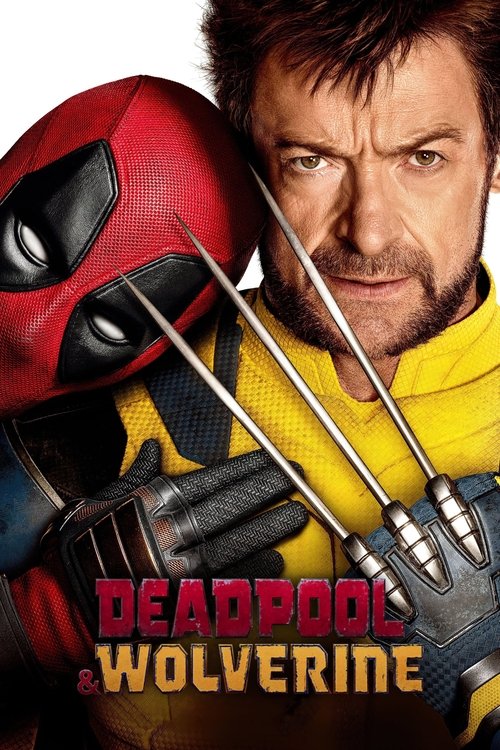
Deadpool & Wolverine - Review
Deadpool & Wolverine: A Meta-Mess Masterpiece (Mostly)
The Merc with a Mouth and the Ol' Canucklehead finally collide in Deadpool & Wolverine, a movie that promises to be the raunchiest, most self-aware, and potentially universe-shattering entry in the Marvel Cinematic Universe. Does it live up to the hype? Mostly. While burdened with some familiar superhero tropes and a slightly bloated runtime, the film delivers on its promise of chaotic fun, witty banter, and brutal action, all while simultaneously deconstructing and celebrating the superhero genre. This isn't just a crossover; it's a meta-commentary delivered with the force of a adamantium claw.
Plot: A Multiversal Mess Worth Getting Lost In
The plot, as much as a Deadpool movie needs one, centers around Wade Wilson (Ryan Reynolds), now seemingly retired from his mercenary gig and living a mundane life, trying to find meaning in a world that doesn't quite understand him. He's working as a car salesman, struggling to connect with his friends and family, and generally feeling…ordinary. This ennui is shattered when the Time Variance Authority (TVA), last seen in the Loki series, comes knocking. Agent Paradox (a delightfully deadpan Shira Haas) recruits Deadpool to help save the multiverse from a Kang variant, specifically Cassandra Nova (Emma Corrin), who is wreaking havoc across realities.
The catch? Deadpool needs Wolverine (Hugh Jackman), specifically a Wolverine from a dying universe, to help him. This Wolverine is cynical, broken, and very, very reluctant to get involved. The film then becomes a buddy-cop road trip through different realities, as Deadpool and Wolverine bicker, fight, and reluctantly learn to rely on each other to stop Nova's plan to erase entire timelines. The plot is convoluted, yes, but deliberately so. It serves more as a framework for the characters to interact, crack jokes, and engage in over-the-top action sequences than a tightly woven narrative.
The film's biggest strength, and arguably its weakness, is its reliance on meta-commentary. It constantly winks at the audience, referencing past Marvel movies, the actors' careers, and the very nature of superhero filmmaking. This self-awareness is often hilarious, but at times feels a little too on the nose, threatening to pull the audience out of the story. The film also suffers from a slightly predictable third act, where the stakes are raised to cosmic levels, and the heroes must overcome seemingly insurmountable odds. It's a familiar superhero trope, and while Deadpool & Wolverine tries to subvert it, it doesn't quite succeed entirely.
Characters: The Unlikely Duo and Their Supporting Cast
Deadpool (Ryan Reynolds)
Ryan Reynolds is Deadpool. There's no separating the actor from the character at this point. Reynolds delivers his trademark wit and irreverence with aplomb, constantly breaking the fourth wall and making self-deprecating jokes. This time, however, we see a slightly more vulnerable side to Wade Wilson. He's grappling with his own mortality, his purpose, and the fear of being forgotten. Reynolds manages to balance the humor with genuine emotion, making Deadpool a surprisingly relatable character, even when he's decapitating bad guys.
Wolverine (Hugh Jackman)
Hugh Jackman's return as Wolverine is a major selling point for the film, and he doesn't disappoint. This isn't the Wolverine we know and love from the X-Men movies. This is a Wolverine who has lost everything, a broken and cynical shell of his former self. He's reluctant to fight, reluctant to care, and generally just wants to be left alone. Jackman brings a gravitas and world-weariness to the role that is both compelling and heartbreaking. His dynamic with Reynolds is electric, as the two actors play off each other perfectly. The contrast between Deadpool's manic energy and Wolverine's stoic grumbling is a constant source of humor.
Cassandra Nova (Emma Corrin)
Emma Corrin's Cassandra Nova is a formidable villain, both physically and intellectually. She's a powerful telepath with a nihilistic worldview, believing that all realities deserve to be erased. Corrin brings a chilling intensity to the role, making Nova a truly menacing antagonist. While her motivations are somewhat generic (destroying everything because…evil), Corrin's performance elevates the character beyond a simple plot device.
Supporting Characters
The supporting cast, including Vanessa (Morena Baccarin), Blind Al (Leslie Uggams), Colossus (Stefan Kapičić), Negasonic Teenage Warhead (Brianna Hildebrand), and Peter (Rob Delaney), all return, providing familiar comedic relief and emotional support for Deadpool. They don't have a huge amount of screen time, but they all make the most of their roles. Shira Haas as Agent Paradox also shines, delivering a dry and sarcastic performance that perfectly complements Deadpool's over-the-top antics.
Direction: Shawn Levy's Balancing Act
Shawn Levy, known for his work on Stranger Things and Free Guy, directs Deadpool & Wolverine with a deft hand. He manages to balance the film's many competing elements – action, comedy, drama, and meta-commentary – without letting it fall apart. He understands the tone of the Deadpool movies and embraces their irreverence, while also adding his own distinct style. Levy's direction is particularly strong in the action sequences, which are inventive, brutal, and often hilarious. He also does a good job of establishing the emotional stakes of the story, ensuring that the audience cares about the characters, even when they're making ridiculous jokes.
However, Levy's direction isn't without its flaws. The film's pacing is somewhat uneven, with the second act feeling a bit sluggish. The reliance on CGI, while generally well-executed, occasionally feels excessive, especially in the final battle. And while Levy embraces the film's meta-commentary, he sometimes lets it overshadow the story itself. Overall, though, Levy does a solid job of directing a difficult and ambitious film.
Cinematography: A Visual Feast of Violence and Mayhem
The cinematography in Deadpool & Wolverine is visually striking, blending the gritty realism of the X-Men movies with the vibrant colors and cartoonish violence of the Deadpool films. The film is full of dynamic camera angles, creative visual effects, and expertly choreographed action sequences. The use of color is particularly effective, with bright reds and oranges dominating the screen during the action scenes, and cooler blues and greens used to create a sense of melancholy during the more emotional moments.
The film also makes good use of its various locations, from the mundane streets of Deadpool's hometown to the bizarre and fantastical landscapes of the multiverse. The visual design of the TVA is particularly impressive, with its sterile and bureaucratic aesthetic contrasting sharply with the chaotic energy of Deadpool and Wolverine. Overall, the cinematography in Deadpool & Wolverine is both visually appealing and thematically relevant, enhancing the film's overall impact.
Themes and Messages: More Than Just Jokes and Violence
Beneath the surface of its raunchy humor and over-the-top violence, Deadpool & Wolverine explores some surprisingly poignant themes. The film grapples with issues of mortality, purpose, and the fear of being forgotten. Deadpool's existential crisis, brought on by his perceived irrelevance, is a relatable struggle for anyone who has ever felt lost or adrift in life. Wolverine's cynicism and world-weariness reflect a deeper sense of loss and regret, highlighting the burden of living a long and violent life.
The film also touches on the importance of family, both biological and chosen. Deadpool's relationships with Vanessa, Blind Al, and his other friends and allies provide him with a sense of belonging and purpose. Wolverine's reluctant partnership with Deadpool forces him to confront his own isolation and learn to trust others again. Ultimately, Deadpool & Wolverine suggests that even in the face of overwhelming odds, human connection is essential for survival.
Furthermore, the film makes a statement about the nature of franchises and cinematic universes. Through its meta-commentary, Deadpool & Wolverine acknowledges the absurdity of the superhero genre while also celebrating its enduring appeal. It pokes fun at the formulaic nature of many superhero movies, while also delivering the kind of action and spectacle that audiences have come to expect. The film seems to be asking the question: can we have our cake and eat it too? Can we enjoy the escapism of superhero movies while also being aware of their limitations?
Comparison to Other Films
Deadpool & Wolverine is a unique film that defies easy categorization. It draws inspiration from a variety of sources, including the Deadpool movies, the X-Men movies, the Loki series, and even films like This is the End and The Lego Movie, which also rely heavily on meta-commentary. Compared to the previous Deadpool movies, Deadpool & Wolverine is more ambitious in scope, tackling larger themes and exploring a wider range of emotions. It also benefits from the addition of Wolverine, whose presence adds a new dynamic to the film. Compared to the X-Men movies, Deadpool & Wolverine is much more irreverent and self-aware, eschewing the serious tone of those films in favor of a more comedic approach.
Shawn Levy's direction can be compared to his work on Free Guy, which also features a protagonist who is aware of his own fictionality. Both films explore the themes of free will and self-discovery, albeit in very different contexts. Ryan Reynolds' performance as Deadpool can be compared to his performance in Free Guy, as both characters are witty, self-deprecating, and ultimately heroic. Hugh Jackman's performance as Wolverine is a departure from his previous portrayals of the character, as he brings a new level of vulnerability and cynicism to the role.
Positive Aspects
- Excellent performances from Ryan Reynolds and Hugh Jackman.
- Inventive and hilarious action sequences.
- Witty and self-aware humor.
- Exploration of surprisingly poignant themes.
- Visually striking cinematography.
Constructive Criticism
- The plot can be convoluted and difficult to follow.
- The pacing is uneven, with the second act feeling sluggish.
- The reliance on CGI occasionally feels excessive.
- The meta-commentary sometimes overshadows the story itself.
- Some might find the humor too raunchy or offensive.
Conclusion
Deadpool & Wolverine is a flawed but ultimately enjoyable film that delivers on its promise of chaotic fun and witty banter. While it suffers from some familiar superhero tropes and a slightly bloated runtime, the film's strengths outweigh its weaknesses. The performances from Ryan Reynolds and Hugh Jackman are excellent, the action sequences are inventive and hilarious, and the film explores some surprisingly poignant themes. If you're a fan of the Deadpool movies or the X-Men movies, you'll likely enjoy this film. Just be prepared for a meta-mess that is both self-aware and self-indulgent.
Rating: 8.5/10