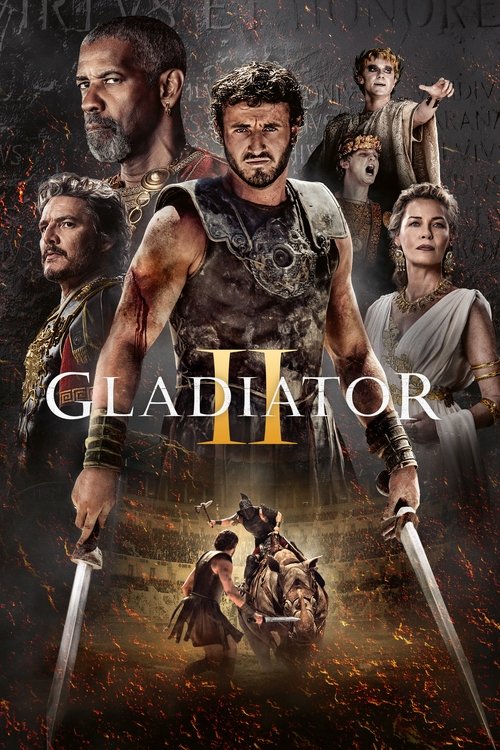
Gladiator II - Review
Gladiator II: A Roaring Return to the Arena, But Does It Stand on its Own?
Ridley Scott's Gladiator remains a towering achievement in historical epic filmmaking, a visceral and emotionally resonant story of revenge, honor, and sacrifice. The prospect of a sequel, especially after so many false starts and abandoned scripts, was met with a mixture of excitement and trepidation. Could lightning strike twice? Could a new story, set within the same world, capture the magic of the original without feeling like a mere retread? Gladiator II, released on November 13th, 2024, attempts to answer those questions, and the results are… complicated.
Plot: A Familiar Struggle, a New Perspective
The film picks up roughly fifteen years after the events of Gladiator. Lucius, the young nephew of Commodus who was spared by Maximus and witnessed his final act of heroism, is now a young man (played with compelling intensity by Paul Mescal). He has grown up haunted by Maximus's legacy, wrestling with the ideals of justice and freedom that the gladiator embodied. However, his privileged life is shattered when his home is conquered by the forces of twin Emperors, ruthless and power-hungry brothers named Caracalla and Geta (played with chilling effectiveness by Austin Butler and Barry Keoghan, respectively). Forced into slavery and thrust into the brutal world of gladiatorial combat, Lucius must learn to survive, hone his skills, and ultimately decide whether to embrace Maximus's path of rebellion.
The plot, while drawing heavily on the themes of the original, attempts to carve its own identity. Instead of a straightforward revenge tale, Gladiator II explores the complexities of power, the cyclical nature of tyranny, and the enduring impact of a single act of defiance. Lucius isn't simply seeking vengeance; he's grappling with the weight of history and the responsibility of potentially igniting another rebellion against a seemingly insurmountable power. The narrative also introduces new political intrigues within the Roman Senate, showcasing the power struggles and betrayals that simmer beneath the surface of the Empire.
However, the plot isn't without its flaws. At times, it feels overly convoluted, juggling too many subplots and characters. The motivations of some supporting characters are unclear, and certain plot twists feel somewhat contrived. The pacing also suffers in the second act, with extended sequences of gladiatorial combat that, while visually impressive, don't always advance the narrative significantly. The reliance on familiar tropes, such as the underdog story and the noble slave rebellion, can also make the film feel predictable at times.
Characters: Echoes of the Past, Seeds of the Future
Paul Mescal delivers a powerful and nuanced performance as Lucius. He captures the character's internal conflict, his struggle to reconcile his privileged upbringing with the brutal realities of his present circumstances. Mescal avoids simply mimicking Russell Crowe's Maximus, instead crafting a character who is both inspired by and distinct from his predecessor. Lucius is more introspective, more hesitant, and more burdened by the weight of history than Maximus ever was. His vulnerability makes him a more relatable and ultimately more compelling protagonist.
Austin Butler and Barry Keoghan are genuinely terrifying as the twin Emperors. Butler's Caracalla is the more outwardly cruel and impulsive of the two, while Keoghan's Geta is the cunning and manipulative strategist. Their sibling rivalry adds another layer of complexity to their reign of terror, creating a sense of instability and paranoia within the Imperial court. They are not simply villains; they are complex and flawed individuals driven by their own ambition and insecurities.
Connie Nielsen reprises her role as Lucilla, Lucius's mother, and brings a welcome sense of continuity to the film. While her role is smaller than in the original, she serves as a crucial moral compass for Lucius, guiding him with her wisdom and experience. Djimon Hounsou also returns as Juba, providing a link to Maximus's past and offering Lucius guidance and support. The inclusion of these returning characters adds emotional weight to the story and helps to ground it within the established world.
However, some of the new characters feel underdeveloped. A love interest for Lucius, played by a promising newcomer, suffers from a lack of screen time and feels more like a plot device than a fully realized character. Similarly, several of the gladiators who fight alongside Lucius are given only cursory introductions, making it difficult to invest in their fates.
Direction: Scott Returns to the Arena, But with a Different Style
Ridley Scott's direction is, as always, visually stunning. He recreates the grandeur of ancient Rome with breathtaking scale and detail, from the bustling streets of the city to the imposing architecture of the Colosseum. The battle sequences are visceral and brutal, capturing the chaos and carnage of gladiatorial combat with unflinching realism. Scott utilizes a variety of camera angles and editing techniques to create a sense of immediacy and immersion, placing the audience right in the heart of the action.
However, Scott's approach to Gladiator II differs somewhat from his direction of the original. While Gladiator was characterized by its sweeping scope and epic grandeur, Gladiator II feels more claustrophobic and intimate. Scott focuses more on the individual struggles of the characters, exploring their internal conflicts and their relationships with one another. This shift in focus is not necessarily a bad thing, but it does result in a film that feels less epic in scale than its predecessor.
One of the criticisms leveled against Scott's recent work is his over-reliance on CGI, and unfortunately, Gladiator II suffers from this as well. While the visual effects are generally impressive, there are moments where they feel artificial and detract from the film's realism. The use of practical effects, which were so effective in the original, is noticeably reduced in Gladiator II.
Cinematography: A Feast for the Eyes, But Lacking the Original's Grit
The cinematography, handled by Dariusz Wolski (who also worked on several of Scott's previous films), is undeniably beautiful. Wolski captures the golden light of the Roman sun, the shadows of the Colosseum, and the vibrant colors of the costumes with stunning clarity. The use of natural light gives the film a sense of authenticity, while the carefully composed shots create a visually striking and memorable experience.
However, the cinematography lacks the gritty realism that was so characteristic of the original Gladiator. The original film had a raw, almost documentary-like feel, which added to its sense of authenticity. Gladiator II, in contrast, feels more polished and stylized, which can sometimes detract from the film's emotional impact. The emphasis on visual beauty sometimes comes at the expense of visceral realism.
Performances: Mescal Shines, But the Supporting Cast is Uneven
As mentioned earlier, Paul Mescal delivers a standout performance as Lucius. He embodies the character's internal struggle with remarkable depth and nuance, making him a compelling and sympathetic protagonist. His physical transformation is also impressive, as he convincingly portrays a hardened gladiator capable of taking on the best fighters in the arena.
Austin Butler and Barry Keoghan are equally impressive as the twin Emperors. They bring a chilling intensity to their roles, making them truly formidable antagonists. Their sibling rivalry is particularly well-portrayed, adding a layer of complexity to their characters and highlighting the instability of their reign.
Connie Nielsen and Djimon Hounsou provide solid supporting performances, adding emotional weight and continuity to the film. However, some of the other supporting actors are less memorable, and their characters feel underdeveloped. The overall strength of the performances is uneven, with Mescal, Butler, and Keoghan carrying much of the weight.
Themes and Messages: The Cycle of Tyranny, the Enduring Power of Hope
Gladiator II explores several complex themes, including the cyclical nature of tyranny, the corrupting influence of power, and the enduring power of hope. The film suggests that even after a tyrant is overthrown, the seeds of tyranny can still remain, and new oppressors will always rise to take their place. It also examines the moral compromises that individuals must make in order to survive in a world dominated by power and corruption.
However, the film also offers a message of hope. It suggests that even in the darkest of times, the human spirit can endure, and that acts of courage and defiance can inspire others to fight for freedom and justice. Lucius's journey is ultimately one of self-discovery and empowerment, as he learns to embrace his destiny and become a symbol of hope for the oppressed people of Rome.
The film also touches upon themes of legacy and the burden of history. Lucius is constantly confronted with the legacy of Maximus, and he must decide whether to embrace that legacy or forge his own path. He grapples with the weight of his family's history and the responsibility of potentially igniting another rebellion against the Empire.
Comparison to Other Films: Echoes of the Past, a Different Melody
Inevitably, Gladiator II will be compared to its predecessor, and while it shares many of the same themes and visual elements, it ultimately feels like a different film. Gladiator was a more straightforward revenge tale, driven by the personal vendetta of Maximus. Gladiator II is a more complex and politically charged story, exploring the broader themes of power, tyranny, and the cyclical nature of history.
The film also draws inspiration from other historical epics, such as Spartacus and Ben-Hur. Like those films, Gladiator II features a protagonist who rises from slavery to challenge the might of the Roman Empire. However, Gladiator II distinguishes itself with its focus on character development and its exploration of complex moral dilemmas.
Compared to Ridley Scott's other historical films, such as Kingdom of Heaven and Robin Hood, Gladiator II is perhaps his most ambitious attempt to grapple with the complexities of power and the human condition. While it may not reach the heights of Gladiator, it is a worthy addition to his filmography and a testament to his enduring talent as a filmmaker.
Positive Aspects: A Visually Stunning and Thought-Provoking Sequel
Gladiator II boasts several strengths that make it a worthwhile cinematic experience. The visual effects are generally impressive, the battle sequences are visceral and exciting, and the performances are strong, particularly from Paul Mescal, Austin Butler, and Barry Keoghan. The film also explores complex themes and offers a thought-provoking commentary on the nature of power and the human spirit.
The return of Connie Nielsen and Djimon Hounsou adds emotional weight to the story and helps to ground it within the established world of Gladiator. The film also introduces new characters and storylines that expand the scope of the narrative and offer fresh perspectives on the Roman Empire.
Ridley Scott's direction is, as always, visually stunning, and he recreates the grandeur of ancient Rome with breathtaking scale and detail. The cinematography is also excellent, capturing the beauty and brutality of the era with remarkable clarity.
Constructive Criticism: Overly Convoluted and Lacking the Original's Grit
Despite its strengths, Gladiator II is not without its flaws. The plot can be overly convoluted at times, juggling too many subplots and characters. The pacing also suffers in the second act, with extended sequences of gladiatorial combat that don't always advance the narrative significantly.
The film's reliance on CGI can sometimes detract from its realism, and the cinematography lacks the gritty realism that was so characteristic of the original Gladiator. Some of the supporting characters feel underdeveloped, and their motivations are unclear.
Ultimately, Gladiator II struggles to escape the shadow of its predecessor. While it attempts to carve its own identity, it often feels like a retread of familiar themes and storylines. The film lacks the emotional resonance and the raw power of the original Gladiator.
Conclusion: A Worthy Successor, But Not a Replacement
Gladiator II is a visually stunning and thought-provoking sequel that expands upon the world of the original film and explores complex themes of power, tyranny, and the human spirit. While it may not reach the heights of Gladiator, it is a worthy addition to Ridley Scott's filmography and a testament to his enduring talent as a filmmaker. Paul Mescal delivers a standout performance as Lucius, and the supporting cast is generally strong, particularly Austin Butler and Barry Keoghan.
However, the film suffers from an overly convoluted plot, uneven pacing, and a lack of the gritty realism that was so characteristic of the original Gladiator. It also struggles to escape the shadow of its predecessor, often feeling like a retread of familiar themes and storylines.
Overall, Gladiator II is a solid and entertaining historical epic that will likely appeal to fans of the original film. However, it is not a perfect film, and it falls short of achieving the same level of emotional resonance and cultural impact as its predecessor. It’s a good film, but not a great one.
Rating: 7.5/10