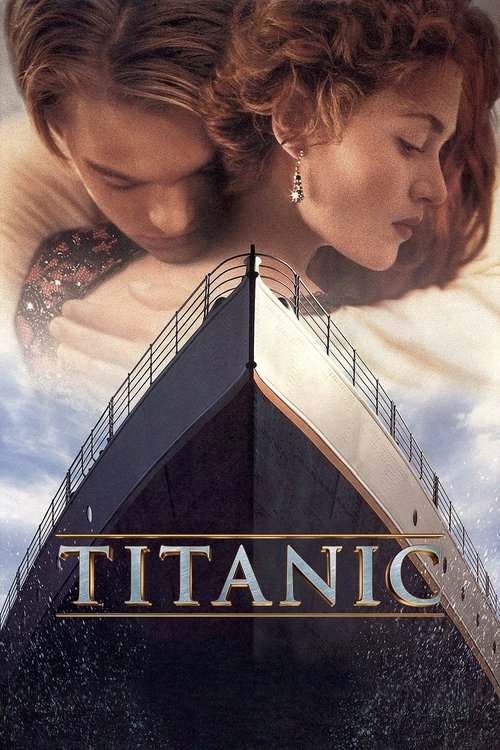
Titanic - Review
Titanic: A Cinematic Voyage Through Love, Loss, and History
James Cameron's Titanic, released in 1997, wasn't just a movie; it was a cultural phenomenon. More than two decades later, it remains a landmark in cinematic history, a sweeping epic that blended romance, disaster, and historical drama into a captivating and heartbreaking experience. But does it still hold up? Is it simply nostalgia that fuels our affection, or is there genuine artistic merit that justifies its enduring legacy? Let's dive deep into the icy waters of this iconic film and explore its triumphs and shortcomings.
Plot: A Love Story Amidst Tragedy
The narrative structure of Titanic is ingenious in its simplicity. The framing device of a modern-day treasure hunt, led by Brock Lovett (Bill Paxton), searching for a legendary diamond necklace, provides the entry point for the story. The discovery of a drawing of a young woman wearing the necklace leads them to Rose DeWitt Bukater (Gloria Stuart), a 101-year-old survivor of the Titanic disaster. She recounts her experiences aboard the ill-fated ship, transporting us back to 1912.
The core of the story revolves around the forbidden love affair between Rose (Kate Winslet), a young woman trapped in a loveless engagement to the wealthy and arrogant Caledon Hockley (Billy Zane), and Jack Dawson (Leonardo DiCaprio), a penniless artist who wins a third-class ticket in a poker game. Their romance blossoms amidst the opulence and class divisions of the Titanic, offering a stark contrast between the gilded cages of the wealthy and the vibrant freedom of the lower classes.
The film masterfully builds tension as the burgeoning romance unfolds, juxtaposed with the looming threat of the iceberg. Cameron doesn't shy away from the historical accuracy of the disaster, meticulously recreating the sinking of the Titanic with breathtaking visual effects. The final act is a harrowing depiction of chaos and survival, forcing Rose and Jack to confront the ultimate test of their love in the face of unimaginable tragedy.
While the central romance is undeniably compelling, the plot occasionally suffers from predictability. The "rich man bad, poor man good" trope is somewhat simplistic, and certain plot points, like the stolen necklace accusations, feel contrived. However, these minor flaws are largely overshadowed by the sheer scale and emotional impact of the overall narrative.
Characters: Archetypes and Heartbreak
Titanic's characters are archetypal, yet they resonate deeply with audiences. Rose embodies the spirit of rebellion and the desire for self-discovery. Kate Winslet delivers a nuanced performance, portraying Rose's transformation from a repressed young woman to a strong and independent survivor. Her chemistry with Leonardo DiCaprio is undeniable, making their love story believable and emotionally engaging.
Jack Dawson is the quintessential romantic hero: charming, artistic, and fiercely independent. DiCaprio's portrayal of Jack is charismatic and vulnerable, making him instantly likable and relatable. He represents freedom and the possibility of a life beyond the constraints of social class. While his character may be somewhat idealized, DiCaprio's performance imbues him with genuine humanity.
Caledon Hockley, the villain of the piece, is a caricature of wealth and privilege. Billy Zane plays him with a sneering arrogance that makes him easy to despise. While the character lacks depth, he serves as a necessary antagonist, highlighting the social inequalities that Rose seeks to escape.
Supporting characters, such as Molly Brown (Kathy Bates), Fabrizio De Rossi (Danny Nucci), and Thomas Andrews (Victor Garber), add depth and color to the story. Molly Brown's kindness and compassion provide a beacon of hope amidst the tragedy, while Fabrizio's friendship with Jack offers a glimpse into the lives of the working-class passengers. Thomas Andrews, the ship's designer, embodies the weight of responsibility and the profound sense of loss experienced by those involved in the Titanic's creation.
The strength of Titanic's characters lies not in their complexity, but in their relatability. They represent universal themes of love, loss, social injustice, and the human will to survive.
Direction: Cameron's Visionary Scope
James Cameron's direction is the driving force behind Titanic's success. His meticulous attention to detail, combined with his ability to create a sense of epic scale, elevates the film beyond a simple romance. Cameron's vision is ambitious and uncompromising, resulting in a visually stunning and emotionally powerful cinematic experience.
Cameron's expertise in underwater filmmaking is evident in the opening scenes, which showcase the wreckage of the Titanic with haunting beauty. The meticulous recreation of the ship's interiors and exteriors is astounding, immersing the audience in the opulence and grandeur of the Edwardian era. The sinking sequence is a masterpiece of visual effects and practical stunts, creating a visceral and terrifying depiction of the disaster.
While Cameron excels at large-scale spectacle, he also demonstrates a keen eye for intimate moments. The scenes between Rose and Jack are tender and heartfelt, capturing the raw emotion of their burgeoning love. Cameron's ability to balance the grand and the intimate is a key factor in Titanic's enduring appeal.
Some critics argue that Cameron's directing style can be overly sentimental or melodramatic. However, these criticisms overlook the fact that Titanic is, at its core, a romance. Cameron embraces the genre with gusto, creating a heightened emotional experience that resonates with audiences on a deep and personal level.
Cinematography: Painting with Light and Water
Russell Carpenter's cinematography is a crucial element in Titanic's visual power. The film's color palette is rich and vibrant, capturing the beauty and opulence of the ship's interiors. The use of light and shadow is particularly effective in creating a sense of atmosphere and drama.
The underwater sequences are breathtaking, showcasing the ghostly beauty of the Titanic wreckage. Carpenter's use of specialized underwater cameras and lighting techniques creates a sense of depth and perspective that is both awe-inspiring and haunting.
The sinking sequence is a tour de force of visual storytelling. Carpenter's camera captures the chaos and panic with a sense of immediacy and realism. The use of slow motion and dramatic lighting enhances the emotional impact of the scene, creating a truly unforgettable cinematic experience.
Carpenter's cinematography is not merely visually impressive; it also serves to enhance the film's themes and messages. The contrast between the bright, sunny days at sea and the dark, chaotic night of the sinking underscores the fragility of life and the inevitability of tragedy.
Performances: DiCaprio and Winslet's Star-Making Turns
Leonardo DiCaprio and Kate Winslet deliver career-defining performances in Titanic. Their chemistry is electric, and their portrayals of Jack and Rose are both nuanced and emotionally resonant. Their performances are a major reason why the film has endured for so long.
DiCaprio's portrayal of Jack Dawson is charming, charismatic, and vulnerable. He captures the character's free spirit and his genuine affection for Rose. DiCaprio's performance is all the more impressive considering he was relatively young and early in his career at the time.
Winslet's portrayal of Rose DeWitt Bukater is equally impressive. She embodies the character's intelligence, her desire for independence, and her growing love for Jack. Winslet's performance is particularly strong in the film's final act, as she portrays Rose's resilience and her determination to survive.
Billy Zane, as Caledon Hockley, delivers a suitably villainous performance. He plays the character with a sneering arrogance that makes him easy to dislike. Kathy Bates, as Molly Brown, provides a welcome dose of warmth and humor. Victor Garber, as Thomas Andrews, delivers a poignant performance as the ship's designer, burdened by the weight of responsibility.
The supporting cast is uniformly excellent, adding depth and color to the story. However, it is DiCaprio and Winslet's performances that truly elevate Titanic to another level.
Themes and Messages: Love, Class, and the Human Spirit
Titanic explores a multitude of themes, including love, loss, social class, the power of the human spirit, and the destructive force of nature. The central love story between Jack and Rose transcends social barriers, highlighting the importance of connection and the power of love to overcome adversity.
The film also offers a scathing critique of social inequality. The stark contrast between the opulence of the first-class passengers and the cramped conditions of the third-class passengers underscores the vast disparities in wealth and opportunity that existed in Edwardian society. The film suggests that these social divisions ultimately contributed to the tragedy, as third-class passengers were often denied access to lifeboats.
Titanic celebrates the resilience of the human spirit in the face of unimaginable tragedy. The film showcases numerous acts of courage and selflessness, as passengers and crew members risk their lives to save others. Rose's survival and her determination to live a full life after the disaster serve as a testament to the enduring power of the human spirit.
The film also serves as a cautionary tale about the dangers of hubris and the destructive force of nature. The Titanic was considered unsinkable, a symbol of human ingenuity and technological progress. However, the iceberg proved to be a force that no amount of human engineering could overcome. The film reminds us that we are ultimately at the mercy of the natural world.
Comparison to Other Films and Works
Titanic can be compared to other epic romances, such as Gone with the Wind and Doctor Zhivago. Like these films, Titanic features a sweeping love story set against the backdrop of a major historical event. However, Titanic is unique in its blend of romance, disaster, and historical drama.
In terms of disaster films, Titanic shares similarities with The Poseidon Adventure and The Towering Inferno. However, Titanic is distinguished by its focus on character development and its emotional depth. While other disaster films often prioritize spectacle over substance, Titanic uses the disaster as a backdrop for a compelling human story.
Titanic can also be compared to James Cameron's other works, such as Aliens and Terminator 2: Judgment Day. Like these films, Titanic features groundbreaking visual effects and a strong female protagonist. However, Titanic is a departure from Cameron's usual action-oriented fare, demonstrating his versatility as a filmmaker.
Positive Aspects: A Cinematic Masterpiece
Titanic boasts numerous positive aspects that contribute to its enduring appeal. The film's visual effects are groundbreaking, creating a realistic and immersive depiction of the Titanic disaster. The performances of Leonardo DiCaprio and Kate Winslet are exceptional, and their chemistry is undeniable. James Cameron's direction is masterful, balancing spectacle with emotional depth. The film's themes of love, loss, and social injustice resonate deeply with audiences. The score, composed by James Horner, is both beautiful and haunting, perfectly complementing the film's emotional tone.
Constructive Criticism: Minor Flaws in a Grand Design
While Titanic is a cinematic masterpiece, it is not without its flaws. The film's length (over three hours) can be daunting for some viewers. The "rich man bad, poor man good" trope is somewhat simplistic. Certain plot points, like the stolen necklace accusations, feel contrived. The dialogue occasionally veers into melodrama. However, these flaws are relatively minor and do not detract significantly from the overall impact of the film.
Conclusion: A Timeless Classic
Titanic is more than just a movie; it's a cultural phenomenon. It's a sweeping epic that blends romance, disaster, and historical drama into a captivating and heartbreaking experience. While it may have some minor flaws, its strengths far outweigh its weaknesses. The performances of Leonardo DiCaprio and Kate Winslet are exceptional, James Cameron's direction is masterful, and the film's themes of love, loss, and social injustice continue to resonate with audiences today. Titanic is a timeless classic that will continue to be enjoyed for generations to come.