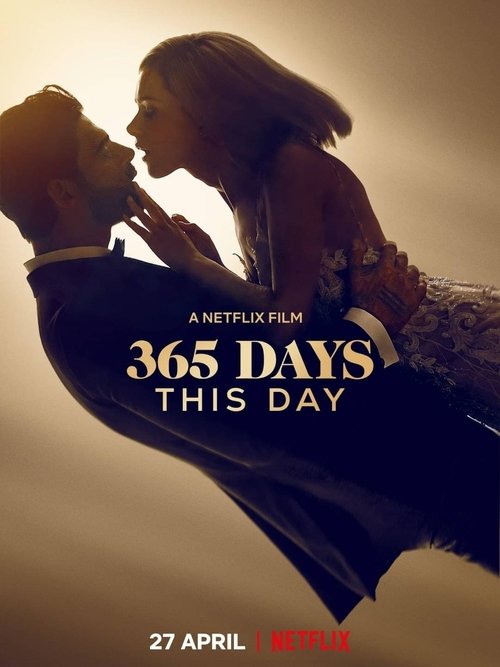
365 Days: This Day - Review
365 Days: This Day - A Review: More Heat, Less Heart
The world collectively shuddered (or perhaps secretly thrilled) when Netflix unleashed 365 Days upon us. A Polish erotic thriller that tiptoed the very fine line between passionate romance and problematic obsession, it became a global sensation, sparking countless debates and, undoubtedly, a fair few raised eyebrows. Now, the sequel, 365 Days: This Day, promises to reignite the flame, bringing back the smoldering Massimo and the headstrong Laura. But does this second helping of sun-drenched sensuality deliver a satisfying course, or is it just another helping of style over substance? Let's dive in.
Plot: A Tangled Web of Love, Loyalty, and Questionable Decisions
This Day picks up where the first film left off – with Laura miraculously alive after the ambiguous cliffhanger. She and Massimo are now married, living in the lap of luxury, and seemingly enjoying a passionate honeymoon phase. However, the honeymoon doesn't last long. Cracks begin to appear in their relationship as Laura struggles to adapt to Massimo's controlling nature and the ever-present shadow of his dangerous lifestyle. Enter Nacho, a handsome and mysterious gardener (yes, really) who challenges Laura's feelings and offers her a different kind of freedom. The plot thickens with revelations about Massimo's family ties, betrayals, and a whole lot of dramatic tension.
While the premise sounds intriguing, the execution is where This Day falters. The plot feels convoluted and often nonsensical. Motivations are flimsy, character arcs are underdeveloped, and the pacing is uneven. There are moments of genuine tension and emotional connection, but they are often overshadowed by unnecessary subplots and predictable plot twists. The introduction of Nacho, intended as a catalyst for Laura's self-discovery, feels more like a convenient plot device than a genuine romantic rival. The film throws in elements of family drama, mafia intrigue, and even a touch of Stockholm Syndrome, creating a messy and ultimately unsatisfying narrative.
Characters: Familiar Faces, Shallow Depths
Laura Biel (Anna-Maria Sieklucka): Sieklucka reprises her role as Laura, and while she certainly brings the glamour, the character's development feels stunted. Laura is still portrayed as a strong woman, but her decisions often contradict her supposed independence. She oscillates between resisting Massimo's control and succumbing to his charm, making her character feel inconsistent and frustrating. The introduction of Nacho is meant to showcase her internal conflict, but it ultimately reinforces the idea that Laura's agency is tied to her romantic relationships.
Massimo Torricelli (Michele Morrone): Morrone continues to embody the brooding, possessive alpha male that made Massimo so captivating (and controversial) in the first film. However, This Day attempts to humanize him, revealing vulnerabilities and insecurities beneath his hardened exterior. While this is a welcome attempt at character development, it often feels superficial. Massimo's controlling behavior is sometimes excused by his past trauma, which feels like a lazy justification for his toxic tendencies. Morrone's performance is undeniably charismatic, but the script doesn't give him enough depth to truly explore the complexities of his character.
Nacho Matos (Simone Susinna): Susinna enters the scene as Nacho, the enigmatic gardener who captures Laura's attention. He's presented as the antithesis of Massimo – kind, understanding, and respectful of Laura's autonomy. While Susinna is undeniably attractive, Nacho's character lacks complexity. He's essentially a perfect romantic ideal, making him feel unrealistic and less compelling than the flawed Massimo. His motivations are unclear, and his connection with Laura feels forced at times.
The supporting characters are largely forgettable, serving primarily as plot devices or comedic relief. They lack depth and contribute little to the overall narrative.
Direction and Cinematography: A Feast for the Eyes, A Famine for the Soul
Barbara Białowąs and Tomasz Mandes, the directors of the first film, return to helm This Day. Visually, the film is stunning. The cinematography is lush and vibrant, showcasing the beautiful Italian landscapes and the characters' opulent lifestyle. The camera lingers on sensual moments, capturing the raw physicality and undeniable chemistry between the actors. The use of slow motion and dramatic lighting enhances the romantic and erotic atmosphere.
However, the visual beauty often overshadows the narrative shortcomings. The directors prioritize aesthetics over substance, resulting in a film that is visually appealing but emotionally hollow. The pacing is uneven, with long stretches of scenic shots and steamy scenes interspersed with rushed and underdeveloped plot points. The directors seem more concerned with creating a visually stimulating experience than with telling a compelling story.
Performances: Chemistry That Can't Save a Weak Script
The actors do their best with the material they are given. Anna-Maria Sieklucka and Michele Morrone have undeniable chemistry, and their scenes together are often the most engaging parts of the film. They convey the passion and intensity of their characters' relationship, even when the dialogue is clunky and the plot is nonsensical. Simone Susinna brings a charming presence to the role of Nacho, but his character is underdeveloped, limiting his impact on the story. The supporting cast is largely unremarkable, failing to leave a lasting impression.
Ultimately, the performances are hampered by the weak script. The actors struggle to elevate the material, and their efforts are often undermined by the film's reliance on clichés and predictable plot devices.
Themes and Messages: Love, Control, and Questionable Morality
This Day attempts to explore themes of love, control, and freedom, but it does so in a superficial and often problematic way. The film raises questions about the nature of consent and the boundaries of a healthy relationship, but it fails to provide any meaningful answers. Massimo's controlling behavior is often romanticized, blurring the line between passionate love and possessive obsession.
The introduction of Nacho is intended to offer Laura an alternative to Massimo's controlling nature, but it ultimately reinforces the idea that a woman's worth is tied to her romantic relationships. The film seems to suggest that Laura's happiness depends on choosing the "right" man, rather than on finding her own independence and self-worth.
Furthermore, the film's portrayal of violence and criminal activity is often glamorized, blurring the lines between right and wrong. The characters operate in a moral gray area, and their actions are often excused by their circumstances. This sends a problematic message, particularly to younger viewers who may not be able to distinguish between fantasy and reality.
Comparison to Similar Films and Previous Works
365 Days: This Day follows in the footsteps of other erotic thrillers like Fifty Shades of Grey and After. Like those films, it relies heavily on sexual tension and romantic drama to drive the plot. However, This Day lacks the depth and complexity of its predecessors. The characters are less developed, the plot is more convoluted, and the themes are explored in a more superficial way.
Compared to the first 365 Days film, This Day is arguably less shocking and more focused on the romantic aspects of the story. However, it also lacks the raw intensity and unpredictable nature of the first film. While the first film was undeniably problematic, it at least had a certain audacity that made it memorable. This Day feels like a watered-down version, lacking the edge and originality that made the first film so controversial.
Positive Aspects: Visual Appeal and Chemistry
Despite its flaws, 365 Days: This Day does have some positive aspects. The film is visually stunning, with beautiful cinematography and a glamorous aesthetic. The chemistry between Anna-Maria Sieklucka and Michele Morrone is undeniable, and their scenes together are often the most engaging parts of the film. The film also offers a brief escape into a world of luxury and romance, which may appeal to viewers looking for pure escapism.
Constructive Criticism: A Need for Substance Over Style
However, the film's positive aspects are ultimately overshadowed by its flaws. 365 Days: This Day suffers from a convoluted plot, underdeveloped characters, and superficial themes. The film prioritizes style over substance, resulting in a visually appealing but emotionally hollow experience. The directors need to focus on crafting a more compelling narrative, developing the characters more fully, and exploring the themes in a more meaningful way. The film also needs to address the problematic aspects of its portrayal of love, control, and violence.
Conclusion: A Missed Opportunity
365 Days: This Day is a disappointing sequel that fails to live up to the potential of its predecessor. While the film is visually appealing and the actors have undeniable chemistry, it suffers from a convoluted plot, underdeveloped characters, and superficial themes. The film ultimately prioritizes style over substance, resulting in a visually stunning but emotionally hollow experience. It's a missed opportunity that leaves viewers wanting more.
Rating: 4/10