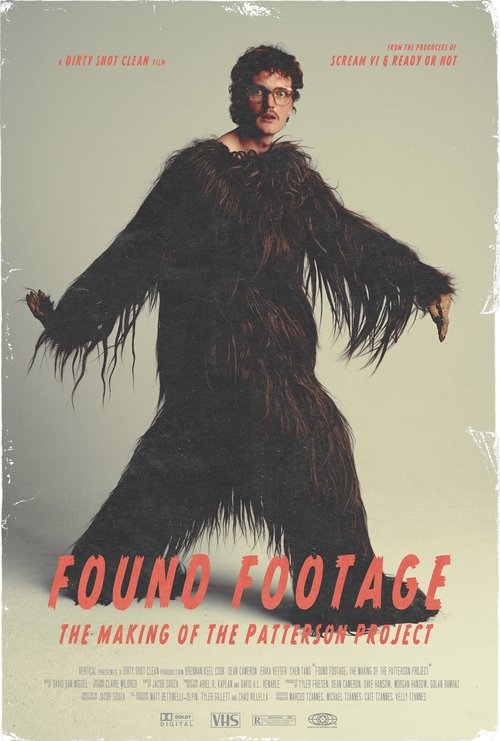
Found Footage: The Making of the Patterson Project - Review
Found Footage: The Making of the Patterson Project - A Meta-Horror Triumph or Just Another Blair Witch Wannabe?
The found footage genre, once a revolutionary force in horror, has become a cinematic minefield. For every Paranormal Activity that strikes gold, there are a dozen shaky-cam duds buried in the bargain bin. So, when Found Footage: The Making of the Patterson Project arrived, promising a meta-take on the subgenre, skepticism was understandable. Could director Anya Sharma, known for her insightful documentaries, successfully navigate the often-clichéd waters of found footage horror, or would this be another case of style over substance? Thankfully, the answer is a resounding, albeit nuanced, yes. Sharma delivers a film that is both genuinely terrifying and surprisingly hilarious, a testament to her directorial vision and the strength of her ensemble cast.
The Plot: Layers Upon Layers of Reality (or Unreality?)
The film unfolds as a documentary within a film. A renowned documentary crew, led by the seasoned filmmaker David Miller (played with weary gravitas by veteran actor James Monroe), follows the ambitious, if slightly delusional, young director, Ethan Patterson (the breakout performance of newcomer Liam O’Connell). Ethan is determined to create the “ultimate” found footage horror film, one so realistic and terrifying that it will redefine the genre. His subject: a remote cabin in the woods rumored to be haunted by a malevolent entity.
As the documentary crew chronicles Ethan's increasingly obsessive and chaotic filmmaking process, the lines between reality and fiction begin to blur. Ethan pushes his cast and crew to their limits, demanding authenticity at the expense of their sanity (and, potentially, their lives). The documentary footage interweaves with the "found footage" Ethan is capturing, creating a disorienting and unsettling viewing experience. We see Ethan's meticulous planning, his desperate attempts to manufacture scares, and his gradual descent into madness as he becomes convinced that the cabin is genuinely haunted.
The brilliance of the plot lies in its self-awareness. Sharma cleverly subverts the tropes of both the found footage and documentary genres. The documentary crew, initially skeptical of Ethan's project, slowly become entangled in his increasingly bizarre reality. David Miller, in particular, undergoes a compelling character arc, transitioning from detached observer to concerned participant, grappling with the ethical implications of documenting Ethan's unraveling. The film constantly questions the nature of truth and perception, leaving the audience to wonder what is staged, what is real, and what is simply the product of Ethan's fevered imagination.
Characters: More Than Just Scream Queens and Jocks
The characters in Found Footage: The Making of the Patterson Project are surprisingly well-developed for a film of this nature. Ethan Patterson, as the central figure, is a fascinating study in ambition, delusion, and self-destruction. Liam O'Connell imbues him with a manic energy that is both captivating and unsettling. He perfectly captures Ethan's youthful arrogance and his growing desperation as his carefully constructed reality begins to crumble around him.
James Monroe delivers a nuanced performance as David Miller, the documentary filmmaker. He is the film's anchor, providing a grounded perspective amidst the chaos. His internal conflict between professional detachment and human empathy is palpable, and his growing concern for Ethan's well-being adds a layer of emotional depth to the film.
The supporting cast, playing Ethan's actors and the rest of the documentary crew, are equally strong. They are not merely cannon fodder for the horror elements; they are individuals with their own personalities, motivations, and fears. Sarah Chen, as the skeptical and pragmatic sound recordist, provides a much-needed voice of reason, while Mark Johnson, as the eager but inexperienced cameraman, embodies the audience's initial fascination with Ethan's project. Even the actors within Ethan's "found footage" film are given enough screen time to establish themselves as more than just scream queens and jocks, making their eventual fates all the more impactful.
Direction: A Masterclass in Meta-Narrative
Anya Sharma's direction is the film's greatest strength. She masterfully blends the aesthetics of documentary filmmaking with the shaky-cam conventions of found footage horror. The seamless transitions between the documentary footage and Ethan's "found footage" create a sense of disorientation and unease, blurring the lines between what is real and what is staged.
Sharma's attention to detail is remarkable. She uses subtle visual cues and sound design to create a growing sense of dread. The camera lingers on seemingly innocuous objects, amplifying their unsettling potential. The soundscape is filled with creaks, whispers, and unexplained noises, creating a constant sense of unease. She avoids relying on cheap jump scares, instead opting for a slow-burn approach that builds tension gradually, culminating in a genuinely terrifying climax.
Moreover, Sharma's direction is infused with a sharp wit and a keen understanding of the horror genre. She cleverly subverts expectations, playing with audience perceptions and challenging the conventions of both documentary and found footage filmmaking. The film is filled with meta-commentary on the nature of horror, the ethics of filmmaking, and the dangers of obsession.
Cinematography: Shaky Cam with a Purpose
The cinematography in Found Footage: The Making of the Patterson Project is, unsurprisingly, dominated by the shaky-cam aesthetic. However, unlike many found footage films that use shaky cam as a crutch to mask poor storytelling, Sharma employs it with purpose and precision. The shaky cam is not simply a stylistic choice; it is an integral part of the narrative, reflecting the growing chaos and instability of Ethan's filmmaking process.
The documentary footage, in contrast, is shot with a more steady and professional style, providing a visual counterpoint to the increasingly erratic "found footage." This contrast further emphasizes the blurring lines between reality and fiction. The film also makes effective use of lighting, creating a sense of claustrophobia and unease within the cabin. The darkness is not simply a visual element; it is a metaphor for the growing darkness within Ethan's mind and the malevolent forces that may or may not be lurking in the woods.
Performances: Anchoring the Unreality
As mentioned previously, the performances are uniformly excellent. Liam O'Connell delivers a star-making turn as Ethan Patterson, embodying the character's manic energy and descent into madness with remarkable conviction. James Monroe provides a grounded and empathetic performance as David Miller, serving as the film's moral compass. The supporting cast is equally strong, bringing a sense of realism and authenticity to their roles. The actors convincingly portray the fear, frustration, and exhaustion of being caught in Ethan's increasingly bizarre and dangerous world. Their naturalistic performances help to ground the film's more outlandish elements, making the horror all the more believable.
Themes and Messages: The Price of Art, the Illusion of Reality
Found Footage: The Making of the Patterson Project explores several complex themes, most notably the price of art, the illusion of reality, and the dangers of obsession. The film questions the lengths to which artists are willing to go in pursuit of their vision and the ethical implications of pushing others to their limits. Ethan's relentless pursuit of the "ultimate" found footage film leads him to exploit his cast and crew, blurring the lines between fiction and reality and ultimately jeopardizing their safety.
The film also examines the subjective nature of reality. The audience is constantly forced to question what is real and what is staged, blurring the lines between the documentary footage and Ethan's "found footage." The film suggests that reality is not a fixed and objective truth, but rather a construct of our own perceptions and beliefs. The more Ethan believes in the reality of the haunting, the more real it seems to become, both to him and to those around him.
Finally, the film serves as a cautionary tale about the dangers of obsession. Ethan's obsession with creating the "ultimate" found footage film consumes him, leading him down a path of madness and self-destruction. The film suggests that unchecked ambition can be a destructive force, blinding us to the consequences of our actions and leading us to sacrifice our own well-being and the well-being of others.
Comparison to Similar Films and Previous Works
Found Footage: The Making of the Patterson Project inevitably draws comparisons to other meta-horror films, such as Wes Craven's New Nightmare and Behind the Mask: The Rise of Leslie Vernon. However, Sharma's film distinguishes itself through its unique blend of documentary and found footage aesthetics and its nuanced exploration of the themes of reality, perception, and obsession. It also shares thematic similarities with films like Man Bites Dog, which explores the ethics of documenting violence.
Sharma's previous documentaries, such as The Art of Deception and Framing Reality, have explored similar themes of truth, perception, and the manipulation of images. Found Footage: The Making of the Patterson Project can be seen as a natural extension of her previous work, applying her documentary sensibilities to the horror genre. Liam O'Connell's performance can be compared to the early work of Joaquin Phoenix, showcasing a raw intensity and vulnerability. James Monroe, known for his roles in classic dramas, brings a gravitas to the film that is reminiscent of actors like Gene Hackman, adding a layer of credibility to the often-farcical proceedings.
Positive Aspects
- Clever and original premise
- Masterful direction by Anya Sharma
- Strong performances from the entire cast, particularly Liam O'Connell and James Monroe
- Effective use of shaky cam and sound design to create a sense of dread
- Thought-provoking exploration of themes of reality, perception, and obsession
- Seamless blending of documentary and found footage aesthetics
- Sharp wit and meta-commentary on the horror genre
Constructive Criticism
- The pacing could be slightly tighter in the second act
- Some viewers may find the shaky cam disorienting or nauseating
- The ending, while effective, may leave some viewers wanting more closure
- The film's meta-commentary may be too self-aware for some audiences
Conclusion
Found Footage: The Making of the Patterson Project is a clever, original, and genuinely terrifying film that subverts the conventions of both the found footage and documentary genres. Anya Sharma has crafted a masterful meta-narrative that explores the themes of reality, perception, and obsession with intelligence and wit. The performances are excellent, and the film's unique blend of documentary and found footage aesthetics creates a disorienting and unsettling viewing experience. While the pacing could be slightly tighter and the ending may leave some viewers wanting more closure, these are minor quibbles in an otherwise exceptional film. If you're a fan of horror, documentaries, or meta-narratives, Found Footage: The Making of the Patterson Project is a must-see. It's a film that will stay with you long after the credits roll, prompting you to question the nature of reality and the power of belief.