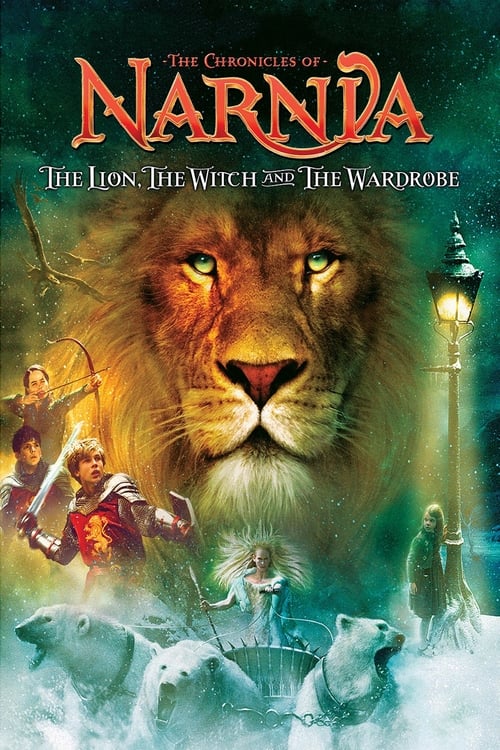
The Chronicles of Narnia: The Lion, the Witch and the Wardrobe - Review
A Journey Through the Wardrobe: A Review of "The Chronicles of Narnia: The Lion, the Witch and the Wardrobe"
Step into a world of talking animals, mythical creatures, and epic battles – a world conjured from the beloved pages of C.S. Lewis's classic novel. "The Chronicles of Narnia: The Lion, the Witch and the Wardrobe," released in 2005, isn't just a film; it's an invitation. An invitation to rediscover the magic of childhood, the power of belief, and the eternal struggle between good and evil. But does this cinematic adaptation truly capture the spirit of Lewis's work, or does it fall short of the fantastical heights it aims for? Let's journey through the wardrobe and find out.
Plot: A Timeless Tale of Sacrifice and Redemption
The film follows the Pevensie siblings – Peter, Susan, Edmund, and Lucy – as they are evacuated from London during the Blitz of World War II. Sent to live in the sprawling country estate of the enigmatic Professor Kirke, they stumble upon an ancient wardrobe that serves as a portal to the magical land of Narnia. Once a vibrant and joyous realm, Narnia is now gripped by an endless winter under the tyrannical rule of the White Witch, Jadis. Lucy, the youngest, is the first to discover Narnia and befriends the faun Mr. Tumnus, who reveals the Witch's oppressive reign.
As the other siblings enter Narnia, they become entangled in the prophecy that foretells the arrival of two Sons of Adam and two Daughters of Eve who will overthrow the White Witch and restore balance to the land. Edmund, swayed by the Witch's promises of power and Turkish Delight, betrays his siblings and aligns himself with her. This act of treachery sets in motion a chain of events that leads to Aslan, the majestic lion and rightful ruler of Narnia, sacrificing himself to save Edmund from the Witch's clutches. Aslan's resurrection and the subsequent battle against the White Witch form the climax of the film, culminating in the Pevensie children fulfilling the prophecy and becoming the Kings and Queens of Narnia.
The film largely adheres to the source material, though some minor details are altered or omitted for pacing and narrative clarity. The plot is relatively straightforward, making it accessible to a wide audience, particularly children. However, this simplicity can also be seen as a weakness, as it sacrifices some of the novel's deeper philosophical and theological undertones.
Characters: From Innocence to Kingship
The success of any adaptation hinges on the portrayal of its characters. "The Lion, the Witch and the Wardrobe" boasts a cast of memorable characters, each with their own unique strengths and flaws.
- Lucy Pevensie (Georgie Henley): Henley delivers a charming and believable performance as Lucy, the first to believe in Narnia and the most compassionate of the siblings. Her innocence and unwavering faith in Aslan are the heart of the film.
- Edmund Pevensie (Skandar Keynes): Keynes portrays Edmund's internal conflict between loyalty and temptation effectively. His journey from a selfish and resentful boy to a redeemed hero is one of the most compelling arcs in the film.
- Susan Pevensie (Anna Popplewell): Susan is depicted as the pragmatic and cautious sister. Popplewell's performance captures her intelligence and her struggle to reconcile logic with the magic of Narnia.
- Peter Pevensie (William Moseley): Peter, the eldest, shoulders the responsibility of protecting his siblings. Moseley embodies Peter's growth from a protective older brother to a courageous and decisive leader.
- Aslan (Liam Neeson): Neeson's voice work as Aslan is simply magnificent. He imbues the Great Lion with a sense of wisdom, power, and profound compassion. Aslan is the moral compass of the story, and Neeson's performance perfectly captures his benevolent authority.
- The White Witch, Jadis (Tilda Swinton): Swinton's portrayal of the White Witch is chilling and iconic. She embodies the coldness and cruelty of Jadis, creating a truly formidable and terrifying antagonist. Her regal bearing and icy demeanor make her a memorable villain.
- Mr. Tumnus (James McAvoy): McAvoy brings a warmth and vulnerability to the role of Mr. Tumnus, the faun who befriends Lucy. His internal struggle between loyalty to the White Witch and his growing affection for Lucy is poignantly portrayed.
While the performances are generally strong, some critics have noted that the Pevensie children, particularly Susan and Peter, can come across as somewhat bland compared to the more dynamic characters of Lucy, Edmund, Aslan, and the White Witch. This may be due to the film's focus on Edmund's redemption arc and Lucy's unwavering faith, leaving less screen time for the development of the other siblings.
Direction: Capturing the Magic of Narnia
Directed by Andrew Adamson, known for his work on the "Shrek" films, "The Lion, the Witch and the Wardrobe" represents a departure from his previous animated fare. Adamson successfully translates the fantastical world of Narnia to the big screen, creating a visually stunning and immersive experience. He balances the lighthearted moments of wonder and discovery with the darker, more intense scenes of conflict and sacrifice.
Adamson's direction is particularly effective in capturing the scale and grandeur of Narnia. The landscapes are breathtaking, and the visual effects bring the mythical creatures to life in a convincing and awe-inspiring way. The battle sequences are well-choreographed and exciting, creating a palpable sense of danger and urgency.
However, some critics have argued that Adamson's direction lacks a certain artistic flair and that the film feels somewhat formulaic in its approach. While he successfully delivers a faithful adaptation, he doesn't necessarily bring a unique or distinctive vision to the material. The film's pacing is also a point of contention, with some feeling that it drags in certain sections and rushes through others.
Cinematography: A Visual Feast
The cinematography, by Donald McAlpine, is one of the film's strongest assets. McAlpine's use of light and shadow creates a visually striking contrast between the frozen wasteland of the White Witch's reign and the vibrant beauty of Narnia after Aslan's return. The snowy landscapes are rendered with a stark beauty, emphasizing the oppressive nature of the eternal winter. The lush forests and rolling hills, once spring arrives, are filled with vibrant colors, symbolizing the restoration of hope and joy.
The camera work is dynamic and engaging, drawing the viewer into the action. The aerial shots of Narnia are particularly impressive, showcasing the vastness and beauty of the land. The close-ups of the characters' faces effectively convey their emotions and internal struggles. McAlpine's cinematography elevates the film beyond a simple fantasy adventure, creating a visually rich and immersive experience.
Themes and Messages: Faith, Sacrifice, and Redemption
"The Lion, the Witch and the Wardrobe" is rich with thematic content, exploring universal themes of good versus evil, faith, sacrifice, redemption, and the power of forgiveness. The film's allegorical nature is evident in its portrayal of Aslan as a Christ-like figure who sacrifices himself to atone for Edmund's sins. His resurrection symbolizes the triumph of good over evil and the promise of eternal life.
The film also emphasizes the importance of courage, loyalty, and standing up for what is right. The Pevensie children, initially ordinary and flawed, rise to the occasion and become heroes, demonstrating the potential for greatness within each of us. Edmund's journey of redemption highlights the possibility of forgiveness and second chances, even after making grave mistakes.
The film's themes of faith and belief are particularly relevant in a modern context. Lucy's unwavering faith in Narnia and Aslan serves as a reminder of the importance of believing in something beyond the tangible and the visible. The film encourages viewers to embrace wonder and imagination, and to never lose sight of the magic that exists in the world around us.
However, the film's overt religious allegory can be a point of contention for some viewers. While the themes of sacrifice and redemption are universal, the specific Christian symbolism may not resonate with all audiences. Some critics have argued that the film's religious undertones are too heavy-handed and detract from the overall storytelling.
Comparison to Other Films and Works
"The Lion, the Witch and the Wardrobe" inevitably draws comparisons to other fantasy films, particularly the "Harry Potter" series and "The Lord of the Rings" trilogy. While it shares some similarities with these films, such as its focus on young heroes and its fantastical setting, it also possesses its own unique identity.
Unlike the "Harry Potter" films, which delve into complex themes of prejudice and social injustice, "The Lion, the Witch and the Wardrobe" is more focused on moral and spiritual themes. While "The Lord of the Rings" is a sprawling epic with intricate world-building, "The Lion, the Witch and the Wardrobe" is a more intimate and character-driven story.
Andrew Adamson's previous work on the "Shrek" films is evident in his ability to create visually appealing and entertaining films for a wide audience. However, "The Lion, the Witch and the Wardrobe" lacks the satirical wit and self-aware humor of the "Shrek" franchise. While Adamson successfully adapts the source material, he doesn't necessarily bring a unique or distinctive style to the film.
Positive Aspects
- Faithful adaptation of C.S. Lewis's beloved novel.
- Strong performances from the cast, particularly Georgie Henley, Skandar Keynes, Liam Neeson, and Tilda Swinton.
- Visually stunning cinematography and special effects.
- Exploration of universal themes of faith, sacrifice, and redemption.
- Engaging and entertaining for audiences of all ages.
Constructive Criticism
- The film's pacing can be uneven at times.
- Some of the Pevensie children, particularly Susan and Peter, are underdeveloped.
- The overt religious allegory may not resonate with all audiences.
- Andrew Adamson's direction lacks a certain artistic flair.
- The film's simplicity sacrifices some of the novel's deeper philosophical undertones.
Conclusion
"The Chronicles of Narnia: The Lion, the Witch and the Wardrobe" is a visually stunning and emotionally resonant adaptation of C.S. Lewis's classic novel. While it may not be a perfect film, it successfully captures the magic and wonder of Narnia, and it explores universal themes of faith, sacrifice, and redemption in a compelling and accessible way. The strong performances from the cast, the breathtaking cinematography, and the engaging storyline make it a worthwhile cinematic experience for audiences of all ages. Despite some minor flaws, it remains a testament to the enduring power of Lewis's storytelling and a worthy addition to the fantasy film genre.