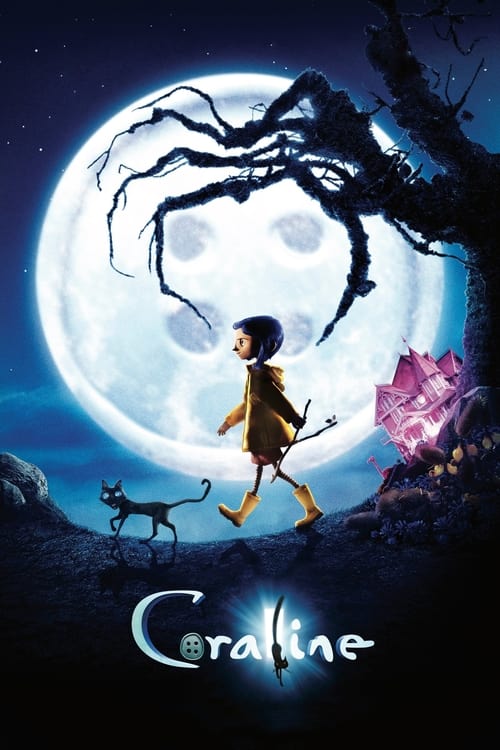
Coraline - Review
Coraline: A Button-Eyed Masterpiece That Still Haunts
Imagine a world just a little bit brighter, a little bit more attentive, a little bit...off. That's the world Coraline Jones stumbles into in Henry Selick's 2009 stop-motion marvel, "Coraline." More than just a children's movie, it's a visually stunning, emotionally resonant, and genuinely unsettling exploration of identity, family, and the dangers of idealized fantasies. Released on February 5th, 2009, "Coraline" hasn't just aged well; it's become a modern classic, a testament to the power of stop-motion animation and the enduring appeal of a well-crafted, slightly terrifying story.
Plot: A Journey Through the Looking Glass (With Buttons)
The film opens with Coraline (voiced by Dakota Fanning), a precocious and adventurous 11-year-old, moving with her parents into the Pink Palace Apartments, a sprawling, somewhat dilapidated house in the middle of nowhere. Her parents, workaholic writers preoccupied with their gardening catalog, are largely neglectful, leaving Coraline feeling bored and ignored. This neglect fuels her exploration of the house, leading her to discover a small, locked door. Upon finding the key and opening it, she finds a bricked-up wall. That night, however, the wall is gone, replaced by a tunnel leading to an alternate world – the Other World.
In this Other World, Coraline finds her Other Mother (voiced by Teri Hatcher) and Other Father (also voiced by John Hodgman). They are idealized versions of her parents: attentive, playful, and endlessly catering to her desires. The catch? They have buttons for eyes. At first, Coraline is captivated by this seemingly perfect world, with its vibrant colors, delicious food, and endless entertainment. The Other World residents, including the eccentric Miss Spink and Miss Forcible and the enigmatic Mr. Bobinsky, are also more engaging and exciting than their real-world counterparts. However, the Other Mother soon reveals her true intentions: she wants Coraline to stay forever, and to do so, Coraline must sew buttons onto her own eyes.
Horrified, Coraline refuses and attempts to return to her own world. But the Other Mother, revealed to be a malevolent creature known as the Beldam, traps her. Coraline escapes back to her own world, only to find her real parents missing. Realizing the Beldam has taken them, Coraline returns to the Other World to rescue them and the souls of three children the Beldam has previously trapped. What follows is a tense and thrilling battle of wits and courage, as Coraline uses her resourcefulness and newfound appreciation for her imperfect real life to outsmart the Beldam and save her family.
Characters: More Than Just Animated Figures
The strength of "Coraline" lies not only in its visuals but also in its well-developed and relatable characters:
- Coraline Jones: A resourceful and independent young girl who craves attention and excitement. She's not always likable, prone to complaining and sulking, but her flaws make her relatable. Her journey is about learning to appreciate what she has and finding the courage to face her fears.
- The Beldam (Other Mother): A terrifying and manipulative creature who preys on children's desires for perfection. Her initial charm and attentiveness mask a sinister hunger for control and possession. She represents the dangers of seeking instant gratification and the seductive allure of idealized fantasies.
- Mel and Charlie Jones (Coraline's Parents): While initially perceived as neglectful, they are ultimately shown to be loving and hardworking parents who are simply struggling to balance their work and family life. Their imperfections are what make them real and ultimately more valuable than the Beldam's manufactured perfection.
- Wybie Lovat: A quirky and somewhat awkward neighbor boy who serves as Coraline's initial guide to the Pink Palace Apartments. He's a loyal and supportive friend, even if Coraline initially dismisses him. His grandmother owns the Pink Palace and harbors a dark secret connected to the Beldam.
- The Cat: A mysterious and sardonic black cat who can travel between the real world and the Other World. He acts as Coraline's guide and advisor, offering cryptic but helpful advice. He represents a sense of independence and perspective.
- Miss Spink and Miss Forcible: Two retired actresses who live downstairs from Coraline. They are eccentric and superstitious, offering Coraline cryptic warnings about the dangers ahead.
- Mr. Bobinsky: A Russian acrobat who lives upstairs from Coraline. He claims to be training mice for a circus, but his pronouncements are often nonsensical and unsettling.
Direction: Henry Selick's Stop-Motion Vision
Henry Selick, the director of "The Nightmare Before Christmas" and "James and the Giant Peach," brings his signature style to "Coraline." His direction is masterful, creating a visually stunning and emotionally engaging experience. He understands the power of stop-motion animation to create a world that is both fantastical and grounded, whimsical and terrifying. He uses the medium to its full potential, crafting intricate sets, expressive character designs, and fluid movements that bring the story to life.
Selick's attention to detail is evident in every frame. The textures of the fabrics, the dust motes in the air, the minute expressions on the characters' faces – all contribute to the film's immersive and captivating atmosphere. He also expertly balances the film's light and dark elements, creating a world that is both beautiful and unsettling. The vibrant colors of the Other World initially draw the viewer in, but as the story progresses, the colors become more saturated and menacing, reflecting the Beldam's growing control.
Selick also deserves credit for his casting choices. The voice actors perfectly embody their characters, bringing nuance and depth to their performances. Dakota Fanning's portrayal of Coraline is particularly noteworthy, capturing the character's intelligence, curiosity, and vulnerability. Teri Hatcher's performance as the Beldam is equally impressive, conveying both the character's initial charm and her ultimate malevolence.
Cinematography: A Stop-Motion Spectacle
The cinematography in "Coraline" is breathtaking. The film is a visual feast, with its intricate sets, vibrant colors, and dynamic camera angles. The stop-motion animation is incredibly fluid and expressive, bringing the characters and the world to life in a way that feels both fantastical and real.
The use of 3D in the film is particularly effective, adding depth and dimension to the already stunning visuals. The 3D effects are not just gimmicks; they are used to enhance the storytelling and create a more immersive experience for the viewer. The scenes in the Other World are particularly enhanced by the 3D, making the world feel even more vibrant and alluring. The scenes in the real world, on the other hand, are often shot in a more subdued style, emphasizing the contrast between the two worlds.
The lighting in "Coraline" is also expertly crafted. The use of light and shadow creates a sense of atmosphere and suspense, particularly in the scenes in the Other World. The Beldam's lair is often shrouded in darkness, with only glimpses of her glowing button eyes visible. This creates a sense of dread and unease, making her all the more terrifying.
Performances: Voice Acting at its Finest
The voice acting in "Coraline" is exceptional. The cast is perfectly chosen, and each actor brings their character to life with nuance and depth. Dakota Fanning delivers a standout performance as Coraline, capturing the character's intelligence, curiosity, and vulnerability. Her voice is expressive and engaging, drawing the viewer into Coraline's world.
Teri Hatcher is equally impressive as the Beldam. She perfectly captures the character's initial charm and warmth, making her all the more terrifying when her true nature is revealed. Her voice is smooth and seductive, but with an underlying hint of menace. John Hodgman provides both the voice of Coraline's father and the Other Father. He effectively portrays the contrast between the real father's preoccupied nature and the Other Father's exaggerated attentiveness.
The supporting cast is also excellent. Jennifer Saunders and Dawn French are hilarious as Miss Spink and Miss Forcible, bringing their eccentric characters to life with wit and charm. Keith David is perfectly cast as the Cat, delivering his lines with a sardonic and knowing tone. Robert Bailey Jr. provides a sympathetic voice to Wybie, making the character more than just a quirky sidekick.
Themes and Messages: A Deeper Look
"Coraline" is a film that is rich in themes and messages. At its core, it is a story about the importance of appreciating what you have and the dangers of seeking perfection. Coraline's initial dissatisfaction with her life leads her to seek out the Other World, where everything seems perfect. However, she soon learns that perfection is an illusion and that true happiness comes from accepting and appreciating the imperfections of real life.
The film also explores the themes of family, identity, and courage. Coraline's journey is about learning to value her family, even though they are not perfect. She learns to appreciate their love and support, and she ultimately finds the courage to stand up to the Beldam and save them. The film also touches on the importance of being true to yourself and not allowing others to define who you are.
Another significant theme is the danger of unchecked desire. The Beldam preys on the desires of children, promising them everything they want. However, her promises are hollow, and her true intention is to trap them and possess their souls. The film serves as a cautionary tale about the dangers of seeking instant gratification and the importance of being wary of those who offer you everything you want.
Comparison to Other Films and Works
"Coraline" shares thematic and stylistic similarities with other works, particularly those by Henry Selick and Neil Gaiman, the author of the original novella.
- "The Nightmare Before Christmas" (Directed by Henry Selick, Story by Tim Burton): Like "Coraline," this film uses stop-motion animation to create a fantastical and slightly macabre world. Both films explore themes of identity and belonging, and both feature protagonists who are searching for something more. However, "The Nightmare Before Christmas" is more lighthearted and comedic than "Coraline," which is darker and more suspenseful.
- "James and the Giant Peach" (Directed by Henry Selick): Another stop-motion film directed by Selick, "James and the Giant Peach" shares a similar sense of whimsy and adventure with "Coraline." However, "James and the Giant Peach" is more focused on childhood innocence and imagination, while "Coraline" delves into darker themes of manipulation and control.
- "Pan's Labyrinth" (Directed by Guillermo del Toro): While not stop-motion, "Pan's Labyrinth" shares a similar tone and atmosphere with "Coraline." Both films explore the power of imagination and the dangers of escapism. Both also feature young protagonists who are forced to confront dark and terrifying realities.
- Other Works by Neil Gaiman: "Coraline" is consistent with Gaiman's other works, such as "The Sandman" and "American Gods," in its exploration of dark fantasy, mythology, and the power of storytelling. Gaiman's stories often feature complex characters and morally ambiguous situations, challenging readers and viewers to think critically about the world around them.
Positive Aspects: A Triumph of Animation and Storytelling
"Coraline" is a film that excels on multiple levels. Its stop-motion animation is breathtaking, its story is engaging and thought-provoking, and its characters are well-developed and relatable. The film's visual style is unique and memorable, and its use of 3D is particularly effective. The voice acting is superb, and the film's score is haunting and evocative.
The film's themes and messages are also particularly relevant in today's world. Its exploration of the dangers of seeking perfection and the importance of appreciating what you have is a message that resonates with audiences of all ages. Its depiction of family dynamics is also realistic and relatable, and its portrayal of a strong and independent female protagonist is empowering.
Most importantly, "Coraline" is a film that stays with you long after the credits roll. Its imagery is haunting and memorable, and its story is one that you will continue to think about and discuss for years to come.
Constructive Criticism: Minor Imperfections in a Near-Perfect Film
While "Coraline" is a masterpiece, it is not without its minor flaws. Some viewers may find the film's pacing to be a bit slow at times, particularly in the first act. The film's dark and unsettling tone may also be off-putting to some younger viewers, although it is ultimately a story about courage and resilience. The character of Wybie, while ultimately supportive, could have been given more depth and agency.
Additionally, while the 3D is generally well-executed, there are a few moments where it feels unnecessary or distracting. However, these are minor quibbles in an otherwise exceptional film.
Conclusion: A Must-See for Animation and Fantasy Fans
"Coraline" is a visually stunning, emotionally resonant, and genuinely unsettling masterpiece of stop-motion animation. Henry Selick has crafted a film that is both entertaining and thought-provoking, and Neil Gaiman's story provides a rich and complex foundation. The film's characters are well-developed and relatable, its themes are relevant and timely, and its overall impact is lasting. While the dark themes might not be suitable for all young children, "Coraline" is a must-see for animation fans, fantasy enthusiasts, and anyone who appreciates a well-crafted and thought-provoking story.
Rating: 9.5/10