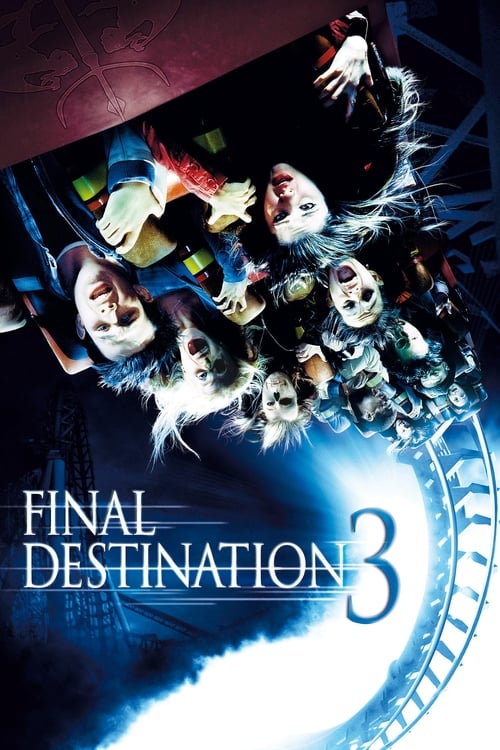
Final Destination 3 - Review
Final Destination 3: A Rollercoaster of Gore and Premonition
The Final Destination franchise, known for its elaborate and gruesome death sequences, reached its third iteration with Final Destination 3, released in 2006. While some sequels struggle to recapture the magic of the original, Final Destination 3 attempts to reignite the formula with a fresh cast, a new set of elaborate accidents, and a slightly more interactive approach. Does it succeed in delivering the chills and thrills that fans have come to expect? Let's buckle up and delve into the ride.
Plot: Dodging Death's Design
Final Destination 3 opens with high school senior Wendy Christensen (Mary Elizabeth Winstead) celebrating her graduation with her friends at an amusement park. As they board the "Devil's Flight" rollercoaster, Wendy experiences a vivid and terrifying premonition of a catastrophic accident that kills everyone on the ride. Overcome with fear, she manages to convince a few others to disembark, narrowly averting the disaster… or so they think.
The rollercoaster crashes as Wendy predicted, leaving those who survived the initial accident haunted by the knowledge that they were meant to die. Soon, Death, personified as an unseen force, begins to systematically hunt down the survivors in a series of increasingly bizarre and often comical accidents. Wendy, along with her classmate Kevin Fischer (Ryan Merriman), takes on the daunting task of deciphering the clues hidden within photographs taken before the accident, hoping to prevent the inevitable deaths of themselves and their friends.
The plot largely mirrors the structure of the previous films. A premonition, a near-miss disaster, and then Death working its way through the survivors in a preordained order. However, Final Destination 3 introduces a slightly more proactive element. The photographs provide clues that, if interpreted correctly, might allow the characters to alter their fate. This adds a layer of mystery and engagement, though it doesn't fundamentally change the core formula. The plot, while predictable in its overall structure, relies heavily on the creative and often over-the-top death sequences to maintain audience interest.
Characters: Familiar Archetypes, Fresh Faces
The characters in Final Destination 3, while not particularly deep or complex, serve their purpose within the context of the horror genre. Wendy Christensen, played by Mary Elizabeth Winstead, is the central protagonist, burdened with the premonition and driven to protect her friends. She's a believable and relatable character, effectively portraying the fear and desperation of someone facing such an extraordinary situation. Winstead brings a sense of vulnerability and determination to the role, making her a compelling lead.
Kevin Fischer, played by Ryan Merriman, serves as Wendy's sidekick and romantic interest. He's the knowledgeable one, familiar with the events of the first film (a nice touch for franchise continuity) and provides support and research to help Wendy understand and combat Death's design. While his character is somewhat less developed than Wendy's, Merriman delivers a solid performance and contributes to the overall dynamic of the duo.
The supporting characters, including Erin Ulmer (Alexz Johnson), Ian McKinley (Kris Lemche), Frankie Cheeks (Sam Easton), Ashley Freund (Chelan Simmons), and Ashlyn Halperin (Crystal Lowe), largely fulfill stereotypical horror movie roles. They are primarily defined by their eventual deaths and serve as fodder for Death's elaborate traps. While some characters, like Ian with his conspiracy theories, attempt to add some personality, they ultimately remain somewhat one-dimensional. However, this isn't necessarily a flaw, as the focus remains on the inventive death sequences and the central protagonists' struggle against fate.
Direction: James Wong's Return to the Franchise
Final Destination 3 marks James Wong's return to the franchise after directing the original Final Destination. Wong's direction emphasizes suspense and visual flair, particularly in the death sequences. He masterfully builds tension, teasing the audience with potential hazards and cleverly employing foreshadowing to create a sense of impending doom. The camera work is dynamic, often focusing on seemingly innocuous objects that later become instruments of death. This technique effectively heightens the suspense and keeps the audience on the edge of their seats.
Wong also utilizes visual effects and CGI to enhance the impact of the death scenes. While some of the effects might appear slightly dated by today's standards, they were generally effective in creating gruesome and memorable moments. The film's pacing is well-managed, balancing moments of intense horror with quieter scenes of character development and investigation. Wong successfully maintains a consistent tone throughout the film, blending elements of horror, suspense, and dark humor.
However, the direction also suffers from some of the common pitfalls of the horror genre. The reliance on jump scares, while effective in some instances, can become predictable and repetitive. Furthermore, the plot's predictability, inherent in the franchise's formula, limits the director's ability to create genuine surprise. Despite these limitations, Wong's direction is competent and contributes significantly to the film's overall entertainment value.
Cinematography: Visual Foreshadowing and Gruesome Detail
The cinematography in Final Destination 3, helmed by Robert McLachlan, plays a crucial role in establishing the film's tone and building suspense. McLachlan effectively uses visual foreshadowing, subtly hinting at future deaths through seemingly insignificant details in the background. These details, often revealed upon closer inspection, create a sense of unease and contribute to the overall atmosphere of dread.
The camera work is dynamic and visually engaging, utilizing a variety of shots and angles to heighten the impact of the death sequences. Close-ups are used to emphasize the characters' fear and pain, while wide shots are employed to showcase the scale of the accidents and the destructive power of Death. The film's color palette is generally muted, with darker tones dominating the visuals, further enhancing the sense of foreboding. However, vibrant colors are occasionally used to create a jarring contrast, particularly in the amusement park setting and during the death scenes.
The lighting is also effectively used to create suspense and highlight the gruesome details of the deaths. Shadows are used to conceal potential threats, while bright light is often used to reveal the shocking aftermath of the accidents. The cinematography effectively captures the film's blend of horror, suspense, and dark humor, contributing significantly to its overall visual appeal.
Performances: Winstead Shines, Supporting Cast Serves
Mary Elizabeth Winstead delivers a standout performance as Wendy Christensen. She effectively portrays the character's vulnerability, fear, and determination, making her a relatable and sympathetic protagonist. Winstead's ability to convey a wide range of emotions, from terror to grief, makes her a compelling lead and anchors the film.
Ryan Merriman provides solid support as Kevin Fischer. While his character is less developed than Wendy's, Merriman delivers a credible performance and effectively portrays Kevin's intelligence and loyalty. The chemistry between Winstead and Merriman is believable, adding a romantic element to the film's otherwise dark and gruesome narrative.
The supporting cast, while largely playing stereotypical horror movie roles, delivers adequate performances. Alexz Johnson, Kris Lemche, Sam Easton, Chelan Simmons, and Crystal Lowe effectively portray their respective characters, contributing to the overall ensemble. However, their performances are primarily defined by their eventual deaths and do not offer significant depth or complexity.
Overall, the performances in Final Destination 3 are competent and contribute to the film's overall entertainment value. Winstead's standout performance elevates the film and makes her a memorable protagonist.
Themes and Messages: Fate, Free Will, and the Inevitability of Death
Final Destination 3, like its predecessors, explores the themes of fate, free will, and the inevitability of death. The film suggests that Death has a preordained plan for everyone and that those who cheat death will ultimately be hunted down and brought back into the fold. This raises questions about whether individuals have control over their own destinies or whether they are simply pawns in a larger cosmic game.
The film also touches upon the idea of survivor's guilt. Wendy and Kevin, having survived the rollercoaster accident, are haunted by the knowledge that they were meant to die and that their friends are now being targeted as a result. This guilt drives them to try and prevent further deaths, but ultimately they are unable to escape Death's design.
Furthermore, Final Destination 3 explores the themes of paranoia and fear. The characters are constantly on edge, anticipating their inevitable deaths and seeing potential threats in everyday objects. This creates a sense of unease and highlights the psychological toll of cheating death. While the film doesn't offer any easy answers to these complex questions, it effectively explores these themes through its thrilling and gruesome narrative.
Comparison to Other Films and Works
Final Destination 3 adheres closely to the formula established by the previous films in the franchise. Like its predecessors, it features a premonition, a near-miss disaster, and then Death systematically hunting down the survivors. However, Final Destination 3 attempts to differentiate itself by introducing the element of photographs as clues to preventing future deaths. This adds a slightly more interactive element to the narrative, but doesn't fundamentally alter the core formula.
Compared to the original Final Destination, Final Destination 3 is arguably more focused on spectacle and gore. The death sequences are more elaborate and visually shocking, catering to a more sensation-seeking audience. However, the original film arguably had a stronger sense of suspense and psychological horror. Compared to Final Destination 2, Final Destination 3 is perhaps slightly less inventive in its death sequences, but benefits from a stronger central protagonist in Mary Elizabeth Winstead.
James Wong's direction in Final Destination 3 is consistent with his work on the original film. He effectively utilizes suspense, visual flair, and dynamic camera work to create a thrilling and engaging experience. However, like other horror sequels, Final Destination 3 struggles to escape the shadow of its predecessors and ultimately relies on familiar tropes and conventions.
Positive Aspects
- Mary Elizabeth Winstead's Performance: Winstead delivers a standout performance as Wendy, making her a compelling and relatable protagonist.
- Creative Death Sequences: The film features a series of elaborate and gruesome death sequences that are both shocking and entertaining.
- Suspenseful Direction: James Wong effectively builds suspense and utilizes visual flair to create a thrilling experience.
- Visual Foreshadowing: The cinematography effectively uses visual foreshadowing to create a sense of unease and impending doom.
- Interactive Element: The introduction of photographs as clues adds a slightly more interactive element to the narrative.
Constructive Criticism
- Predictable Plot: The plot adheres closely to the formula established by the previous films, making it somewhat predictable.
- Stereotypical Characters: The supporting characters are largely stereotypical and lack significant depth or complexity.
- Reliance on Jump Scares: The film relies heavily on jump scares, which can become predictable and repetitive.
- Dated CGI: Some of the visual effects appear slightly dated by today's standards.
- Lack of Subtlety: The film often sacrifices subtlety for spectacle, prioritizing gore over genuine suspense.
Conclusion and Rating
Final Destination 3 delivers exactly what fans of the franchise expect: a rollercoaster of gore, suspense, and inventive death sequences. While the plot is predictable and the characters are largely stereotypical, Mary Elizabeth Winstead's standout performance and James Wong's effective direction elevate the film. The addition of photographs as clues adds a slightly more interactive element, but the core formula remains largely unchanged. Despite its flaws, Final Destination 3 is a solid entry in the franchise and provides a satisfying dose of horror entertainment.
Rating: 7/10