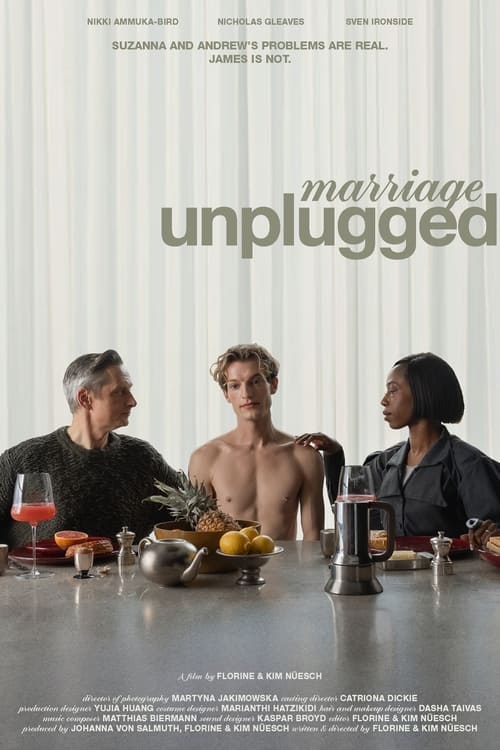
Marriage Unplugged - Review
"Marriage Unplugged": When Artificial Intelligence Exposes Real Flaws
In an era saturated with science fiction exploring the anxieties of artificial intelligence, "Marriage Unplugged," released on October 28, 2024, dares to venture into a more intimate and unsettling territory: the marital bed. Director Anya Sharma, known for her subtle yet impactful dramas, pivots slightly into the realm of speculative fiction, crafting a poignant and often uncomfortable exploration of a marriage on the brink of collapse. The premise – a couple introducing a sex robot into their relationship – might sound sensationalistic, but Sharma elevates it into a nuanced character study, forcing viewers to confront uncomfortable truths about modern relationships, intimacy, and the very definition of love.
Plot: A Threesome of Troubles
The film centers on Suzanna (played with quiet desperation by Maya Rodriguez) and Andrew (a convincingly detached Ethan Bell), a couple whose marriage has become a hollow shell of its former self. Years of unspoken resentments and unmet needs have erected an invisible wall between them. Suzanna, feeling neglected and sexually frustrated, proposes a radical solution: purchasing a state-of-the-art sex robot named James (portrayed with unnerving perfection by newcomer Kai Ito). She hopes James will reignite the spark in their relationship, offering a safe outlet for their individual desires and, perhaps, a bridge back to each other. Andrew, initially hesitant but ultimately worn down by Suzanna's persistence and his own sense of inadequacy, reluctantly agrees.
James's arrival throws their already fragile dynamic into chaos. He's programmed to be the ideal partner – attentive, responsive, and endlessly available. However, his very perfection highlights the imperfections in Suzanna and Andrew's interactions. James's unwavering devotion to Suzanna triggers Andrew's insecurities and jealousy. He finds himself competing with a machine that can fulfill his wife's needs without the emotional baggage he carries. Meanwhile, Suzanna begins to question her own desires and motivations. Is she truly seeking intimacy, or is she simply using James as a way to escape the painful realities of her marriage? The film masterfully avoids portraying James as a simple plot device. He evolves from a mere object of desire into a catalyst for self-reflection, forcing Suzanna and Andrew to confront the deep-seated issues they've been avoiding for years.
The plot unfolds with a deliberate pace, allowing the tension to build gradually. There are no sudden twists or dramatic reveals, but rather a slow, agonizing unraveling of Suzanna and Andrew's relationship. The film culminates in a powerful and ambiguous ending, leaving the audience to ponder the future of their marriage and the implications of integrating artificial intelligence into such a deeply personal aspect of human life.
Characters: Flawed Humanity vs. Perfect Artifice
The strength of "Marriage Unplugged" lies in its well-developed and relatable characters. Suzanna is a complex and sympathetic figure, torn between her desire for connection and her fear of vulnerability. Rodriguez delivers a nuanced performance, conveying Suzanna's inner turmoil with subtle gestures and heartbreaking glances. She's not simply a victim of a failing marriage; she's an active participant, making choices that are both understandable and deeply flawed.
Andrew, on the other hand, is a more withdrawn and emotionally stunted character. Bell captures Andrew's quiet resentment and underlying insecurity with remarkable accuracy. He's a man who struggles to express his emotions, preferring to retreat into himself rather than confront the challenges in his marriage. While his actions are often frustrating, the film allows us to understand the root of his behavior, making him a surprisingly sympathetic figure.
Kai Ito's portrayal of James is nothing short of remarkable. He manages to imbue the robot with a sense of both artificiality and unsettling humanity. His movements are precise and deliberate, yet there's a subtle hint of something more beneath the surface. Ito's performance is crucial to the film's success, as he must convince the audience that James is both a machine and a believable romantic rival. He achieves this with a quiet intensity, making James a truly unforgettable character. Crucially, the film avoids the trope of the robot "developing feelings." James remains true to his programming, highlighting the absence of genuine connection in Suzanna and Andrew's relationship. His perfect performance of intimacy only serves to underscore their own inability to connect on a deeper level.
Direction: A Masterclass in Subtlety
Anya Sharma's direction is masterful in its subtlety. She avoids the flashy visuals and over-the-top melodrama that often plague science fiction films. Instead, she focuses on creating a sense of intimacy and realism, allowing the characters' emotions to drive the narrative. Sharma's use of close-ups is particularly effective, capturing the nuances of the actors' performances and drawing the audience into their emotional world. She also employs long takes to build tension and create a sense of unease. The film's pacing is deliberate, allowing the audience to fully absorb the characters' struggles and the complexities of their situation.
Sharma's direction is also notable for its restraint. She avoids explicit depictions of sex, focusing instead on the emotional and psychological impact of James's presence on Suzanna and Andrew's marriage. This allows the film to explore the themes of intimacy and connection in a more nuanced and thought-provoking way. She trusts the audience to fill in the blanks, leaving room for interpretation and encouraging viewers to reflect on their own relationships and desires.
Cinematography: Painting with Light and Shadow
The cinematography, helmed by veteran Darius Khondji, is a crucial element in creating the film's atmosphere. Khondji employs a muted color palette, reflecting the emotional stagnation of Suzanna and Andrew's marriage. The lighting is often dim and subdued, creating a sense of claustrophobia and isolation. He uses shadows to emphasize the characters' inner turmoil and to create a sense of unease. In contrast, James is often bathed in a soft, artificial light, highlighting his otherworldly nature. The visual contrast between James and the human characters underscores the film's central theme: the tension between artificial perfection and flawed humanity.
Khondji's use of composition is also noteworthy. He often frames Suzanna and Andrew in separate shots, emphasizing the distance between them. When they are together, he often places them on opposite sides of the frame, creating a sense of visual imbalance. These subtle visual cues reinforce the film's themes of disconnection and alienation. The camera work is deliberate and unobtrusive, never calling attention to itself but always serving to enhance the story.
Performances: A Trio of Excellence
As mentioned previously, the performances in "Marriage Unplugged" are exceptional across the board. Maya Rodriguez delivers a career-defining performance as Suzanna, capturing the character's vulnerability and desperation with remarkable authenticity. Ethan Bell is equally impressive as Andrew, conveying the character's quiet resentment and underlying insecurity with subtle gestures and nuanced expressions. Kai Ito's portrayal of James is a revelation. He manages to create a character who is both artificial and surprisingly human, challenging our perceptions of what it means to be alive and to love.
The chemistry between the three actors is palpable, even in the scenes where they are at odds with each other. They create a believable and compelling dynamic, drawing the audience into their complex and often uncomfortable relationship. The actors' commitment to their roles is evident in every scene, making "Marriage Unplugged" a truly unforgettable cinematic experience.
Themes and Messages: Unpacking Intimacy in the Age of AI
"Marriage Unplugged" delves into a multitude of complex themes, chief among them the evolving definition of intimacy in a technologically advanced world. The film questions whether genuine connection can be replicated or replaced by artificial intelligence. It explores the ways in which technology can both enhance and erode our relationships, highlighting the importance of communication, vulnerability, and emotional honesty. The film also touches on themes of societal expectations around marriage, gender roles, and the pursuit of happiness. Suzanna's desire for James can be interpreted as a rebellion against the traditional roles expected of her as a wife, while Andrew's insecurity stems from his inability to fulfill the expectations of a "perfect" husband.
The film also raises important questions about the ethics of artificial intelligence. While James is presented as a tool for enhancing intimacy, his very existence raises concerns about the potential for exploitation and the blurring of lines between human and machine. The film doesn't offer easy answers to these questions, but it encourages viewers to consider the ethical implications of integrating AI into our personal lives.
Ultimately, "Marriage Unplugged" is a cautionary tale about the dangers of neglecting our relationships and the importance of addressing underlying issues before they fester. The film suggests that technology can be a useful tool, but it cannot replace the need for genuine human connection. It reminds us that true intimacy requires vulnerability, empathy, and a willingness to confront our own flaws and insecurities.
Comparisons: Echoes of the Past, Whispers of the Future
"Marriage Unplugged" shares thematic similarities with films like "Her" (2013), which explored the complexities of human-AI relationships, and "Ex Machina" (2014), which delved into the ethical implications of artificial intelligence. However, "Marriage Unplugged" distinguishes itself by focusing specifically on the impact of AI on marital relationships. While "Her" explored the potential for romantic connection with an AI entity, "Marriage Unplugged" examines the ways in which AI can expose the flaws and vulnerabilities within existing relationships.
Anya Sharma's previous work, particularly her critically acclaimed drama "The Silent Echo" (2018), also explored themes of communication breakdown and emotional isolation within families. "Marriage Unplugged" can be seen as a natural progression of these themes, albeit within a science fiction context. Sharma's signature style of subtle character development and nuanced storytelling is evident in both films, making her a unique and compelling voice in contemporary cinema.
Positive Aspects: A Thought-Provoking and Compelling Experience
"Marriage Unplugged" is a triumph of intelligent and nuanced storytelling. The film's strengths lie in its well-developed characters, its thought-provoking themes, and its masterful direction. The performances are exceptional across the board, and the cinematography is both beautiful and evocative. The film avoids the pitfalls of sensationalism, instead focusing on creating a realistic and relatable portrayal of a marriage on the brink of collapse. It's a film that stays with you long after the credits roll, prompting reflection on your own relationships and the role of technology in our lives.
Constructive Criticism: Minor Imperfections in a Near-Perfect Film
While "Marriage Unplugged" is a remarkable film, it's not without its minor imperfections. The film's pacing, while deliberate, may feel slow for some viewers. The lack of explicit explanations for the characters' motivations could also be frustrating for those who prefer a more straightforward narrative. Additionally, the ending, while powerful, is somewhat ambiguous, leaving the audience to draw their own conclusions about the future of Suzanna and Andrew's marriage. While this ambiguity is intentional, it may not satisfy all viewers. Finally, the film's focus on a relatively privileged couple might limit its relatability for some audiences. Exploring the socio-economic implications of AI in relationships could have added another layer of depth to the narrative.
Conclusion: A Must-See for Thoughtful Filmgoers
"Marriage Unplugged" is a captivating and thought-provoking film that deserves to be seen and discussed. Anya Sharma has crafted a masterful exploration of intimacy, technology, and the complexities of modern relationships. The film's exceptional performances, stunning cinematography, and nuanced storytelling make it a truly unforgettable cinematic experience. Despite its minor imperfections, "Marriage Unplugged" is a must-see for anyone interested in intelligent and engaging science fiction.