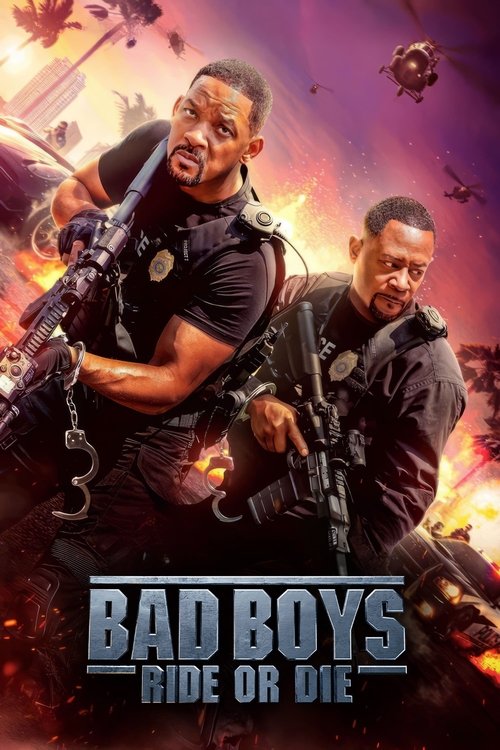
Bad Boys: Ride or Die - Review
Bad Boys: Ride or Die - A Review: Is Miami Still Burning?
The Bad Boys franchise, a cornerstone of action-comedy cinema, returns with Ride or Die, promising more of the explosive action, rapid-fire banter, and bromance that have defined Mike Lowrey (Will Smith) and Marcus Burnett's (Martin Lawrence) partnership for nearly three decades. But can this latest installment, directed by Adil El Arbi and Bilall Fallah, capture the magic of the original while offering something fresh and exciting? Buckle up, buttercup, because we're diving deep into the Miami mayhem to find out.
Plot: A Conspiracy Unravels
Ride or Die throws Lowrey and Burnett into a whirlwind of conspiracy and danger when their late Captain Howard (Joe Pantoliano), a father figure to both, is posthumously framed for corruption. The film opens with a montage celebrating Captain Howard’s life, setting a somber tone that quickly shifts to the familiar high-octane energy we expect. When evidence surfaces suggesting Howard was involved in illicit activities with a powerful Romanian cartel, Mike and Marcus refuse to believe it. Driven by loyalty and a desire to clear their mentor's name, they embark on a rogue mission to uncover the truth.
The plot thickens as the investigation leads them down a rabbit hole of double-crosses, shady government officials, and dangerous criminals. They soon discover that Howard was attempting to expose a vast network of corruption within law enforcement, and those implicated are willing to do anything to keep the truth buried. As Lowrey and Burnett dig deeper, they find themselves not only fighting to clear Howard’s name but also becoming targets themselves, framed for crimes they didn't commit. Now, they're not just Bad Boys; they're wanted men, forced to operate outside the law to prove their innocence and expose the real villains.
The narrative takes several unexpected turns, introducing new allies and revealing surprising connections to the past. Mike's estranged son, Armando Aretas (Jacob Scipio), who was responsible for the death of Captain Howard in the previous film, plays a significant role. Armando, now seeking redemption, offers his expertise and assistance, creating a complex dynamic with his father. The unlikely alliance adds depth to Mike's character, forcing him to confront his paternal shortcomings and accept Armando's efforts to atone for his sins.
Characters: Familiar Faces, Evolving Dynamics
The core strength of the Bad Boys franchise lies in the dynamic between Mike Lowrey and Marcus Burnett. Will Smith and Martin Lawrence effortlessly reprise their roles, showcasing the chemistry and comedic timing that have made them iconic. Mike, the suave and sophisticated ladies' man, continues to grapple with his commitment issues and past traumas. This time, however, he's also dealing with the emotional baggage of accepting Armando into his life. Will Smith delivers a nuanced performance, blending his signature charisma with moments of vulnerability and introspection.
Marcus, the family man with a penchant for stress-induced health scares, provides the film's comedic relief. Martin Lawrence shines as Marcus, delivering hilarious one-liners and physical comedy that perfectly complements Smith's more serious portrayal. In Ride or Die, Marcus experiences a near-death experience that leads him to believe he's invincible, resulting in some of the film's most absurd and entertaining moments. This newfound "invincibility" becomes a running gag, adding a layer of absurdity to the already over-the-top action sequences.
Beyond the core duo, the supporting characters add depth and flavor to the narrative. Paola Núñez returns as Captain Rita Secada, Mike's wife and a formidable detective in her own right. Vanessa Hudgens and Alexander Ludwig reprise their roles as Kelly and Dorn, the tech-savvy members of the Advanced Miami Metro Operations (AMMO) team, providing crucial support and technological expertise. Each member of the AMMO team gets their moment to shine, contributing to the overall success of the mission.
New additions to the cast include Rhea Seehorn as a determined U.S. Marshal and Eric Dane as the primary antagonist, a ruthless and calculating former military operative with ties to the corrupt network that framed Captain Howard. Dane delivers a chilling performance, portraying a villain who is both intelligent and physically imposing. The conflict between Lowrey and the antagonist is not just physical but also ideological, representing a clash between old-school policing and modern corruption.
Direction and Cinematography: Style and Substance
Adil El Arbi and Bilall Fallah, who also directed Bad Boys for Life, return to helm Ride or Die, bringing their signature visual style and energetic pacing to the franchise. They masterfully blend action and comedy, creating a film that is both thrilling and hilarious. The action sequences are inventive and visually stunning, utilizing creative camera angles and dynamic editing to enhance the impact.
The cinematography, led by Robrecht Heyvaert, is sharp and vibrant, capturing the beauty and grit of Miami. The film makes excellent use of its locations, showcasing the city's iconic landmarks and hidden corners. The use of color is particularly noteworthy, with bright, saturated hues that enhance the film's visual appeal. The nighttime scenes are equally impressive, with expertly crafted lighting that creates a sense of atmosphere and suspense.
One of the standout aspects of the direction is the creative use of drone shots, which provide a unique perspective on the action. These shots are not just visually impressive but also contribute to the narrative, allowing the audience to follow the characters as they navigate the city and engage in high-speed chases. The directors also incorporate innovative camera techniques, such as first-person perspectives during action sequences, adding a sense of immersion and excitement.
Performances: Chemistry and Charisma
The success of Bad Boys: Ride or Die hinges on the performances of its lead actors, and Will Smith and Martin Lawrence do not disappoint. Their chemistry is as strong as ever, and they effortlessly bounce off each other, delivering witty banter and heartfelt moments. Smith brings a gravitas to his role, portraying Mike Lowrey as a complex character grappling with his past and future. Lawrence shines as Marcus Burnett, providing the film's comedic relief with his impeccable timing and physical comedy.
The supporting cast also delivers strong performances. Paola Núñez brings depth and strength to Captain Rita Secada, portraying her as a capable and independent woman who is more than just a love interest. Vanessa Hudgens and Alexander Ludwig provide valuable support as the tech-savvy members of the AMMO team, and Rhea Seehorn delivers a compelling performance as the determined U.S. Marshal. Jacob Scipio's portrayal of Armando Aretas adds a layer of complexity to the narrative, and Eric Dane delivers a chilling performance as the film's antagonist.
The performances are not just about delivering lines; they're about creating believable characters and relationships. The actors bring a sense of authenticity to their roles, making the audience care about their fates. The chemistry between Smith and Lawrence is particularly crucial, as it is the foundation upon which the entire franchise is built. Their ability to seamlessly transition between comedic and dramatic moments is a testament to their talent and experience.
Themes and Messages: Family, Loyalty, and Redemption
Beneath the explosions and one-liners, Bad Boys: Ride or Die explores several important themes. The most prominent theme is the importance of family, both biological and chosen. Mike's relationship with Armando is a central focus of the film, highlighting the challenges and rewards of fatherhood. Marcus's unwavering support for Mike, despite his own personal struggles, demonstrates the strength of their bond. The film also emphasizes the importance of loyalty, as Mike and Marcus risk their lives to clear Captain Howard's name.
Redemption is another key theme explored in the film. Armando seeks to atone for his past actions and prove that he is worthy of his father's love. Mike, in turn, must confront his own shortcomings and accept Armando's efforts to make amends. The film suggests that redemption is possible, even for those who have made terrible mistakes, but it requires courage, honesty, and a willingness to change.
The film also touches upon themes of corruption and justice. Captain Howard's framing exposes the dark underbelly of law enforcement and the lengths to which some people will go to protect their power. Mike and Marcus's fight to uncover the truth is a testament to their commitment to justice and their refusal to compromise their values. The film suggests that even in the face of overwhelming corruption, individuals can make a difference by standing up for what is right.
Comparison to Other Films and Previous Works
Bad Boys: Ride or Die follows in the footsteps of its predecessors, delivering the same blend of action, comedy, and bromance that fans have come to expect. However, it also introduces new elements that set it apart from the previous films. The focus on Armando's redemption arc adds a layer of emotional depth that was not as prominent in the earlier installments. The film also incorporates more modern technology and social commentary, reflecting the changing times.
Compared to other action-comedy franchises, such as Lethal Weapon or Rush Hour, Bad Boys stands out for its emphasis on visual style and over-the-top action sequences. While those franchises rely more on character-driven humor and realistic scenarios, Bad Boys embraces its absurdity and delivers a more bombastic and visually stunning experience.
Adil El Arbi and Bilall Fallah's direction in Ride or Die is consistent with their work in Bad Boys for Life, showcasing their ability to blend action and comedy seamlessly. They draw inspiration from classic action films while also incorporating their own unique visual style. Their use of drone shots and innovative camera techniques adds a modern flair to the franchise, keeping it fresh and exciting.
Positive Aspects
- Chemistry between Will Smith and Martin Lawrence: Their on-screen chemistry remains the heart of the franchise.
- Action Sequences: The action is inventive, over-the-top, and visually stunning.
- Humor: The film delivers plenty of laughs, thanks to Martin Lawrence's comedic timing and the witty banter between the characters.
- Visual Style: The cinematography and direction are sharp and vibrant, capturing the essence of Miami.
- Themes: The film explores important themes of family, loyalty, and redemption.
Constructive Criticism
- Plot Complexity: The plot can be convoluted at times, making it difficult to follow all the twists and turns.
- Reliance on Familiar Tropes: The film relies on some familiar action-comedy tropes, which can make it feel predictable at times.
- Character Development: While the main characters are well-developed, some of the supporting characters could have been given more depth.
- Pacing: The pacing can be uneven at times, with some scenes dragging on while others feel rushed.
Conclusion
Bad Boys: Ride or Die is a worthy addition to the franchise, delivering the action, comedy, and bromance that fans have come to expect. While the plot can be convoluted at times and the film relies on some familiar tropes, the chemistry between Will Smith and Martin Lawrence, the inventive action sequences, and the vibrant visual style make it a fun and entertaining ride. The film also explores important themes of family, loyalty, and redemption, adding a layer of depth to the narrative. Overall, Ride or Die is a satisfying conclusion (or continuation?) to the Bad Boys saga, proving that Miami is still burning bright.
Rating: 7.5/10