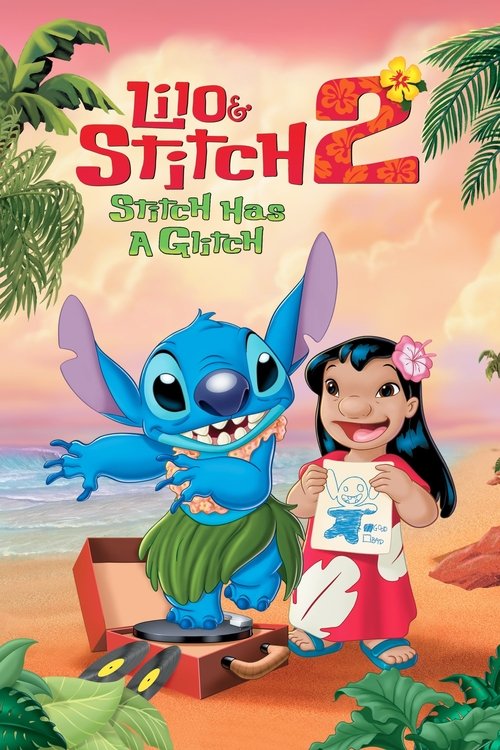
Lilo & Stitch 2: Stitch Has a Glitch - Review
Lilo & Stitch 2: Stitch Has a Glitch - A Nostalgic, Imperfect Sequel
In the realm of direct-to-video Disney sequels, a land often paved with forgettable retreads and diluted charm, Lilo & Stitch 2: Stitch Has a Glitch dares to return to the heartwarming Hawaiian shores of its predecessor. Released in 2005, this sequel attempts to recapture the magic of the original Lilo & Stitch, a film celebrated for its unique animation style, quirky humor, and deeply resonant themes of family and belonging. But can a sequel, especially one lacking the theatrical grandeur, truly live up to the legacy of such a beloved film? Let’s dive in and explore the highs and lows of Stitch’s second outing.
Plot: A Glitch in the System, A Strain on the 'Ohana
The story picks up sometime after the events of the first film. Lilo, now a bit older, is diligently preparing for the annual May Day hula competition, hoping to follow in her mother's footsteps. Stitch, now seemingly well-adjusted to life on Earth and deeply integrated into Lilo’s 'ohana, is eager to support her. However, lurking beneath the surface is a ticking time bomb: a glitch in Stitch’s creation, a consequence of Dr. Jumba's incomplete programming. This glitch causes Stitch to revert to his destructive tendencies, experiencing increasingly frequent and intense episodes of chaos and destruction. These episodes are triggered by seemingly random events, and Stitch has no control over them.
As Stitch's glitches worsen, his friendship with Lilo is tested. She struggles to understand his erratic behavior, initially believing he's simply misbehaving. Jumba and Pleakley, aware of the true nature of Stitch's condition, attempt to find a way to fix him before he completely reverts to his pre-Lilo programming, or worse, shuts down entirely. The plot thickens as Stitch's condition deteriorates, causing him physical pain and mental anguish. He becomes increasingly withdrawn, fearing he will hurt Lilo and her 'ohana. The narrative tension hinges on whether Jumba can find a cure, and whether Lilo and Stitch's bond can withstand this ultimate challenge.
One of the plot's strengths is its exploration of Stitch's internal struggle. He desperately wants to be good and to belong, but his inherent programming fights against him. This internal conflict adds a layer of depth to the character, making him more sympathetic and relatable. However, the plot also suffers from some predictable elements. The "misunderstanding" trope, where Lilo initially misunderstands Stitch's behavior, feels somewhat forced and weakens the emotional impact of their eventual reconciliation.
Characters: Familiar Faces, Evolving Dynamics
The core characters of Lilo & Stitch 2 remain largely consistent with their original portrayals, but their relationships evolve in subtle ways.
Lilo Pelekai
Lilo, voiced by Dakota Fanning, is slightly older and more mature, but she retains her quirky personality and unwavering loyalty to her 'ohana. Her passion for hula dancing is a central aspect of her character in this film, serving as both a connection to her deceased mother and a source of personal identity. Her initial frustration with Stitch's behavior is understandable, given her desire to succeed in the hula competition, but it also highlights her growth as a character. She ultimately learns to look beyond Stitch's actions and understand the underlying cause.
Stitch (Experiment 626)
Stitch, voiced by Chris Sanders, is the heart and soul of the film. His internal struggle with the glitch is compelling, and his desire to be a good member of the 'ohana is genuinely touching. The film delves deeper into his emotional vulnerability, showcasing his fear of reverting to his destructive programming and losing Lilo's love. The moments where he tries to control his glitches, often resulting in comical but ultimately heartbreaking failures, are among the most impactful scenes in the film.
Nani Pelekai
Nani, voiced by Tia Carrere, continues to be the responsible and caring older sister, juggling her responsibilities with the challenges of raising Lilo and dealing with the unconventional members of their 'ohana. Her role is primarily supportive, offering guidance and encouragement to Lilo and trying to mediate the situation with Stitch. While she doesn't undergo significant character development, she remains a stable and reliable presence in their lives.
Dr. Jumba Jookiba and Agent Wendy Pleakley
Jumba and Pleakley, voiced by David Ogden Stiers and Kevin McDonald respectively, provide much of the comic relief. Jumba's guilt over Stitch's glitch drives his efforts to find a cure, while Pleakley offers his typically eccentric and often misguided advice. Their bickering and comedic antics are a welcome addition, but their roles are largely relegated to providing support and comic relief, rather than driving the main plot.
Mr. Jameson
A new character, Mr. Jameson, is introduced as Lilo's hula teacher. He is a stern but ultimately supportive figure who encourages Lilo to embrace her own unique style of hula. While not a major character, he serves as a positive influence and helps Lilo gain confidence in her abilities.
The character dynamics in Lilo & Stitch 2 are generally strong, building upon the established relationships from the first film. However, some characters, particularly Nani, Jumba, and Pleakley, feel somewhat underdeveloped, their roles primarily serving to support Lilo and Stitch's central conflict.
Direction and Cinematography: A Direct-to-Video Aesthetic
Lilo & Stitch 2 was directed by Michael LaBash and Anthony Leondis. While the film attempts to maintain the visual style of the original, it inevitably suffers from the limitations of a direct-to-video production. The animation, while competent, lacks the distinctive watercolor backgrounds and fluid movement that characterized the first film. The color palette is generally brighter and more vibrant, but the overall visual impact is less striking and memorable.
The direction is generally straightforward, focusing on clear storytelling and character interactions. However, the film lacks the visual flair and innovative camera angles that made the original so visually engaging. The pacing is also somewhat uneven, with some scenes feeling rushed while others drag on unnecessarily. The musical score, while incorporating some of the original's iconic Hawaiian-inspired themes, is less impactful and memorable.
While the film does its best to emulate the visual style of the original, the lower budget and direct-to-video format are evident in the animation quality and overall production value. It's a decent effort, but it simply can't match the visual artistry of its predecessor.
Performances: Familiar Voices, Endearing Performances
The voice acting in Lilo & Stitch 2 is generally strong, with the original cast reprising their roles. Dakota Fanning delivers a convincing performance as Lilo, capturing her youthful energy and emotional vulnerability. Chris Sanders continues to embody Stitch with his signature growls, snarls, and surprisingly expressive vocalizations. Tia Carrere provides a solid performance as Nani, conveying her warmth and responsibility. David Ogden Stiers and Kevin McDonald deliver their usual comedic brilliance as Jumba and Pleakley, respectively.
The voice acting is one of the film's strengths, helping to maintain the continuity and familiarity of the characters. The performances are engaging and emotionally resonant, bringing the characters to life and making them relatable to the audience.
Themes and Messages: 'Ohana and Acceptance
Lilo & Stitch 2 revisits the core themes of family ('ohana) and acceptance that were central to the original film. The film emphasizes the importance of unconditional love and support, even when faced with challenges and imperfections. Stitch's glitch represents a metaphor for dealing with personal flaws and difficulties, and the film underscores the idea that even with imperfections, one can still belong and be loved.
The film also explores the theme of legacy, particularly through Lilo's desire to follow in her mother's footsteps and honor her memory through hula dancing. This theme adds a layer of emotional depth to the story, highlighting the importance of family history and traditions.
However, the film's thematic exploration is somewhat less nuanced than the original. The messages of 'ohana and acceptance, while still present, feel somewhat diluted and less impactful. The film relies more on familiar tropes and sentimental moments, rather than delving into deeper philosophical or emotional territory.
Comparison to Other Films and Previous Works
Compared to the original Lilo & Stitch, Lilo & Stitch 2 inevitably falls short. The original film was a groundbreaking animated feature that pushed the boundaries of visual style and storytelling. It was a unique and innovative film that resonated with audiences of all ages. The sequel, while enjoyable, lacks the originality and impact of its predecessor. It feels more like a continuation of the story, rather than a significant expansion or evolution.
Compared to other direct-to-video Disney sequels, Lilo & Stitch 2 is generally considered to be one of the better entries. It maintains the spirit of the original film and features strong performances from the voice cast. However, it still suffers from the limitations of the direct-to-video format, lacking the visual polish and narrative depth of a theatrical release. Films like The Lion King II: Simba's Pride or Aladdin: The Return of Jafar, while also sequels, attempted to create new storylines and explore new characters, something Lilo & Stitch 2 doesn't fully embrace.
Positive Aspects
- Strong voice acting performances from the original cast.
- Revisits the beloved characters and setting of the original film.
- Explores the themes of 'ohana and acceptance.
- Offers a heartwarming and entertaining story for families.
- Stitch's internal conflict is well-portrayed and adds depth to his character.
Constructive Criticism
- The animation quality is noticeably lower than the original film.
- The plot is somewhat predictable and relies on familiar tropes.
- Some characters feel underdeveloped and their roles are primarily supportive.
- The thematic exploration is less nuanced than the original film.
- The pacing is uneven, with some scenes feeling rushed while others drag on.
Conclusion
Lilo & Stitch 2: Stitch Has a Glitch is a decent direct-to-video sequel that attempts to recapture the magic of the original Lilo & Stitch. While it falls short of its predecessor in terms of visual style, narrative depth, and overall impact, it still offers a heartwarming and entertaining story for families. The strong voice acting performances, the familiar characters and setting, and the exploration of the themes of 'ohana and acceptance make it a worthwhile watch for fans of the original film. However, the lower animation quality, predictable plot, and underdeveloped characters prevent it from reaching the same level of excellence.
Ultimately, Lilo & Stitch 2 is a nostalgic trip back to the Hawaiian shores of Lilo and Stitch's world. It's a reminder of the importance of family, acceptance, and unconditional love. While it may not be a perfect sequel, it's a generally enjoyable and heartwarming film that will appeal to fans of the original.