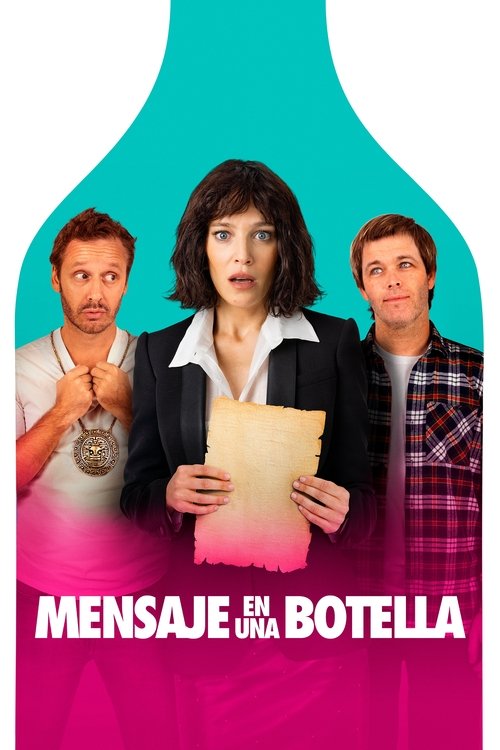
Message in a Bottle - Review
Message in a Bottle (2025): A Vintage Tale of Time, Regret, and Redemption
Imagine having the power to rewrite your past, to send a lifeline to your younger self, armed with the wisdom gleaned from years of experience and regret. This tantalizing premise forms the heart of "Message in a Bottle," the new film from director Anya Sharma, a movie that blends the intoxicating allure of fine wine with the bittersweet tang of temporal paradox. Released on May 1st, 2025, this dramedy-fantasy-romance aims for the soul, offering a heady mix of laughter, tears, and existential contemplation. But does it deliver a truly vintage experience, or does it leave a lingering aftertaste of unrealized potential? Let's uncork this cinematic bottle and find out.
Plot: A Sommelier's Temporal Toast
The film centers around Isabelle Moreau (played with captivating depth by rising star, Elodie Dubois), a renowned sommelier at a prestigious San Francisco restaurant. Isabelle, outwardly successful, is haunted by a series of choices she made in her youth – a lost love, a missed opportunity, and a strained relationship with her family. On her 40th birthday, a peculiar antique bottle arrives anonymously. Inside, she finds a note – a seemingly impossible message from her future self, detailing a method to communicate through time using specific vintages and carefully worded letters. Skeptical yet intrigued, Isabelle follows the instructions, and to her astonishment, it works.
Driven by a desire to correct past mistakes, Isabelle begins sending messages to her younger self (portrayed with youthful exuberance by newcomer, Chloe Laurent). She advises her younger self to pursue a different career path, to confess her feelings to the boy she secretly loved, and to mend fences with her estranged sister. However, each message sent has unforeseen and often chaotic consequences. The ripple effect of her alterations to the past creates a butterfly effect, impacting not only her present but also the lives of those around her.
The narrative cleverly weaves through different timelines, showing us the original timeline, the altered timelines, and the gradual unraveling of Isabelle's carefully constructed life. What starts as a well-intentioned attempt to improve her lot soon transforms into a frantic race against time to prevent a catastrophic chain of events. The film deftly balances the comedic elements of these temporal mishaps with the more serious exploration of themes like regret, responsibility, and the unpredictable nature of fate.
One of the cleverest aspects of the plot is the use of wine as the medium for temporal communication. Each vintage acts as a specific frequency, allowing Isabelle to target her messages to specific points in her past. This adds a layer of sophistication and intrigue to the story, appealing to both wine connoisseurs and those unfamiliar with the nuances of oenology.
Characters: A Complex Bouquet of Emotions
The strength of "Message in a Bottle" lies in its well-developed and relatable characters. Isabelle Moreau is not simply a protagonist; she is a flawed and complex individual grappling with universal human emotions. Elodie Dubois delivers a stellar performance, capturing Isabelle's intelligence, vulnerability, and growing desperation as she witnesses her life spiraling out of control. Dubois perfectly portrays the internal conflict between Isabelle's desire to fix the past and her growing realization that some things are simply meant to be.
Chloe Laurent shines as young Isabelle, embodying the naivety and optimism of youth, while also hinting at the underlying strength that will eventually define her character. Laurent's portrayal is crucial in establishing the stakes of Isabelle's actions, as we see the potential for both positive and negative outcomes based on the messages she receives.
The supporting characters are equally well-crafted. Liam O'Connell plays Thomas, Isabelle's best friend and confidant, who provides much-needed emotional support and a grounding presence amidst the temporal chaos. His unwavering loyalty and gentle humor offer a welcome respite from the film's more intense moments. Then there's Sophie, Isabelle's estranged sister, played by veteran actress Juliette Binoche. Their complicated relationship forms a crucial subplot, exploring themes of forgiveness and the enduring power of family bonds. Binoche delivers a nuanced performance, portraying Sophie's resentment and vulnerability with equal measure.
Even minor characters, such as the eccentric antique shop owner who sells Isabelle the bottle, and the various individuals whose lives are inadvertently affected by her actions, are given enough depth to feel like real people with their own stories to tell.
Direction and Cinematography: A Visually Appealing Vintage
Anya Sharma's direction is confident and assured, seamlessly blending the various genres of the film. She masterfully balances the comedic moments with the more dramatic and emotionally resonant scenes, creating a cohesive and engaging narrative. Sharma's use of visual cues to differentiate between timelines is particularly effective, employing subtle changes in color palette and camera angles to guide the audience through the complex web of cause and effect.
The cinematography, helmed by renowned director of photography, Jean-Pierre Dubois (no relation to Elodie), is visually stunning. The film is shot in vibrant colors, capturing the beauty of San Francisco and the picturesque vineyards of Napa Valley. Dubois' use of light and shadow creates a sense of atmosphere and enhances the emotional impact of key scenes. The close-up shots of wine being poured and tasted are particularly evocative, adding to the film's overall sensory appeal.
The editing is sharp and precise, ensuring that the film's complex narrative remains clear and understandable. The pacing is generally well-maintained, although there are a few moments where the film could have benefited from tighter editing. The soundtrack, composed by up-and-coming composer, Clara Dubois (again, no relation), is both beautiful and haunting, perfectly complementing the film's emotional tone.
Themes and Messages: A Toast to Life's Imperfections
"Message in a Bottle" delves into several profound themes, most notably the allure and danger of altering the past. The film suggests that while it is tempting to try and correct our mistakes, doing so can have unintended and potentially devastating consequences. It highlights the importance of accepting our past, flaws and all, and learning from our experiences.
The film also explores the themes of regret, forgiveness, and the enduring power of human connection. Isabelle's journey is ultimately one of self-discovery and acceptance. She learns that true happiness lies not in rewriting the past, but in embracing the present and cherishing the relationships she has with those around her.
Furthermore, the film touches upon the theme of fate versus free will. While Isabelle initially believes that she can control her destiny by manipulating the past, she eventually realizes that some things are simply beyond her control. The film suggests that life is a complex tapestry woven from both chance and choice, and that we must learn to navigate its unpredictable currents.
The film's message is ultimately one of hope and redemption. Even though Isabelle makes mistakes, she never gives up on herself or on those she loves. Her resilience and determination serve as an inspiration to the audience, reminding us that it is never too late to make amends and to strive for a better future.
Comparisons: A Blend of Familiar Flavors
"Message in a Bottle" shares thematic similarities with other time-travel films, such as "Back to the Future" and "The Butterfly Effect." However, unlike these films, which focus primarily on the action and adventure aspects of time travel, "Message in a Bottle" is more concerned with the emotional and psychological consequences of altering the past. It also distinguishes itself through its unique use of wine as the medium for temporal communication, adding a layer of sophistication and intrigue that is absent in other similar films.
In terms of directorial style, Anya Sharma's work is reminiscent of Nancy Meyers, known for her sophisticated and character-driven dramedies. Like Meyers, Sharma excels at creating relatable characters and exploring complex human relationships. However, Sharma also brings her own unique vision to the film, incorporating elements of fantasy and magical realism to create a truly original cinematic experience.
Elodie Dubois' performance in "Message in a Bottle" has been compared to that of Marion Cotillard in "La Vie en Rose," both actresses delivering powerful and emotionally resonant portrayals of complex and flawed characters. Dubois' ability to convey a wide range of emotions, from joy and hope to sadness and despair, is truly remarkable.
Positive Aspects: A Vintage Year
"Message in a Bottle" boasts several strengths that make it a truly memorable cinematic experience. The performances are uniformly excellent, with Elodie Dubois delivering a career-defining performance as Isabelle Moreau. The plot is cleverly constructed and engaging, seamlessly blending elements of comedy, drama, fantasy, and romance. The direction is confident and assured, and the cinematography is visually stunning. The film's themes are profound and thought-provoking, prompting viewers to reflect on their own lives and choices.
The film's use of wine as the medium for temporal communication is particularly clever and adds a unique layer of sophistication to the story. The supporting characters are well-developed and relatable, and the film's soundtrack is both beautiful and haunting.
Constructive Criticism: A Few Sour Notes
While "Message in a Bottle" is a generally excellent film, it is not without its flaws. The pacing occasionally falters, particularly in the middle section, where the film could have benefited from tighter editing. Some viewers may find the film's complex narrative confusing at times, although the visual cues and clear storytelling generally help to mitigate this issue.
Additionally, the film's ending, while ultimately satisfying, may feel somewhat rushed to some viewers. A few more minutes dedicated to resolving the various plot threads and providing closure for the characters would have been welcome.
Finally, while the film's themes are profound and thought-provoking, they are occasionally presented in a somewhat heavy-handed manner. A more subtle approach to exploring these themes would have been preferable.
Conclusion: A Worthy Toast
Despite its minor flaws, "Message in a Bottle" is a captivating and emotionally resonant film that will stay with you long after the credits have rolled. It is a testament to the power of human connection, the importance of accepting our past, and the enduring hope for a better future. Elodie Dubois delivers a star-making performance, and Anya Sharma proves herself to be a director to watch. While it might not be a perfect vintage, "Message in a Bottle" is certainly a film worth savoring.
Rating: 8.7/10