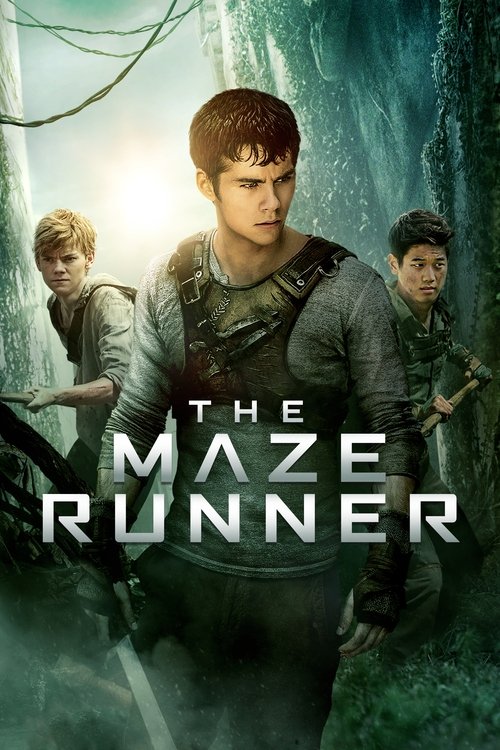
The Maze Runner - Review
The Maze Runner: A Thrilling Race Against the Unknown
Imagine waking up in a metal box, hurtling upwards, with no memory of who you are or where you came from. This is the terrifying reality that Thomas faces in Wes Ball's 2014 adaptation of James Dashner's young adult dystopian novel, The Maze Runner. More than just another entry in the post-apocalyptic teen fiction boom, The Maze Runner delivers a genuinely gripping and suspenseful experience, fueled by a compelling mystery, strong performances, and a visually stunning, albeit occasionally flawed, execution. Buckle up, Gladers, because this review is about to navigate the twists and turns of the Maze.
Plot: A Labyrinth of Intrigue and Peril
The story centers around Thomas (Dylan O'Brien), who arrives in the Glade, a seemingly idyllic clearing surrounded by four massive, ever-changing doors. These doors lead into the Maze, a colossal and deadly labyrinth patrolled by Grievers – grotesque, biomechanical creatures. The Glade is inhabited by a community of teenage boys, each with their own assigned roles and responsibilities, who have been trapped there for years. They are led by Alby (Aml Ameen) and Newt (Thomas Brodie-Sangster), who maintain order and enforce the Glade's established rules. The Gladers' primary goal is to find a way out of the Maze, a task that has proven impossible thus far.
Thomas's arrival disrupts the Glade's established order. He possesses a natural curiosity and a rebellious streak, questioning the rules and challenging the status quo. He quickly befriends Chuck (Blake Cooper), a younger, more vulnerable Glader, and develops a cautious respect for Minho (Ki Hong Lee), the lead Runner, responsible for mapping the Maze. Thomas's determination to become a Runner and his uncanny ability to remember fragments of his past make him a valuable asset, but also a source of suspicion among some of the Gladers, particularly Gally (Will Poulter), who distrusts Thomas and fears the changes he brings.
The plot thickens with the arrival of Teresa (Kaya Scodelario), the first and only girl to ever enter the Glade. She arrives with a cryptic message: "She's the last one ever." Teresa's presence, combined with the discovery of a mysterious serum and a series of increasingly bizarre events, forces the Gladers to confront the reality of their situation and to make a desperate attempt to escape the Maze. The climax involves a perilous journey through the Maze, a confrontation with the Grievers, and the uncovering of a shocking truth about the Gladers' origins and their purpose.
While the plot is engaging and fast-paced, it does suffer from some common young adult tropes. The amnesia plot device, while effective in creating initial mystery, feels somewhat overused. The romantic subplot between Thomas and Teresa is underdeveloped and lacks genuine chemistry. Furthermore, the film rushes through some of the more complex elements of Dashner's novel, particularly regarding the organization behind the Maze and their motivations.
Characters: A Cast of Compelling Personalities
The Maze Runner benefits from a strong ensemble cast, each bringing a distinct personality to their respective roles.
- Thomas (Dylan O'Brien): O'Brien delivers a solid performance as the protagonist. He effectively portrays Thomas's courage, determination, and vulnerability. While his character arc is somewhat predictable, O'Brien imbues Thomas with a genuine sense of humanity, making him a relatable and likable hero.
- Newt (Thomas Brodie-Sangster): Brodie-Sangster shines as Newt, the second-in-command. He provides a calm and rational counterpoint to Thomas's impulsiveness. Newt's loyalty, compassion, and strategic thinking make him a crucial member of the Glade. Brodie-Sangster's performance is nuanced and understated, making Newt one of the most compelling characters in the film.
- Minho (Ki Hong Lee): Lee brings a much-needed dose of humor and swagger to the role of Minho. As the lead Runner, Minho is brave, resourceful, and fiercely protective of his fellow Gladers. Lee's performance is energetic and charismatic, making Minho a fan favorite.
- Gally (Will Poulter): Poulter is excellent as Gally, the antagonist. He effectively portrays Gally's fear, paranoia, and unwavering belief in the established order. While Gally's actions are often misguided, Poulter manages to make him a sympathetic character, highlighting the pressures and responsibilities he feels as a leader.
- Teresa (Kaya Scodelario): Scodelario's performance as Teresa is somewhat underwhelming. While the character is meant to be mysterious and enigmatic, Scodelario's portrayal often comes across as bland and detached. The lack of chemistry between her and O'Brien further diminishes the impact of her character.
- Alby (Aml Ameen): Ameen provides a strong and authoritative presence as Alby, the leader of the Glade. He effectively portrays Alby's struggle to maintain order and his growing despair as the Glade's situation becomes increasingly dire.
- Chuck (Blake Cooper): Cooper delivers a heartwarming performance as Chuck, the youngest and most vulnerable Glader. His innocence and vulnerability make him a sympathetic character, and his friendship with Thomas provides the film with its emotional core.
The characters are well-defined and contribute to the overall narrative, though some, like Teresa, could have benefited from further development. The interactions between the Gladers, particularly the camaraderie and loyalty they share, are believable and add depth to the story.
Direction and Cinematography: A Visually Stunning Maze
Wes Ball's directorial debut is impressive. He effectively captures the claustrophobia and danger of the Maze, creating a visually stunning and suspenseful experience. The film's pacing is generally well-managed, with moments of intense action interspersed with quieter, character-driven scenes.
The cinematography, by Enrique Chediak, is a standout feature of the film. The Maze itself is a breathtaking creation, with its towering walls, intricate pathways, and ever-shifting landscape. The use of wide shots effectively conveys the scale and complexity of the Maze, while close-ups emphasize the Gladers' fear and determination. The lighting is also well-utilized, creating a sense of mystery and foreboding. The Griever design is particularly effective, creating truly terrifying and menacing creatures that are a genuine threat to the Gladers.
However, the film's visual effects are not always seamless. Some of the CGI, particularly during the Griever attacks, can appear somewhat artificial. Furthermore, the film's reliance on jump scares can feel repetitive and detract from the overall suspense. Despite these minor flaws, the direction and cinematography are generally strong, creating a visually engaging and immersive experience.
Themes and Messages: Hope, Courage, and Sacrifice
The Maze Runner explores several important themes, including hope, courage, sacrifice, and the importance of community. The Gladers are trapped in a seemingly hopeless situation, yet they never give up on their dream of escaping the Maze. Their courage in the face of danger and their willingness to sacrifice for each other are inspiring.
The film also highlights the importance of community. The Gladers rely on each other for support, strength, and survival. Their ability to work together, despite their differences, is crucial to their success. The film suggests that even in the most challenging circumstances, human connection and cooperation can make a difference.
Furthermore, the film touches upon the themes of control and manipulation. The Gladers are pawns in a larger game, their memories erased and their lives controlled by an unknown organization. The film raises questions about the ethics of experimentation and the dangers of unchecked power. While these themes are not explored in great depth, they add a layer of complexity to the story and provide food for thought.
Comparisons: Echoes of Dystopian Predecessors
The Maze Runner inevitably draws comparisons to other young adult dystopian films, such as The Hunger Games and Divergent. While it shares some common elements with these films, such as a strong female lead and a rebellious protagonist, The Maze Runner distinguishes itself through its focus on mystery and suspense. Unlike The Hunger Games, which centers on a televised competition, The Maze Runner is primarily concerned with solving the puzzle of the Maze. Similarly, unlike Divergent, which explores themes of social conformity and identity, The Maze Runner focuses on the challenges of survival and the importance of teamwork.
The film also shares some thematic similarities with films like Cube and Saw, which feature characters trapped in elaborate and deadly environments. However, The Maze Runner is less graphic and more character-driven than these films.
Wes Ball's previous work primarily consisted of short films and visual effects projects. The Maze Runner represents a significant step up in scale and complexity, and Ball proves himself to be a capable director with a strong visual style. Dylan O'Brien's previous roles were primarily in television, most notably in the series Teen Wolf. The Maze Runner provided him with an opportunity to showcase his talents on a larger stage, and he delivers a strong and convincing performance.
Positive Aspects: A Thrilling and Engaging Experience
The Maze Runner offers a multitude of positive aspects that make it a worthwhile cinematic experience:
- Compelling Mystery: The central mystery of the Maze is genuinely intriguing, keeping the audience guessing until the very end.
- Strong Performances: The ensemble cast delivers solid performances, particularly Dylan O'Brien, Thomas Brodie-Sangster, and Will Poulter.
- Visually Stunning: The cinematography and visual effects create a breathtaking and immersive experience, particularly in the depiction of the Maze and the Grievers.
- Fast-Paced and Engaging: The film's pacing is well-managed, with a good balance of action, suspense, and character development.
- Themes of Hope and Courage: The film's themes of hope, courage, and sacrifice are inspiring and resonate with audiences.
Constructive Criticism: Room for Improvement
Despite its strengths, The Maze Runner is not without its flaws:
- Underdeveloped Characters: Some characters, particularly Teresa, could have benefited from further development.
- Predictable Plot Elements: The amnesia plot device and the romantic subplot are somewhat predictable and lack originality.
- Uneven Visual Effects: Some of the CGI, particularly during the Griever attacks, can appear artificial.
- Rushed Exposition: The film rushes through some of the more complex elements of the novel, leaving some questions unanswered.
- Reliance on Jump Scares: The film's reliance on jump scares can feel repetitive and detract from the overall suspense.
Conclusion: A Solid Start to a Promising Franchise
The Maze Runner is a thrilling and engaging young adult dystopian film that delivers a genuinely suspenseful experience. While it suffers from some common genre tropes and underdeveloped characters, its strengths outweigh its weaknesses. The film's compelling mystery, strong performances, visually stunning cinematography, and themes of hope and courage make it a worthwhile watch for fans of the genre. Wes Ball's directorial debut is impressive, and Dylan O'Brien proves himself to be a capable leading man. While not perfect, The Maze Runner is a solid start to a promising franchise. It successfully translates the essence of Dashner's novel to the screen, leaving audiences eager to see what lies beyond the Maze.
Rating: 7.5/10