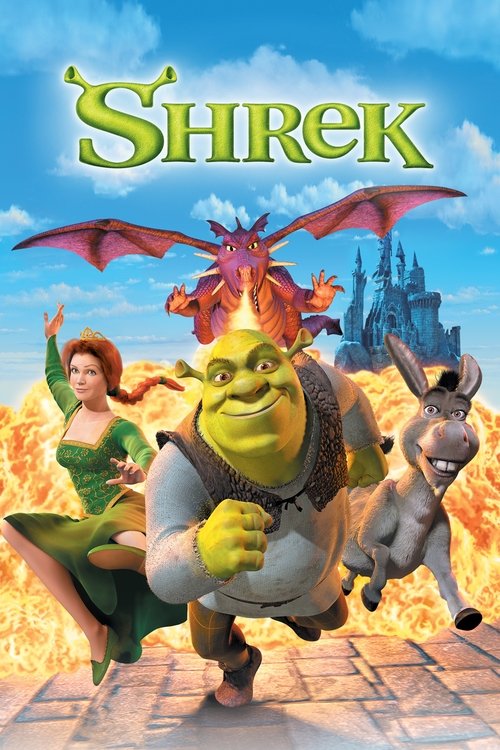
Shrek - Review
Shrek: An Ogre-sized Revolution in Animation
In the annals of animated cinema, few films have dared to challenge the saccharine sweetness and fairytale perfection quite like Shrek (2001). Released on May 18th, 2001, this DreamWorks Animation production wasn't just a movie; it was a cultural phenomenon. It was a defiant roar against the established norms of the genre, a hilarious skewering of classic fairytale tropes, and, surprisingly, a heartwarming story about acceptance, friendship, and finding beauty in the unconventional. But does this green giant still hold up after all these years? Let's delve into the swamp and find out.
Plot: Deconstructing the Fairytale
The plot of Shrek, on the surface, seems simple enough: a grumpy ogre, Shrek (voiced with gruff perfection by Mike Myers), just wants to be left alone in his beloved swamp. His peaceful existence is shattered when the diminutive and power-hungry Lord Farquaad (John Lithgow, deliciously villainous) exiles all fairytale creatures to Shrek's swamp. Determined to reclaim his solitude, Shrek reluctantly agrees to travel to Duloc and convince Farquaad to reverse his decision. Accompanying him on this quest is Donkey (Eddie Murphy, at his motor-mouthed best), a relentlessly optimistic and talkative donkey who quickly becomes Shrek's unwanted, yet ultimately indispensable, companion.
Farquaad, eager to become a king, tasks Shrek with rescuing Princess Fiona (Cameron Diaz), who is imprisoned in a dragon-guarded tower. Shrek and Donkey succeed in their mission, battling the fiery dragon (who develops a surprising affection for Donkey, setting up one of the film's many hilarious subplots) and escaping with the princess. As they journey back to Duloc, Shrek and Fiona begin to bond, discovering a shared love for belching, farting, and generally defying societal expectations. However, a misunderstanding leads Shrek to believe that Fiona finds him repulsive, and he delivers her to Farquaad. Heartbroken, Shrek returns to his swamp, only to realize that he has fallen in love with Fiona. With Donkey's help, Shrek races to Duloc to stop the wedding, revealing Fiona's secret: she is cursed to transform into an ogress every night, and only true love's kiss can break the spell. Shrek declares his love for Fiona, she chooses to remain an ogress, and they live happily ever after, embracing their unconventional beauty.
What makes the plot so compelling is its clever subversion of fairytale conventions. The damsel in distress isn't a passive victim; she's a strong, independent woman (or ogress) who can hold her own. The handsome prince is a power-hungry tyrant. And the ogre, traditionally the villain, is the hero. Shrek doesn't just tell a fairytale; it deconstructs one, highlighting the absurdity of the genre's often unrealistic and superficial ideals.
Characters: Beyond the Stereotypes
The strength of Shrek lies not only in its plot but also in its memorable and well-developed characters. Each character, even the supporting ones, is given depth and personality, making them relatable and endearing.
Shrek
Shrek, the titular character, is far more than just a grumpy ogre. He's a lonely individual who has built walls around himself to protect himself from a world that judges him based on his appearance. He craves solitude not out of malice but out of a desire to avoid the prejudice and fear that he has experienced his entire life. His journey throughout the film is one of self-discovery, as he learns to trust others, open himself up to love, and embrace his true self. Mike Myers' voice acting is superb, capturing Shrek's gruff exterior and his hidden vulnerability.
Donkey
Donkey, voiced by Eddie Murphy, is the film's comedic engine. He's a relentlessly optimistic, talkative, and often annoying donkey who refuses to leave Shrek's side. While he initially seems like a purely comedic character, Donkey also provides emotional support for Shrek, pushing him out of his comfort zone and encouraging him to embrace his feelings. He's the loyal friend that Shrek never knew he needed. Murphy's performance is energetic and hilarious, making Donkey one of the most beloved characters in the film.
Princess Fiona
Princess Fiona, voiced by Cameron Diaz, is a refreshing departure from the traditional damsel in distress. She's strong, independent, and capable of defending herself. However, she's also burdened by a curse that forces her to hide her true self. Her journey is about accepting her imperfections and finding someone who loves her for who she truly is, both inside and out. Diaz's performance captures Fiona's strength, vulnerability, and sense of humor.
Lord Farquaad
Lord Farquaad, voiced by John Lithgow, is the film's primary antagonist. He's a short, insecure, and power-hungry ruler who is obsessed with achieving perfection. He represents the superficiality and vanity that Shrek satirizes. Lithgow's performance is brilliantly over-the-top, making Farquaad a truly memorable villain.
Direction and Cinematography: A Visual Feast
Directed by Andrew Adamson and Vicky Jenson, Shrek is a visually stunning film that pushed the boundaries of CGI animation at the time. The attention to detail is remarkable, from the texture of Shrek's skin to the lushness of the swamp. The film's vibrant color palette and dynamic camera angles create a visually engaging experience. The directors masterfully blend humor and heart, creating a film that is both entertaining and emotionally resonant.
The cinematography, while not traditional in the live-action sense, is still crucial to the film's success. The use of lighting, composition, and camera movement creates a sense of depth and realism that enhances the storytelling. The animators effectively use visual gags and slapstick humor, adding another layer of comedic appeal to the film.
Performances: A Voice Cast for the Ages
The voice cast of Shrek is arguably one of the best in animated film history. Each actor brings their unique talents to their respective roles, creating characters that are both believable and memorable. Mike Myers' portrayal of Shrek is iconic, capturing the ogre's gruffness and vulnerability with equal skill. Eddie Murphy's performance as Donkey is a masterclass in comedic voice acting, and Cameron Diaz brings strength and humor to the role of Princess Fiona. John Lithgow's portrayal of Lord Farquaad is deliciously villainous, making him a memorable and effective antagonist.
The chemistry between the voice actors is palpable, enhancing the film's comedic and emotional impact. The dialogue is witty and sharp, and the actors deliver their lines with perfect timing and inflection. The voice cast truly elevates Shrek to another level, making it a truly unforgettable cinematic experience.
Themes and Messages: More Than Just a Fairytale Parody
While Shrek is undoubtedly a hilarious parody of fairytales, it also explores several important themes and messages. The film emphasizes the importance of self-acceptance, encouraging viewers to embrace their imperfections and celebrate their individuality. It also challenges societal norms and stereotypes, promoting a message of tolerance and acceptance. The film suggests that true beauty lies within and that appearances can be deceiving.
Furthermore, Shrek highlights the importance of friendship and love. Shrek and Donkey's unlikely friendship demonstrates that true connection can be found in the most unexpected places. Shrek and Fiona's love story emphasizes that true love is about accepting someone for who they truly are, regardless of their appearance. The film ultimately suggests that happiness can be found in embracing one's true self and surrounding oneself with people who love and support them.
Comparison to Other Films and Works
Shrek arrived at a time when Disney was largely considered the undisputed king of animated fairytales. While films like Toy Story had proven the power of CGI, Shrek dared to challenge the established narrative conventions of the genre. In many ways, it can be seen as a response to the often-formulaic nature of Disney's animated films, offering a more subversive and self-aware take on the fairytale genre.
Comparing Shrek to other DreamWorks Animation films, it's clear that it set the tone for the studio's future endeavors. Films like Madagascar and Kung Fu Panda followed a similar formula, blending humor, heart, and pop culture references to create entertaining and engaging animated films. However, Shrek remains a standout achievement, thanks to its sharp wit, memorable characters, and groundbreaking animation.
Looking at the careers of the voice actors involved, Shrek undoubtedly helped to solidify their status as A-list talents. Mike Myers, already a comedic icon, further cemented his reputation with his portrayal of Shrek. Eddie Murphy's performance as Donkey revitalized his career, showcasing his comedic brilliance to a new generation of audiences. Cameron Diaz proved her versatility as an actress, demonstrating her ability to handle both comedic and dramatic roles with equal skill.
Positive Aspects: A Timeless Classic
Shrek boasts numerous positive aspects that contribute to its enduring popularity. The film's humor is witty and clever, appealing to both children and adults. The animation is visually stunning, creating a vibrant and immersive world. The characters are well-developed and relatable, making them easy to root for. The voice acting is superb, bringing the characters to life with depth and personality. The film's themes and messages are positive and uplifting, promoting self-acceptance, tolerance, and the importance of friendship and love. Shrek is a genuinely entertaining and heartwarming film that has earned its place as a modern classic.
Constructive Criticism: Minor Imperfections in a Masterpiece
While Shrek is a near-perfect film, it's not without its minor flaws. Some critics have argued that the film's reliance on pop culture references can feel dated at times. While these references were undoubtedly funny upon its release, some may not resonate with younger audiences today. Additionally, some viewers may find Donkey's constant chatter to be grating, although his energetic performance is generally considered a highlight of the film.
Furthermore, while the animation was groundbreaking for its time, it naturally appears somewhat dated compared to modern CGI animation. However, this doesn't detract significantly from the film's overall visual appeal. These minor imperfections are easily overlooked in light of the film's many strengths.
Conclusion: An Ogre-whelming Success
Shrek is more than just an animated film; it's a cultural phenomenon that redefined the fairytale genre. With its witty humor, memorable characters, stunning animation, and uplifting themes, Shrek is a film that continues to resonate with audiences of all ages. It's a testament to the power of storytelling and the importance of embracing one's true self. While some of its pop culture references may feel dated, the film's core message of self-acceptance and the importance of friendship remains timeless. Shrek is a genuinely entertaining and heartwarming film that has earned its place as a modern classic.