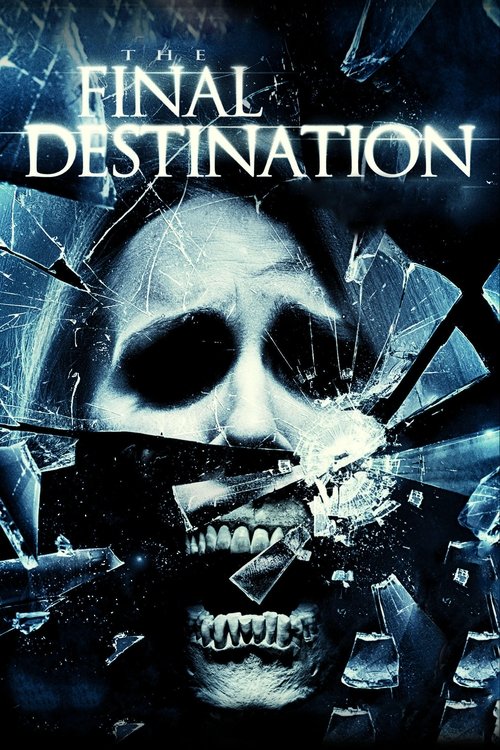
The Final Destination - Review
"The Final Destination": A Rollercoaster of Gore and Premonition (Review)
The "Final Destination" franchise, known for its elaborate death sequences and darkly comedic take on fate, returned in 2009 with The Final Destination, the fourth installment. While some sequels struggle to recapture the magic of the original, this entry promised a fresh wave of carnage, delivered in glorious 3D. But does it live up to the franchise's legacy, or is it just another predictable bloodbath? Let's delve into the twisted world where death has a design, and no escape is truly possible.
Plot: A Premonition and its Deadly Aftermath
Nick O'Bannon (Bobby Campo), a college student, attends a NASCAR race with his friends Lori Milligan (Shantel VanSanten), Hunt Wynorski (Nick Zano), and Janet Cunningham (Haley Webb). During the race, Nick experiences a terrifying premonition of a horrific multi-car pileup that sends debris flying into the stands, killing hundreds, including his friends and himself. Shaken, Nick manages to convince Lori, Hunt, Janet, and a few others to leave the stadium moments before the premonition becomes reality. However, as the survivors soon discover, death is not easily cheated. One by one, they begin to die in bizarre and elaborately staged accidents, mirroring the order in which they were supposed to perish in Nick's vision. Nick, haunted by his premonition, teams up with Lori to understand the pattern and find a way to stop death's relentless pursuit. Their quest leads them to George Lanter (Mykelti Williamson), a security guard who lost his family in a previous "Final Destination" incident, offering cryptic advice and warnings about the inevitability of fate.
The plot, while familiar to fans of the franchise, introduces a few new elements. Nick's premonitions are more vivid and detailed than in previous films, offering clues to the impending deaths. The film also explores the psychological toll on the survivors, particularly Nick, as he grapples with the responsibility of saving his friends and the guilt of knowing their deaths are still looming. However, the core structure remains the same: a premonition, a narrow escape, and a series of increasingly outlandish deaths. This predictability, while part of the franchise's appeal, can also be a point of criticism.
Characters: Stock Archetypes with Fleeting Moments of Depth
The characters in The Final Destination, unfortunately, fall into familiar horror movie archetypes. Nick is the reluctant hero, burdened by his visions and determined to protect his friends. Lori is the supportive girlfriend, providing emotional grounding for Nick and acting as his confidante. Hunt is the comic relief, often making inappropriate jokes and displaying a general lack of seriousness. Janet is the somewhat uptight and skeptical friend, initially resistant to Nick's warnings. George Lanter, played by Mykelti Williamson, offers a brief respite from the predictable teenage drama. His character brings a sense of gravitas and a connection to the larger "Final Destination" mythology.
While the characters are not particularly deep or well-developed, the actors do their best with the material. Bobby Campo portrays Nick with a convincing sense of urgency and desperation. Shantel VanSanten brings a warmth and vulnerability to Lori, making her a likable and relatable character. Nick Zano, as Hunt, delivers the required comedic moments, although his character's obnoxiousness can be grating at times. Haley Webb, as Janet, effectively conveys her initial skepticism and eventual fear. Mykelti Williamson, as always, delivers a strong performance, adding a layer of emotional depth to the film. However, the characters remain largely defined by their roles in the plot rather than their individual personalities.
Direction: A Focus on Spectacle and Gore
David R. Ellis, who also directed Final Destination 2, returns to helm this installment. His direction prioritizes spectacle and gore, delivering a series of elaborate and visually striking death sequences. Ellis clearly understands the franchise's appeal and caters to the audience's expectations for creative and over-the-top deaths. The film's use of 3D (in its original release) is particularly noteworthy, enhancing the impact of the various accidents and making the deaths even more visceral. Objects flying directly at the camera, limbs being severed in graphic detail, and blood splattering across the screen were all designed to maximize the 3D experience.
However, Ellis's focus on spectacle sometimes comes at the expense of character development and narrative coherence. The film often rushes through the scenes leading up to the deaths, sacrificing suspense and emotional connection for the sake of getting to the next gruesome set piece. The dialogue is often clunky and exposition-heavy, serving primarily to set up the next death sequence. While Ellis excels at creating visually impressive deaths, his direction lacks the subtlety and nuance that could elevate the film beyond a simple gore-fest.
Cinematography: Visually Striking, But Sometimes Over-the-Top
Glen MacPherson's cinematography is a mixed bag. On one hand, the film is visually striking, with vibrant colors and dynamic camera angles. The use of slow-motion during the death sequences is particularly effective, emphasizing the brutality and absurdity of the accidents. The film also utilizes a variety of visual effects to enhance the impact of the deaths, including CGI blood and gore. However, the cinematography can also be overly stylized and gratuitous. The constant use of slow-motion and close-ups can become repetitive and distracting, and the CGI effects sometimes look unrealistic and cheap.
The film's use of 3D also influenced MacPherson's cinematography. Many shots are specifically designed to take advantage of the 3D effect, with objects protruding from the screen and creating a sense of depth. While this enhances the visceral impact of the deaths, it can also be distracting and artificial. The cinematography prioritizes visual spectacle over realism, which is in line with the franchise's overall tone, but it also limits the film's artistic merit.
Performances: Serviceable, But Not Memorable
As mentioned earlier, the actors in The Final Destination deliver serviceable performances, but none of them are particularly memorable. Bobby Campo, as Nick, carries the weight of the film on his shoulders and does a decent job of portraying his character's fear and desperation. Shantel VanSanten, as Lori, provides a sense of warmth and stability. Nick Zano, as Hunt, is appropriately obnoxious and annoying. Haley Webb, as Janet, effectively conveys her initial skepticism and eventual terror. Mykelti Williamson, as George Lanter, adds a much-needed layer of emotional depth to the film.
However, the actors are limited by the script and the shallow character development. They are given little opportunity to explore their characters' motivations or emotions beyond the immediate threat of death. The performances are functional rather than inspired, serving primarily to move the plot forward and react to the various death sequences. While the actors are competent, they are not given the material to truly shine.
Themes and Messages: Fate, Free Will, and the Absurdity of Death
The "Final Destination" franchise, at its core, explores the themes of fate, free will, and the absurdity of death. The films suggest that death is an inescapable force, a pre-ordained plan that cannot be altered. The characters who cheat death in the initial accident are merely delaying the inevitable, as death will eventually find a way to claim them. This raises questions about the nature of free will and whether we truly have control over our own destinies.
The films also highlight the absurdity of death. The death sequences are often elaborate and improbable, showcasing the random and chaotic nature of life. The characters die in bizarre and unexpected ways, highlighting the fragility of human existence. The films suggest that death can strike at any moment, regardless of our plans or precautions. This can be interpreted as a nihilistic message, suggesting that life is meaningless and that death is the ultimate victor. However, the films also offer a glimmer of hope. By understanding the pattern of death, the characters can sometimes find a way to temporarily postpone their demise. This suggests that while we may not be able to escape death entirely, we can at least fight for our survival and make the most of our time.
Comparison to Other Films and Previous Works
The Final Destination follows the established formula of the franchise, sharing many similarities with the previous installments. Like the other films, it begins with a premonition of a large-scale disaster, followed by a narrow escape and a series of increasingly elaborate deaths. The film also features a similar tone, blending horror with dark humor. However, The Final Destination distinguishes itself through its use of 3D and its emphasis on visual spectacle. The death sequences are more gruesome and over-the-top than in previous films, catering to the audience's appetite for gore.
Compared to David R. Ellis's previous "Final Destination" film, Final Destination 2, this installment is arguably less effective. While Final Destination 2 featured some memorable death sequences (the log truck accident being a standout), it also had a stronger sense of suspense and character development. The Final Destination, on the other hand, feels more like a series of loosely connected death scenes, lacking the narrative coherence and emotional depth of its predecessor. In comparison to the original "Final Destination" directed by James Wong, this film lacks the grounded realism and subtle suspense that made the first film so effective. The original felt more like a genuine thriller, while this feels more like a rollercoaster ride of gore.
Positive Aspects
- Creative Death Sequences: The film delivers on its promise of inventive and gruesome deaths, pushing the boundaries of what's possible within the franchise's framework.
- Effective Use of 3D: The 3D effects, while dated by today's standards, were well-integrated into the film, enhancing the visceral impact of the deaths.
- Mykelti Williamson's Performance: Williamson's portrayal of George Lanter adds a much-needed layer of emotional depth and gravitas to the film.
- Fast-Paced Action: The film moves at a brisk pace, keeping the audience engaged and entertained.
Constructive Criticism
- Shallow Character Development: The characters are largely archetypes, lacking depth and complexity.
- Predictable Plot: The film follows the established formula of the franchise too closely, making the plot predictable.
- Over-Reliance on Gore: The film prioritizes gore over suspense and character development, resulting in a less satisfying experience.
- Clunky Dialogue: The dialogue is often exposition-heavy and unnatural.
- Uneven Visual Effects: The CGI effects are sometimes unrealistic and cheap.
Conclusion and Rating
The Final Destination is a visually impressive but ultimately shallow entry in the franchise. While it delivers on its promise of creative and gruesome deaths, it lacks the suspense, character development, and narrative coherence of the better installments. The film's over-reliance on gore and its predictable plot make it a somewhat repetitive and uninspired experience. However, fans of the franchise may still find enjoyment in the film's elaborate death sequences and its darkly comedic tone. While not a terrible movie, it lacks the substance to be truly memorable. It's a rollercoaster ride of gore that quickly fades from memory.
Rating: 5.5/10