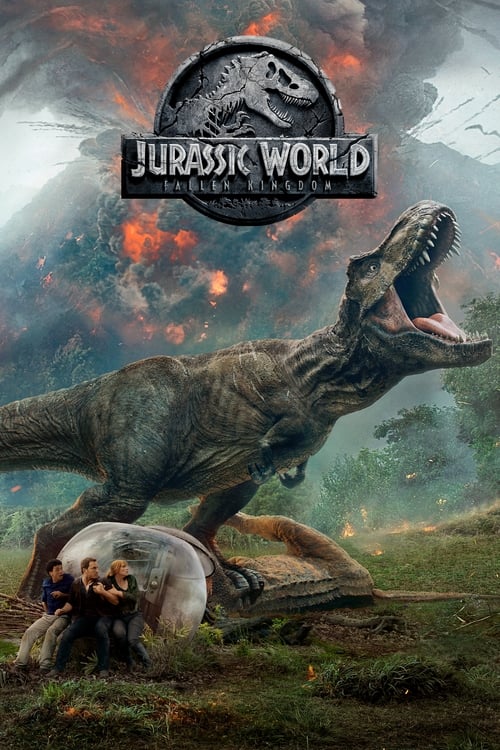
Jurassic World: Fallen Kingdom - Review
Jurassic World: Fallen Kingdom - A Roaring Spectacle with Uneven Teeth
Three years after the catastrophic collapse of Jurassic World, director J.A. Bayona takes the reins of the franchise with Jurassic World: Fallen Kingdom. The film promises a rescue mission fraught with peril, a volcanic eruption threatening to wipe out the remaining dinosaurs, and a conspiracy that delves into the darker side of genetic engineering. While the film delivers on spectacle and thrilling action sequences, it stumbles with a convoluted plot and character development that often feels secondary to the visual effects extravaganza. Is it a worthy successor to the Jurassic Park legacy, or just another dino-sized disappointment? Let's delve in.
Plot: From Rescue Mission to Gothic Horror
The film opens with a daring, albeit somewhat implausible, underwater retrieval mission to secure DNA from the Indominus Rex skeleton. This sets the stage for the core conflict: Isla Nublar's long-dormant volcano is awakening, threatening to render the island – and its resident dinosaurs – extinct. Claire Dearing (Bryce Dallas Howard), now a dedicated dinosaur rights activist, is approached by Benjamin Lockwood (James Cromwell), John Hammond's former partner, and his estate manager, Eli Mills (Rafe Spall), with a proposal to rescue the dinosaurs and relocate them to a sanctuary island. Of course, Owen Grady (Chris Pratt) is also brought on board, primarily to track down Blue, the highly intelligent Velociraptor he trained.
The first act is a thrilling race against time as Owen, Claire, and a team of mercenaries, led by the ruthless Ken Wheatley (Ted Levine), navigate the crumbling landscape of Isla Nublar, dodging lava flows and stampeding dinosaurs. The volcanic eruption is genuinely spectacular, showcasing Bayona's talent for crafting visually stunning disaster sequences. However, the film takes a sharp turn when the rescue mission proves to be a facade. The dinosaurs are not being relocated to a sanctuary; instead, they are being transported to Lockwood's estate for auction to the highest bidder, a global consortium of arms dealers and unscrupulous collectors.
This shift transforms the film from a disaster movie into a gothic horror thriller, with the dinosaurs confined within the dark, imposing Lockwood Manor. The introduction of the Indoraptor, a genetically engineered hybrid designed for military applications, further amplifies the horror elements. The Indoraptor, with its unsettling design and predatory intelligence, is a genuinely terrifying creature, and its stalking of Maisie Lockwood (Isabella Sermon), Benjamin Lockwood's supposed granddaughter, adds a layer of suspense and vulnerability.
However, the plot's ambition is also its downfall. The transition from a natural disaster scenario to a clandestine auction and the introduction of the Indoraptor feel somewhat disjointed. The film attempts to juggle too many narrative threads, resulting in a rushed and somewhat convoluted climax. The motivations of some characters, particularly Eli Mills, feel underdeveloped, making his villainy feel more cartoonish than menacing.
Characters: Familiar Faces and Missed Opportunities
Owen Grady (Chris Pratt): Pratt continues to embody the rugged charm and dinosaur-whispering abilities of Owen Grady. He's the action hero we expect, delivering witty one-liners and displaying unwavering bravery. However, his character arc feels somewhat stagnant. He's still primarily motivated by his connection to Blue, and his relationship with Claire, while hinted at, never fully develops. The emotional depth that was present in the first Jurassic World is largely absent here.
Claire Dearing (Bryce Dallas Howard): Claire undergoes a significant transformation from the corporate executive of the first film to a passionate dinosaur rights advocate. Howard portrays this shift convincingly, showcasing Claire's newfound empathy and determination to protect the dinosaurs. However, her character often falls into the damsel-in-distress trope, relying on Owen to rescue her from perilous situations. While she takes initiative in certain moments, her agency is often undermined by the narrative's focus on Owen's action heroics.
Maisie Lockwood (Isabella Sermon): Maisie Lockwood is a crucial character, serving as the emotional core of the film and the catalyst for its controversial conclusion. Sermon delivers a solid performance, capturing Maisie's curiosity, vulnerability, and growing awareness of her unique heritage. However, the film's reliance on Maisie as a plot device, particularly in the final act, feels somewhat manipulative.
Eli Mills (Rafe Spall): Eli Mills is the film's primary antagonist, driven by greed and a desire to profit from the sale of the dinosaurs. Spall's performance is adequate, but the character lacks depth and complexity. His motivations are simplistic, and he comes across as a generic corporate villain rather than a truly compelling antagonist. His demise is predictable and ultimately unsatisfying.
Benjamin Lockwood (James Cromwell): Cromwell brings gravitas to the role of Benjamin Lockwood, John Hammond's former partner. His character provides a link to the original Jurassic Park and raises ethical questions about the consequences of genetic engineering. However, his role is relatively limited, and his character ultimately serves as a plot device to introduce Maisie and the Lockwood estate.
Supporting Characters: The supporting characters, including the mercenaries and the auction attendees, are largely forgettable. They serve primarily as cannon fodder or caricatures of greed and corruption. The film misses an opportunity to develop these characters and explore the broader implications of the dinosaur trade.
Direction: Bayona's Gothic Touch
J.A. Bayona brings his signature visual flair to Fallen Kingdom, creating a visually stunning and often terrifying experience. His direction is particularly effective in the film's second half, transforming Lockwood Manor into a gothic haunted house. The shadows, the claustrophobic corridors, and the lurking presence of the Indoraptor create a palpable sense of dread and suspense. Bayona also excels at crafting thrilling action sequences, particularly the volcanic eruption on Isla Nublar and the Indoraptor's rampage through the mansion.
However, Bayona's direction is not without its flaws. The film's pacing is uneven, with the first act feeling rushed and the second act dragging in certain moments. The dialogue is often clunky and exposition-heavy, detracting from the overall narrative flow. Furthermore, Bayona's reliance on jump scares and visual spectacle sometimes overshadows the film's thematic concerns.
Cinematography: A Feast for the Eyes
Oscar Faura's cinematography is one of the film's strongest assets. He captures the beauty and terror of Isla Nublar's volcanic eruption with breathtaking visuals, showcasing the raw power of nature. The film's color palette is rich and vibrant, particularly in the scenes set on the island. The use of lighting is also masterful, creating a sense of unease and foreboding in the Lockwood Manor sequences. Faura's cinematography elevates the film's visual impact, making it a truly immersive experience.
Performances: Pratt and Howard Carry the Weight
Chris Pratt and Bryce Dallas Howard deliver solid performances, carrying the weight of the franchise on their shoulders. Pratt embodies the action hero archetype with ease, while Howard portrays Claire's transformation with conviction. However, their performances are somewhat limited by the script's lack of depth and complexity. The supporting cast is largely forgettable, with Rafe Spall's villainous performance feeling particularly underwhelming.
Themes and Messages: Evolution, Responsibility, and the Value of Life
Fallen Kingdom explores several complex themes, including the ethical implications of genetic engineering, the responsibility humans have towards the creatures they create, and the inherent value of all life. The film raises questions about whether humans have the right to play God and whether the pursuit of scientific advancement should come at the expense of ethical considerations.
The film also touches upon the theme of evolution, both natural and artificial. The dinosaurs are presented as creatures that are constantly adapting and evolving, while the Indoraptor represents the dangers of manipulating evolution for military purposes. The film suggests that tampering with nature can have unforeseen and potentially catastrophic consequences.
Ultimately, Fallen Kingdom argues for the inherent value of all life, regardless of its origin or genetic makeup. The film challenges viewers to consider the moral implications of treating dinosaurs as mere commodities and to recognize their right to exist. The controversial decision to release the dinosaurs into the wild at the end of the film underscores this message, suggesting that the future of these creatures is uncertain but ultimately their own.
Comparisons: A Blend of Familiar and New
Fallen Kingdom draws inspiration from several previous films in the Jurassic Park franchise, particularly The Lost World: Jurassic Park, which also featured a dinosaur rescue mission and a relocation to the mainland. The film's gothic horror elements are reminiscent of Jurassic Park III, which also featured a darker and more suspenseful tone. However, Fallen Kingdom also introduces new elements, such as the dinosaur auction and the Indoraptor, which set it apart from its predecessors.
Compared to Colin Trevorrow's Jurassic World, Fallen Kingdom is a more visually ambitious and thematically complex film. However, it lacks the narrative coherence and character development that made Jurassic World a commercial success. While Fallen Kingdom offers a more thrilling and suspenseful experience, it ultimately feels less satisfying due to its convoluted plot and underdeveloped characters.
Positive Aspects: Spectacle and Suspense
- Visual Spectacle: The volcanic eruption on Isla Nublar and the Indoraptor's rampage are visually stunning and memorable sequences.
- Suspenseful Atmosphere: The gothic horror elements in the Lockwood Manor sequences create a palpable sense of dread and suspense.
- Ethical Themes: The film raises important ethical questions about genetic engineering and the responsibility humans have towards the creatures they create.
- Bayona's Direction: J.A. Bayona's direction is visually dynamic and creates a thrilling cinematic experience.
Constructive Criticism: Plot and Character Issues
- Convoluted Plot: The film attempts to juggle too many narrative threads, resulting in a rushed and somewhat disjointed climax.
- Underdeveloped Characters: The characters, particularly the villains and supporting cast, lack depth and complexity.
- Uneven Pacing: The film's pacing is uneven, with the first act feeling rushed and the second act dragging in certain moments.
- Reliance on Jump Scares: The film relies too heavily on jump scares, which detract from the overall narrative impact.
Conclusion: A Thrilling but Flawed Addition to the Franchise
Jurassic World: Fallen Kingdom is a visually stunning and often thrilling addition to the Jurassic Park franchise. J.A. Bayona's direction and Oscar Faura's cinematography create a truly immersive and suspenseful experience. However, the film's convoluted plot and underdeveloped characters prevent it from reaching its full potential. While it raises important ethical questions and offers moments of genuine excitement, Fallen Kingdom ultimately feels like a missed opportunity. It prioritizes spectacle over substance, leaving the audience entertained but ultimately unfulfilled.
Rating: 6.5/10