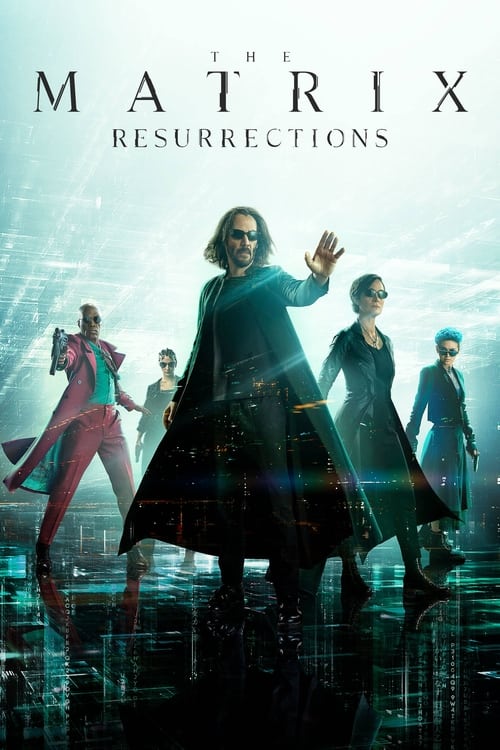
The Matrix Resurrections - Review
The Matrix Resurrections: A Glitch in the System or a Reboot Worth Rebooting?
Twenty years after Neo and Trinity rode off into the digital dawn, promising a revolution, The Matrix Resurrections crash-landed into theaters, loaded with nostalgia, meta-commentary, and the weighty expectations of a fanbase yearning for more. Was it a triumphant return to form, a bold new direction, or a digital mirage best left undisturbed? The answer, as with most things Matrix, is complex, layered, and ultimately, divisive.
Plot: Déjà Vu All Over Again?
The narrative picks up with Thomas Anderson (Keanu Reeves), a successful video game designer haunted by visions of a life he can't quite grasp. He's the creator of "The Matrix," a trilogy of games that eerily mirrors the events of the original films. His therapist prescribes blue pills to suppress his anxieties, a clear callback to the franchise's iconic choice. Enter Tiffany (Carrie-Anne Moss), a married mother who bears a striking resemblance to Trinity and frequents the same coffee shop as Thomas. Their connection is palpable, a magnetic pull that defies the mundane reality they inhabit.
Meanwhile, a new generation of rebels, led by Bugs (Jessica Henwick), a ship captain with a white rabbit tattoo, believes Neo is still alive and seeks to awaken him. They succeed, revealing that Neo is indeed trapped within a newly constructed Matrix, engineered by the Analyst (Neil Patrick Harris), a program designed to control Neo's powers and prevent another war between humans and machines.
The plot then becomes a rescue mission, with Neo and Trinity needing to rediscover their connection and fight their way out of the Matrix, facing familiar enemies and navigating a world that has evolved in their absence. The film throws in new concepts, such as the "Modal," a virtual space used for training and simulation, and explores the evolving relationship between humans and machines, with some machines now siding with humanity.
Positive Aspects: The initial setup is intriguing, playing on the meta-narrative of the original films' impact on popular culture. The exploration of Neo's and Trinity's enduring love story is genuinely touching, and the action sequences, while not as groundbreaking as the originals, are still visually impressive. The film also attempts to grapple with contemporary issues, such as the dangers of misinformation and the power of collective action.
Constructive Criticism: The plot often feels derivative, relying heavily on nostalgia and rehashing familiar tropes from the original trilogy. The pacing is uneven, with long stretches of exposition interspersed with action sequences. Some of the new characters, while interesting in concept, lack the depth and development needed to truly resonate. The explanation for Neo's and Trinity's resurrection feels somewhat convoluted and unsatisfying.
Characters: Old Faces, New Roles, and Some Missed Potential
Neo (Keanu Reeves): Reeves delivers a nuanced performance, portraying Neo's initial confusion and despair with vulnerability. He effectively captures the character's struggle to reconcile his past with his present, and his eventual embrace of his destiny. However, the Neo of Resurrections feels less proactive and more reactive than his earlier incarnation, often relying on others to guide him.
Trinity (Carrie-Anne Moss): Moss shines as Trinity, imbuing her with both strength and vulnerability. Her connection with Neo is the emotional core of the film, and their scenes together are among the most compelling. However, the film initially relegates Trinity to a more passive role, which feels like a disservice to the character's legacy. Thankfully, she eventually reclaims her agency and becomes an active participant in the fight.
Bugs (Jessica Henwick): Henwick is a welcome addition to the cast, bringing energy and enthusiasm to the role of Bugs. She is a capable and resourceful leader, driven by her belief in Neo and her desire to free humanity. However, her character could have benefited from more backstory and development.
The Analyst (Neil Patrick Harris): Harris delivers a chilling performance as the Analyst, a manipulative and calculating program who has taken on a human form. He is a compelling antagonist, but his motivations and methods are not always clearly defined.
Morpheus (Yahya Abdul-Mateen II): Abdul-Mateen II takes on the iconic role of Morpheus, but his interpretation feels more like an imitation than a true reimagining. While he captures some of Morpheus's charisma and wisdom, he lacks the gravitas and presence of Laurence Fishburne. The explanation for his different appearance is also somewhat flimsy.
Positive Aspects: Reeves and Moss effortlessly recapture the chemistry that made Neo and Trinity such an iconic couple. Henwick is a standout, bringing fresh energy to the franchise. Harris is a compelling villain, adding a new dimension to the conflict between humans and machines.
Constructive Criticism: The recasting of Morpheus is a controversial decision that ultimately detracts from the film. Some of the new characters feel underdeveloped, and their motivations are not always clear. The film relies too heavily on nostalgia, rehashing familiar character arcs and relationships without adding significant new dimensions.
Direction and Cinematography: A Visual Feast, But Lacking Innovation
Lana Wachowski returns as director, but without her sister Lilly, the directorial vision feels somewhat diluted. While the film retains the visual flair of the original trilogy, it lacks the groundbreaking innovation that made the first Matrix so revolutionary.
The cinematography is slick and stylish, with vibrant colors and dynamic camera movements. The action sequences are well-choreographed and visually engaging, but they often rely on CGI to an excessive degree, which can detract from the sense of realism. The film also incorporates elements of the original trilogy's visual language, such as bullet time and slow-motion effects, but these techniques feel less impactful than they did in the past.
Positive Aspects: The film is visually stunning, with impressive special effects and well-designed sets. The action sequences are exciting and entertaining, even if they lack the originality of the original trilogy. The film incorporates elements of the original trilogy's visual language in a way that feels respectful and nostalgic.
Constructive Criticism: The direction lacks the boldness and innovation that defined the original Matrix. The overuse of CGI can detract from the sense of realism. The film relies too heavily on visual spectacle at the expense of character development and plot coherence.
Themes and Messages: Love, Choice, and the Power of Belief
The Matrix Resurrections explores a range of themes, including the power of love, the importance of choice, and the transformative potential of belief. The film argues that love is a powerful force that can transcend even the most rigid structures of reality. Neo and Trinity's enduring connection is the driving force behind their actions, and their willingness to fight for each other is what ultimately allows them to break free from the Matrix.
The film also reinforces the importance of choice, reminding us that we are not simply puppets of fate. Even within the confines of the Matrix, we have the power to choose our own path and to shape our own destiny. Neo's decision to take the red pill in the first film is echoed in the choices that he and Trinity make in Resurrections, demonstrating that the power of choice is a constant throughout the franchise.
Finally, the film emphasizes the transformative potential of belief. Neo and Trinity's belief in each other, and in the possibility of a better future, is what ultimately allows them to overcome the obstacles in their path. The film suggests that our beliefs can shape our reality, and that by believing in ourselves and in each other, we can create a world that is more just and equitable.
Positive Aspects: The film explores complex and thought-provoking themes that resonate with contemporary audiences. It offers a message of hope and empowerment, suggesting that we have the power to create a better future. The film encourages viewers to question the nature of reality and to challenge the systems that control them.
Constructive Criticism: The film's themes are not always clearly articulated, and they can sometimes feel muddled or contradictory. The film's message of empowerment is somewhat undermined by the fact that Neo and Trinity are ultimately dependent on others to help them achieve their goals. The film's exploration of contemporary issues, such as misinformation and social media, feels somewhat superficial and underdeveloped.
Comparison to Other Films and Previous Works
The Matrix Resurrections inevitably invites comparisons to the original Matrix trilogy, as well as to other science fiction films that explore similar themes. The film's meta-narrative and self-referential humor are reminiscent of films like Scream and Adaptation, which also play with the conventions of their respective genres.
The film's exploration of virtual reality and artificial intelligence also draws parallels to films like Tron, Blade Runner, and Ghost in the Shell. However, The Matrix Resurrections distinguishes itself by its focus on the human element, emphasizing the importance of love, connection, and belief in a world increasingly dominated by technology.
Compared to Lana Wachowski's other works, such as Cloud Atlas and Sense8, The Matrix Resurrections feels less ambitious and more constrained. While the film retains Wachowski's signature visual style and thematic concerns, it lacks the scope and complexity of her earlier projects.
Positive Aspects: The film pays homage to the original Matrix trilogy while also attempting to carve out its own identity. It engages with contemporary themes and issues in a way that is both relevant and thought-provoking. The film showcases Lana Wachowski's unique visual style and thematic concerns.
Constructive Criticism: The film relies too heavily on nostalgia, rehashing familiar tropes and characters from the original trilogy. It lacks the originality and innovation that made the first Matrix so groundbreaking. The film feels less ambitious and more constrained than Lana Wachowski's other works.
Conclusion
The Matrix Resurrections is a flawed but fascinating film that attempts to recapture the magic of the original trilogy while also forging its own path. While it falls short of its lofty ambitions, it offers moments of genuine emotion, visual spectacle, and thought-provoking commentary. The film is sure to divide audiences, with some appreciating its meta-narrative and nostalgic callbacks, while others will find it to be a derivative and unnecessary sequel. Ultimately, whether you enjoy The Matrix Resurrections will depend on your expectations and your willingness to embrace its unconventional approach.
While not a complete failure, it doesn't quite reach the heights of the original. It's a glitchy, but ultimately interesting, addition to the Matrix universe.