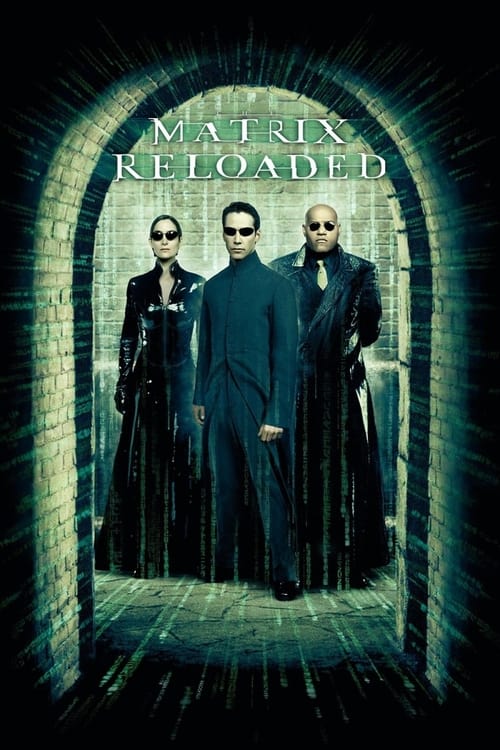
The Matrix Reloaded - Review
The Matrix Reloaded: A Deep Dive into the Sequel That Divided Fans
Six months after Neo chose the red pill and embraced his destiny, the Wachowskis returned with The Matrix Reloaded, a sequel that promised to expand upon the revolutionary world they had created. Released in 2003, the film was met with immense anticipation, fueled by the groundbreaking success of its predecessor. However, while The Matrix was universally lauded, Reloaded sparked a fierce debate, dividing audiences and critics alike. Was it a worthy successor, or a convoluted mess that betrayed the original's brilliance? Let's delve into the depths of the Matrix to find out.
Plot: Expanding the Universe, Complicating the Narrative
Reloaded picks up the story with Neo (Keanu Reeves) having embraced his role as "The One." More and more humans are being freed from the Matrix and brought to Zion, the last human city, which is now facing an imminent attack by a quarter of a million Sentinels. The film throws us headfirst into the escalating war between humans and machines, raising the stakes considerably. Neo, Morpheus (Laurence Fishburne), and Trinity (Carrie-Anne Moss) embark on a quest, guided by the Oracle (Gloria Foster, in her final role), to find the Keymaker (Randall Duk Kim) who can lead them to the Source, the heart of the Matrix.
The plot is significantly more complex than the original. While The Matrix was a relatively straightforward hero's journey, Reloaded introduces layers of philosophy, mythology, and intricate subplots. The introduction of characters like the Merovingian (Lambert Wilson), Persephone (Monica Bellucci), and the Architect (Helmut Bakaitis) adds depth to the world but also contributes to the film's perceived convolution. The Merovingian, a powerful program with a penchant for information and control, presents a formidable obstacle. His scenes are filled with cryptic dialogue and a sense of decadent power, adding a unique flavor to the Matrix's digital landscape.
One of the central conflicts revolves around Neo's recurring dreams of Trinity's death. This premonition weighs heavily on him, forcing him to grapple with his destiny and the limits of his power. The film explores the idea of choice versus fate, questioning whether Neo's actions are predetermined or if he truly has the power to alter the course of events.
The emergence of Agent Smith (Hugo Weaving) as a self-replicating virus is another crucial plot point. No longer bound by the rules of the Matrix, Smith has become a rogue program with the ability to assimilate others, creating an army of himself. This development adds a new dimension to the conflict, transforming Smith from a mere antagonist into a formidable force that threatens both humans and machines.
Criticism: The plot's complexity is both a strength and a weakness. While it expands the universe and explores deeper themes, it can also feel convoluted and overwhelming. Some viewers found the philosophical discussions and intricate subplots distracting from the core narrative, leading to a sense of disconnect. The film also suffers from pacing issues, with lengthy exposition dumps and drawn-out action sequences that sometimes detract from the overall momentum.
Characters: Evolution and New Additions
Reloaded sees the return of the core trio: Neo, Morpheus, and Trinity. Neo continues his journey of self-discovery, grappling with his powers and the responsibilities that come with being "The One." He struggles with the weight of expectations and the realization that his choices have far-reaching consequences. Keanu Reeves delivers a more confident and assured performance, showcasing Neo's growing mastery of his abilities.
Morpheus remains steadfast in his belief in Neo, serving as his mentor and guiding force. Laurence Fishburne imbues the character with unwavering conviction and gravitas. However, some critics felt that Morpheus's role was somewhat diminished in Reloaded, overshadowed by Neo's burgeoning powers and the introduction of new characters.
Trinity, played by Carrie-Anne Moss, continues to be a strong and capable fighter, but her character is also given more emotional depth. Her relationship with Neo is explored further, adding a romantic dimension to the narrative. The premonition of her death hangs over her, creating a sense of vulnerability that contrasts with her usual stoicism.
Agent Smith's evolution is one of the most compelling aspects of Reloaded. Hugo Weaving delivers a masterful performance, portraying Smith's transformation from a rigid enforcer to a rebellious virus with chilling intensity. His ability to replicate himself adds a terrifying new dimension to his character, making him a truly formidable adversary.
The new characters introduced in Reloaded add to the richness of the Matrix universe. The Merovingian, played with flamboyant eccentricity by Lambert Wilson, is a memorable addition. His scenes are filled with intrigue and a sense of old-world power. Persephone, played by Monica Bellucci, adds a touch of mystery and allure to the Merovingian's realm.
The Keymaker, played by Randall Duk Kim, is a crucial character who holds the key to accessing the Source. His calm demeanor and unwavering dedication to his purpose make him a valuable ally to Neo and his team.
Criticism: While the returning characters are well-developed, some of the new additions feel underdeveloped or serve primarily as plot devices. The Merovingian, while entertaining, can feel somewhat tangential to the main narrative. The Oracle's cryptic pronouncements, while intriguing, can also be frustratingly vague.
Direction and Cinematography: Pushing the Boundaries of Visual Effects
The Wachowskis once again demonstrate their mastery of visual storytelling in Reloaded. The film is a visual feast, pushing the boundaries of CGI and special effects. The action sequences are even more elaborate and stylized than in the original, showcasing Neo's superhuman abilities in breathtaking fashion.
The "Burly Brawl" scene, in which Neo fights hundreds of Agent Smiths, is a standout sequence that exemplifies the film's innovative use of visual effects. The sheer scale and complexity of the fight are awe-inspiring, and the choreography is both visually stunning and physically demanding.
The highway chase scene is another memorable set piece, featuring a thrilling combination of car chases, gunfights, and acrobatic stunts. The use of slow-motion and bullet-time effects is further refined, creating a sense of heightened reality.
The film's cinematography, once again helmed by Bill Pope, is visually striking. The use of color is deliberate and impactful, with the green hues of the Matrix contrasting with the stark, metallic tones of the real world. The lighting is used to create a sense of atmosphere and tension, enhancing the film's overall mood.
Criticism: While the visual effects are impressive, some critics felt that they were overused, detracting from the film's narrative and emotional impact. The reliance on CGI can sometimes make the action sequences feel less grounded and more artificial. The film's visual style, while distinctive, can also feel somewhat repetitive, lacking the freshness and originality of the original.
Performances: Reeves, Weaving, and the Ensemble Cast
Keanu Reeves delivers a solid performance as Neo, showcasing his character's growth and evolution. He portrays Neo's internal struggles and his growing confidence with conviction. However, some critics felt that Reeves's performance lacked the emotional depth needed to fully convey Neo's internal conflicts.
Hugo Weaving steals the show as Agent Smith. His portrayal of the rogue program is both menacing and captivating. He imbues Smith with a chilling sense of purpose and a sardonic wit that makes him a truly memorable villain. Weaving's performance is a highlight of the film, and his presence elevates every scene he's in.
Laurence Fishburne and Carrie-Anne Moss deliver strong performances as Morpheus and Trinity, respectively. They bring a sense of gravitas and emotional depth to their roles, grounding the film's more fantastical elements.
The supporting cast, including Lambert Wilson, Monica Bellucci, and Randall Duk Kim, also deliver memorable performances, adding to the richness and complexity of the Matrix universe.
Criticism: While the performances are generally strong, some critics felt that the actors were sometimes overshadowed by the film's visual effects and complex plot. The emotional connections between the characters can sometimes feel strained, particularly in the romantic subplot between Neo and Trinity.
Themes and Messages: Exploring Choice, Fate, and Control
Reloaded delves deeper into the philosophical themes introduced in the original film. The film explores the nature of reality, questioning what is real and what is simulated. It raises questions about free will versus determinism, and the extent to which our choices are predetermined.
The concept of choice is a central theme in Reloaded. Neo is constantly faced with difficult decisions, and his choices have far-reaching consequences. The film explores the idea that even in a simulated reality, we still have the power to choose our own path.
The theme of control is also prominent in Reloaded. The machines seek to control humanity through the Matrix, while the Merovingian seeks to control information and power. The film suggests that the struggle for control is a constant battle, both within the Matrix and in the real world.
The film also explores the nature of love and sacrifice. Neo's love for Trinity motivates him to risk his own life to save her. The film suggests that love is a powerful force that can transcend even the most difficult circumstances.
Criticism: The film's philosophical themes can sometimes feel heavy-handed and overly didactic. The lengthy exposition dumps and cryptic dialogue can detract from the film's emotional impact. Some viewers found the philosophical discussions pretentious and ultimately unsatisfying.
Comparison to Other Films and Previous Works
The Matrix Reloaded builds upon the foundation laid by its predecessor, The Matrix. It expands the universe, introduces new characters, and delves deeper into the philosophical themes. However, it also differs from the original in several key aspects. Reloaded is more complex, more visually ambitious, and more philosophically dense.
Compared to other science fiction films, Reloaded stands out for its innovative visual effects, its philosophical depth, and its unique blend of action and intellectualism. It shares thematic similarities with films like Blade Runner, Dark City, and Ghost in the Shell, which also explore the nature of reality and the relationship between humans and machines.
The Wachowskis' subsequent works, such as Speed Racer and Cloud Atlas, further demonstrate their penchant for visual experimentation and complex storytelling. However, none of their later films have achieved the same level of cultural impact as The Matrix.
Criticism: While Reloaded builds upon the foundation laid by The Matrix, it also suffers in comparison. The original's simplicity and clarity are lost in the sequel's complexity and convolution. The action sequences, while impressive, lack the visceral impact of the original's more grounded fight scenes. The philosophical discussions, while intriguing, can feel pretentious and ultimately unsatisfying.
Positive Aspects
- Visually stunning and groundbreaking special effects
- Expands the Matrix universe with new characters and locations
- Explores complex philosophical themes about choice, fate, and control
- Hugo Weaving's exceptional performance as Agent Smith
- Ambitious and thought-provoking storytelling
Constructive Criticism
- Overly complex plot that can feel convoluted and overwhelming
- Lengthy exposition dumps and cryptic dialogue that detract from the narrative
- Overreliance on CGI that can make the action sequences feel artificial
- Some underdeveloped characters and tangential subplots
- Philosophical themes can feel heavy-handed and pretentious
Conclusion
The Matrix Reloaded is a flawed but fascinating sequel that attempts to expand upon the groundbreaking world created in The Matrix. While it suffers from an overly complex plot, an overreliance on CGI, and some heavy-handed philosophical discussions, it also offers visually stunning action sequences, compelling performances (especially from Hugo Weaving), and a thought-provoking exploration of choice, fate, and control. It's a film that demands multiple viewings to fully appreciate its intricacies, and its divisive nature continues to spark debate among fans. Ultimately, The Matrix Reloaded is a bold and ambitious sequel that, while not reaching the heights of its predecessor, remains a significant and influential work of science fiction cinema.