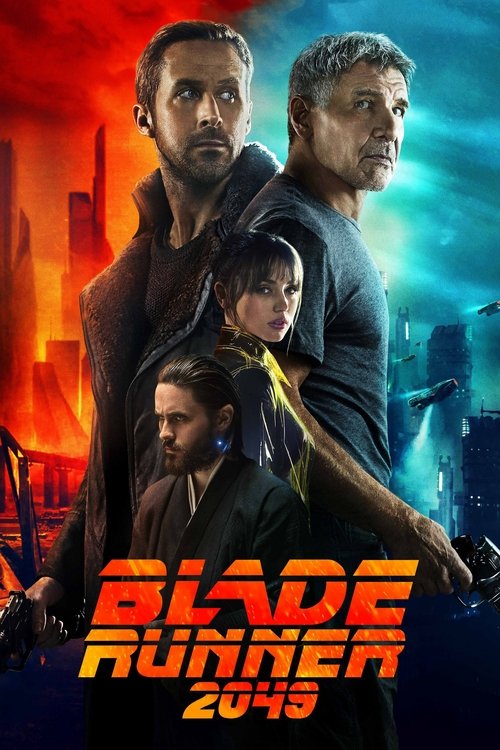
Blade Runner 2049 - Review
Blade Runner 2049: A Neon-Drenched Masterpiece of Existential Dread
Thirty-five years after Ridley Scott’s groundbreaking Blade Runner posed the question of what it means to be human, Denis Villeneuve returned to that dystopian landscape with Blade Runner 2049. A daunting task, to be sure, considering the original's iconic status and the decades of philosophical debate it sparked. But Villeneuve, a director known for his meticulous craftsmanship and thought-provoking narratives, didn't just deliver a sequel; he crafted a breathtaking, melancholic, and deeply resonant cinematic experience that stands shoulder-to-shoulder with its predecessor, while forging its own distinct identity. This isn't just a sci-fi spectacle; it's a profound meditation on memory, identity, and the very soul of existence.
Plot: Unraveling the Secrets of Humanity
Blade Runner 2049 picks up three decades after Rick Deckard’s (Harrison Ford) disappearance. The world is even more bleak and polluted, with humanity clinging to survival in overcrowded cities and vast, desolate wastelands. The Tyrell Corporation is gone, replaced by the Wallace Corporation, led by the enigmatic and ambitious Niander Wallace (Jared Leto), who has perfected the replicant technology, making them more docile and readily disposable. Our protagonist is K (Ryan Gosling), a replicant blade runner working for the LAPD, tasked with hunting down and "retiring" older, rogue replicants.
K's routine existence is shattered when he discovers a long-buried secret: a replicant was able to conceive and give birth to a child. This revelation has the potential to destabilize the already fragile balance between humans and replicants, threatening the established order. K is ordered by his superior, Lieutenant Joshi (Robin Wright), to find and eliminate the child, fearing the chaos such a discovery could unleash. However, as K delves deeper into the mystery, he begins to question his own identity and purpose, blurring the lines between hunter and hunted, human and replicant. His investigation leads him on a perilous journey to find Deckard, the key to unlocking the truth behind the child’s birth and the future of both humans and replicants.
The plot is meticulously crafted, unfolding at a deliberate pace that allows the audience to fully immerse themselves in the world and contemplate the complex themes at play. The mystery surrounding the replicant child is compelling, and the journey K undertakes is fraught with danger and existential questioning. While the narrative is complex, it remains engaging and rewarding, offering layers of meaning that reveal themselves upon multiple viewings.
Characters: Echoes of Humanity in a Synthetic World
The characters in Blade Runner 2049 are complex and deeply flawed, mirroring the moral ambiguity of the world they inhabit.
K (Ryan Gosling)
Ryan Gosling delivers a career-defining performance as K, a replicant blade runner grappling with his own identity and purpose. K is a stoic and reserved character, haunted by the knowledge of his artificial origins. He yearns for connection and meaning, finding solace in his holographic AI companion, Joi. Gosling masterfully portrays K's internal struggle, conveying a sense of quiet desperation and a yearning for something more than his programmed existence. His portrayal is nuanced and subtle, allowing the audience to empathize with his plight and question the very nature of humanity.
Rick Deckard (Harrison Ford)
Harrison Ford reprises his iconic role as Rick Deckard, now a hardened and disillusioned recluse. Deckard has spent the past three decades hiding from the world, haunted by his past and the choices he has made. Ford brings a world-weariness and vulnerability to the character, showing the toll that years of hiding and regret have taken on him. His interactions with K are charged with tension and suspicion, as both men try to unravel the truth about their past and the future of replicants.
Joi (Ana de Armas)
Ana de Armas delivers a captivating performance as Joi, K's holographic AI companion. Joi is more than just a virtual assistant; she is a source of comfort, companionship, and even love for K. She represents the potential for connection and intimacy in a world increasingly dominated by technology. De Armas imbues Joi with a sense of warmth, vulnerability, and genuine affection for K, making their relationship one of the most poignant aspects of the film. Her character raises profound questions about the nature of love, consciousness, and the blurring lines between the real and the artificial.
Niander Wallace (Jared Leto)
Jared Leto's portrayal of Niander Wallace is both mesmerizing and unsettling. Wallace is a visionary and a ruthless businessman, obsessed with perfecting replicant technology and expanding his influence. He sees replicants as a means to an end, disposable tools to be used and controlled. Leto brings a chilling intensity to the role, conveying Wallace's ambition and his unwavering belief in his own vision. While his screen time is limited, Wallace leaves a lasting impression as a powerful and enigmatic antagonist.
Lieutenant Joshi (Robin Wright)
Robin Wright delivers a strong and nuanced performance as Lieutenant Joshi, K's superior officer at the LAPD. Joshi is a pragmatic and cynical character, burdened with the responsibility of maintaining order in a chaotic world. She is torn between her duty to protect humanity and her growing understanding of the replicants' capacity for emotion and self-awareness. Wright portrays Joshi's internal conflict with subtlety and conviction, adding depth and complexity to the character.
Luv (Sylvia Hoeks)
Sylvia Hoeks is chillingly effective as Luv, Wallace's loyal and ruthless enforcer. Luv is a highly advanced replicant, devoid of empathy and completely dedicated to Wallace's goals. Hoeks portrays Luv with a cold and calculating demeanor, making her a formidable and terrifying antagonist. Her dedication to Wallace and her willingness to carry out his orders without question highlight the dangers of unchecked power and the dehumanization of replicants.
Direction: Villeneuve's Masterful Vision
Denis Villeneuve's direction is nothing short of masterful. He doesn't simply replicate the aesthetic of the original Blade Runner; he expands upon it, creating a world that is both familiar and strikingly new. Villeneuve's meticulous attention to detail is evident in every frame, from the sprawling cityscapes to the intimate character moments. He masterfully uses visual storytelling to convey the film's themes and emotions, creating a deeply immersive and thought-provoking cinematic experience.
Villeneuve's pacing is deliberate and measured, allowing the audience to fully absorb the atmosphere and contemplate the complex ideas at play. He trusts the audience to engage with the film on a deeper level, rather than relying on cheap thrills or exposition dumps. His direction is confident and assured, showcasing his skill as a visual storyteller and his ability to create emotionally resonant narratives.
He also masterfully balances the visual spectacle with the emotional core of the story. The action sequences are expertly choreographed and visually stunning, but they never overshadow the characters' emotional journeys. Villeneuve understands that the heart of Blade Runner 2049 lies in the characters' struggle to find meaning and purpose in a world that often seems devoid of both.
Cinematography: A Visual Symphony of Light and Shadow
Roger Deakins' cinematography is simply breathtaking. He paints a visual symphony of light and shadow, creating a world that is both beautiful and terrifying. The film is visually stunning, with its sprawling cityscapes, desolate wastelands, and rain-soaked streets. Deakins' use of color is masterful, creating a distinct visual palette that is both futuristic and evocative of classic film noir. The warm, muted tones of the interior spaces contrast sharply with the cold, harsh light of the exterior, reflecting the characters' internal struggles and the moral ambiguity of the world they inhabit.
Deakins' use of long takes and slow camera movements creates a sense of immersion and allows the audience to fully appreciate the beauty and detail of the world. He also expertly uses framing and composition to convey the characters' emotions and relationships. The cinematography is not just visually stunning; it is also integral to the storytelling, enhancing the film's themes and creating a deeply emotional experience.
Deakins won a well-deserved Academy Award for his work on Blade Runner 2049, and it's easy to see why. His cinematography is a masterclass in visual storytelling, elevating the film to a new level of artistic achievement.
Performances: A Cast at the Top of Their Game
The entire cast delivers exceptional performances, bringing depth and nuance to their respective roles. Ryan Gosling is perfectly cast as K, conveying the character's internal struggle with a quiet intensity. Harrison Ford delivers a nuanced and emotionally resonant performance as Rick Deckard, showing the toll that years of hiding and regret have taken on him. Ana de Armas is captivating as Joi, imbuing the character with warmth, vulnerability, and genuine affection for K. Jared Leto is chillingly effective as Niander Wallace, while Robin Wright delivers a strong and nuanced performance as Lieutenant Joshi. Sylvia Hoeks is terrifying as Luv, Wallace's loyal and ruthless enforcer.
The chemistry between the actors is palpable, adding to the realism and emotional impact of the film. The performances are understated and believable, allowing the audience to fully immerse themselves in the world and connect with the characters on a deeper level. The casting is perfect, with each actor bringing their own unique talents and strengths to their respective roles.
Themes and Messages: Exploring the Essence of Humanity
Blade Runner 2049 delves into a multitude of profound themes, including:
The Nature of Humanity:
The film continues the original's exploration of what it means to be human. It questions whether consciousness, emotions, and the ability to love are inherently human traits, or if they can be replicated in artificial beings. The replicants in the film demonstrate a capacity for empathy, self-awareness, and even sacrifice, blurring the lines between human and machine. The film challenges the audience to consider what truly defines humanity and whether it is solely based on biological origins.
Memory and Identity:
Memory plays a crucial role in shaping identity in Blade Runner 2049. K's implanted memories are central to his sense of self, and his quest to uncover the truth about his past forces him to question his own identity. The film explores the idea that memories, whether real or artificial, can shape our perceptions of ourselves and the world around us. It also raises questions about the reliability of memory and the potential for manipulation.
Love and Connection:
In a world that is increasingly isolated and dehumanized, the search for love and connection is a central theme. K's relationship with Joi provides him with a sense of companionship and meaning, even though she is a holographic AI. The film explores the potential for love to transcend physical boundaries and the importance of human connection in a world dominated by technology. It also raises questions about the nature of love and whether it can exist between humans and artificial beings.
Free Will vs. Determinism:
The film explores the tension between free will and determinism, particularly in the context of replicants. Replicants are programmed to obey, but they also demonstrate a capacity for independent thought and action. The film questions whether replicants are truly free or if they are simply acting out pre-programmed behaviors. It also raises questions about the extent to which human beings are truly free, given the influence of genetics, environment, and social conditioning.
Hope and Sacrifice:
Despite its bleak and dystopian setting, Blade Runner 2049 offers a glimmer of hope. K's willingness to sacrifice himself for the greater good suggests that even in a world devoid of humanity, there is still the potential for altruism and compassion. The film suggests that hope can be found in the smallest of acts of kindness and that even in the face of overwhelming adversity, it is possible to make a difference.
Comparison to Other Films and Previous Works
Blade Runner 2049 inevitably draws comparisons to its predecessor, Blade Runner. While both films explore similar themes and exist in the same dystopian world, they also have distinct identities. Blade Runner is a more intimate and focused story, centered on Deckard's personal journey. Blade Runner 2049 is a more expansive and ambitious film, exploring broader themes and featuring a larger cast of characters. Both films are visually stunning and thought-provoking, but they offer different perspectives on the same world.
Villeneuve's direction in Blade Runner 2049 shares similarities with his other films, such as Arrival and Sicario. He is known for his meticulous attention to detail, his deliberate pacing, and his ability to create emotionally resonant narratives. Like his other films, Blade Runner 2049 is a visually stunning and thought-provoking cinematic experience that lingers in the mind long after the credits roll.
The film also draws comparisons to other science fiction films that explore similar themes, such as Ghost in the Shell, A.I. Artificial Intelligence, and Gattaca. These films all grapple with questions about the nature of humanity, the role of technology in society, and the search for meaning and purpose in a complex and often dehumanizing world.
Positive Aspects
- Stunning Visuals: Roger Deakins' cinematography is a masterpiece.
- Compelling Narrative: The plot is complex, engaging, and thought-provoking.
- Exceptional Performances: The entire cast delivers outstanding performances.
- Masterful Direction: Denis Villeneuve's vision is realized with precision and artistry.
- Profound Themes: The film explores a multitude of complex and relevant themes.
- Sound Design: The immersive sound design is integral to the atmosphere.
Constructive Criticism
- Pacing: The deliberate pace may not appeal to all viewers, some may find it slow.
- Length: The film's runtime is considerable, which could be a challenge for some.
- Jared Leto's Performance: While captivating, some may find his portrayal of Wallace overly theatrical.
- Narrative Complexity: The plot can be dense, requiring close attention and multiple viewings to fully grasp.
Conclusion
Blade Runner 2049 is not just a sequel; it's a profound and breathtaking cinematic experience that stands on its own merits. Denis Villeneuve has crafted a visually stunning, emotionally resonant, and intellectually stimulating film that explores the very essence of humanity. The performances are exceptional, the cinematography is masterful, and the themes are both timeless and relevant. While its deliberate pacing and complex narrative may not appeal to all viewers, Blade Runner 2049 is a must-see for fans of science fiction, philosophy, and thought-provoking cinema. It's a film that will stay with you long after the credits roll, prompting reflection and debate about the future of humanity and the nature of existence itself. It's a neon-drenched masterpiece of existential dread, a testament to the power of visual storytelling and the enduring appeal of the Blade Runner universe.