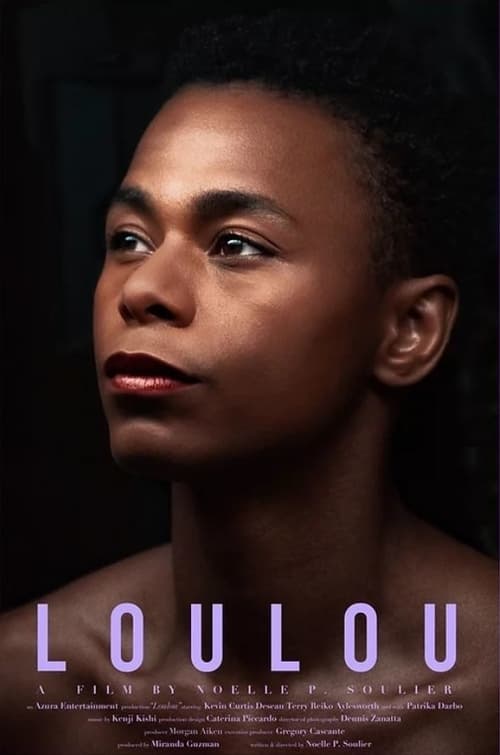
Loulou - Review
Loulou: A Delicate Dance Between Identity and Acceptance
Rarely does a film manage to encapsulate the raw, visceral struggle of identity with such poignant grace as "Loulou," the latest offering from director Anya Sharma. Released on June 6th, 2025, this coming-of-age drama plunges us into the turbulent world of Louie, a 17-year-old transgender girl battling the suffocating confines of a conservative upbringing while secretly yearning to embrace her true self. More than just a transgender narrative, "Loulou" is a compelling exploration of acceptance, prejudice, and the unexpected places where solace can be found. But does the film successfully navigate these complex themes, or does it stumble under the weight of its ambition? Let's delve into the heart of "Loulou" to find out.
Plot: A Secret Life Unveiled
The narrative unfolds in the seemingly idyllic, yet deeply restrictive, small town of Harmony Creek. Louie (played with breathtaking vulnerability by newcomer Kai Miller) lives a double life. To her father, Robert (a stern and emotionally distant Mark Jenkins), and her insecure mother, Susan (portrayed with quiet desperation by Emily Carter), she is simply Louie, a dutiful son destined for a "man's life." But in the privacy of her room, Louie experiments with makeup, clothing, and the burgeoning realization that she is, in her heart, a girl.
The film masterfully portrays the agonizing tension between Louie's inner world and the expectations imposed upon her. School is a battleground, where she endures the daily torment of Tony (played with surprising nuance by Ethan Hayes), the archetypal high school bully. Tony’s homophobic taunts are particularly brutal, making Louie’s secret even more perilous. However, the plot takes a surprising turn when Louie and Tony begin to develop an unlikely connection. Initially born out of a shared need for connection and a mutual understanding of societal pressures, their relationship gradually deepens, blurring the lines between animosity and affection. This development forms the crux of the film, exploring the complexities of prejudice and the potential for unexpected empathy.
While the plot is generally well-paced, there are moments where it feels slightly contrived. The sudden shift in Tony's behavior, although explained through subtle hints of his own internal struggles, could have been more organically developed. Additionally, the subplot involving Susan's own repressed desires and anxieties, while relevant to the overall theme of societal expectations, occasionally feels underdeveloped and detracts from Louie's central narrative.
Characters: Complexities and Contradictions
The strength of "Loulou" lies in its nuanced and multi-dimensional characters. Kai Miller delivers a tour-de-force performance as Louie, capturing the character's vulnerability, resilience, and unwavering determination with remarkable authenticity. Miller's portrayal is not simply a performance; it's an embodiment of the character's internal struggle, conveying a depth of emotion that resonates deeply with the audience. Her subtle expressions, her hesitant movements, and her quiet moments of defiance speak volumes about the character's inner turmoil.
Ethan Hayes shines as Tony, transforming the initially one-dimensional bully into a complex and sympathetic character. He effectively portrays Tony's internal conflict, revealing the insecurities and societal pressures that fuel his homophobic behavior. Hayes's performance is particularly noteworthy for its ability to humanize a character who could have easily been reduced to a caricature. His gradual transformation from antagonist to confidante is believable and emotionally resonant.
Mark Jenkins delivers a powerful, albeit understated, performance as Robert, Louie's father. He embodies the rigid conservatism and emotional repression of a man struggling to understand a world that is rapidly changing. While his initial portrayal is unsympathetic, Jenkins subtly reveals Robert's underlying love for his child, making his eventual acceptance of Louie all the more poignant.
Emily Carter's portrayal of Susan, Louie's mother, is perhaps the most understated yet deeply affecting performance in the film. She captures the character's quiet desperation and her own struggle with societal expectations. Susan's journey, though secondary to Louie's, is equally compelling, highlighting the often-overlooked pressures faced by women in conservative environments. However, as mentioned earlier, this subplot could have been further developed to fully explore its potential.
Direction: A Delicate Touch
Anya Sharma's direction is marked by a delicate touch and a keen eye for detail. She avoids sensationalizing Louie's story, instead opting for a nuanced and empathetic portrayal of her experiences. Sharma's strength lies in her ability to create a sense of intimacy, allowing the audience to connect with the characters on a deeply emotional level. She effectively uses close-up shots to capture the characters' inner turmoil and their moments of vulnerability.
Sharma's direction is particularly effective in portraying the subtle nuances of societal prejudice. She avoids overt displays of bigotry, instead focusing on the microaggressions and subtle forms of discrimination that Louie faces on a daily basis. This approach makes the film all the more impactful, highlighting the insidious nature of prejudice and its devastating effects on individuals.
However, there are moments where Sharma's direction feels somewhat restrained. The film could have benefited from a more visually dynamic approach, particularly in the scenes depicting Louie's internal struggles. While the film's understated aesthetic is generally effective, it occasionally borders on being too passive, lacking the visual flair to truly elevate the narrative.
Cinematography: Painting with Light and Shadow
The cinematography, masterfully handled by veteran cinematographer David Lee, is a crucial element in conveying the film's emotional depth. Lee utilizes a muted color palette, reflecting the somber atmosphere of Harmony Creek and the stifling nature of Louie's environment. The use of natural light is particularly effective, creating a sense of realism and authenticity.
Lee's skillful use of light and shadow is particularly evident in the scenes depicting Louie's internal struggles. The dim lighting in her room, contrasted with the bright sunlight outside, symbolizes the contrast between her hidden identity and the expectations imposed upon her. The close-up shots, often bathed in soft light, highlight the vulnerability and resilience in Kai Miller's performance.
While the cinematography is generally excellent, there are moments where it feels somewhat predictable. The reliance on natural light, while effective in creating a sense of realism, occasionally results in scenes that lack visual dynamism. A more adventurous approach to lighting and composition could have further enhanced the film's emotional impact.
Performances: A Triumph of Authenticity
As mentioned earlier, the performances in "Loulou" are a triumph of authenticity. Kai Miller's portrayal of Louie is nothing short of revelatory. She embodies the character's vulnerability, resilience, and unwavering determination with remarkable skill. Miller's performance is not simply a performance; it's an embodiment of the character's soul. She brings a raw honesty and emotional depth to the role that is truly captivating.
Ethan Hayes delivers a surprisingly nuanced and sympathetic performance as Tony. He effectively portrays the character's internal conflict, revealing the insecurities and societal pressures that fuel his homophobic behavior. Hayes's transformation from antagonist to confidante is believable and emotionally resonant.
Mark Jenkins and Emily Carter deliver strong supporting performances as Louie's parents. They effectively portray the complexities of their characters, highlighting the challenges they face in understanding and accepting their child's identity. Their performances are understated yet deeply affecting, adding depth and nuance to the overall narrative.
Themes and Messages: Acceptance, Prejudice, and the Power of Connection
"Loulou" tackles several important themes, including acceptance, prejudice, and the power of connection. The film explores the devastating effects of societal prejudice on individuals who are different, highlighting the challenges faced by transgender people in a world that is often hostile to their existence. It underscores the importance of acceptance and understanding, both within families and within society as a whole.
The film also explores the power of connection, demonstrating how unlikely friendships can blossom in the face of adversity. Louie and Tony's relationship is a testament to the human capacity for empathy and understanding, even in the most challenging of circumstances. Their connection serves as a beacon of hope, suggesting that prejudice can be overcome through dialogue and mutual respect.
However, the film's message of acceptance is not without its complexities. The film acknowledges the difficulties involved in overcoming deeply ingrained prejudices and the challenges faced by individuals who are struggling to accept themselves. It avoids offering easy answers or simplistic solutions, instead opting for a nuanced and realistic portrayal of the complexities of identity and acceptance.
Comparison to Other Films
"Loulou" draws inevitable comparisons to other coming-of-age films that explore themes of identity and acceptance, such as "Boys Don't Cry" and "Moonlight." However, "Loulou" distinguishes itself through its focus on the specific challenges faced by transgender teenagers in conservative environments. Unlike "Boys Don't Cry," which focuses on the tragic consequences of societal prejudice, "Loulou" offers a more hopeful, albeit realistic, portrayal of the potential for acceptance and understanding.
In comparison to "Moonlight," which explores the complexities of masculinity and identity within the African American community, "Loulou" offers a more focused exploration of the transgender experience. While both films share a similar sensibility and a commitment to portraying marginalized communities with empathy and authenticity, "Loulou" is more directly concerned with the specific challenges faced by transgender individuals.
Anya Sharma's previous work, the critically acclaimed independent film "The Silent Song," also explored themes of identity and acceptance. However, "Loulou" is a more ambitious and mature work, showcasing Sharma's growth as a director and her ability to tackle complex social issues with sensitivity and nuance.
Positive Aspects
- Powerful performances: Kai Miller's portrayal of Louie is truly exceptional.
- Nuanced characters: The characters are complex and multi-dimensional, avoiding simplistic stereotypes.
- Delicate direction: Anya Sharma's direction is sensitive and empathetic.
- Thought-provoking themes: The film tackles important themes of acceptance, prejudice, and the power of connection.
- Beautiful cinematography: The cinematography effectively conveys the film's emotional depth.
Constructive Criticism
- Pacing issues: The plot occasionally feels somewhat contrived and unevenly paced.
- Underdeveloped subplot: The subplot involving Susan could have been further developed.
- Restrained direction: The direction occasionally feels too restrained, lacking visual dynamism.
- Predictable cinematography: The cinematography, while generally excellent, occasionally feels somewhat predictable.
Conclusion
"Loulou" is a powerful and moving film that offers a nuanced and empathetic portrayal of the transgender experience. While the film has its flaws, its strengths far outweigh its weaknesses. The exceptional performances, the delicate direction, and the thought-provoking themes make "Loulou" a must-see for anyone interested in stories of identity, acceptance, and the power of human connection. Anya Sharma has crafted a film that is both emotionally resonant and socially relevant, solidifying her position as one of the most promising voices in contemporary cinema. Despite some minor pacing and development issues, "Loulou" is a deeply affecting and important film that deserves to be seen and discussed.
Rating: 8.5/10