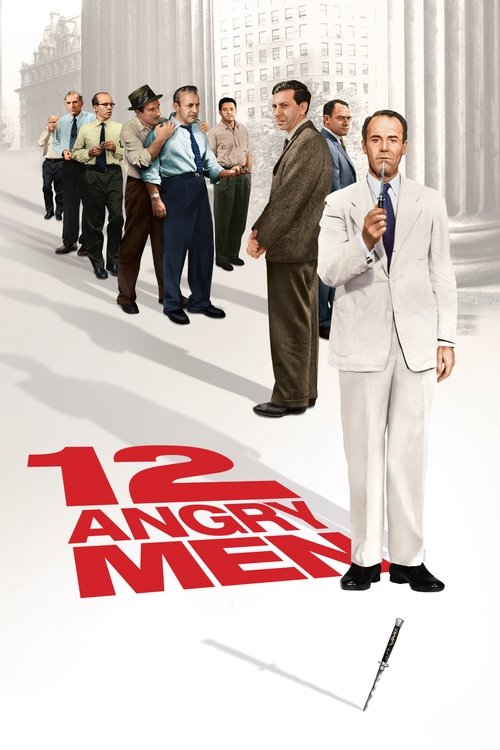
12 Angry Men - Review
A Pressure Cooker of Justice: A Review of "12 Angry Men"
Sidney Lumet's "12 Angry Men," released in 1957, isn't just a film; it's a masterclass in storytelling, a powerful indictment of prejudice, and a testament to the importance of critical thinking. Confined almost entirely to a single, stifling room, the film manages to be both claustrophobic and expansive, intimate and universal. More than six decades after its release, "12 Angry Men" remains as relevant and compelling as ever, a stark reminder that justice isn't always blind and that individual responsibility can be the difference between life and death.
Plot: A Room Where Lives Hang in the Balance
The premise of "12 Angry Men" is deceptively simple: twelve jurors are tasked with deciding the fate of a young man accused of murdering his father. The evidence seems overwhelming, and an initial vote reveals eleven men convinced of his guilt. However, one dissenting voice, Juror #8 (Henry Fonda), refuses to blindly follow the crowd. He raises reasonable doubts about the prosecution's case, prompting the other jurors to re-examine the evidence and their own biases. The film unfolds in real-time, meticulously tracking the shifting dynamics within the jury room as the jurors debate, argue, and confront their own prejudices. The plot's brilliance lies in its gradual unraveling of the "facts," revealing the fragility of eyewitness testimony, the power of suggestion, and the inherent flaws in the justice system.
Characters: A Microcosm of Society
The film's strength resides not only in its plot but also in its meticulously crafted characters. Each juror represents a distinct social type, bringing their own baggage, prejudices, and life experiences into the deliberation room. Here's a closer look at some of the key figures:
- Juror #8 (Henry Fonda): The architect and the initial holdout. He's calm, rational, and committed to justice. He doesn't necessarily believe the defendant is innocent, but he insists on a thorough examination of the evidence and a respect for the presumption of innocence. Fonda's portrayal is subtle yet powerful, embodying quiet conviction and unwavering integrity.
- Juror #3 (Lee J. Cobb): A hot-tempered businessman with a troubled relationship with his own son. He's the most vocal proponent of guilt, driven by personal anger and a need to punish. Cobb's performance is explosive and visceral, making him a compelling antagonist.
- Juror #10 (Ed Begley): A garage owner consumed by prejudice against people from the defendant's background. He's loud, bigoted, and relies on stereotypes to justify his conviction. Begley's portrayal is chillingly realistic, showcasing the ugliness of ingrained prejudice.
- Juror #9 (Joseph Sweeney): An elderly man who is the first to support Juror #8. He's observant, empathetic, and recognizes the importance of standing up for what's right, even in the face of opposition.
- Juror #5 (Jack Klugman): A young man who grew up in a slum similar to the defendant's. He's initially hesitant to speak up, fearing judgment from the other jurors, but eventually finds his voice and provides valuable insights.
- Juror #4 (E.G. Marshall): A stockbroker who prides himself on his rationality and logic. He initially believes the defendant is guilty based on the facts presented, but gradually comes to question his own assumptions.
The ensemble cast is uniformly excellent, with each actor bringing depth and nuance to their respective roles. The film's success hinges on the believability of these characters and the complex dynamics that develop between them. They are not simply cardboard cutouts; they are flawed, relatable individuals grappling with a weighty decision.
Direction: A Masterclass in Claustrophobia and Tension
Sidney Lumet's direction is nothing short of masterful. He transforms a single room into a dynamic and visually engaging space. The camera angles gradually become lower as the film progresses, heightening the sense of claustrophobia and increasing the tension. The close-ups emphasize the jurors' sweat-soaked faces, revealing their anxiety and internal turmoil. Lumet also uses subtle shifts in lighting to reflect the changing mood of the room, from the initial brightness of the day to the increasingly oppressive darkness as the debate wears on. The film's pacing is deliberate and precise, allowing the tension to build gradually and organically. Lumet's decision to shoot the film in black and white adds to its timeless quality and enhances the sense of realism.
Cinematography: Confined Spaces, Expanding Perspectives
Boris Kaufman's cinematography is crucial to the film's success. Given the confined setting, Kaufman employs a variety of techniques to keep the visuals interesting and engaging. He utilizes close-ups to capture the jurors' emotions, wide shots to emphasize the physical space of the room, and tracking shots to follow the movement of the characters. The use of shadows and light is particularly effective in creating a sense of atmosphere and highlighting the jurors' internal conflicts. The cinematography is not flashy or ostentatious; it's subtle and purposeful, serving to enhance the storytelling and amplify the emotional impact of the film.
Performances: A Symphony of Acting
The performances in "12 Angry Men" are uniformly outstanding. Henry Fonda delivers a nuanced and understated performance as Juror #8, embodying the quiet strength and moral conviction that drives him to challenge the consensus. Lee J. Cobb is equally compelling as Juror #3, portraying his anger and frustration with raw intensity. The supporting cast is equally impressive, with each actor bringing depth and authenticity to their respective roles. The film's success rests on the chemistry between the actors and their ability to create believable and compelling characters. The actors don't just play their roles; they inhabit them, making the jurors feel like real people with real flaws and real motivations.
Themes and Messages: Justice, Prejudice, and the Power of Doubt
"12 Angry Men" is a film rich in themes and messages. At its core, it's a powerful statement about the importance of justice and the dangers of prejudice. The film exposes the ways in which personal biases, stereotypes, and preconceived notions can cloud judgment and lead to injustice. It also highlights the importance of critical thinking, reasonable doubt, and the presumption of innocence. The film emphasizes the responsibility of each individual to uphold the principles of justice and to challenge the status quo when necessary. It's a reminder that even in the face of overwhelming evidence, it's crucial to question assumptions and to consider all perspectives. The film also explores themes of social class, generational conflict, and the power of empathy. It's a complex and nuanced exploration of human nature, revealing both the best and the worst of humanity.
Comparison to Other Films and Works
"12 Angry Men" stands as a unique achievement in cinematic history, but it shares thematic similarities with other films that explore issues of justice, prejudice, and social responsibility. Films like "To Kill a Mockingbird" (1962) and "A Time to Kill" (1996) also tackle issues of racial prejudice and the struggle for justice in the American South. "The Verdict" (1982) explores the ethical dilemmas faced by lawyers and the challenges of fighting for justice against powerful institutions. While these films share similar themes, "12 Angry Men" distinguishes itself through its claustrophobic setting, its focus on the jury deliberation process, and its emphasis on the power of individual conviction. Sidney Lumet's previous work, such as "Serpico" (1973) and "Dog Day Afternoon" (1975), also explored themes of corruption, injustice, and the struggle for individual integrity, demonstrating his commitment to social commentary through filmmaking.
Positive Aspects: A Timeless Masterpiece
"12 Angry Men" is a near-perfect film. Its strengths lie in its compelling plot, its well-developed characters, its masterful direction, its effective cinematography, and its outstanding performances. The film's themes are timeless and universally relevant, making it as powerful today as it was upon its release. The film's ability to create tension and suspense within a confined space is a testament to Lumet's skill as a director. The film's message about the importance of justice and the dangers of prejudice is both timely and timeless. "12 Angry Men" is a film that stays with you long after the credits roll, prompting reflection and discussion.
Constructive Criticism: Minor Imperfections in a Monumental Work
While "12 Angry Men" is a masterpiece, it's not without its minor imperfections. Some critics argue that the film's portrayal of the jurors is somewhat idealized, suggesting that real-life jury deliberations are often more chaotic and less rational. Others point out that the film's focus on the male jurors neglects the perspectives of women, who are often excluded from positions of power and influence. However, these criticisms are relatively minor and do not detract significantly from the film's overall impact. The film's strengths far outweigh its weaknesses, making it a truly exceptional work of cinema.
Conclusion: A Cinematic Triumph
"12 Angry Men" is more than just a film; it's a cultural touchstone, a reminder of the importance of justice, and a testament to the power of individual conviction. Sidney Lumet's direction, Boris Kaufman's cinematography, and the ensemble cast's performances are all superb, creating a cinematic experience that is both intellectually stimulating and emotionally resonant. The film's themes are timeless and universally relevant, making it a must-see for anyone interested in justice, prejudice, and the human condition. "12 Angry Men" is a film that deserves to be watched and re-watched, studied and debated, for generations to come.