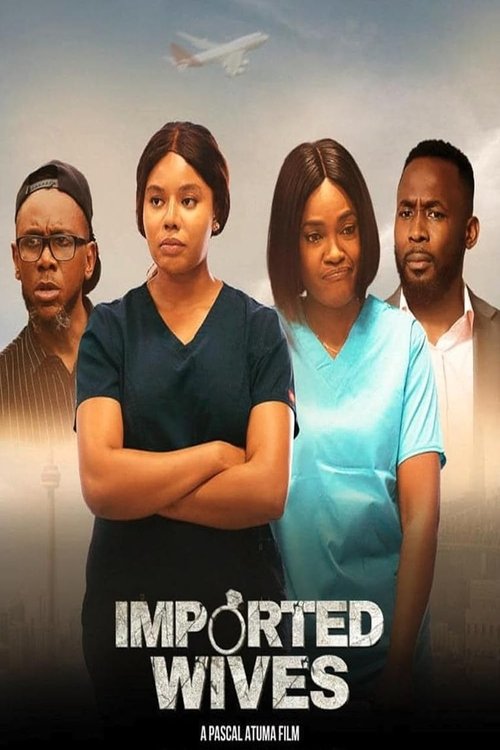
Imported Wives - Review
Imported Wives: A Sparkling Façade Hiding a Complex Reality
The glossy brochures promised paradise: idyllic homes, loving husbands, and a life of unimaginable comfort. But the reality, as depicted in Anya Sharma's latest dramedy, Imported Wives, is far more nuanced, messy, and often heartbreaking. Released on May 30th, 2025, this film isn't just a lighthearted romp through cultural clashes; it's a sharp and insightful exploration of ambition, loneliness, and the often-unseen sacrifices made in the pursuit of happiness. Sharma, known for her previous work on the critically acclaimed "Nowhere Home," delivers a film that is both laugh-out-loud funny and deeply affecting, leaving audiences pondering the true cost of the "American Dream."
Plot: A Web of Aspirations and Disappointments
Imported Wives centers around three women - Anya (played with captivating vulnerability by Maya Choudhury), Sofia (a fiery and determined Isabella Rossi), and Mei (portrayed with subtle strength by Li Wei) - who arrive in the affluent, seemingly perfect suburban enclave of Willow Creek from drastically different corners of the world. Anya, a bright and ambitious engineer from India, leaves behind her family and career for a chance at a better life with her American husband, David (Ethan Miller), a successful but emotionally distant software developer. Sofia, a vivacious and independent artist from Italy, envisions a life of creative freedom with her charming but financially irresponsible husband, Marco (Alessandro Bellini). Mei, a quiet and resilient teacher from China, hopes to build a stable future for herself and her ailing mother with her pragmatic, yet emotionally unavailable, husband, Robert (James Harrison).
The initial honeymoon phase quickly fades, revealing the cracks beneath the surface of their seemingly perfect unions. Anya grapples with the isolation of suburban life and David's growing detachment, as he prioritizes work over their relationship. Sofia struggles to reconcile her artistic aspirations with Marco's mounting debt and his traditional views on women's roles. Mei faces the daunting task of navigating a new language and culture while caring for her mother and dealing with Robert's quiet disapproval of her cultural traditions. As the women navigate their individual challenges, they find solace and strength in their shared experiences, forming an unlikely but powerful bond of friendship.
The plot thickens as each woman confronts a pivotal moment that forces her to question her choices and re-evaluate her definition of happiness. Anya discovers a hidden side to David that shatters her idealized image of him. Sofia's artistic talent gains recognition, but Marco's jealousy threatens to destroy their marriage. Mei is presented with an opportunity to pursue her passion for teaching, but Robert's disapproval forces her to choose between her personal aspirations and her commitment to their marriage. The film culminates in a series of dramatic confrontations and poignant resolutions, leaving the audience to contemplate the complex realities of love, sacrifice, and the pursuit of a better life.
Characters: A Tapestry of Human Experiences
The strength of Imported Wives lies in its well-developed and relatable characters. Anya Sharma masterfully crafts characters that are not simply caricatures of "foreign wives," but rather complex individuals with their own hopes, dreams, and flaws.
Anya (Maya Choudhury): Choudhury delivers a stellar performance as Anya, capturing her initial optimism and vulnerability as she navigates the challenges of a new culture and a crumbling marriage. Anya's journey is one of self-discovery, as she learns to assert her own needs and desires in a relationship where she initially felt powerless. Choudhury's nuanced portrayal allows the audience to empathize with Anya's struggles and celebrate her eventual triumph.
Sofia (Isabella Rossi): Rossi injects a vibrant energy into the character of Sofia, portraying her as a passionate and independent artist who refuses to compromise her dreams. Sofia's fiery spirit and unwavering determination make her a compelling and inspiring character. Rossi effectively conveys Sofia's frustration with Marco's traditional views and her struggle to balance her artistic aspirations with her marital commitments.
Mei (Li Wei): Wei's performance as Mei is a masterclass in subtle acting. She portrays Mei as a quiet and resilient woman who possesses an inner strength that is gradually revealed throughout the film. Mei's journey is one of cultural adaptation and self-acceptance, as she learns to embrace her heritage while navigating the complexities of American society. Wei's understated performance allows the audience to appreciate Mei's quiet dignity and unwavering commitment to her family.
David (Ethan Miller): Miller delivers a nuanced performance as David, portraying him as a well-meaning but emotionally detached husband who is more focused on his career than his marriage. Miller effectively conveys David's inability to understand Anya's needs and his gradual realization of the damage he has inflicted on their relationship.
Marco (Alessandro Bellini): Bellini brings a charming but ultimately flawed quality to the character of Marco. He portrays Marco as a passionate and charismatic man who is unable to handle his financial responsibilities and his wife's growing success. Bellini effectively conveys Marco's jealousy and insecurity, making him a complex and ultimately sympathetic character.
Robert (James Harrison): Harrison portrays Robert as a pragmatic and emotionally reserved man who struggles to express his feelings. Harrison effectively conveys Robert's quiet disapproval of Mei's cultural traditions and his inability to understand her need for emotional connection. While Robert is not a villain, he represents the cultural barriers that often exist within intercultural marriages.
Direction and Cinematography: Painting a Picture of Suburbia
Anya Sharma's direction is both sensitive and insightful, allowing the actors to fully embody their characters and explore the complexities of their relationships. Sharma's skillful use of close-ups and intimate scenes draws the audience into the emotional lives of the characters, creating a sense of empathy and understanding. The pacing of the film is deliberate, allowing the story to unfold gradually and revealing the nuances of each character's journey.
The cinematography, by renowned director of photography, Javier Rodriguez, is visually stunning, capturing the beauty and artificiality of suburban life. The film's color palette is initially bright and vibrant, reflecting the initial optimism of the characters. However, as the story progresses, the colors become more muted and subdued, reflecting the growing disillusionment and emotional turmoil of the characters. Rodriguez's use of natural light creates a sense of realism and intimacy, while his carefully composed shots highlight the beauty and isolation of the suburban landscape.
The use of contrasting visual styles to depict the characters' homelands versus their new suburban environment is particularly effective. Flashbacks to India, Italy, and China are filled with vibrant colors, bustling streets, and a sense of community, while the scenes in Willow Creek are characterized by manicured lawns, sterile interiors, and a feeling of isolation. This visual contrast effectively underscores the cultural shock and sense of displacement experienced by the "imported wives."
Themes and Messages: The Price of the "American Dream"
Imported Wives explores a multitude of complex themes, including:
- The Illusion of the "American Dream": The film challenges the idealized notion of the "American Dream," exposing the sacrifices and compromises that are often required to achieve it. The characters in the film initially believe that moving to America will solve all their problems, but they quickly discover that the reality is far more complicated.
- Cultural Identity and Assimilation: The film explores the challenges of maintaining one's cultural identity in a new and unfamiliar environment. The "imported wives" struggle to balance their desire to assimilate into American society with their need to preserve their cultural heritage.
- Marital Expectations and Gender Roles: The film examines the changing dynamics of marriage and the evolving roles of women in contemporary society. The characters in the film grapple with traditional gender roles and expectations, questioning the notion of a wife's subservience to her husband.
- The Power of Female Friendship: The film celebrates the importance of female friendship as a source of support and strength. The "imported wives" find solace and understanding in their shared experiences, forming a bond that helps them navigate the challenges of their new lives.
- The Search for Happiness and Fulfillment: Ultimately, Imported Wives is a story about the search for happiness and fulfillment. The characters in the film learn that true happiness cannot be found in material possessions or external validation, but rather in self-acceptance, meaningful relationships, and the pursuit of one's own passions.
The film's central message is that the pursuit of a better life should not come at the expense of one's identity and well-being. It encourages audiences to question societal expectations and to define happiness on their own terms.
Comparisons: Echoes of the Past, a Fresh Perspective
Imported Wives shares thematic similarities with films like "The Joy Luck Club" (1993), which also explores the experiences of immigrant women and the challenges of cultural assimilation. However, Sharma's film offers a more contemporary and nuanced perspective on these issues, focusing specifically on the experiences of women who have married into wealth and privilege.
In terms of Sharma's own filmography, Imported Wives builds upon the themes explored in "Nowhere Home," which examined the complexities of immigration and the search for belonging. However, Imported Wives is a more ambitious and mature work, delving deeper into the psychological and emotional toll of cultural displacement.
The film's comedic elements are reminiscent of "Crazy Rich Asians" (2018), but Sharma's film offers a more realistic and less glamorous portrayal of affluent communities. While "Crazy Rich Asians" focused on the opulence and extravagance of the wealthy elite, Imported Wives explores the hidden struggles and insecurities that often lie beneath the surface of seemingly perfect lives.
Positive Aspects: A Triumph of Storytelling and Performance
Imported Wives is a triumph of storytelling, offering a compelling and insightful exploration of complex themes. The film's strength lies in its well-developed characters, its nuanced performances, and its visually stunning cinematography. Sharma's direction is both sensitive and insightful, allowing the actors to fully embody their roles and explore the complexities of their relationships.
The film's comedic elements provide moments of levity and laughter, while its dramatic scenes are emotionally resonant and thought-provoking. The film's ending is both satisfying and ambiguous, leaving the audience to contemplate the characters' futures and the complexities of their choices.
The soundtrack is also noteworthy, featuring a blend of original compositions and traditional music from India, Italy, and China. The music effectively enhances the emotional impact of the film and underscores the cultural diversity of the characters.
Constructive Criticism: Minor Imperfections in a Masterpiece
While Imported Wives is a remarkable film, it is not without its minor imperfections. The pacing of the film could be slightly tighter in the second act, as some scenes feel somewhat repetitive. Additionally, the subplot involving David's hidden secret could have been developed more fully, as it feels somewhat rushed and underdeveloped.
Furthermore, while the film effectively portrays the challenges faced by the "imported wives," it could have explored the perspectives of their husbands in more depth. While the husbands are not portrayed as villains, their motivations and struggles are not fully explored, leaving the audience with a somewhat incomplete understanding of their experiences.
Finally, the film's ending, while satisfying, could have been more decisive. While the ambiguity of the ending allows for audience interpretation, it also leaves some viewers feeling somewhat unresolved.
Conclusion: A Must-See for Film Enthusiasts
Despite its minor imperfections, Imported Wives is a powerful and moving film that deserves to be seen by a wide audience. Anya Sharma has crafted a compelling and insightful story that explores the complexities of love, sacrifice, and the pursuit of a better life. The film's well-developed characters, nuanced performances, and visually stunning cinematography make it a truly unforgettable cinematic experience.
Imported Wives is a must-see for film enthusiasts who appreciate thought-provoking dramas with strong female characters and compelling social commentary. It's a film that will stay with you long after the credits roll, prompting you to question your own assumptions about happiness, success, and the true meaning of home.
Rating: 9/10