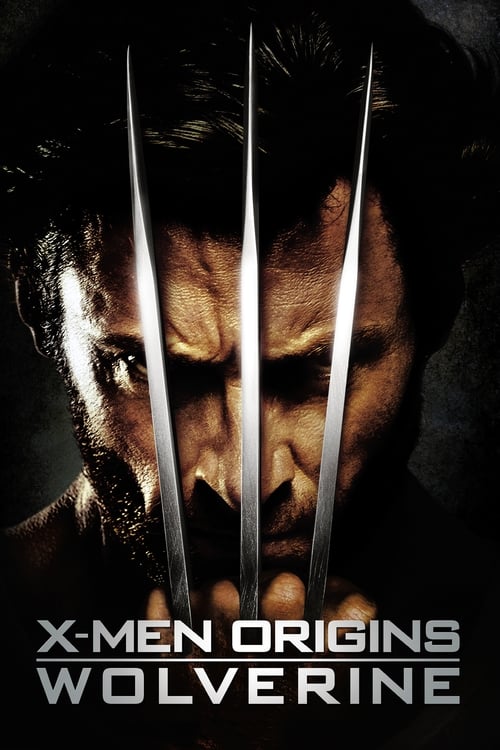
X-Men Origins: Wolverine - Review
X-Men Origins: Wolverine: A Claws-Out Examination of a Flawed Origin Story
X-Men Origins: Wolverine, unleashed upon the world in 2009, promised to delve into the tormented past of one of Marvel's most iconic characters. The anticipation was palpable. Fans yearned to understand the mysteries surrounding Logan, his adamantium skeleton, and the Weapon X program. What they received, however, was a mixed bag – a film riddled with moments of exhilarating action, interspersed with questionable plot choices, inconsistent characterizations, and a narrative that ultimately felt like a missed opportunity. While Hugh Jackman's performance remains a highlight, the film as a whole struggles to live up to the legacy of the X-Men franchise. Let's dive into the good, the bad, and the adamantium-plated ugly of this controversial origin story.
Plot: A Choppy Journey Through Logan's Past
The film opens with a compelling prologue, showcasing the childhood of James Howlett (later Logan/Wolverine) and his half-brother Victor Creed (Sabretooth). We witness their mutant powers manifesting and their subsequent flight from a tragic event. This sets the stage for a story spanning decades, tracing their involvement in various wars and their eventual recruitment into a black-ops team led by Colonel William Stryker. This initial setup is arguably the strongest part of the film, establishing the complex and volatile relationship between Logan and Victor, and hinting at the moral ambiguities that will define their paths.
However, the plot quickly becomes convoluted and uneven. Logan, disillusioned by the team's increasingly ruthless tactics, attempts to escape his violent past and settle down with Kayla Silverfox. Her tragic death at the hands of Victor triggers Logan's thirst for revenge, leading him to Stryker and the Weapon X program. This is where the film begins to falter. The Weapon X sequence, while visually impressive, feels rushed. The transformation is depicted in a somewhat generic manner, lacking the visceral impact and emotional weight that such a pivotal moment deserves.
The subsequent revenge plot is equally problematic. Logan’s quest for vengeance is often sidetracked by encounters with other mutants, some of whom feel shoehorned into the narrative. Gambit, for example, is introduced and then quickly dispatched, serving little purpose beyond fan service. The pacing becomes erratic, jumping between action sequences and exposition dumps, leaving the audience feeling disconnected from Logan's emotional journey. The climax, involving a showdown with a super-powered Deadpool variant, is widely regarded as one of the film's biggest failures, betraying the character's established traits and undermining the overall narrative.
Criticism: The plot suffers from too many narrative threads and a lack of focus. The attempt to cram multiple storylines and characters into a single film results in a diluted and unsatisfying experience. The pacing is inconsistent, and the resolution feels rushed and anticlimactic.
Characters: A Mix of Strong Performances and Weak Development
Logan/Wolverine (Hugh Jackman): Hugh Jackman continues to embody the role of Wolverine with undeniable charisma and intensity. He captures the character's brooding nature, his inner turmoil, and his ferocious fighting abilities. Jackman's commitment to the role is evident in every scene, and he remains the film's strongest asset. However, even Jackman's performance is somewhat hampered by the script's inconsistencies. Logan's motivations sometimes feel unclear, and his emotional arc lacks the depth and complexity that the character deserves.
Victor Creed/Sabretooth (Liev Schreiber): Liev Schreiber delivers a compelling performance as Victor Creed, Logan's brutal and sadistic half-brother. Schreiber captures Victor's animalistic rage and his twisted sense of loyalty to Logan. The dynamic between Jackman and Schreiber is one of the film's highlights, and their fight scenes are among the most brutal and engaging. However, Victor's character arc is somewhat underdeveloped. His motivations for his actions remain somewhat vague, and his ultimate fate feels unsatisfying.
Kayla Silverfox (Lynn Collins): Lynn Collins portrays Kayla Silverfox as a strong and independent woman who provides Logan with a sense of peace and normalcy. Her relationship with Logan is initially believable and heartwarming. However, the revelation of her true identity and her connection to Stryker feels contrived and undermines her earlier characterization. The twist, intended to add layers of complexity, ultimately diminishes her impact on Logan's journey.
Colonel William Stryker (Danny Huston): Danny Huston delivers a solid performance as Colonel William Stryker, the manipulative and ruthless mastermind behind the Weapon X program. Huston captures Stryker's cold and calculating demeanor, and his unwavering belief in his own twisted vision. However, Stryker's motivations are somewhat generic, and his character lacks the depth and nuance of previous incarnations. He serves primarily as a plot device, driving the narrative forward but failing to leave a lasting impression.
Wade Wilson/Deadpool (Ryan Reynolds): Ryan Reynolds' portrayal of Wade Wilson in the early scenes is a highlight, capturing the character's wit and irreverence. However, the transformation of Wade Wilson into a mute, overpowered, and unrecognisable "Weapon XI" is a major misstep. This version of Deadpool betrays everything that makes the character unique and beloved, and it is widely considered one of the film's biggest failures.
Criticism: While Jackman and Schreiber deliver strong performances, many of the supporting characters are underdeveloped or poorly written. The portrayal of Deadpool is particularly egregious, and it severely undermines the film's credibility. The character development often feels rushed and inconsistent, leaving the audience feeling disconnected from the characters' emotional journeys.
Direction: A Competent but Uninspired Vision
Gavin Hood's direction is competent but lacks a distinctive visual style. He manages to deliver some exciting action sequences, but the overall aesthetic feels generic and uninspired. The film lacks the visual flair and creativity of other X-Men films, and it fails to establish a unique identity. The pacing is uneven, and the transitions between scenes often feel abrupt and jarring.
Hood's direction also struggles to balance the film's various tones. The film attempts to be a serious drama, a superhero action movie, and a lighthearted adventure, but it fails to seamlessly blend these elements. The result is a film that feels tonally inconsistent and ultimately unsatisfying.
Criticism: The direction lacks a distinctive visual style and fails to establish a unique identity for the film. The pacing is uneven, and the tonal shifts are often jarring. Hood's direction is competent but ultimately uninspired.
Cinematography: Visually Appealing but Lacking Innovation
The cinematography, handled by Donald McAlpine, is visually appealing, with some well-composed shots and effective use of lighting. The action sequences are generally well-shot and easy to follow. However, the cinematography lacks innovation and fails to elevate the film beyond the level of a standard action movie. The visual effects are a mixed bag, with some impressive moments but also some noticeable CGI flaws.
The film's color palette is somewhat muted, reflecting the dark and gritty tone of the story. However, the overall visual aesthetic feels somewhat bland and uninspired. The cinematography fails to capture the unique atmosphere and visual style of the X-Men universe.
Criticism: The cinematography is visually appealing but lacks innovation and fails to elevate the film beyond the level of a standard action movie. The visual effects are a mixed bag, and the overall aesthetic feels somewhat bland.
Themes and Messages: A Superficial Exploration of Violence and Identity
X-Men Origins: Wolverine attempts to explore themes of violence, identity, and the corrupting influence of power. The film examines the cyclical nature of violence and its impact on Logan's psyche. It also explores the theme of identity, as Logan struggles to reconcile his violent past with his desire for a peaceful life. However, these themes are often explored in a superficial manner, lacking the depth and nuance of other X-Men films.
The film also touches upon the theme of government control and the ethical implications of scientific experimentation. The Weapon X program serves as a cautionary tale about the dangers of unchecked power and the dehumanizing effects of scientific advancement. However, this theme is not fully explored, and it ultimately feels like a missed opportunity.
Criticism: The film attempts to explore complex themes but often does so in a superficial manner. The themes of violence, identity, and government control are not fully developed, and they ultimately feel like missed opportunities.
Performances: Jackman and Schreiber Shine, But Others Falter
As mentioned previously, Hugh Jackman and Liev Schreiber deliver standout performances as Logan and Victor Creed, respectively. Their chemistry is palpable, and their fight scenes are among the film's highlights. However, many of the other performances are less memorable. Lynn Collins' portrayal of Kayla Silverfox is initially strong but ultimately undermined by the script's inconsistencies. Danny Huston delivers a solid performance as Colonel William Stryker, but his character lacks depth and nuance. Ryan Reynolds' brief appearance as Wade Wilson is a highlight, but his transformation into Weapon XI is a major misstep.
The supporting cast is generally unremarkable, with many of the mutants feeling like afterthoughts. The performances are often hampered by the underdeveloped characters and the rushed pacing of the plot.
Criticism: While Jackman and Schreiber deliver standout performances, many of the other performances are less memorable. The supporting cast is generally unremarkable, and the performances are often hampered by the underdeveloped characters and the rushed pacing of the plot.
Comparison to Other Films
Compared to other X-Men films, X-Men Origins: Wolverine falls short in several key areas. It lacks the thematic depth and complexity of X2: X-Men United and X-Men: Days of Future Past. It also lacks the visual flair and creativity of X-Men: First Class. While the action sequences are generally well-executed, they lack the emotional resonance and character-driven stakes of the best X-Men films.
Compared to other superhero origin stories, X-Men Origins: Wolverine is also somewhat disappointing. It lacks the compelling narrative and character development of Batman Begins and Iron Man. It also lacks the visual spectacle and world-building of Spider-Man. The film feels rushed and underdeveloped, failing to fully explore the character's origins and motivations.
Criticism: Compared to other X-Men films and superhero origin stories, X-Men Origins: Wolverine falls short in several key areas. It lacks the thematic depth, visual flair, and compelling narrative of its predecessors and contemporaries.
Positive Aspects
- Hugh Jackman's performance as Wolverine remains a highlight.
- Liev Schreiber delivers a compelling performance as Sabretooth.
- The action sequences are generally well-executed.
- The opening prologue is engaging and sets the stage for the story.
Constructive Criticism
- The plot is convoluted and uneven.
- Many of the supporting characters are underdeveloped or poorly written.
- The portrayal of Deadpool is a major misstep.
- The direction lacks a distinctive visual style.
- The cinematography is visually appealing but lacks innovation.
- The film attempts to explore complex themes but often does so in a superficial manner.
- The pacing is inconsistent, and the resolution feels rushed and anticlimactic.
Conclusion
X-Men Origins: Wolverine is a flawed but ultimately watchable film. Hugh Jackman's performance and the action sequences provide some entertainment value, but the film's numerous shortcomings prevent it from reaching its full potential. The convoluted plot, underdeveloped characters, and inconsistent tone make it a disappointing entry in the X-Men franchise. While not a complete disaster, it's a far cry from the quality that fans have come to expect from Marvel's mutant universe. The film serves as a cautionary tale about the dangers of rushing production and sacrificing quality for the sake of fan service. It also highlights the importance of staying true to the source material and respecting the established traits of beloved characters.