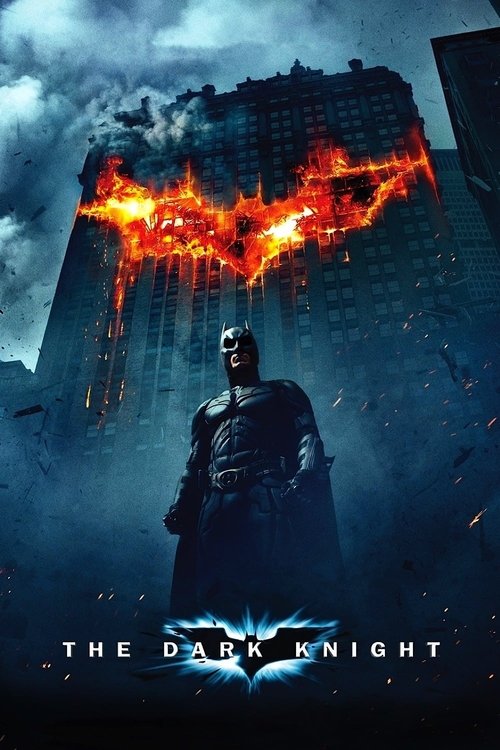
The Dark Knight - Review
The Dark Knight: A Symphony of Chaos and Heroism
Christopher Nolan's The Dark Knight isn't just a superhero film; it's a meticulously crafted operatic tragedy, a descent into the abyss of human nature, and a profound exploration of morality in the face of absolute chaos. Released in 2008, it transcends the genre, standing as a cinematic landmark that continues to be dissected, debated, and revered. More than a decade later, its impact on filmmaking, particularly in the realm of superhero narratives, remains undeniable. Prepare to delve into the shadows of Gotham, where heroes are tested, villains are iconic, and the line between good and evil blurs into a terrifying, exhilarating, and ultimately unforgettable experience.
Plot: A City on the Brink
The Dark Knight doesn't simply present a straightforward battle between good and evil. It's a complex, multi-layered narrative that builds upon the foundations laid in Batman Begins. Gotham City, though seemingly on the path to recovery thanks to Batman's (Christian Bale) efforts, remains plagued by organized crime. Enter Harvey Dent (Aaron Eckhart), the newly elected District Attorney, a charismatic and incorruptible figure who, alongside Lieutenant Jim Gordon (Gary Oldman), forms a powerful triumvirate with Batman to eradicate the city's criminal underworld. This alliance proves remarkably effective, dismantling the mob's operations and offering a glimmer of hope for a brighter future.
However, this fragile peace is shattered by the arrival of the Joker (Heath Ledger). Unlike the conventional criminals Batman has faced, the Joker is an agent of pure chaos, a force of nature whose motives are unclear and whose methods are relentlessly unpredictable. He doesn't seek wealth or power; he simply wants to watch the world burn. The Joker throws Gotham into a state of anarchy, forcing Batman, Gordon, and Dent to make impossible choices that test their principles and push them to their breaking points. He systematically targets the very institutions of order, exposing the inherent hypocrisy and vulnerability within them. The plot is a masterclass in escalating tension, with each scene building upon the previous one, culminating in a series of devastating consequences that reshape Gotham and its heroes forever.
Characters: Masks and Morality
The brilliance of The Dark Knight lies not just in its plot but also in its deeply complex and morally ambiguous characters. Each character is faced with excruciating dilemmas that reveal their true nature and challenge their ideals.
Batman/Bruce Wayne
Christian Bale delivers a nuanced performance as Batman, portraying him as a conflicted hero burdened by the weight of his responsibility. He grapples with the question of whether his actions are truly making a difference or simply escalating the violence. The film explores the personal sacrifices he makes, the isolation he endures, and the constant struggle to maintain his humanity while embodying a symbol of fear. Batman is not just a crime fighter; he's a symbol of hope, but also a symbol of vigilantism, and the film cleverly explores the ethical implications of his actions. He questions whether his existence ultimately enables the escalation of crime, personified by the Joker. His relationship with Alfred (Michael Caine) provides a crucial emotional anchor, grounding him amidst the chaos and reminding him of his humanity.
The Joker
Heath Ledger's portrayal of the Joker is legendary, a performance that redefined the archetype of the cinematic villain. He embodies pure, unadulterated chaos, a force that cannot be reasoned with or controlled. His motivations are enigmatic, his methods are brutal, and his philosophy is nihilistic. He's not driven by greed or power; he simply wants to prove that everyone, given the right circumstances, is capable of succumbing to their darkest impulses. Ledger's Joker is mesmerizing, terrifying, and utterly unforgettable. He's not just a villain; he's an idea, a representation of the inherent chaos that lurks beneath the surface of society. His Oscar-winning performance is a testament to his dedication to the role and his ability to bring such a complex and disturbing character to life.
Harvey Dent/Two-Face
Aaron Eckhart delivers a compelling performance as Harvey Dent, initially portrayed as Gotham's "White Knight," a symbol of hope and justice. His transformation into Two-Face is the heart of the film's tragedy. The Joker's manipulation and the corruption within Gotham ultimately break him, turning him into a vengeful and morally compromised figure. The visual representation of Two-Face is both shocking and symbolic, reflecting the duality of his nature and the corrupting influence of the Joker's chaos. His fall from grace serves as a stark warning about the fragility of even the most virtuous individuals.
Jim Gordon
Gary Oldman's portrayal of Jim Gordon is the quiet anchor of the film. He represents the unwavering moral compass in a city teetering on the brink of collapse. He's a dedicated police officer who believes in justice and is willing to risk everything to uphold the law, even when it means bending the rules. His relationship with Batman is built on mutual respect and trust, and he serves as a crucial ally in the fight against crime. Gordon's quiet strength and unwavering integrity provide a much-needed counterpoint to the chaos and corruption that surrounds him.
Direction and Cinematography: A Visual Masterpiece
Christopher Nolan's direction is masterful, creating a visually stunning and emotionally resonant experience. He uses a combination of practical effects and CGI to create a realistic and immersive Gotham City. The action sequences are visceral and intense, but they are always grounded in the characters and the story. The cinematography, by Wally Pfister, is equally impressive, utilizing dark and gritty tones to create a sense of unease and tension. The use of IMAX cameras elevates the scope and scale of the film, immersing the audience in the action and making them feel like they are right there in Gotham City.
Nolan's use of long takes and practical effects adds a sense of realism and immediacy to the film. The famous truck chase scene, for example, is a breathtaking display of practical stunt work and visual effects, creating a truly unforgettable cinematic moment. The film's visual language is deliberately dark and unsettling, reflecting the moral decay and the pervasive sense of fear that grips Gotham. The use of shadows and silhouettes creates a sense of mystery and intrigue, while the stark contrast between light and darkness emphasizes the battle between good and evil.
Themes and Messages: Beyond Good and Evil
The Dark Knight is not just a superhero film; it's a profound exploration of complex themes and messages, including:
- Chaos vs. Order: The film explores the inherent tension between chaos and order, and the fragility of the social contract. The Joker represents the ultimate force of chaos, challenging the established order and exposing the hypocrisy and corruption within it.
- Morality and Corruption: The film examines the corrupting influence of power and the moral compromises that people are willing to make in the face of adversity. Harvey Dent's transformation into Two-Face is a stark reminder of the fragility of even the most virtuous individuals.
- Sacrifice and Responsibility: The film explores the sacrifices that heroes must make in order to protect the innocent. Batman is forced to make impossible choices that test his principles and push him to his breaking point. He ultimately takes the blame for Harvey Dent's crimes to preserve Gotham's hope, embodying the ultimate sacrifice.
- The Nature of Evil: The Joker's motives are enigmatic, but his actions reveal a deep understanding of human nature. He believes that everyone, given the right circumstances, is capable of succumbing to their darkest impulses.
- Hope and Despair: Despite the darkness and chaos that pervades the film, there is also a glimmer of hope. Batman's unwavering commitment to justice and Jim Gordon's unwavering integrity provide a much-needed counterpoint to the despair that threatens to consume Gotham.
The film's ending, while bittersweet, ultimately offers a message of hope. Batman's sacrifice allows Gotham to believe in Harvey Dent's heroism, providing the city with a symbol of hope that it desperately needs. The film suggests that even in the darkest of times, there is always the possibility of redemption and renewal.
Performances: A Cast of Titans
The performances in The Dark Knight are universally acclaimed, with each actor delivering a memorable and compelling portrayal of their respective characters. Christian Bale embodies the brooding intensity of Batman, while Gary Oldman provides a steady and unwavering presence as Jim Gordon. Aaron Eckhart delivers a heartbreaking performance as Harvey Dent, capturing the character's initial idealism and his tragic descent into madness. Michael Caine provides a warm and comforting presence as Alfred, offering guidance and support to Bruce Wayne.
However, it is Heath Ledger's performance as the Joker that truly stands out. His portrayal is mesmerizing, terrifying, and utterly unforgettable. He embodies the character's chaotic energy and nihilistic philosophy with chilling precision. Ledger's performance is not just a villainous caricature; it's a deeply nuanced and psychologically complex portrayal of a man driven by a desire to expose the inherent hypocrisy and absurdity of society. His Oscar-winning performance is a testament to his talent and his dedication to the role.
Comparison to Similar Films and Previous Works
The Dark Knight stands apart from other superhero films due to its realistic tone, complex characters, and thought-provoking themes. While other superhero films often focus on escapism and spectacle, The Dark Knight delves into the darker aspects of human nature and explores the ethical implications of vigilantism. It's more akin to a crime thriller or a psychological drama than a traditional superhero movie.
Compared to Nolan's previous Batman film, Batman Begins, The Dark Knight is a significant step up in terms of scope, ambition, and thematic depth. While Batman Begins focused on the origin story of Batman, The Dark Knight explores the consequences of his actions and the challenges he faces in trying to maintain order in a chaotic world. The sequel also features a more compelling and complex villain in the Joker, who poses a far greater threat to Gotham than Ra's al Ghul in the first film.
In comparison to other superhero films of its time (and even today), The Dark Knight set a new standard for the genre. Its grounded realism, complex characters, and thought-provoking themes influenced countless subsequent superhero films, including those in the Marvel Cinematic Universe. Films like Captain America: The Winter Soldier and Avengers: Infinity War owe a debt to The Dark Knight for pushing the boundaries of what a superhero film could be.
Positive Aspects
- Compelling Narrative: The plot is intricate, suspenseful, and emotionally resonant.
- Iconic Performances: Heath Ledger's Joker is a legendary performance, and the rest of the cast delivers strong performances as well.
- Masterful Direction: Christopher Nolan's direction is visually stunning and emotionally engaging.
- Thought-Provoking Themes: The film explores complex themes about morality, chaos, and sacrifice.
- Realistic Tone: The film's grounded realism sets it apart from other superhero films.
- Excellent Cinematography: The use of IMAX and practical effects enhances the visual experience.
Constructive Criticism
- Pacing Issues: The film's length (over 2.5 hours) can feel a bit long at times, particularly in the middle act. Some scenes could have been trimmed without sacrificing the overall narrative.
- Bale's Batman Voice: Christian Bale's Batman voice, while iconic, can be difficult to understand at times. It's a stylistic choice that some viewers may find distracting.
- Rachel Dawes' Character: The character of Rachel Dawes (played by Maggie Gyllenhaal in this film) feels somewhat underdeveloped compared to the other main characters. Her motivations and her relationships with Bruce Wayne and Harvey Dent could have been explored in more depth.
- Slight Over-Reliance on Exposition: While the film is complex, there are moments where the dialogue relies a bit too heavily on exposition to explain the characters' motivations and the plot's intricacies. A more subtle approach could have been more effective in some instances.
Conclusion
The Dark Knight is a cinematic masterpiece, a triumph of storytelling, direction, and performance. It's a superhero film that transcends the genre, offering a profound and thought-provoking exploration of morality, chaos, and sacrifice. While not without its minor flaws, its strengths far outweigh its weaknesses. Heath Ledger's Joker is an iconic villain, and the film's themes and messages continue to resonate with audiences today. The Dark Knight is not just a great superhero film; it's a great film, period.