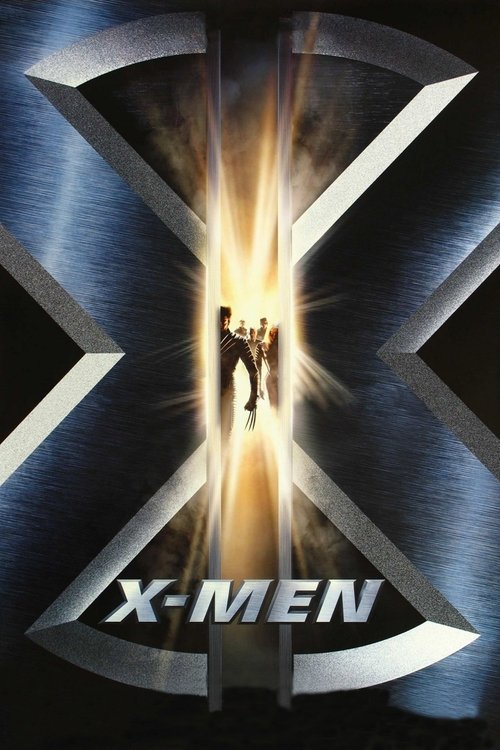
X-Men - Review
X-Men: A Mutant Milestone (2000) - A Retrospective Review
In the summer of 2000, Bryan Singer’s X-Men burst onto the scene, not just as another superhero flick, but as a cinematic statement. Before the Marvel Cinematic Universe dominated screens and before superhero fatigue became a common complaint, X-Men offered a grounded, character-driven take on the comic book genre. It was a film that dared to explore themes of prejudice, acceptance, and the struggle for identity, all while delivering thrilling action sequences and introducing audiences to a roster of iconic characters. More than two decades later, does X-Men still hold up as a groundbreaking film? Let's delve into the nuances of this mutant masterpiece.
Plot: A World on the Brink
The narrative of X-Men is deceptively simple. We are introduced to a world where mutants, individuals born with extraordinary abilities, exist alongside humans. The story primarily follows two newcomers to this hidden world: Marie, a young woman who inadvertently absorbs the life force of anyone she touches (later known as Rogue), and Logan, a gruff, amnesiac mutant with adamantium claws and a healing factor (Wolverine). Their paths collide, leading them to Professor Charles Xavier’s School for Gifted Youngsters, a sanctuary for mutants and the base of operations for the X-Men.
Simultaneously, we are introduced to Magneto, a powerful mutant with the ability to control metal. Haunted by his experiences during the Holocaust, Magneto believes that mutants are superior to humans and are destined to rule. He forms the Brotherhood of Mutants, a group dedicated to achieving mutant supremacy through any means necessary. Magneto’s plan involves a machine that can transform humans into mutants, but its true purpose is far more sinister: to eliminate the human threat altogether.
The film expertly juggles these two storylines, weaving together the personal journeys of Rogue and Wolverine with the larger conflict between the X-Men and the Brotherhood. While the plot might seem straightforward by today’s standards, it was revolutionary for its time. It treated the source material with respect, focusing on character development and thematic resonance rather than simply delivering spectacle. The pacing is well-managed, allowing for moments of quiet introspection alongside high-octane action.
Characters: A Symphony of Superpowers and Personal Struggles
The strength of X-Men lies in its compelling characters. Each mutant is given a distinct personality and backstory, making them relatable and engaging.
The X-Men:
- Professor Charles Xavier (Patrick Stewart): The benevolent leader of the X-Men, Xavier is a powerful telepath who believes in peaceful coexistence between humans and mutants. Stewart's portrayal is pitch-perfect, capturing Xavier's wisdom, compassion, and unwavering hope. He is the moral compass of the film, a beacon of empathy in a world rife with prejudice.
- Cyclops (James Marsden): The field leader of the X-Men, Cyclops possesses the ability to emit powerful optic blasts. Marsden portrays him as a disciplined and dedicated soldier, but also hints at the emotional turmoil he faces due to his uncontrollable powers. While his character is somewhat underdeveloped compared to others, he serves as a crucial anchor for the team.
- Jean Grey (Famke Janssen): A powerful telekinetic and telepath, Jean Grey is a vital member of the X-Men and Xavier's confidante. Janssen brings a quiet strength and intelligence to the role, suggesting the immense power that lies dormant within her. Her relationship with Cyclops adds a layer of emotional complexity to the team dynamics.
- Storm (Halle Berry): A mutant with the ability to control the weather, Storm is a formidable warrior and a loyal member of the X-Men. Berry's performance is solid, although her character is arguably the least developed of the core team. Her iconic lines, while somewhat clunky, have become memorable moments in superhero cinema.
- Wolverine (Hugh Jackman): The breakout star of the film, Wolverine is a complex and brooding character haunted by his past. Jackman's portrayal is nothing short of iconic, capturing Wolverine's ferocity, vulnerability, and reluctant heroism. He is the outsider, the anti-hero, who is ultimately drawn to the X-Men's cause. His interactions with Rogue are particularly poignant, highlighting his protective instincts and his own feelings of isolation.
The Brotherhood of Mutants:
- Magneto (Ian McKellen): Xavier's former friend and now his ideological adversary, Magneto is a complex and compelling villain. McKellen delivers a masterful performance, imbuing Magneto with a sense of righteous anger and unwavering conviction. He is not simply a mustache-twirling villain; he is a man driven by pain and a deep-seated fear of human oppression. His motivations are understandable, even if his methods are extreme.
- Mystique (Rebecca Romijn): A shapeshifting mutant and Magneto's loyal lieutenant, Mystique is a deadly and enigmatic figure. Romijn's performance is captivating, conveying Mystique's coldness and ruthlessness. Her shapeshifting abilities are visually striking and add a layer of intrigue to her character.
- Sabretooth (Tyler Mane): A feral mutant with enhanced strength and agility, Sabretooth is Wolverine's nemesis. Mane portrays him as a brutal and animalistic force, providing a physical threat to the X-Men.
- Toad (Ray Park): A mutant with enhanced agility and a long, prehensile tongue, Toad is a less formidable member of the Brotherhood, but Park infuses him with a surprising amount of personality. He serves as a foil to the more serious members of the team.
Beyond the superpowers, the film delves into the characters' inner struggles. Rogue's inability to touch others, Wolverine's search for his identity, and Magneto's deeply rooted trauma all contribute to the film's emotional depth. This focus on character development is what sets X-Men apart from many other superhero films.
Direction: Grounding the Fantastic
Bryan Singer's direction is a key factor in the film's success. He approached the source material with a sense of realism, grounding the fantastic elements in a believable world. He avoids excessive CGI and focuses on practical effects, which gives the film a tangible and gritty feel.
Singer's use of close-ups and intimate camera angles allows the audience to connect with the characters on a personal level. He also uses slow motion effectively to highlight the characters' powers and create a sense of drama. The action sequences are well-choreographed and exciting, but they are always grounded in the characters' abilities and motivations.
One of Singer's most significant contributions is his ability to balance the ensemble cast. He gives each character their moment to shine, ensuring that everyone feels like an integral part of the story. He also establishes the dynamics between the characters, creating a sense of camaraderie and conflict that drives the narrative forward.
Cinematography: A Dark and Moody Palette
Newton Thomas Sigel's cinematography contributes significantly to the film's overall tone and atmosphere. He employs a dark and moody palette, reflecting the themes of prejudice and fear that permeate the story. The use of shadows and low-key lighting creates a sense of unease and tension, mirroring the characters' internal struggles.
The film's visual style is understated but effective. Sigel avoids flashy camera movements and instead focuses on framing and composition to create visually compelling images. The action sequences are shot with a sense of clarity and precision, allowing the audience to follow the action without feeling overwhelmed.
The cinematography also plays a crucial role in establishing the film's sense of realism. Sigel avoids overly stylized visuals and instead opts for a more naturalistic approach. This helps to ground the fantastical elements of the story in a believable world.
Performances: A Cast of Superstars
The performances in X-Men are universally strong. The cast is perfectly chosen, with each actor embodying their respective character with conviction and nuance.
- Patrick Stewart and Ian McKellen: Their performances as Xavier and Magneto are the heart and soul of the film. They bring a gravitas and intelligence to their roles, elevating the film beyond typical superhero fare. Their scenes together are particularly powerful, showcasing the complex relationship between these two former friends.
- Hugh Jackman: His portrayal of Wolverine is a career-defining performance. He captures the character's ferocity, vulnerability, and reluctant heroism with remarkable skill. He instantly became a fan favorite and set the standard for future portrayals of the character.
- Famke Janssen, James Marsden, and Halle Berry: They deliver solid performances as Jean Grey, Cyclops, and Storm, respectively. While their characters are somewhat underdeveloped, they bring a sense of professionalism and dedication to their roles.
- Rebecca Romijn: She is captivating as Mystique, conveying the character's coldness and ruthlessness with a subtle intensity.
The chemistry between the actors is also palpable. The X-Men feel like a cohesive team, while the Brotherhood of Mutants exude a sense of menace and discord. The performances are a testament to Singer's ability to cast the right actors and create a collaborative environment on set.
Themes and Messages: Prejudice and Acceptance
X-Men is more than just a superhero film; it is a powerful allegory for prejudice and discrimination. The film explores the themes of fear, acceptance, and the struggle for identity through the lens of the mutant experience.
The film draws parallels between the treatment of mutants and the treatment of marginalized groups in society. The fear and hatred directed towards mutants mirror the prejudice faced by racial minorities, LGBTQ+ individuals, and other marginalized communities. Magneto's belief in mutant supremacy can be seen as a response to this prejudice, a desire to protect his people from oppression.
Xavier's vision of peaceful coexistence is a message of hope and tolerance. He believes that humans and mutants can learn to live together in harmony, but it requires understanding and acceptance. The film ultimately argues that diversity is a strength and that we should celebrate our differences rather than fear them.
The film also explores the theme of identity. Many of the characters struggle with their mutant identities, unsure of where they belong in the world. Rogue's inability to touch others isolates her from human contact, while Wolverine's amnesia leaves him searching for his past. The X-Men offer these characters a sense of belonging and purpose, helping them to embrace their mutant identities and use their powers for good.
Comparison: A Precursor to the Modern Superhero Film
X-Men was a pivotal film in the evolution of the superhero genre. It paved the way for the modern superhero film by demonstrating that these stories could be told with depth, complexity, and emotional resonance.
Compared to earlier superhero films like the Superman films of the 1970s and 1980s, X-Men is a more grounded and realistic portrayal of the genre. It avoids the campy tone and simplistic storytelling of its predecessors, instead focusing on character development and thematic exploration.
X-Men also influenced later superhero films like Spider-Man (2002) and Batman Begins (2005), which adopted a similar approach to realism and character-driven storytelling. The success of X-Men demonstrated that audiences were hungry for more sophisticated and nuanced superhero films.
However, X-Men also has its limitations. Compared to the sprawling and interconnected narratives of the Marvel Cinematic Universe, X-Men feels relatively self-contained. The special effects, while impressive for their time, have aged somewhat. And some of the characters, particularly Storm and Cyclops, could have been more fully developed.
Positive Aspects: A Groundbreaking Achievement
X-Men has many positive aspects that contribute to its enduring appeal:
- Strong character development: The film invests in its characters, making them relatable and engaging.
- Compelling performances: The cast is perfectly chosen and delivers strong, nuanced performances.
- Thought-provoking themes: The film explores important themes of prejudice, acceptance, and identity.
- Effective direction: Bryan Singer's direction is grounded and realistic, bringing a sense of credibility to the fantastical elements.
- Groundbreaking impact: The film paved the way for the modern superhero film and demonstrated the genre's potential for depth and complexity.
Constructive Criticism: Areas for Improvement
While X-Men is a groundbreaking film, it is not without its flaws:
- Underdeveloped characters: Some characters, particularly Storm and Cyclops, could have been more fully developed.
- Dated special effects: The special effects, while impressive for their time, have aged somewhat.
- Simplistic plot: The plot, while effective, is relatively straightforward compared to later superhero films.
- Clunky dialogue: Some of the dialogue, particularly Storm's lines, can feel clunky and unnatural.
Conclusion: A Mutant Legacy
X-Men (2000) remains a significant and influential film in the superhero genre. Its focus on character development, thematic exploration, and grounded realism set it apart from its predecessors and paved the way for the modern superhero film. While it has some minor flaws, its strengths far outweigh its weaknesses. The performances are excellent, the direction is effective, and the themes are thought-provoking. X-Men is a film that continues to resonate with audiences today, reminding us of the importance of acceptance, tolerance, and the power of embracing our differences. It's a mutant milestone that deserves its place in cinematic history.