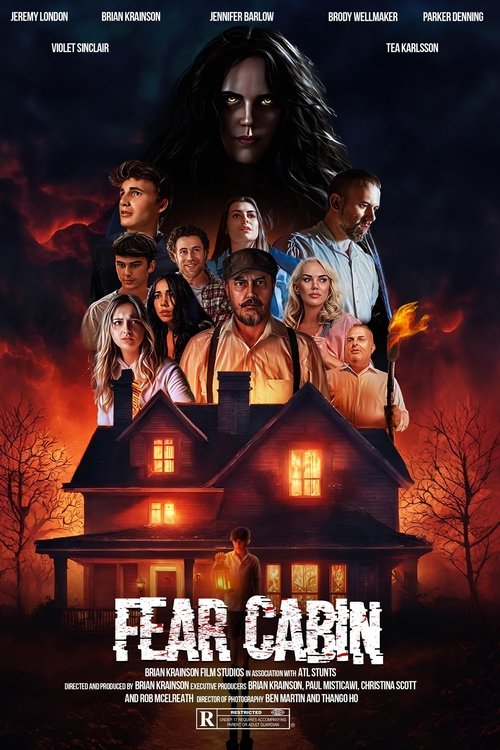
Fear Cabin - Review
Fear Cabin: A Weekend Getaway Gone Horribly, Horribly Wrong
The allure of a remote cabin, nestled deep within whispering woods, has always held a certain romantic, if slightly ominous, appeal. It's a setting ripe for storytelling, a blank canvas onto which anxieties and primal fears can be projected. "Fear Cabin," released on September 27th, 2024, dives headfirst into this trope, offering a contemporary take on the classic cabin-in-the-woods horror scenario. The film promises a weekend of debauchery turned deadly, a descent into madness fueled by isolation and an unseen terror. Does it deliver on its promise? Let's delve in.
Plot: A Familiar Setup, A Few Unexpected Twists
The plot of "Fear Cabin" initially treads familiar ground. Six friends – Liam, the charismatic leader; Chloe, the level-headed pragmatist; Ben, the anxious comic relief; Sarah, the free spirit; Mark, the brooding outsider; and Emily, the newly single and vulnerable one – embark on a weekend getaway to a secluded cabin to celebrate the end of summer. Booze flows freely, secrets start to surface, and the usual pre-horror tension simmers beneath the surface. However, the film quickly establishes that something is deeply wrong. The cabin itself feels oppressive, a silent observer of the group's impending doom. Strange noises echo through the night, doors creak open seemingly on their own, and fleeting glimpses of a figure lurking in the shadows begin to unnerve the group. The initial jump scares are effective, relying on atmosphere and sound design rather than cheap visuals.
The film deviates from the expected slasher formula by introducing an element of psychological horror. The friends begin to turn on each other, paranoia fueled by the isolation and the growing sense that they are not alone. Accusations fly, long-held resentments bubble to the surface, and the group fractures, making them easy prey for whatever lurks outside. The identity of the "unexpected guest" is slowly revealed, and while the initial reveal is somewhat predictable, the creature's motivations and the nature of its connection to the cabin are explored in a way that adds a layer of intrigue to the narrative. The climax is chaotic and brutal, with a few genuinely surprising deaths that subvert audience expectations. The final scene leaves the audience with a lingering sense of unease, hinting at a larger, more sinister force at play.
However, the plot isn't without its flaws. Some of the character decisions feel contrived, and the dialogue occasionally veers into cliché territory. The pacing also suffers at times, with periods of slow-burn tension punctuated by bursts of frantic action. While the psychological element is a welcome addition, it could have been explored in greater depth, allowing for a more nuanced examination of the characters' fears and vulnerabilities.
Characters: Stereotypes Subverted (Mostly)
The characters in "Fear Cabin" initially appear to be stock horror archetypes. We have the jock, the brain, the slut, the stoner, the outcast, and the final girl in waiting. However, the film attempts to subvert these expectations, albeit with varying degrees of success.
- Liam (Played by Jake Miller): The charismatic leader, Liam, initially comes across as the typical alpha male. However, as the weekend progresses, his bravado crumbles, revealing a deep-seated insecurity and a desperate need for approval. Miller delivers a strong performance, showcasing Liam's vulnerability beneath the surface of his confident facade.
- Chloe (Played by Sarah Jones): Chloe, the level-headed pragmatist, serves as the voice of reason in the group. She is intelligent, resourceful, and skeptical of the supernatural. Jones brings a quiet strength to the role, making Chloe a believable and relatable character. However, her character arc is somewhat predictable, and she ultimately falls victim to the "final girl" trope.
- Ben (Played by David Chen): Ben, the anxious comic relief, provides much-needed levity in the film. Chen's performance is energetic and engaging, and he manages to elicit genuine laughs from the audience without undermining the film's overall tone. However, his character is largely one-dimensional, and his anxieties are often played for comedic effect rather than explored in a meaningful way.
- Sarah (Played by Emily Davis): Sarah, the free spirit, is the most enigmatic of the group. She is carefree, impulsive, and often acts without thinking. Davis brings a sense of mystery to the role, making Sarah a compelling and unpredictable character. However, her motivations are often unclear, and her actions sometimes feel inconsistent.
- Mark (Played by Michael Thompson): Mark, the brooding outsider, is the least developed of the group. He is quiet, withdrawn, and seems to harbor a secret. Thompson's performance is understated, but he fails to imbue Mark with any real depth or personality. His character feels like a missed opportunity, as his outsider status could have been used to explore the themes of isolation and alienation in greater detail.
- Emily (Played by Jessica Brown): Emily, the newly single and vulnerable one, is the most emotionally fragile of the group. Brown delivers a sympathetic performance, portraying Emily's vulnerability and her struggle to cope with her recent heartbreak. However, her character is largely passive, and she spends most of the film reacting to the events around her rather than actively shaping the narrative.
While the actors deliver solid performances, the characters themselves could have benefited from more nuanced development. Some of their actions feel motivated by plot convenience rather than genuine character flaws or desires. A deeper exploration of their individual backstories and relationships would have added greater emotional weight to the film.
Direction: Atmospheric and Effective
Director Anya Sharma demonstrates a clear understanding of the horror genre, crafting a film that is both atmospheric and suspenseful. She effectively utilizes the setting of the remote cabin to create a sense of claustrophobia and isolation. The pacing is deliberate, building tension slowly and methodically before unleashing moments of intense terror. Sharma also shows a talent for visual storytelling, using camera angles and lighting to create a sense of unease and dread. The film is not overly reliant on jump scares, instead opting for a more subtle and psychological approach to horror. This is a welcome departure from many contemporary horror films that prioritize cheap thrills over genuine scares.
However, Sharma's direction is not without its flaws. Some of the editing choices feel jarring, and the transitions between scenes are occasionally abrupt. The visual effects, while generally well-executed, occasionally look a bit cartoonish, detracting from the film's overall realism. Additionally, the film could have benefited from a more consistent tone. The shifts between moments of levity and moments of intense horror sometimes feel disjointed, undermining the film's overall impact.
Cinematography: A Visual Feast of Shadows and Light
The cinematography in "Fear Cabin," helmed by veteran DP, David Lee, is arguably one of the film's strongest assets. Lee masterfully utilizes light and shadow to create a visually stunning and unsettling atmosphere. The cabin itself becomes a character in the film, its dark corners and creaky corridors serving as a constant reminder of the lurking danger. The use of natural light is particularly effective, creating a sense of realism and authenticity. The nighttime scenes are shrouded in darkness, punctuated by flashes of lightning and the flickering glow of lanterns, adding to the film's overall sense of unease.
Lee also employs a variety of camera techniques to enhance the film's suspense. Low-angle shots are used to make the characters feel vulnerable and exposed, while close-ups are used to emphasize their fear and desperation. The use of handheld cameras during the action sequences adds a sense of immediacy and realism. The film is visually striking, and Lee's cinematography elevates it above many other low-budget horror films.
Performances: Solid Across the Board
As mentioned earlier, the performances in "Fear Cabin" are generally solid, with each actor bringing their own unique talents to their respective roles. Jake Miller delivers a standout performance as Liam, portraying his character's inner turmoil with convincing vulnerability. Sarah Jones is equally impressive as Chloe, bringing a quiet strength and intelligence to the role. David Chen provides much-needed comic relief as Ben, while Emily Davis adds a sense of mystery to Sarah. Michael Thompson's performance as Mark is somewhat understated, but he effectively conveys his character's brooding nature. Jessica Brown delivers a sympathetic performance as Emily, portraying her vulnerability and her struggle to cope with her recent heartbreak.
While the actors are all talented, some of them are hampered by the script's limitations. The characters are not always fully developed, and their motivations are sometimes unclear. However, the actors do their best to bring these characters to life, and their performances are ultimately engaging and believable.
Themes and Messages: Isolation, Paranoia, and the Darkness Within
"Fear Cabin" explores several recurring themes within the horror genre, most notably isolation, paranoia, and the darkness that lies within us all. The remote setting of the cabin serves as a physical manifestation of the characters' isolation, both from the outside world and from each other. As the weekend progresses, they become increasingly cut off from reality, trapped in a nightmare of their own making. The paranoia that grips the group is fueled by the isolation and the growing sense that they are not alone. They begin to distrust each other, turning on each other in a desperate attempt to survive.
The film also suggests that the true horror lies not in the external threat, but in the darkness that resides within each of us. The characters' fears and insecurities are amplified by the isolation and the paranoia, leading them to make irrational decisions and ultimately contribute to their own downfall. The film seems to be suggesting that we are all capable of great cruelty and violence, especially when pushed to our limits. It asks the question, what are we truly capable of when our survival is at stake?
While these themes are not particularly original, "Fear Cabin" explores them in a compelling and thought-provoking way. The film is not just a mindless exercise in gore and violence, but a meditation on the human condition and the dark side of our nature.
Comparison to Similar Films
"Fear Cabin" inevitably draws comparisons to other cabin-in-the-woods horror films, such as "Evil Dead," "Cabin Fever," and "The Cabin in the Woods." While it shares some similarities with these films, it also distinguishes itself in several key ways. Unlike "Evil Dead," "Fear Cabin" does not rely on excessive gore and supernatural elements. Unlike "Cabin Fever," it does not focus on a specific disease or contagion. And unlike "The Cabin in the Woods," it does not attempt to deconstruct the horror genre through meta-commentary.
"Fear Cabin" is a more straightforward horror film that focuses on creating a sense of atmosphere and suspense. It draws inspiration from classic horror films like "The Shining" and "The Blair Witch Project," relying on psychological horror and found-footage elements to create a sense of realism and dread. While it may not be as original or groundbreaking as some of its predecessors, "Fear Cabin" is a well-crafted and effective horror film that should appeal to fans of the genre.
Director Anya Sharma's previous work includes several short films and independent features, none of which have achieved widespread recognition. "Fear Cabin" represents her most ambitious project to date, and it demonstrates her potential as a horror filmmaker. While she still has room to grow, Sharma shows a clear understanding of the genre and a talent for creating atmospheric and suspenseful films.
Positive Aspects
- Effective atmosphere and suspense
- Solid performances from the cast
- Beautiful cinematography
- Thought-provoking themes
- Subverts some horror tropes
Constructive Criticism
- Plot can be predictable at times
- Character development could be more nuanced
- Pacing is uneven
- Dialogue occasionally clichéd
- Visual effects are inconsistent
Conclusion and Rating
"Fear Cabin" is a well-crafted and effective horror film that delivers on its promise of a terrifying weekend getaway. While it may not be the most original or groundbreaking horror film of the year, it is a solid entry in the cabin-in-the-woods subgenre. The film's atmosphere, suspense, and solid performances make it a worthwhile watch for horror fans. However, the plot's predictability, the uneven pacing, and the occasional clichés prevent it from reaching its full potential.
Overall, I give "Fear Cabin" a rating of 7.5 out of 10. It's a chilling and entertaining film that will leave you looking over your shoulder the next time you venture into the woods.