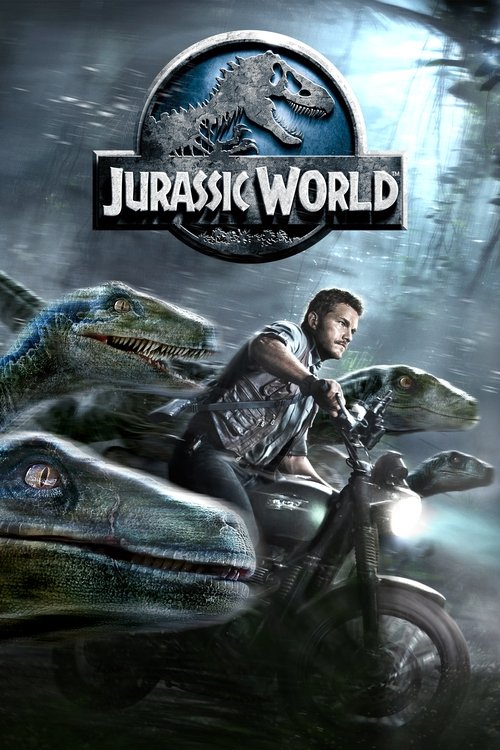
Jurassic World - Review
Jurassic World: A Nostalgic Roar with Modern Teeth
The gates are open once again. Twenty-two years after John Hammond’s dream crumbled into chaos, Isla Nublar is home to Jurassic World, a fully operational dinosaur theme park. But has humanity learned its lesson? Colin Trevorrow’s Jurassic World (2015) attempts to answer that question, delivering a spectacle of action, adventure, and genetically engineered mayhem. While it doesn't quite reach the heights of Spielberg's original, Jurassic Park, it offers a thrilling and visually stunning ride that successfully reignites the franchise for a new generation. This review delves into the film's plot, characters, direction, cinematography, performances, themes, and its place within the broader context of the Jurassic Park saga, weighing its triumphs against its shortcomings to determine if this dino-sized blockbuster truly earns its place in the prehistoric pantheon.
Plot: Familiar Territory, New Predators
Jurassic World picks up the story with Isla Nublar thriving as a bustling tourist destination. Millions visit each year to witness the resurrected dinosaurs, from gentle giants like the Brachiosaurus to fan-favorites like the Tyrannosaurus Rex. However, park attendance is dwindling, and the InGen corporation, now under the leadership of Simon Masrani (Irrfan Khan), is pressured to create something "bigger" and "scarier" to boost profits. Enter the Indominus Rex, a genetically modified hybrid dinosaur designed to be the ultimate attraction.
Claire Dearing (Bryce Dallas Howard), the park's operations manager, is focused on efficiency and profitability, often prioritizing the park's success over the well-being of the dinosaurs. Her nephews, Zach (Nick Robinson) and Gray (Ty Simpkins), are visiting the park, giving her a chance to reconnect with her family, though she struggles to balance her professional and personal lives. Owen Grady (Chris Pratt), a Navy veteran and dinosaur behaviorist, is working at the park, studying the Velociraptors and attempting to establish a level of control and communication with them. He serves as a voice of reason, warning against the dangers of tampering with nature.
Predictably, the Indominus Rex escapes its enclosure, unleashing chaos upon the park. The film becomes a race against time as Claire and Owen must find Zach and Gray, who are lost in the park, and contain the Indominus Rex before it destroys everything. The plot follows a familiar formula: a hubristic corporation meddling with nature, a catastrophic escape, and a desperate struggle for survival. While the overall structure is predictable, the film introduces new elements, such as the Indominus Rex and Owen's relationship with the Raptors, to keep the story engaging.
One of the main criticisms of the plot lies in its reliance on contrivances and plot holes. For instance, the Indominus Rex's escape relies on a series of unlikely events and questionable security protocols. The film also struggles to balance the human drama with the dinosaur action, often sacrificing character development for spectacle. Despite these flaws, the plot provides a solid foundation for the film's thrilling set pieces and impressive visual effects.
Characters: A Mix of Archetypes and Nuance
The characters in Jurassic World are a mixed bag, ranging from compelling and nuanced to stereotypical and underdeveloped.
Claire Dearing: Bryce Dallas Howard's Claire is initially portrayed as a cold and detached businesswoman, more concerned with spreadsheets than the well-being of her nephews. Her character arc involves learning to connect with her family and developing a sense of empathy for the dinosaurs. While her transformation is somewhat predictable, Howard delivers a solid performance, showcasing Claire's determination and resourcefulness in the face of danger. However, the initial portrayal of Claire as a career-obsessed woman who doesn't know how to care for children perpetuates a tired trope.
Owen Grady: Chris Pratt brings his signature charm and charisma to the role of Owen Grady. He is presented as the rugged hero, a man of action who understands the dinosaurs better than anyone else. His relationship with the Velociraptors, particularly Blue, Delta, Echo, and Charlie, is one of the most intriguing aspects of the film. Pratt's performance is engaging, but Owen's character can feel somewhat simplistic and lacks the depth of characters like Alan Grant from the original film.
Zach and Gray Mitchell: The two brothers, Zach and Gray, serve as the audience's entry point into the park. Zach is a typical teenager, more interested in girls than dinosaurs, while Gray is the younger, dinosaur-obsessed brother. Their relationship is strained at the beginning of the film, but they are forced to rely on each other after the Indominus Rex escapes. While their performances are adequate, their characters are relatively underdeveloped and serve primarily as plot devices.
Simon Masrani: Irrfan Khan delivers a memorable performance as Simon Masrani, the owner of Jurassic World. He is portrayed as a well-intentioned but ultimately misguided leader who believes he can control nature. Masrani's character provides a connection to John Hammond, the visionary behind the original Jurassic Park, and highlights the dangers of unchecked ambition. Khan brings a sense of warmth and humanity to the role, making Masrani a sympathetic figure.
Vic Hoskins: Vincent D'Onofrio plays Vic Hoskins, the head of InGen Security, who wants to weaponize the Velociraptors for military purposes. He represents the film's antagonist, driven by greed and a desire for power. Hoskins' character is one-dimensional and serves primarily as a foil to Owen Grady's more ethical approach to dinosaur management. His death scene, while satisfying, is somewhat anticlimactic.
Overall, the characters in Jurassic World are a mixed bag. While some, like Owen and Masrani, are engaging and well-acted, others, like Zach and Gray, are underdeveloped and serve primarily as plot devices. The film's reliance on archetypes and stereotypes detracts from the overall character development, preventing the audience from fully investing in their journeys.
Direction: Trevorrow's Balancing Act
Colin Trevorrow faced a daunting task in directing Jurassic World: reviving a beloved franchise while appealing to both longtime fans and a new generation of viewers. He largely succeeds in this balancing act, delivering a visually stunning and action-packed film that captures the spirit of the original while introducing new elements and ideas.
Trevorrow's direction is competent, but it lacks the Spielbergian magic that made the original Jurassic Park so iconic. He relies heavily on CGI and visual effects, which, while impressive, sometimes feel artificial and lack the tactile quality of the animatronics used in the original film. He does, however, effectively build suspense and tension, particularly during the Indominus Rex's escape and the subsequent chase sequences.
Trevorrow also incorporates numerous nods to the original film, including the return of the iconic Jurassic Park gates and the use of the original John Williams score. These nostalgic touches are sure to please longtime fans, but they also risk overshadowing the film's own identity. The film attempts to both pay homage to the original and forge its own path, resulting in a somewhat uneven tone.
One of Trevorrow's strengths is his ability to direct action sequences. The Indominus Rex's rampage through the park is both thrilling and terrifying, and the final showdown between the dinosaurs is a spectacle to behold. However, some of the action sequences feel overly choreographed and lack the sense of realism that characterized the original film.
Trevorrow's direction also suffers from a lack of subtlety. The film's themes and messages are often presented in a heavy-handed manner, leaving little room for interpretation. The dialogue is often clunky and expositional, and the characters' motivations are sometimes unclear. Despite these flaws, Trevorrow's direction is overall competent and delivers a crowd-pleasing blockbuster that successfully revives the Jurassic Park franchise.
Cinematography: Visual Spectacle and Nostalgic Echoes
The cinematography in Jurassic World, helmed by John Schwartzman, is a visual feast, capturing the grandeur of the park and the awe-inspiring scale of the dinosaurs. The film is visually stunning, with vibrant colors and breathtaking landscapes. The use of CGI is impressive, bringing the dinosaurs to life in a way that was not possible in the original film.
Schwartzman effectively uses wide shots to showcase the vastness of the park and the dinosaurs, emphasizing their size and power. He also employs close-ups to capture the characters' emotions and reactions to the unfolding chaos. The lighting is well-executed, creating a sense of atmosphere and suspense. The nighttime scenes, in particular, are visually striking, with the dinosaurs lurking in the shadows.
The film's visual style is a departure from the more grounded and realistic look of the original Jurassic Park. Jurassic World embraces a more stylized and cinematic approach, prioritizing visual spectacle over realism. While this approach is effective in creating a sense of excitement and wonder, it also detracts from the film's sense of authenticity.
The cinematography also incorporates numerous visual references to the original film, including shots of the iconic Jurassic Park gates, the visitor center, and the T-Rex paddock. These visual callbacks are sure to evoke nostalgia in longtime fans, but they also serve to highlight the differences between the two films. The cinematography in Jurassic World is undeniably impressive, but it lacks the subtlety and artistry of the original film.
Performances: Pratt's Charisma Anchors a Mixed Cast
The performances in Jurassic World are a mixed bag, with Chris Pratt's charismatic turn as Owen Grady serving as the film's anchor. Pratt brings a sense of humor and action-hero swagger to the role, making Owen a likable and engaging protagonist. His chemistry with the Velociraptors is one of the film's highlights, and he effectively conveys Owen's deep understanding and respect for the dinosaurs.
Bryce Dallas Howard delivers a solid performance as Claire Dearing, but her character is initially unlikeable and difficult to root for. Howard effectively portrays Claire's transformation from a cold and detached businesswoman to a caring and compassionate leader, but her character arc feels somewhat rushed and unconvincing. Her infamous run in heels throughout the jungle remains a point of contention for many viewers, highlighting the film's occasional lapses in logic.
Irrfan Khan delivers a memorable performance as Simon Masrani, bringing a sense of warmth and humanity to the role. Khan effectively portrays Masrani's good intentions and his ultimate failure to control nature. Vincent D'Onofrio's performance as Vic Hoskins is adequate, but his character is one-dimensional and lacks nuance. Nick Robinson and Ty Simpkins deliver competent performances as Zach and Gray Mitchell, but their characters are relatively underdeveloped and serve primarily as plot devices.
Overall, the performances in Jurassic World are a mixed bag. While Pratt and Khan deliver strong performances, other members of the cast are hampered by underdeveloped characters and clunky dialogue. The film's reliance on archetypes and stereotypes detracts from the overall character development, preventing the audience from fully investing in their journeys.
Themes and Messages: Hubris, Control, and the Power of Nature
Jurassic World explores several prominent themes, most notably the dangers of hubris, the illusion of control, and the power of nature. The film argues that humanity's attempts to control and manipulate nature, particularly through genetic engineering, are ultimately doomed to fail. The creation of the Indominus Rex serves as a cautionary tale, highlighting the unforeseen consequences of tampering with the natural world.
The film also explores the theme of corporate greed and the pursuit of profit at the expense of ethics and safety. The InGen corporation's decision to create the Indominus Rex is driven by a desire to boost park attendance and increase profits, regardless of the potential risks. This theme resonates with contemporary concerns about the power of corporations and their impact on the environment.
Jurassic World also touches on the theme of family and the importance of human connection. Claire's relationship with her nephews, Zach and Gray, is strained at the beginning of the film, but they are forced to rely on each other after the Indominus Rex escapes. The film suggests that family is a source of strength and resilience in the face of adversity.
One of the more subtle themes of the film is the idea of the dinosaur as a symbol of the past. The dinosaurs represent a bygone era, a time when nature reigned supreme. Their resurrection in the modern world serves as a reminder of the power and fragility of the natural world.
While the film's themes are relevant and thought-provoking, they are often presented in a heavy-handed manner. The dialogue is often clunky and expositional, and the characters' motivations are sometimes unclear. The film could have benefited from a more nuanced and subtle approach to its thematic exploration.
Comparisons: Echoes of the Past, Visions of the Future
Jurassic World inevitably invites comparisons to the original Jurassic Park. While Jurassic Park is widely considered a masterpiece of suspense and visual effects, Jurassic World aims to update the franchise for a new generation, embracing modern CGI technology and a more action-oriented approach.
Jurassic Park excels in its character development and its exploration of scientific ethics. The characters are complex and believable, and the film raises important questions about the dangers of unchecked scientific ambition. Jurassic World, on the other hand, prioritizes spectacle over substance, with underdeveloped characters and a more simplistic plot.
Visually, both films are impressive for their time. Jurassic Park's use of animatronics and practical effects remains impressive even today, while Jurassic World's CGI dinosaurs are undeniably realistic. However, some critics argue that Jurassic World relies too heavily on CGI, sacrificing the tactile quality and sense of realism that characterized the original film.
Compared to other dinosaur-themed films, Jurassic World stands out for its scale and ambition. While films like The Lost World: Jurassic Park and Jurassic Park III failed to capture the magic of the original, Jurassic World successfully revives the franchise and introduces new ideas and concepts. However, it doesn't quite reach the heights of Spielberg's original in terms of storytelling and character development. It's a worthy successor, but not a replacement.
Positive Aspects: Thrilling Spectacle and Nostalgic Appeal
Jurassic World offers a multitude of positive aspects that contribute to its overall entertainment value. The film's visual effects are stunning, bringing the dinosaurs to life in a way that was not possible in previous installments. The action sequences are thrilling and well-choreographed, providing plenty of excitement and suspense. The film also incorporates numerous nods to the original Jurassic Park, appealing to longtime fans and evoking a sense of nostalgia.
Chris Pratt's performance as Owen Grady is a major highlight, bringing charisma and humor to the role. The relationship between Owen and the Velociraptors is one of the most intriguing aspects of the film, showcasing the potential for humans and dinosaurs to coexist. The film's themes, while sometimes heavy-handed, are relevant and thought-provoking, raising important questions about the dangers of hubris and the power of nature.
The film's pacing is generally well-managed, keeping the audience engaged from beginning to end. The score, composed by Michael Giacchino, effectively captures the spirit of the original John Williams score while adding its own unique flavor. Overall, Jurassic World is a crowd-pleasing blockbuster that successfully revives the Jurassic Park franchise and delivers a thrilling and visually stunning experience.
Constructive Criticism: Missed Opportunities and Familiar Tropes
Despite its many positive aspects, Jurassic World is not without its flaws. The film's plot is somewhat predictable and relies on contrivances and plot holes. The characters are often underdeveloped and stereotypical, lacking the depth and nuance of the characters in the original Jurassic Park. The film's dialogue is often clunky and expositional, and the themes are sometimes presented in a heavy-handed manner.
The film's reliance on CGI, while impressive, sometimes detracts from the sense of realism and authenticity. The action sequences, while thrilling, can feel overly choreographed and lack the sense of danger that characterized the original film. The film also perpetuates some tired tropes, such as the career-obsessed woman who doesn't know how to care for children.
Jurassic World could have benefited from a more nuanced and subtle approach to its storytelling and character development. The film had the potential to explore more complex themes and ideas, but it ultimately settles for a more simplistic and crowd-pleasing approach. While it succeeds in reviving the franchise, it doesn't quite reach the heights of Spielberg's original in terms of artistry and storytelling.
Conclusion and Rating
Jurassic World is a thrilling and visually stunning blockbuster that successfully revives the Jurassic Park franchise for a new generation. While it doesn't quite reach the heights of Spielberg's original in terms of storytelling and character development, it offers a compelling and entertaining experience that is sure to please fans of the series. The film's visual effects are impressive, the action sequences are exciting, and Chris Pratt delivers a charismatic performance as Owen Grady. Despite its flaws, Jurassic World is a worthy addition to the Jurassic Park canon and a testament to the enduring appeal of dinosaurs.
Rating: 7.5/10