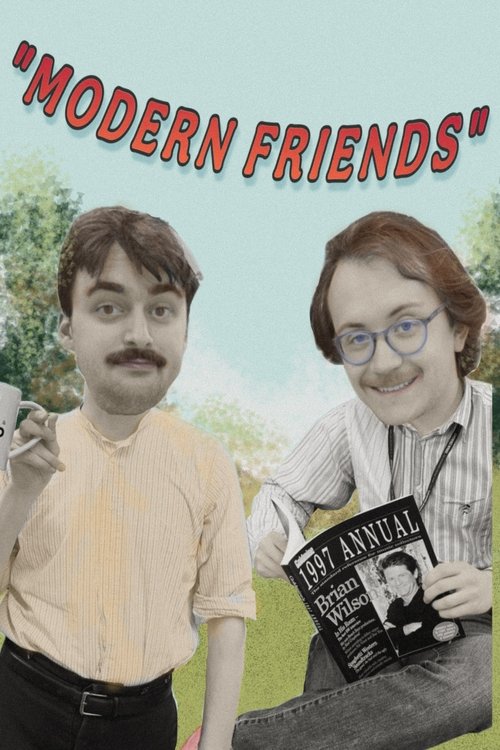
Modern Friends - Review
Modern Friends: A Hilarious, Vertically Challenged Triumph (Review)
In a cinematic landscape saturated with sequels, reboots, and predictable narratives, Modern Friends arrives like a breath of fresh, albeit slightly disorienting, air. Released on June 7th, 2025, this silent comedy dares to challenge conventions, presenting a story told entirely through vertical framing and expressive physical comedy. Forget widescreen epics; director Anya Sharma delivers a hilariously intimate experience, forcing audiences to reconsider how they perceive storytelling and comedic timing. But does this bold experiment succeed? Let's dive in.
Plot: Ups and Downs in a Vertical World
The narrative of Modern Friends centers around three millennials, Maya, Liam, and Chloe, navigating the absurdities of modern urban life. The catch? Their world is presented entirely in vertical format, mimicking the ubiquitous smartphone screen. Maya, a struggling artist with a penchant for dramatic flair, lives in a cramped, multi-story apartment building. Liam, a perpetually unemployed aspiring influencer, bounces between odd jobs and disastrous dates, all meticulously documented on his phone. Chloe, a cynical tech worker, tries to maintain a semblance of normalcy amidst the chaos, often acting as the exasperated voice of reason.
The film unfolds as a series of interconnected vignettes, each showcasing the characters' daily struggles and triumphs. We see Maya's attempts to sell her avant-garde art (displayed vertically, of course), Liam's increasingly desperate attempts to go viral, and Chloe's frustrating encounters with her eccentric coworkers. The vertical framing becomes an integral part of the comedic setup. Characters often interact through apartment windows stacked on top of each other, creating visual gags and opportunities for physical comedy. The limited horizontal space forces the actors to rely on exaggerated movements and facial expressions, amplifying the comedic effect.
One particularly memorable sequence involves Liam attempting to assemble a flat-pack bookshelf in his tiny apartment. The vertical framing emphasizes the precariousness of the situation, as the bookshelf threatens to topple over at any moment, crushing Liam in the process. Another highlight sees Maya accidentally flooding her apartment, causing a cascade of water to pour down through the floors, affecting Liam and Chloe below. These moments of slapstick brilliance are carefully choreographed and perfectly timed, showcasing the film's commitment to visual storytelling.
While the plot is relatively simple, the film cleverly uses the vertical format to explore themes of connection, isolation, and the pressures of modern life. The characters are constantly striving for validation, whether it's through likes on social media or recognition for their artistic endeavors. The vertical framing reinforces the sense of confinement and the feeling of being constantly observed, reflecting the anxieties of a generation growing up in the age of social media.
Characters: Millennial Archetypes with a Vertical Twist
The success of Modern Friends hinges on the performances of its three leads: Anya Sharma, Ben Carter, and Emily Davis. Each actor brings a unique energy to their respective roles, creating believable and relatable characters.
Anya Sharma shines as Maya, the flamboyant and emotionally volatile artist. Sharma's expressive eyes and physical dexterity are perfectly suited to the silent comedy format. She conveys a wide range of emotions with just a few subtle gestures, making Maya a sympathetic and engaging character. Her performance is reminiscent of Lucille Ball, known for physical comedy, but with a modern, millennial twist.
Ben Carter delivers a hilarious performance as Liam, the perpetually optimistic but ultimately hapless influencer. Carter's comedic timing is impeccable, and he effortlessly embodies the anxieties and insecurities of a generation obsessed with online validation. He manages to elicit both laughter and sympathy, making Liam a surprisingly complex character. His performance recalls elements of Jim Carrey's physical comedy, but grounded in a more relatable, modern context.
Emily Davis provides a much-needed dose of cynicism and practicality as Chloe, the voice of reason amidst the chaos. Davis's deadpan delivery and subtle facial expressions are a perfect counterpoint to Sharma and Carter's more exaggerated performances. She anchors the film with her grounded portrayal of a character struggling to maintain her sanity in a world gone mad. Her performance has shades of Aubrey Plaza's sardonic wit, but with a more vulnerable undercurrent.
While the characters are somewhat archetypal, the actors bring them to life with nuance and authenticity. The vertical framing forces them to rely on close-ups and expressive gestures, revealing the characters' inner thoughts and emotions in a way that traditional filmmaking often overlooks. The chemistry between the three leads is palpable, making their interactions feel genuine and believable.
Direction and Cinematography: A Vertical Vision
Anya Sharma's direction is the true star of Modern Friends. She masterfully utilizes the vertical format to create a unique and engaging cinematic experience. The film is not simply a traditional comedy shot vertically; it is a comedy designed for vertical viewing. Sharma's understanding of visual storytelling is evident in every frame. She uses the limited horizontal space to create claustrophobic environments that reflect the characters' anxieties and insecurities. She also utilizes the vertical space to create moments of slapstick brilliance, with characters falling, climbing, and interacting across multiple levels.
The cinematography, helmed by veteran DP David Lee, is equally impressive. Lee uses a variety of techniques to keep the vertical frame visually interesting, employing creative camera angles, dynamic lighting, and bold color palettes. The film is surprisingly dynamic, despite the limitations of the format. Lee's use of shallow depth of field draws the viewer's attention to specific details and facial expressions, enhancing the comedic effect.
The film's editing is also crucial to its success. Editor Sarah Chen skillfully cuts between different scenes and perspectives, maintaining a brisk pace and ensuring that the comedic timing is always on point. The use of visual gags and quick cuts adds to the film's overall energy and excitement.
One of the most impressive aspects of the direction and cinematography is the way they work together to create a sense of immersion. The vertical framing mimics the experience of watching content on a smartphone, drawing the viewer into the characters' world in a way that traditional filmmaking cannot. This immersive quality is particularly effective during scenes where the characters are interacting with social media, blurring the lines between the film and the viewer's own online experiences.
Themes and Messages: Connection in a Disconnected World
Beneath its comedic surface, Modern Friends explores several timely and relevant themes. The film examines the challenges of navigating modern life in an increasingly digital world. It explores the pressures of social media, the anxieties of unemployment, and the search for meaning and connection in a disconnected society.
The film also touches on the themes of isolation and loneliness. Despite being constantly connected to the internet, the characters often feel isolated and alone. They crave validation and attention, but struggle to form meaningful relationships. The vertical framing reinforces this sense of isolation, emphasizing the characters' physical separation and the barriers that exist between them.
However, Modern Friends is ultimately a hopeful film. It suggests that even in a disconnected world, genuine connection is still possible. The characters find solace and support in their friendships, helping each other navigate the challenges of modern life. The film celebrates the power of human connection and the importance of finding meaning and purpose beyond the digital realm.
The film's message is particularly relevant in a time when many people feel overwhelmed by the constant barrage of information and the pressures of social media. Modern Friends reminds us that it is important to disconnect from the digital world and connect with the people around us. It encourages us to find joy in the simple things and to appreciate the value of genuine human connection.
Comparisons: Breaking the Mold
Modern Friends is a unique and innovative film that defies easy categorization. While it shares some similarities with other comedies, its vertical framing and silent comedy format set it apart from the crowd.
The film's physical comedy and visual gags are reminiscent of classic silent films like those of Charlie Chaplin and Buster Keaton. However, Modern Friends updates this classic style for a modern audience, incorporating contemporary themes and references.
The film also shares some similarities with mockumentary comedies like The Office and Parks and Recreation. However, Modern Friends takes a more stylized and experimental approach, using the vertical framing to create a unique visual language.
Director Anya Sharma's previous work includes several short films and web series, all of which showcase her talent for visual storytelling and her knack for creating relatable characters. Modern Friends represents a significant step forward in her career, demonstrating her ability to translate her unique vision to a larger canvas.
Ultimately, Modern Friends is a film that stands on its own. It is a bold and innovative experiment that challenges conventions and pushes the boundaries of cinematic storytelling.
Positive Aspects: Vertical Virtues
- Innovative Concept: The vertical framing is a brilliant gimmick that adds a unique visual dimension to the comedy.
- Strong Performances: The actors deliver excellent physical comedy and convey a wide range of emotions without dialogue.
- Clever Direction: Anya Sharma's direction is masterful, making the most of the limited space and creating a visually engaging experience.
- Timely Themes: The film explores relevant themes of connection, isolation, and the pressures of modern life.
- Engaging Storytelling: Despite the lack of dialogue, the film tells a compelling and entertaining story.
Constructive Criticism: Room for Improvement
- Plot Simplicity: The plot is relatively simple and predictable at times.
- Character Archetypes: The characters are somewhat archetypal, although the actors bring them to life with nuance.
- Potential for Repetition: The vertical framing, while initially novel, could become repetitive for some viewers. More variety in shot composition could enhance later acts.
- Limited Emotional Depth: While the film explores relevant themes, it could delve deeper into the characters' emotional lives.
- Accessibility Concerns: While innovative, the vertical format might not appeal to all viewers, potentially limiting its audience.
Conclusion: A Vertical Victory
Modern Friends is a bold and innovative comedy that dares to challenge conventions. While it may not be for everyone, its unique visual style, strong performances, and timely themes make it a worthwhile cinematic experience. Director Anya Sharma has created a film that is both hilarious and thought-provoking, proving that even in a world saturated with content, there is still room for originality and innovation. The film's success lies in its ability to embrace its limitations and turn them into strengths. The vertical framing, while initially unconventional, becomes an integral part of the comedic setup, creating opportunities for visual gags and physical comedy that would not be possible in a traditional format.
Modern Friends is not just a comedy; it is a commentary on modern life, exploring the challenges of connection, isolation, and the pressures of social media. The film's message is particularly relevant in a time when many people feel overwhelmed by the constant barrage of information and the pressures of the digital world. Modern Friends reminds us that it is important to disconnect from the digital world and connect with the people around us. It encourages us to find joy in the simple things and to appreciate the value of genuine human connection.
For its innovative concept, strong performances, and clever direction, I give Modern Friends a well-deserved: