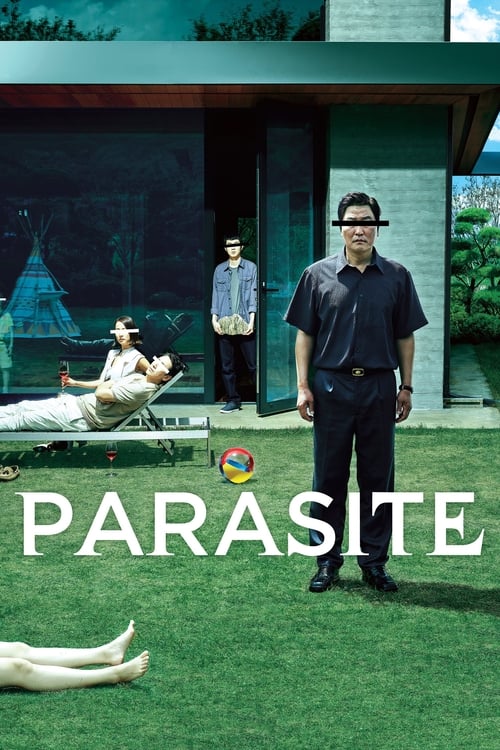
Parasite - Review
Parasite: A Masterclass in Social Commentary Wrapped in Thrilling Suspense
Bong Joon-ho's Parasite isn't just a film; it's a cultural phenomenon. Released in 2019, it swept the awards season, culminating in a historic Best Picture win at the Oscars, a first for a non-English language film. But beyond the accolades, Parasite is a meticulously crafted, darkly comedic thriller that burrows under your skin, leaving you pondering its profound social commentary long after the credits roll. It's a film that demands to be discussed, dissected, and experienced multiple times to fully appreciate its layers of brilliance.
Plot: A Calculated Descent into Chaos
The film centers around the Kim family, living in a cramped, semi-basement apartment in a poor Seoul neighborhood. Ki-taek, the patriarch, along with his wife Chung-sook, son Ki-woo, and daughter Ki-jung, are all unemployed and struggling to make ends meet. Their lives take a dramatic turn when Ki-woo, thanks to a friend’s recommendation, gets a job tutoring Da-hye, the teenage daughter of the wealthy Park family.
This marks the beginning of a carefully orchestrated infiltration. Ki-woo, sensing an opportunity, uses his wit and cunning to recommend his sister, Ki-jung, to the Parks as an art therapist for their hyperactive son, Da-song. From there, the Kims systematically scheme to replace the Park family's driver and housekeeper, cleverly manipulating situations to get each member of their family employed by the unsuspecting Parks. They become parasites, feeding off the wealth and privilege of their hosts, enjoying a lifestyle they could only dream of before.
However, this carefully constructed facade begins to crumble when the Kims discover a shocking secret hidden within the Park family's luxurious home: the former housekeeper's husband, Geun-sae, has been living in a hidden bunker beneath the house for years, secretly worshipping Mr. Park. This revelation sets off a chain of events that spirals into violence and exposes the raw, simmering tensions between the haves and have-nots. The film masterfully blends dark humor with moments of genuine suspense and shocking brutality, keeping the audience on the edge of their seats until the very end.
Characters: Morally Grey and Brilliantly Acted
One of Parasite's greatest strengths lies in its complex and compelling characters. None of them are purely good or evil; they are all flawed individuals driven by their circumstances and desires.
The Kim Family: Survivors by Any Means Necessary
- Ki-taek (Song Kang-ho): The patriarch of the Kim family, Ki-taek is a resourceful but ultimately passive man. He's willing to do whatever it takes to provide for his family, even if it means deception and manipulation. Song Kang-ho delivers a nuanced performance, portraying Ki-taek's desperation and underlying vulnerability with remarkable skill.
- Chung-sook (Chang Hyae-jin): Ki-taek's wife, Chung-sook, is the more pragmatic and assertive of the two. She's a formidable woman who isn't afraid to get her hands dirty. Chang Hyae-jin brings a fierce energy to the role, making Chung-sook a memorable and compelling character.
- Ki-woo (Choi Woo-shik): The son, Ki-woo, is the catalyst for the Kims' infiltration. He's intelligent and ambitious, but also somewhat naive. Choi Woo-shik portrays Ki-woo's transformation from hopeful student to manipulative schemer with impressive subtlety.
- Ki-jung (Park So-dam): The daughter, Ki-jung, is the most cunning and resourceful member of the Kim family. She's a talented artist and forger who plays a crucial role in their scheme. Park So-dam brings a sharp wit and undeniable charisma to the role, making Ki-jung a fan favorite.
The Park Family: Naive Privilege and Unintentional Cruelty
- Mr. Park (Lee Sun-kyun): The wealthy and successful CEO of a global IT company, Mr. Park embodies the obliviousness of the upper class. He's obsessed with his image and easily manipulated by the Kims. Lee Sun-kyun perfectly captures Mr. Park's aloofness and subtle disdain for those he considers beneath him.
- Mrs. Park (Cho Yeo-jeong): Mr. Park's wife, Mrs. Park, is a naive and somewhat ditzy housewife. She's easily impressed by the Kims and completely unaware of their true intentions. Cho Yeo-jeong delivers a brilliant comedic performance, highlighting Mrs. Park's vulnerability and dependence on others.
- Da-hye (Jung Ji-so): The teenage daughter of the Parks, Da-hye, is initially portrayed as a typical teenager, but she develops a connection with Ki-woo that adds another layer of complexity to the story.
- Da-song (Jung Hyun-jun): The Park's young son, Da-song, is a troubled child who adds an element of the bizarre to the film. His obsession with Native American culture and his strange behavior are both unsettling and darkly humorous.
The Other Players: Fueling the Fire
- Moon-gwang (Lee Jung-eun): The former housekeeper, Moon-gwang, is a crucial character who exposes the Kims' deception and sets off the film's explosive climax. Her desperation and unwavering loyalty to the Parks are both tragic and unsettling.
- Geun-sae (Park Myung-hoon): Moon-gwang's husband, Geun-sae, who lives in the bunker, represents the extreme end of economic disparity. His existence is a shocking indictment of the system that allows such inequality to persist.
The ensemble cast delivers phenomenal performances across the board. Each actor embodies their character with depth and nuance, making them feel real and relatable, even in their most morally questionable moments. The chemistry between the actors is palpable, further enhancing the film's immersive quality.
Direction: A Masterful Hand at the Helm
Bong Joon-ho's direction is nothing short of masterful. He seamlessly blends genres, creating a film that is both hilarious and terrifying, thought-provoking and entertaining. His attention to detail is impeccable, from the meticulously designed sets to the subtle visual cues that foreshadow future events. He uses the camera to tell the story, employing a variety of techniques to create a sense of tension, suspense, and unease.
Bong's control over the pacing is particularly impressive. He builds the tension slowly and deliberately, allowing the audience to become invested in the characters and their situation before unleashing the film's explosive climax. He also knows when to inject moments of levity, providing much-needed relief from the film's darker themes.
Furthermore, Bong Joon-ho's direction expertly utilizes mise-en-scène to highlight the film's themes. The stark contrast between the Kim family's cramped, squalid basement apartment and the Park family's spacious, modern home is a constant visual reminder of the economic divide that separates them. The recurring motif of smells, particularly Mr. Park's comments about Ki-taek's "smell," underscores the class distinctions and the Kims' attempts to conceal their true identities.
Cinematography: A Feast for the Eyes
Hong Kyung-pyo's cinematography is stunning. He uses a variety of camera angles and movements to create a visually dynamic and engaging experience. The film's color palette is carefully chosen to reflect the mood and tone of each scene, with bright, vibrant colors used to depict the Park family's world and darker, more muted colors used to depict the Kim family's world.
The use of light and shadow is particularly effective in creating a sense of unease and suspense. The film's many scenes set in the dark, cramped spaces of the Kim family's apartment and the hidden bunker are claustrophobic and unsettling, reflecting the characters' sense of desperation and confinement.
The film's visual language is rich and symbolic. The frequent use of stairs, for example, represents the social hierarchy and the Kims' attempts to climb out of poverty. The rain, which floods the Kim family's apartment but barely touches the Park family's home, symbolizes the unequal distribution of resources and the vulnerability of the poor.
Themes and Messages: A Deep Dive into Social Inequality
Parasite is more than just a thrilling suspense film; it's a powerful commentary on social inequality, class divisions, and the human cost of capitalism. The film explores the desperation and desperation of the poor, the obliviousness and privilege of the wealthy, and the simmering resentment that exists between the two.
The film challenges the notion of individual responsibility, suggesting that systemic inequality plays a significant role in shaping people's lives. The Kims are not inherently evil; they are simply trying to survive in a system that is rigged against them. Their actions, while morally questionable, are driven by their desire to provide for their families and escape their poverty-stricken existence.
Parasite also explores the concept of identity and the lengths people will go to in order to escape their circumstances. The Kims are constantly pretending to be someone they are not, adopting new identities and personas to fit in with the Park family. This raises questions about the nature of authenticity and the pressures of social conformity.
The film's ending is deliberately ambiguous, leaving the audience to grapple with the complex moral questions it raises. There are no easy answers, and the film refuses to offer a simplistic resolution to the problems it depicts.
Comparison to Other Films and Works
Parasite shares thematic similarities with other films that explore social inequality, such as Roma (2018) and Us (2019). Like Roma, it offers a nuanced and empathetic portrayal of the lives of the working class. Like Us, it uses genre conventions to explore the darker aspects of American society.
In terms of Bong Joon-ho's previous work, Parasite shares similarities with his earlier films, such as Snowpiercer (2013) and Okja (2017), which also address themes of social injustice and the exploitation of the marginalized. However, Parasite is arguably his most mature and accomplished film to date, demonstrating a mastery of storytelling, character development, and visual language. Song Kang-ho, a frequent collaborator with Bong Joon-ho, delivers another outstanding performance, solidifying his status as one of South Korea's finest actors.
Positive Aspects
- Masterful Direction: Bong Joon-ho's direction is impeccable, seamlessly blending genres and creating a visually stunning and emotionally resonant experience.
- Compelling Characters: The characters are complex, flawed, and relatable, making them feel real and human.
- Phenomenal Performances: The ensemble cast delivers outstanding performances across the board.
- Stunning Cinematography: Hong Kyung-pyo's cinematography is visually dynamic and enhances the film's themes and mood.
- Profound Social Commentary: The film offers a powerful and thought-provoking commentary on social inequality, class divisions, and the human cost of capitalism.
- Clever Plot Twists: The film keeps you guessing with unexpected twists and turns.
- Perfect Blend of Genres: The film seamlessly blends comedy, thriller, and drama.
Constructive Criticism
- Pacing in the Middle Section: While the film's pacing is generally excellent, the middle section, where the Kims are settling into their roles, could feel slightly slower for some viewers.
- Ambiguous Ending: The film's ambiguous ending may not satisfy all viewers, as it leaves many questions unanswered. However, this ambiguity is also one of the film's strengths, as it encourages viewers to think critically about the issues it raises.
Conclusion
Parasite is a cinematic masterpiece that transcends genre conventions and delivers a powerful and unforgettable experience. It's a film that will stay with you long after you've seen it, prompting you to reflect on the complexities of social inequality and the human condition. Bong Joon-ho has crafted a film that is both entertaining and thought-provoking, a rare feat in contemporary cinema. Parasite is not just a great film; it's an important film that deserves to be seen and discussed by audiences around the world.