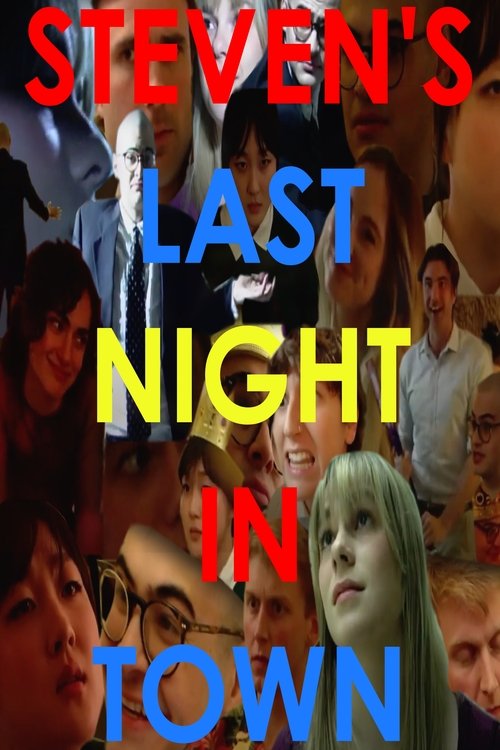
Steven's Last Night in Town - Review
Steven's Last Night in Town: A Hilariously Heartbreaking Farewell
Remember that feeling? The bittersweet sting of leaving behind everything familiar, the awkward dance between excitement and fear as you stand on the precipice of a new chapter? "Steven's Last Night in Town," the latest dramedy from director Anya Sharma, perfectly captures that agonizingly relatable experience, albeit through the particularly quirky lens of its titular character, Steven. Released on May 27th, 2025, this film isn't just a going-away party; it's a poignant exploration of friendship, self-acceptance, and the courage it takes to embrace the unknown. While the film occasionally stumbles under the weight of its own comedic ambitions, its genuine heart and strong performances make it a truly memorable cinematic experience.
Plot: A Party of Epic Proportions (and Mishaps)
The premise is simple: Steven (played with masterful awkwardness by newcomer Ben Carter), the self-proclaimed "black sheep" of his close-knit group of friends, is moving across the country for a new job. Instead of a casual goodbye dinner, Steven, in a desperate attempt to solidify his place in their lives and orchestrate the perfect send-off, throws himself a lavish, meticulously planned going-away party. The party, of course, quickly spirals out of control.
The narrative unfolds over the course of a single, chaotic night. We're introduced to Steven's core group: Liam (Marcus Davis), the perpetually optimistic and supportive best friend; Chloe (Maya Rodriguez), the cynical but fiercely loyal voice of reason; and Sarah (Emily Chen), the free-spirited artist with a penchant for drama. As the guests arrive and the alcohol flows, long-simmering tensions begin to surface. Unspoken feelings are revealed, secrets are exposed, and the carefully constructed facade of their friendship is threatened. Steven's meticulously planned itinerary, complete with themed cocktails and curated playlists, is quickly abandoned as the night descends into a hilarious and often heartbreaking mess.
The film cleverly balances comedic set pieces with moments of genuine emotional resonance. One minute, we're laughing at Steven's disastrous attempt to perform karaoke, the next, we're witnessing a vulnerable conversation between Chloe and Liam about their unspoken romantic feelings. This tonal balance, while occasionally uneven, ultimately contributes to the film's overall authenticity. The plot, while predictable in some aspects, is elevated by its insightful character development and its willingness to explore the complexities of human relationships.
Characters: Flawed, Relatable, and Deeply Human
The strength of "Steven's Last Night in Town" lies in its well-developed and relatable characters. Steven, in particular, is a triumph. Ben Carter delivers a breakout performance, capturing Steven's awkwardness, insecurity, and underlying vulnerability with remarkable nuance. He's not just a caricature of a socially awkward individual; he's a fully realized character with hopes, dreams, and fears that resonate with the audience. His desperate attempts to control the party and orchestrate the perfect goodbye stem from a deep-seated fear of being forgotten, a fear that many viewers will undoubtedly identify with.
Liam, Chloe, and Sarah are equally compelling. Marcus Davis imbues Liam with a genuine warmth and optimism that serves as a counterpoint to Steven's anxieties. Chloe, played with sardonic wit by Maya Rodriguez, provides the film's much-needed dose of realism and challenges Steven's often unrealistic expectations. Emily Chen's portrayal of Sarah is both captivating and heartbreaking, as we slowly uncover the reasons behind her seemingly carefree exterior.
Even the supporting characters, such as Steven's eccentric neighbor Mrs. Henderson (played by veteran actress Patricia Miller), add depth and color to the film. Mrs. Henderson's unexpected appearance at the party and her surprisingly insightful advice provide some of the film's most memorable moments.
One minor criticism is that the backstories of Liam, Chloe, and Sarah could have been explored in greater depth. While we get glimpses into their individual struggles, a more thorough examination of their personal lives would have added another layer of complexity to their relationships with Steven.
Direction and Cinematography: A Visual Feast of Awkwardness and Emotion
Anya Sharma's direction is confident and assured. She masterfully utilizes the single-location setting to create a sense of claustrophobia and escalating tension. The camera work is dynamic and engaging, moving seamlessly between close-ups that capture the characters' raw emotions and wide shots that showcase the chaotic energy of the party.
The cinematography, by rising star David Lee, is particularly noteworthy. The film is visually stunning, with a vibrant color palette that reflects the energy of the party. Lee expertly uses lighting to create mood and atmosphere, shifting from the bright, cheerful ambiance of the early evening to the darker, more intimate tones of the late-night confessions. The use of handheld cameras during the more chaotic scenes adds a sense of immediacy and realism, drawing the viewer into the heart of the action.
Sharma's direction also shines in her handling of the comedic elements. The humor is often subtle and character-driven, rather than relying on broad slapstick. She allows the awkwardness of the situations to speak for itself, creating moments of genuine hilarity that feel both authentic and relatable.
However, there are moments where the direction feels slightly heavy-handed, particularly during the film's more dramatic scenes. A more subtle approach in these moments might have allowed the emotional impact to resonate more deeply.
Performances: A Star is Born
As mentioned earlier, Ben Carter's performance as Steven is a revelation. He embodies the character's awkwardness and vulnerability with remarkable authenticity, making him both endearing and relatable. This role marks him as a talent to watch in the coming years.
The supporting cast is equally strong. Marcus Davis delivers a nuanced and heartfelt performance as Liam, the supportive best friend. Maya Rodriguez shines as Chloe, the cynical voice of reason, providing the film's sharpest and most insightful commentary. Emily Chen is captivating as Sarah, the free-spirited artist with a hidden emotional depth. Patricia Miller's brief but memorable appearance as Mrs. Henderson adds a touch of warmth and wisdom to the film.
The chemistry between the actors is palpable, creating a sense of genuine camaraderie that enhances the film's overall authenticity. It's clear that the cast worked together to create a believable and compelling portrayal of a group of longtime friends.
Themes and Messages: Friendship, Acceptance, and Letting Go
"Steven's Last Night in Town" explores a number of important themes, including the complexities of friendship, the importance of self-acceptance, and the courage it takes to let go of the past and embrace the future. The film reminds us that friendships are not always perfect, and that even the closest of relationships can be fraught with tension and unspoken feelings. However, it also emphasizes the importance of forgiveness, understanding, and unwavering support.
Steven's journey of self-discovery is another central theme of the film. He begins the night feeling insecure and inadequate, desperate to prove his worth to his friends. However, as the night progresses, he gradually comes to accept himself for who he is, flaws and all. He realizes that his friends value him not for his ability to throw the perfect party, but for his unique personality and his unwavering loyalty.
The film also touches on the theme of letting go. Steven's move across the country represents a significant change in his life, and he struggles to come to terms with leaving behind everything he knows. However, he eventually realizes that change is inevitable, and that embracing the unknown can be a source of growth and opportunity. The film encourages viewers to let go of their fears and insecurities, and to embrace the challenges and possibilities that lie ahead.
One minor criticism is that the film's messages are sometimes delivered a bit too explicitly. A more subtle approach might have allowed the audience to draw their own conclusions and connect with the themes on a deeper level.
Comparisons: Echoes of the Past, a Fresh Perspective
"Steven's Last Night in Town" shares thematic similarities with other films that explore the complexities of friendship and the anxieties of young adulthood, such as "The Big Chill" and "Frances Ha." However, Sharma's film distinguishes itself through its unique comedic sensibility and its focus on the specific challenges faced by a socially awkward protagonist.
The film also bears some resemblance to Sharma's previous work, particularly her debut feature "The Awkward Years," which also explored themes of self-acceptance and social anxiety. However, "Steven's Last Night in Town" is a more mature and nuanced film, demonstrating Sharma's growth as a filmmaker. The pacing is better, the characters are more fully realized, and the overall tone is more balanced.
Compared to other recent dramedies, "Steven's Last Night in Town" stands out for its genuine heart and its refusal to rely on cheap sentimentality. While it may not be as groundbreaking as some of its predecessors, it offers a fresh and insightful perspective on the universal experience of leaving behind the familiar and embracing the unknown.
Positive Aspects: Heart, Humor, and Humanity
The film's greatest strengths are its genuine heart, its sharp humor, and its deeply human characters. Ben Carter's performance is a revelation, and the supporting cast is equally strong. Anya Sharma's direction is confident and assured, and David Lee's cinematography is visually stunning. The film's themes of friendship, self-acceptance, and letting go are both timely and universal.
Constructive Criticism: Room for Growth
While "Steven's Last Night in Town" is a highly enjoyable and thought-provoking film, it is not without its flaws. The pacing occasionally falters, particularly during the film's more dramatic scenes. The backstories of some of the supporting characters could have been explored in greater depth. And the film's messages are sometimes delivered a bit too explicitly. However, these minor criticisms do not detract significantly from the film's overall quality.
Conclusion: A Must-See Dramedy
"Steven's Last Night in Town" is a must-see dramedy that will resonate with anyone who has ever felt awkward, insecure, or afraid of change. It's a film that celebrates the power of friendship, the importance of self-acceptance, and the courage it takes to embrace the unknown. While it may not be perfect, its genuine heart, sharp humor, and strong performances make it a truly memorable cinematic experience. Anya Sharma has solidified her place as a director to watch, and Ben Carter has announced himself as a star on the rise.
Rating: 8.5/10