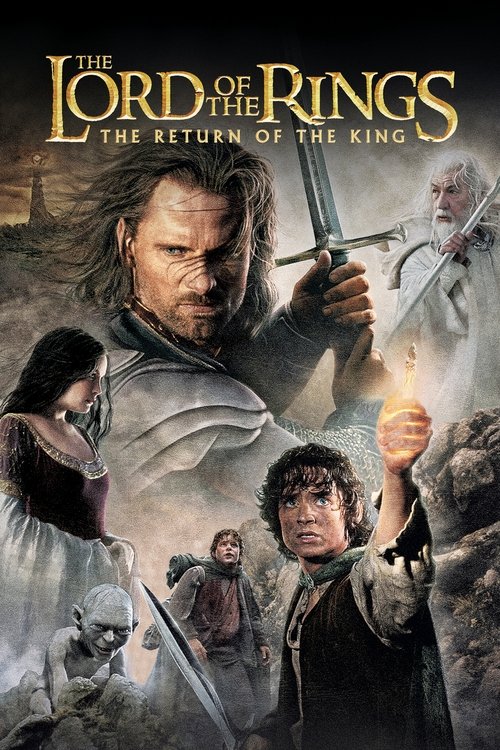
The Lord of the Rings: The Return of the King - Review
The Lord of the Rings: The Return of the King - A Cinematic Triumph, A Bittersweet Farewell
Nearly two decades have passed since Peter Jackson's The Lord of the Rings: The Return of the King stormed into theaters, concluding a cinematic journey of unprecedented scope and ambition. More than just a film, it was a cultural event, a culmination of years of painstaking effort that redefined the fantasy genre and set a new standard for epic storytelling on the big screen. But does the film, weighed down by its own legacy and the immense expectations that preceded it, still hold up as a masterpiece? The answer, while complex, leans heavily towards a resounding yes. The Return of the King is a powerful, emotional, and visually stunning conclusion to a saga that continues to captivate audiences worldwide. However, beneath the grandeur and spectacle, there lie minor imperfections that, while not detracting from the overall experience, are worth examining.
Plot and Narrative Structure: Weaving Together Threads of Hope and Despair
The Return of the King picks up the threads left dangling at the end of The Two Towers, seamlessly weaving together multiple storylines that converge towards the final, climactic battle for Middle-earth. The film masterfully juggles the perilous journey of Frodo and Sam as they navigate the treacherous landscapes of Mordor, guided (or rather, manipulated) by the increasingly unstable Gollum. Simultaneously, we witness the growing strength of Aragorn as he embraces his destiny as the King of Gondor, leading the armies of men against the overwhelming forces of Sauron. The narrative structure is ambitious, demanding the audience's attention as it shifts between these seemingly disparate storylines, but Jackson expertly manages the pacing, building tension and suspense with each passing scene.
One of the film's greatest strengths lies in its ability to balance the epic scale of the war with the intimate, personal struggles of its characters. While the battles rage and kingdoms fall, the focus remains firmly on the emotional journey of Frodo and Sam, whose unwavering friendship and courage in the face of unimaginable darkness serve as the heart and soul of the film. The constant threat of discovery, the debilitating effects of the Ring, and the insidious influence of Gollum create a palpable sense of dread and desperation that keeps the audience on the edge of their seats.
However, the film's plot isn't without its minor flaws. Some critics have pointed to the multiple "false endings" as a pacing issue, particularly the extended sequence after the Ring is destroyed. While these scenes are undoubtedly crucial for providing closure and allowing the characters to say their goodbyes, they do feel somewhat protracted and could have been trimmed for a more streamlined narrative.
Characters: A Symphony of Heroism and Corruption
The characters in The Return of the King are richly developed and deeply compelling, each grappling with their own internal conflicts and external challenges. Viggo Mortensen delivers a career-defining performance as Aragorn, perfectly embodying the reluctant hero who gradually accepts his responsibility and embraces his destiny as the King of Men. His transformation from a wandering ranger to a noble leader is both inspiring and believable, and his scenes on the Pelennor Fields are among the most iconic in the entire trilogy.
Elijah Wood and Sean Astin continue to shine as Frodo and Sam, respectively. Wood portrays Frodo's increasing burden with a quiet intensity, capturing the physical and psychological toll that the Ring takes on him. Astin, as Sam, provides the emotional anchor of the film, his unwavering loyalty and selfless devotion to Frodo serving as a beacon of hope in the darkest of times. Their relationship is the emotional core of the film, and their final scene together is one of the most moving and unforgettable moments in cinematic history.
Andy Serkis's performance as Gollum remains a groundbreaking achievement in motion capture technology. He perfectly captures the character's fractured psyche, his conflicting desires, and his pathetic desperation for the Ring. Gollum is both repulsive and pitiable, a tragic figure whose descent into madness serves as a cautionary tale about the corrupting power of greed and obsession.
The supporting cast is equally impressive, with Ian McKellen delivering a wise and powerful performance as Gandalf, Orlando Bloom showcasing Legolas's acrobatic prowess, and John Rhys-Davies bringing his characteristic humor and gravitas to the role of Gimli. Miranda Otto's Éowyn is particularly memorable, her defiance in the face of the Witch-king of Angmar providing one of the film's most empowering moments.
While the character development is generally excellent, some characters feel somewhat underdeveloped. For example, the relationship between Faramir and Éowyn, while touching, feels rushed and lacks the depth that it deserves. Similarly, some of the Rohan characters, such as Théoden, could have been given more screen time to fully explore their motivations and relationships.
Direction and Vision: Peter Jackson's Masterpiece
Peter Jackson's direction of The Return of the King is nothing short of masterful. He seamlessly blends epic battle sequences with intimate character moments, creating a film that is both visually stunning and emotionally resonant. His attention to detail is remarkable, from the meticulously crafted costumes and sets to the breathtaking landscapes of New Zealand, which serve as the perfect backdrop for Middle-earth.
Jackson's vision for The Lord of the Rings is truly remarkable. He manages to capture the spirit and tone of Tolkien's novels while also making the story accessible to a wider audience. He doesn't shy away from the darker aspects of the story, but he also infuses the film with a sense of hope and optimism that is ultimately uplifting. The sheer scale and ambition of the project are staggering, and Jackson deserves immense credit for bringing Tolkien's world to life in such a spectacular and compelling way.
One of Jackson's greatest strengths as a director is his ability to create a sense of immersion. The audience is completely transported to Middle-earth, feeling as though they are witnessing these events firsthand. This is achieved through a combination of stunning visuals, powerful sound design, and compelling performances. Jackson also makes effective use of slow-motion and other cinematic techniques to heighten the drama and suspense.
While Jackson's direction is generally flawless, some critics have argued that he sometimes relies too heavily on CGI. While the visual effects are undoubtedly impressive, there are moments where they feel somewhat artificial and detract from the realism of the film. However, these moments are relatively few and far between, and they do not significantly detract from the overall experience.
Cinematography: A Visual Feast for the Eyes
The cinematography in The Return of the King is absolutely breathtaking. Andrew Lesnie, the director of photography, captures the beauty and majesty of Middle-earth with stunning clarity and detail. The landscapes of New Zealand are showcased to their full potential, and the battle sequences are filmed with a visceral intensity that puts the audience right in the heart of the action.
Lesnie's use of light and shadow is particularly effective, creating a sense of depth and atmosphere that enhances the emotional impact of the film. The scenes in Mordor are shrouded in darkness and gloom, reflecting the evil that permeates the land. In contrast, the scenes in Gondor are bathed in sunlight, symbolizing the hope and resilience of its people.
The battle sequences are a masterclass in visual storytelling. Lesnie uses a variety of camera angles and techniques to capture the chaos and brutality of war, while also highlighting the heroism and sacrifice of the individual soldiers. The aerial shots of the Pelennor Fields are particularly impressive, showcasing the sheer scale of the battle and the overwhelming odds faced by the defenders of Gondor.
While the cinematography is generally excellent, some critics have pointed to the overuse of slow-motion as a potential weakness. While slow-motion can be effective in highlighting key moments of drama and action, it can also feel somewhat gratuitous if overused. However, this is a minor quibble in an otherwise visually stunning film.
Themes and Messages: Hope, Courage, and the Power of Friendship
The Return of the King is a film rich in themes and messages, exploring universal ideas about hope, courage, friendship, and the corrupting power of evil. The film emphasizes the importance of standing up for what is right, even in the face of overwhelming odds. Aragorn's decision to embrace his destiny and lead the armies of men against Sauron is a powerful example of courage and leadership.
The film also highlights the importance of friendship and loyalty. The unwavering bond between Frodo and Sam is the emotional heart of the film, and their selfless devotion to each other serves as a beacon of hope in the darkest of times. Their friendship is tested to its limits, but they ultimately emerge stronger and more united than ever before.
The Return of the King also explores the corrupting power of evil. The Ring represents the seductive nature of power and the dangers of unchecked ambition. Gollum's descent into madness is a cautionary tale about the devastating consequences of succumbing to greed and obsession. The film suggests that even the smallest person can make a difference in the fight against evil, and that hope can be found even in the darkest of times.
Another important theme is the acceptance of responsibility. Aragorn must accept his destiny as King, Frodo must accept the burden of the Ring, and even Gollum must confront the consequences of his actions. The film suggests that true strength lies not in avoiding responsibility, but in embracing it and facing the challenges that come with it.
Comparison to Other Films and Previous Works
The Return of the King stands as a towering achievement in the fantasy genre, setting a new standard for epic storytelling on the big screen. It is often compared to other fantasy films such as Harry Potter, Chronicles of Narnia, and even older classics like Excalibur. However, The Lord of the Rings trilogy distinguishes itself through its sheer scale, its complex characters, and its profound exploration of universal themes.
Compared to the previous films in the trilogy, The Return of the King is arguably the most emotionally resonant and visually spectacular. It builds upon the foundations laid by The Fellowship of the Ring and The Two Towers, culminating in a satisfying and cathartic conclusion to the saga. While each film in the trilogy has its own strengths and weaknesses, The Return of the King is often considered the best due to its epic scope, its powerful performances, and its profound exploration of good and evil.
Peter Jackson's previous films, such as Heavenly Creatures and The Frighteners, showcased his talent for visual storytelling and his ability to blend genres. However, The Lord of the Rings trilogy represents a significant leap forward in his career, demonstrating his ability to handle a project of unprecedented scale and complexity. The trilogy cemented Jackson's reputation as one of the most visionary and talented directors of his generation.
Positive Aspects: A Triumph of Filmmaking
- Epic Scale and Scope: The film's sheer scale and ambition are breathtaking, creating a truly immersive cinematic experience.
- Compelling Characters: The characters are richly developed and deeply compelling, each grappling with their own internal conflicts and external challenges.
- Masterful Direction: Peter Jackson's direction is flawless, seamlessly blending epic battle sequences with intimate character moments.
- Stunning Visuals: The cinematography is breathtaking, capturing the beauty and majesty of Middle-earth with stunning clarity and detail.
- Powerful Themes: The film explores universal themes of hope, courage, friendship, and the corrupting power of evil.
- Groundbreaking Visual Effects: The visual effects are groundbreaking, bringing Tolkien's world to life in a spectacular and believable way.
- Emotional Resonance: The film is deeply emotional and emotionally resonant, leaving a lasting impact on the audience.
- Iconic Music Score: Howard Shore's musical score is iconic, perfectly capturing the mood and atmosphere of Middle-earth.
Constructive Criticism: Minor Imperfections in a Masterpiece
- Pacing Issues: The multiple "false endings" can feel somewhat protracted and could have been trimmed for a more streamlined narrative.
- Underdeveloped Characters: Some characters, such as Faramir and Éowyn, could have been given more screen time to fully explore their relationships.
- Overreliance on CGI: While the visual effects are generally impressive, there are moments where they feel somewhat artificial.
- Overuse of Slow-Motion: The overuse of slow-motion can feel somewhat gratuitous at times.
Conclusion: A Timeless Classic
The Lord of the Rings: The Return of the King is a cinematic triumph, a fitting conclusion to a saga that has captivated audiences worldwide. While it may have a few minor imperfections, its strengths far outweigh its weaknesses. The film is a visually stunning, emotionally resonant, and thematically rich masterpiece that will continue to be enjoyed and appreciated for generations to come. It's a testament to the power of storytelling, the magic of cinema, and the enduring appeal of Tolkien's world. It's not just a great fantasy film; it's a great film, period.
Rating: 9.5/10