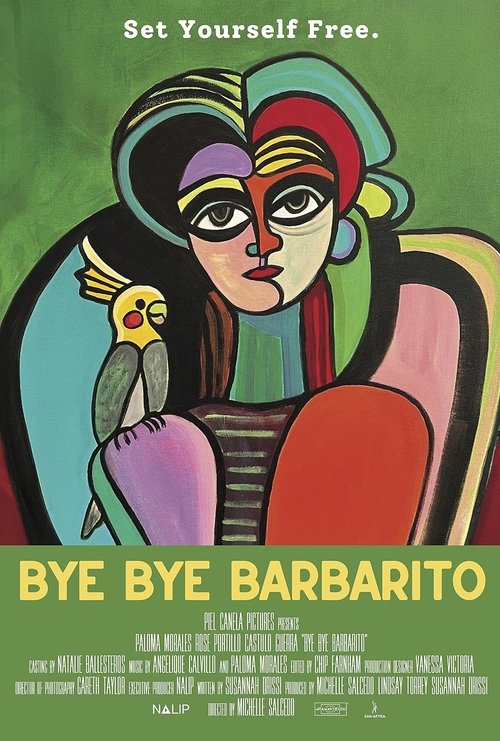
Bye Bye Barbarito - Review
Bye Bye Barbarito: A bittersweet symphony of freedom and feathered friends
In a cinematic landscape often saturated with superhero epics and high-octane thrillers, "Bye Bye Barbarito," released on May 30th, 2025, offers a refreshing and poignant counterpoint. This heartwarming dramedy, directed by newcomer Sofia Alvarez, explores themes of grief, liberation, and the unexpected connections that shape our lives. While the premise might seem simple – an elderly woman celebrates her husband’s death and then searches for her beloved cockatiel – the film delves into deeper emotional territories with surprising grace and wit. It's a film that lingers in the mind long after the credits roll, prompting reflection on the complexities of long-term relationships, the joy of rediscovering oneself, and the enduring power of companionship, even in its most unconventional forms.
Plot: A liberation tale disguised as a bird chase
The film opens with the death of Antonio, Romelia’s husband of fifty-seven years. But this isn't your typical grieving widow scenario. Romelia, played with captivating nuance by veteran actress Elena Ramirez, barely sheds a tear. Instead, a mischievous glint sparkles in her eyes. "Too long," she mutters, referring to the duration of their marriage, setting the tone for a narrative that subverts expectations. We quickly learn that Antonio was a grumpy, demanding man, and Romelia, stifled by decades of his negativity, sees his passing as an opportunity for a fresh start.
She transforms her living room into a vibrant tropical paradise, complete with inflatable palm trees and brightly colored decorations. This act of rebellion is met with disapproval from her neighbor, Ida, a devout and judgmental church lady, portrayed with delightful comedic timing by Marta Fernández. Ida’s constant disapproval provides a humorous counterpoint to Romelia’s newfound freedom, highlighting the societal pressures and expectations placed upon older women.
The central conflict arises when Barbarito, Romelia’s beloved cockatiel and her true companion, escapes from his cage. This sets Romelia on a quest through her neighborhood, a journey that becomes more than just a search for a pet. It’s a symbolic pursuit of happiness, a rediscovery of her own identity, and a chance to connect with the world outside the confines of her home. Along the way, she encounters a diverse cast of characters, each offering a unique perspective on life, loss, and the importance of embracing the present.
The plot unfolds at a deliberate pace, allowing for character development and emotional resonance. While the search for Barbarito provides the narrative drive, the film's true strength lies in its exploration of Romelia's inner journey. The ending, while perhaps slightly predictable, is satisfyingly heartwarming and reinforces the film's central themes of self-discovery and the enduring power of connection.
Characters: Flawed, relatable, and utterly captivating
The characters in "Bye Bye Barbarito" are its greatest asset. Each character is flawed, relatable, and imbued with a unique personality that makes them feel incredibly real.
Romelia: The liberated widow
Elena Ramirez delivers a tour-de-force performance as Romelia. She masterfully portrays the character's initial liberation with a subtle blend of joy and guilt. Ramirez allows us to see the years of suppressed dreams and desires simmering beneath the surface. Romelia's transformation is gradual and believable, making her a truly compelling and empathetic protagonist. We root for her every step of the way, even when she makes questionable choices.
Antonio: The grumpy ghost (of a husband)
While Antonio is deceased for most of the film, his presence is felt throughout. Through flashbacks and Romelia's internal monologues, we gain a glimpse into their complex relationship. Antonio is portrayed as a man set in his ways, often critical and emotionally distant. However, the film avoids painting him as a complete villain. We see glimpses of affection and moments of tenderness, suggesting that their relationship, despite its flaws, was built on a foundation of love, albeit a love that had become stifled by routine and resentment.
Ida: The judgmental neighbor
Marta Fernández shines as Ida, the nosy and judgmental neighbor. While initially presented as a comedic foil to Romelia, Ida's character is more nuanced than it appears. She represents the societal expectations and religious constraints that often bind older women. However, as the film progresses, we see glimpses of vulnerability and loneliness in Ida, suggesting that her judgmental behavior stems from her own insecurities and unfulfilled desires. By the end of the film, Ida undergoes a subtle but significant transformation, demonstrating the power of empathy and understanding.
Barbarito: The feathered catalyst
Barbarito, the cockatiel, is more than just a pet; he's a symbol of Romelia's newfound freedom and a catalyst for her personal growth. He represents the simple joys and unconditional love that Romelia craves. His escape forces her to step outside her comfort zone and engage with the world, ultimately leading her to rediscover her own passions and desires.
Direction and Cinematography: A visual feast of color and emotion
Sofia Alvarez demonstrates a remarkable talent for visual storytelling in her directorial debut. The film is visually stunning, with a vibrant color palette that reflects Romelia's emotional journey. The opening scenes, depicting the drab and muted tones of Romelia's life with Antonio, starkly contrast with the explosion of color that follows his death.
The cinematography, masterfully handled by veteran cinematographer Ricardo Torres, is both intimate and expansive. Close-up shots capture the subtle nuances of the actors' performances, while wide shots showcase the beauty of the film's setting, a quaint and colorful Latin American neighborhood. The use of natural light adds to the film's authenticity and creates a warm and inviting atmosphere.
Alvarez's direction is both sensitive and assured. She allows the actors to breathe and explore their characters, resulting in performances that feel genuine and emotionally resonant. She also demonstrates a keen eye for detail, incorporating subtle visual cues that enhance the film's themes and messages.
Performances: A triumph of acting
The performances in "Bye Bye Barbarito" are uniformly excellent. Elena Ramirez delivers a career-defining performance as Romelia, showcasing her incredible range and depth as an actress. Marta Fernández is equally impressive as Ida, bringing both humor and pathos to the role. The supporting cast is also strong, with each actor contributing to the film's overall authenticity and emotional impact.
Ramirez's performance is particularly noteworthy. She embodies Romelia with a quiet strength and vulnerability that is both captivating and heartbreaking. She effortlessly conveys the character's suppressed emotions and her growing sense of liberation. Her performance is a masterclass in subtlety and nuance, making Romelia a truly unforgettable character.
Themes and Messages: Freedom, connection, and the beauty of second chances
"Bye Bye Barbarito" explores several universal themes, including:
- Freedom and Liberation: The film celebrates the pursuit of personal freedom, particularly for women who have spent their lives fulfilling the expectations of others. Romelia's journey is a testament to the idea that it's never too late to rediscover oneself and pursue one's dreams.
- Grief and Acceptance: While Romelia doesn't grieve in the traditional sense, the film acknowledges the complexities of grief and the different ways people cope with loss. Romelia's celebration of Antonio's death is not a sign of disrespect but rather a recognition of the fact that his passing has freed her to live her own life.
- The Power of Connection: The film emphasizes the importance of human connection, even in its most unexpected forms. Romelia's relationship with Barbarito, her interactions with her neighbors, and her eventual reconciliation with Ida demonstrate the power of empathy and understanding.
- Second Chances: "Bye Bye Barbarito" is a story about second chances. Romelia's journey is a reminder that it's never too late to start over, to pursue one's passions, and to find happiness.
The film delivers these messages with subtlety and grace, avoiding heavy-handedness or moralizing. It allows the characters and their experiences to speak for themselves, creating a powerful and emotionally resonant viewing experience.
Comparisons: Echoes of "Amour" and "Harold and Maude," but with its own unique flavor
While "Bye Bye Barbarito" is a unique film, it shares thematic similarities with other films that explore the complexities of aging, loss, and the search for meaning. It echoes the bittersweet beauty of Michael Haneke's "Amour" in its unflinching portrayal of the challenges of old age and the complexities of long-term relationships. It also shares a similar spirit of rebellion and unconventionality with Hal Ashby's "Harold and Maude," albeit with a lighter and more optimistic tone.
However, "Bye Bye Barbarito" distinguishes itself through its unique cultural context and its focus on the female perspective. The film's Latin American setting adds a layer of warmth and vibrancy, while its exploration of Romelia's journey as a woman reclaiming her identity after decades of domesticity sets it apart from other films in the genre.
Sofia Alvarez's directorial style also sets "Bye Bye Barbarito" apart. Her ability to blend humor and pathos, her keen eye for visual detail, and her sensitivity to the actors' performances create a film that is both deeply moving and thoroughly entertaining.
Positive Aspects: A triumph of heart and artistry
"Bye Bye Barbarito" excels in several key areas:
- Compelling Narrative: The story is engaging and emotionally resonant, keeping the audience invested in Romelia's journey from beginning to end.
- Exceptional Performances: The acting is superb, particularly Elena Ramirez's portrayal of Romelia.
- Stunning Visuals: The cinematography and art direction create a visually rich and emotionally evocative experience.
- Thought-Provoking Themes: The film explores universal themes of freedom, connection, and second chances with sensitivity and grace.
- Effective Direction: Sofia Alvarez demonstrates a remarkable talent for visual storytelling and character development.
Constructive Criticism: Minor imperfections in an otherwise stellar film
While "Bye Bye Barbarito" is a remarkable film, it's not without its minor imperfections:
- Predictable Ending: The ending, while heartwarming, is somewhat predictable. A more ambiguous or surprising conclusion could have elevated the film to an even higher level.
- Slightly Uneven Pacing: The film's pacing is deliberate, which allows for character development and emotional resonance. However, some viewers may find the middle section of the film to be slightly slow.
- Ida's Transformation: While Ida's character undergoes a subtle transformation, it could have been explored in greater depth. A more nuanced exploration of her motivations and insecurities would have added another layer of complexity to the film.
These minor criticisms aside, "Bye Bye Barbarito" is a truly exceptional film that deserves to be seen and celebrated.
Conclusion: A must-see film that will stay with you long after the credits roll
"Bye Bye Barbarito" is a heartwarming, poignant, and visually stunning film that explores the complexities of aging, loss, and the search for meaning. With its compelling narrative, exceptional performances, and thought-provoking themes, it's a film that will stay with you long after the credits roll. Sofia Alvarez has crafted a truly special film that is both entertaining and emotionally resonant. It's a must-see for anyone who appreciates thoughtful storytelling, strong performances, and a celebration of the human spirit.