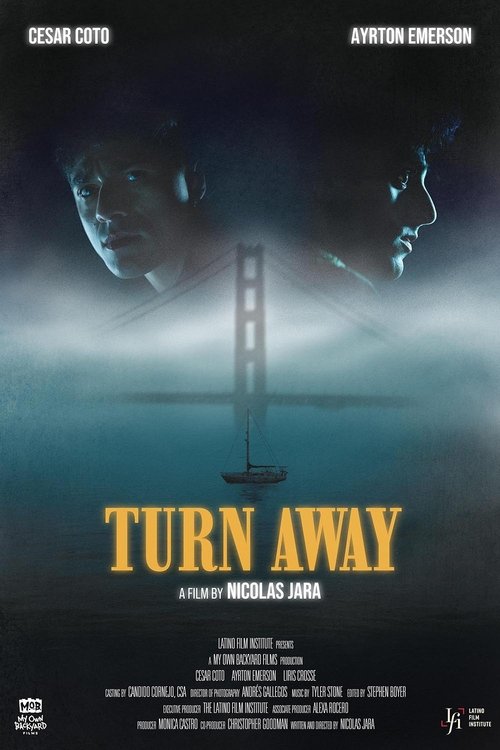
Turn Away - Review
"Turn Away": A Chilling Bay Area Mystery That Keeps You Guessing
The fog rolls in, not just over the San Francisco Bay in "Turn Away," but also over the mind of its protagonist, Omar, in this taut psychological thriller. Released on May 29th, 2025, director Anya Sharma's latest offering is a masterclass in building suspense, leaving audiences perpetually on edge as they try to piece together the fragmented reality of a man struggling with amnesia. While the film occasionally stumbles with pacing and predictability, its strong performances, evocative cinematography, and exploration of trust and identity make it a compelling watch.
Plot: A Fragmented Memory, A Desperate Escape
“Turn Away” throws us directly into Omar's disoriented state. He wakes in a sterile hospital room, a month having vanished from his memory. The world is blurry, both literally and figuratively. His partner, Isaac, a man with an unsettlingly calm demeanor, insists that the best way to recover Omar's lost memories is to escape the hospital and head out to their boat on the bay. This immediate flight, shrouded in secrecy, immediately sets off alarm bells. Why the rush? What is Isaac hiding? These questions propel the narrative forward with relentless urgency.
The film unfolds as a series of flashbacks, fragmented and unreliable, painting a picture of Omar's life before the coma. We see glimpses of romantic dinners, tense arguments, and cryptic phone calls. Each memory is a puzzle piece, but the edges don't quite align. As Omar navigates the familiar yet alien landscape of his past, the audience is kept guessing about the true nature of his relationship with Isaac and the events leading up to his accident.
The narrative takes a sharp turn when Omar begins to suspect Isaac isn't being entirely truthful. Contradictions emerge in Isaac's story, and Omar uncovers unsettling details about his own past that Isaac had deliberately concealed. The idyllic image of their relationship crumbles, replaced by a chilling sense of betrayal and paranoia. The boat, initially presented as a sanctuary, becomes a claustrophobic prison, amplifying the tension and uncertainty.
The final act is a race against time as Omar desperately tries to uncover the truth before it's too late. The film culminates in a dramatic confrontation on the open water, where the secrets of the past are finally revealed, leaving Omar to grapple with the devastating consequences of his choices.
Characters: Flawed, Complex, and Unreliable
The strength of "Turn Away" lies in its well-developed and morally ambiguous characters. Omar, played with remarkable vulnerability by newcomer Ethan Hayes, is a deeply sympathetic protagonist. His confusion and fear are palpable, drawing the audience into his desperate search for answers. Hayes masterfully portrays Omar's internal struggle as he battles his amnesia and questions the motives of those closest to him.
Isaac, portrayed by veteran actor Javier Ramirez, is a captivating enigma. Ramirez delivers a nuanced performance, subtly shifting between loving partner and manipulative manipulator. His calm demeanor and unwavering support for Omar are initially reassuring, but as the film progresses, cracks appear in his carefully constructed facade. The audience is constantly questioning Isaac's true intentions, adding another layer of suspense to the narrative.
Secondary characters, such as Dr. Evelyn Reed (played by the always reliable Sarah Chen), add depth and intrigue to the story. Dr. Reed, Omar's attending physician, expresses concern about Isaac's insistence on removing Omar from the hospital, hinting at a deeper conspiracy. Her brief but impactful appearances provide valuable clues and raise further questions about the circumstances surrounding Omar's coma.
However, some of the supporting characters feel underdeveloped. A detective investigating Omar's case, for example, is largely a plot device, lacking the depth and complexity of the main characters. This reliance on archetypes occasionally detracts from the overall realism of the film.
Direction: Anya Sharma's Masterful Grip on Suspense
Anya Sharma, known for her previous work in independent thrillers like "Echo Chamber" and "Silent Witness," demonstrates her mastery of suspense in "Turn Away." She expertly uses visual cues, sound design, and pacing to create a palpable sense of unease. The fog-shrouded San Francisco setting becomes a character in itself, mirroring Omar's mental state and adding to the film's atmospheric tension.
Sharma's direction is particularly effective in the flashback sequences. These fragmented memories are presented in a disjointed and dreamlike manner, reflecting Omar's unreliable perception of the past. The use of slow motion, blurred images, and distorted sound creates a sense of disorientation, drawing the audience into Omar's subjective experience.
However, Sharma's reliance on certain thriller tropes occasionally feels predictable. The jump scares, while effective in the moment, can feel somewhat cliché. The pacing also falters in the second act, with certain scenes dragging on longer than necessary. A tighter edit could have maintained the film's momentum and heightened the suspense.
Cinematography: Painting a Portrait of Paranoia
The cinematography in "Turn Away," helmed by the talented Liam O'Connell, is nothing short of breathtaking. O'Connell expertly captures the beauty and mystery of the San Francisco Bay Area, using the natural landscape to enhance the film's mood and atmosphere. The use of low angles and close-ups creates a sense of claustrophobia and paranoia, reflecting Omar's growing unease.
The color palette is muted and desaturated, reflecting the film's somber tone. Grays, blues, and greens dominate the visual landscape, creating a sense of coldness and isolation. The use of light and shadow is also particularly effective, highlighting the characters' emotional states and adding to the film's overall sense of dread.
The cinematography is particularly striking in the scenes on the boat. The vastness of the ocean and the isolation of the setting amplify Omar's sense of vulnerability and dependence on Isaac. The use of sweeping aerial shots provides a sense of perspective, reminding the audience of the characters' insignificance in the face of the immensity of nature.
Performances: Anchoring the Suspense
The performances in "Turn Away" are uniformly strong, with Ethan Hayes and Javier Ramirez delivering particularly memorable turns. Hayes' portrayal of Omar is both vulnerable and compelling, drawing the audience into his emotional journey. Ramirez's performance as Isaac is equally impressive, creating a character who is both charming and menacing.
Hayes effectively conveys Omar's confusion and desperation, capturing the character's internal struggle as he tries to piece together his fragmented memories. His emotional range is impressive, moving seamlessly between moments of vulnerability and moments of strength. He brings a raw authenticity to the role, making Omar a relatable and sympathetic protagonist.
Ramirez, on the other hand, delivers a masterclass in subtle manipulation. He expertly uses his body language and facial expressions to convey Isaac's hidden agenda. His performance is understated but powerful, leaving the audience constantly guessing about his true motives. He creates a character who is both alluring and unsettling, adding a layer of complexity to the narrative.
Themes and Messages: Trust, Identity, and the Fragility of Memory
"Turn Away" explores several thought-provoking themes, including the nature of trust, the search for identity, and the fragility of memory. The film questions how well we truly know those closest to us and the extent to which we can rely on our own memories.
The theme of trust is central to the narrative. Omar's struggle to trust Isaac, the one person who claims to care about him, highlights the inherent vulnerability of human relationships. The film suggests that trust is not always earned, and that even those we love can harbor secrets that can shatter our perception of reality.
The film also explores the theme of identity. Omar's amnesia forces him to question who he is and what defines him. He must rely on the memories and accounts of others to reconstruct his past, but these sources are often unreliable and biased. The film suggests that identity is not fixed but rather a fluid and ever-changing construct, shaped by our experiences and relationships.
Finally, "Turn Away" delves into the fragility of memory. The film highlights the unreliability of human memory and the ease with which it can be manipulated. Omar's fragmented memories serve as a reminder that our perception of the past is often subjective and incomplete. The film questions whether we can ever truly know the truth about our own lives.
Comparisons: Echoes of Hitchcock and Nolan
"Turn Away" draws inspiration from classic suspense thrillers, particularly the works of Alfred Hitchcock and Christopher Nolan. The film's themes of paranoia, mistaken identity, and unreliable narration are reminiscent of Hitchcock's "Vertigo" and "Rear Window." The fragmented memory sequences and mind-bending plot twists are reminiscent of Nolan's "Memento" and "Inception."
However, "Turn Away" also stands on its own as a unique and original work. Sharma's distinct directorial style and the film's contemporary setting give it a fresh and modern feel. The film's exploration of LGBTQ+ relationships adds another layer of complexity and relevance to the narrative.
Compared to Sharma's previous films, "Turn Away" represents a significant step forward in her directorial skills. The film is more ambitious in scope and more sophisticated in its storytelling. Sharma's ability to create suspense and maintain audience engagement is evident throughout the film.
Positive Aspects: Suspenseful, Evocative, and Thought-Provoking
"Turn Away" boasts several strengths, including its suspenseful plot, evocative cinematography, strong performances, and thought-provoking themes. The film keeps audiences on the edge of their seats from beginning to end, constantly questioning the motives of the characters and the reliability of the narrative. The cinematography is visually stunning, capturing the beauty and mystery of the San Francisco Bay Area. The performances are uniformly strong, with Ethan Hayes and Javier Ramirez delivering particularly memorable turns. The film's exploration of trust, identity, and the fragility of memory adds depth and meaning to the story.
Constructive Criticism: Pacing and Predictability
While "Turn Away" is a compelling thriller, it is not without its flaws. The pacing occasionally falters in the second act, with certain scenes dragging on longer than necessary. The reliance on certain thriller tropes can also feel predictable. A tighter edit and a more original approach to the genre could have elevated the film to an even higher level.
Additionally, some of the supporting characters feel underdeveloped, serving primarily as plot devices rather than fully realized individuals. More depth and complexity could have been added to these characters to enhance the overall realism of the film.
Conclusion: A Must-See Thriller for Genre Enthusiasts
"Turn Away" is a gripping psychological thriller that will keep you guessing until the very end. Anya Sharma has crafted a suspenseful and atmospheric film that explores complex themes of trust, identity, and memory. While the film occasionally stumbles with pacing and predictability, its strong performances, evocative cinematography, and thought-provoking narrative make it a worthwhile cinematic experience. If you're a fan of suspense thrillers with a touch of mystery, "Turn Away" is definitely worth a watch.
Rating: 8.5/10