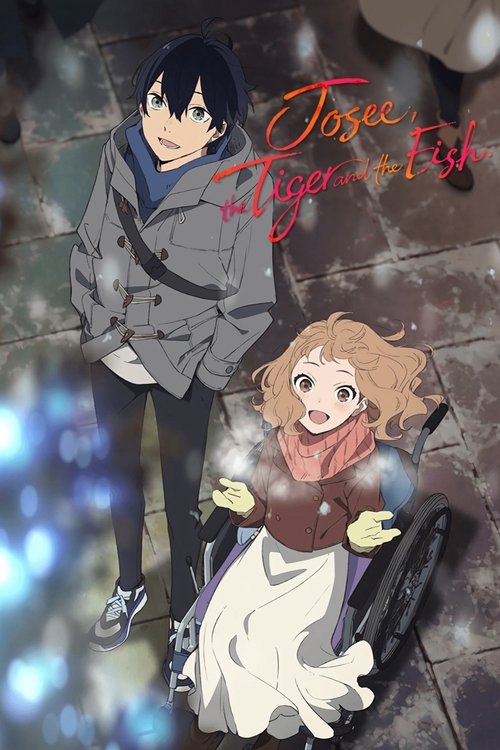
Josee, the Tiger and the Fish - Review
A Dive into the Heart: A Review of "Josee, the Tiger and the Fish"
In a world often painted with broad strokes of sentimentality, where disability is either a source of pity or an obstacle to overcome, "Josee, the Tiger and the Fish" (2020) offers a refreshing, nuanced, and deeply moving exploration of love, independence, and the courage to chase your dreams. This animated gem, directed by Kotaro Tamura, isn't just a romance; it's a poignant character study wrapped in stunning visuals and imbued with a profound understanding of human connection. It's a film that lingers long after the credits roll, prompting reflection on our own limitations and the boundless potential within us all.
Plot: A Tale of Two Worlds Colliding
The story unfolds in the vibrant port city of Osaka, Japan, where we meet Tsuneo Suzukawa, a bright and ambitious university student with a burning desire to study marine biology and dive in Mexico. His dreams are temporarily put on hold as he juggles multiple part-time jobs to save money. One fateful night, he stumbles upon a runaway wheelchair, and inside it, Josee, a young woman with limited mobility and a sharp, often abrasive personality. Confined to her home by her grandmother, Josee lives vicariously through books and her vivid imagination, creating fantastical worlds inhabited by tigers and mermaids.
Circumstances lead Tsuneo to become Josee's caretaker, a role he initially takes on reluctantly for the financial compensation. Their relationship begins rocky, marked by Josee's demanding nature and Tsuneo's initial lack of understanding. However, as they spend more time together, a genuine connection begins to blossom. Tsuneo starts to see beyond Josee's disability and recognizes her intelligence, creativity, and vulnerability. He introduces her to the world outside her home, taking her to art museums, the beach, and even on a tentative exploration of the ocean. Josee, in turn, challenges Tsuneo to confront his own fears and insecurities, pushing him to pursue his dreams with greater determination.
The narrative isn't without its challenges. Their relationship faces external pressures, societal expectations, and internal struggles as both characters grapple with their own limitations and the complexities of their burgeoning romance. The film doesn't shy away from depicting the realities of living with a disability, showing Josee's frustrations, dependence, and the emotional toll it takes on her. It also explores Tsuneo's internal conflict between his personal ambitions and his growing affection for Josee.
The climax of the film presents a devastating turning point, forcing both characters to confront their deepest fears and insecurities. This event serves as a catalyst for growth and self-discovery, ultimately leading them to a more profound understanding of themselves and each other. The ending, while bittersweet, is ultimately hopeful, emphasizing the importance of resilience, self-acceptance, and the enduring power of love.
Characters: Beyond Archetypes
The strength of "Josee, the Tiger and the Fish" lies in its well-developed and relatable characters. They are not simply defined by their circumstances but are complex individuals with their own flaws, dreams, and desires.
Josee (Kumiko):
Josee, whose real name is Kumiko, is the heart and soul of the film. Initially portrayed as a prickly and demanding young woman, she gradually reveals her vulnerability and the deep-seated insecurities that stem from her disability. Her artistic talent and vivid imagination serve as both an escape from her physical limitations and a means of self-expression. She is fiercely independent and determined to define her own life, even within the confines of her circumstances. Her evolution throughout the film is remarkable, as she learns to embrace her vulnerability, open herself up to love, and find strength in her own resilience.
Tsuneo Suzukawa:
Tsuneo is the grounded and ambitious protagonist who initially appears to have his life all planned out. However, beneath his confident exterior lies a deep-seated fear of failure and a reluctance to take risks. His relationship with Josee challenges his preconceived notions about disability and forces him to confront his own limitations. He learns to appreciate the beauty and wonder of the world through Josee's eyes and discovers the importance of empathy and compassion. He grows from a somewhat self-centered individual to a more caring and understanding person, ultimately finding the courage to pursue his dreams with renewed passion.
Supporting Characters:
The supporting characters, while not as central to the narrative, add depth and texture to the story. Josee's grandmother, Chizu, is a stern but loving figure who has dedicated her life to caring for her granddaughter. Her protectiveness stems from a genuine concern for Josee's well-being, but it also inadvertently contributes to her isolation. Mai Ninomiya, Tsuneo's colleague, provides a contrasting perspective on relationships and ambition. She serves as a reminder of the sacrifices often required to achieve one's goals. Hayato Gotoda, Tsuneo's diving mentor, offers guidance and support, encouraging him to pursue his dreams with unwavering determination.
Direction and Cinematography: A Visual Masterpiece
Kotaro Tamura's direction is masterful, seamlessly blending realism with fantasy to create a visually stunning and emotionally resonant film. The animation is breathtaking, capturing the beauty of Osaka with meticulous detail. The vibrant colors, fluid movements, and expressive character designs bring the story to life in a way that live-action films often struggle to achieve.
The cinematography is particularly noteworthy, utilizing a variety of techniques to enhance the emotional impact of the story. The use of light and shadow creates a sense of atmosphere and depth, while the camera angles and compositions draw the viewer into the characters' inner worlds. The underwater sequences are especially captivating, immersing the audience in Josee's fantastical visions and Tsuneo's passion for the ocean.
The film's visual style is reminiscent of Makoto Shinkai's work, particularly in its attention to detail and its use of vibrant colors to evoke emotion. However, "Josee, the Tiger and the Fish" possesses its own unique aesthetic, blending elements of realism and fantasy to create a world that feels both familiar and magical.
Performances: Voices that Resonate
The voice acting in "Josee, the Tiger and the Fish" is exceptional, with each actor delivering a nuanced and believable performance. Taishi Nakagawa as Tsuneo perfectly captures the character's youthful energy, ambition, and growing affection for Josee. Kaya Kiyohara as Josee delivers a tour-de-force performance, conveying the character's intelligence, vulnerability, and fierce independence with remarkable skill. The supporting cast also delivers strong performances, adding depth and authenticity to the story.
The Japanese voice acting is particularly noteworthy for its ability to convey subtle nuances of emotion that might be lost in translation. The actors' use of tone, inflection, and pauses adds layers of meaning to the dialogue, enhancing the overall emotional impact of the film.
While dubs are available, the original Japanese voice acting is highly recommended for the most authentic and emotionally resonant experience.
Themes and Messages: A Deeper Dive
"Josee, the Tiger and the Fish" explores a multitude of complex and thought-provoking themes, including:
Disability and Independence:
The film challenges traditional representations of disability by portraying Josee as a complex and multifaceted individual with her own dreams, desires, and agency. It explores the challenges and frustrations of living with a disability, but it also emphasizes the importance of independence, self-acceptance, and the right to define one's own life.
Love and Connection:
The film explores the transformative power of love and human connection. The relationship between Josee and Tsuneo is not a simple love story but a profound exploration of empathy, understanding, and the ability to see beyond superficial differences. Their connection challenges them to grow as individuals and to embrace their vulnerabilities.
Dreams and Aspirations:
The film emphasizes the importance of pursuing one's dreams, regardless of the obstacles that may stand in the way. Both Josee and Tsuneo have dreams that seem unattainable, but they find the courage to pursue them with determination and resilience. The film reminds us that the journey is just as important as the destination.
Self-Discovery and Acceptance:
The film explores the process of self-discovery and acceptance. Both Josee and Tsuneo undergo significant transformations as they learn to confront their fears, insecurities, and limitations. They discover their inner strength and learn to embrace their true selves, flaws and all.
The Power of Imagination:
The film celebrates the power of imagination as a source of escape, inspiration, and self-expression. Josee's vivid imagination allows her to transcend her physical limitations and create a world where anything is possible. The film reminds us that imagination can be a powerful tool for coping with adversity and finding joy in the world around us.
Comparison to Other Films: Echoes and Uniqueness
While "Josee, the Tiger and the Fish" stands on its own merits, it inevitably draws comparisons to other films that explore similar themes. Its exploration of disability and romance echoes elements of "The Intouchables" (2011), but with a distinctly Japanese sensibility and a greater emphasis on the internal struggles of the characters.
The film's blend of realism and fantasy is reminiscent of Makoto Shinkai's works, such as "Your Name." (2016) and "Weathering with You" (2019), but it delves into more mature and complex themes. The film's focus on personal growth and self-discovery aligns with coming-of-age anime films like "Whisper of the Heart" (1995).
However, "Josee, the Tiger and the Fish" distinguishes itself through its nuanced portrayal of disability, its focus on the transformative power of human connection, and its stunning visual style. It is a film that is both deeply personal and universally relatable, offering a unique and unforgettable cinematic experience.
Positive Aspects: A Triumph of Storytelling
The film's strengths are numerous:
- Compelling Characters: Josee and Tsuneo are richly developed and relatable, drawing the audience into their emotional journeys.
- Stunning Visuals: The animation is breathtaking, creating a world that is both beautiful and immersive.
- Thought-Provoking Themes: The film explores complex themes with sensitivity and nuance, prompting reflection on disability, love, and self-discovery.
- Emotional Resonance: The film is deeply moving, evoking a range of emotions from joy and laughter to sadness and empathy.
- Excellent Voice Acting: The voice actors deliver nuanced and believable performances, enhancing the emotional impact of the story.
Constructive Criticism: Minor Flaws
While "Josee, the Tiger and the Fish" is a remarkable film, it is not without its minor flaws:
- Pacing: The pacing occasionally feels uneven, with some scenes feeling rushed while others linger for too long.
- Predictability: Some plot points are somewhat predictable, particularly in the later stages of the film.
- Oversimplification: While the film generally handles complex themes with nuance, there are moments where it veers towards oversimplification.
However, these minor flaws do not detract significantly from the overall impact of the film. They are merely minor imperfections in an otherwise exceptional work of art.
Conclusion: A Must-See Masterpiece
"Josee, the Tiger and the Fish" is a poignant, visually stunning, and emotionally resonant film that explores the complexities of love, disability, and the pursuit of dreams. It is a film that will stay with you long after the credits roll, prompting reflection on your own limitations and the boundless potential within you. Despite some minor pacing and predictability issues, the film's strengths far outweigh its weaknesses. It is a must-see for fans of animation, romance, and thought-provoking storytelling.