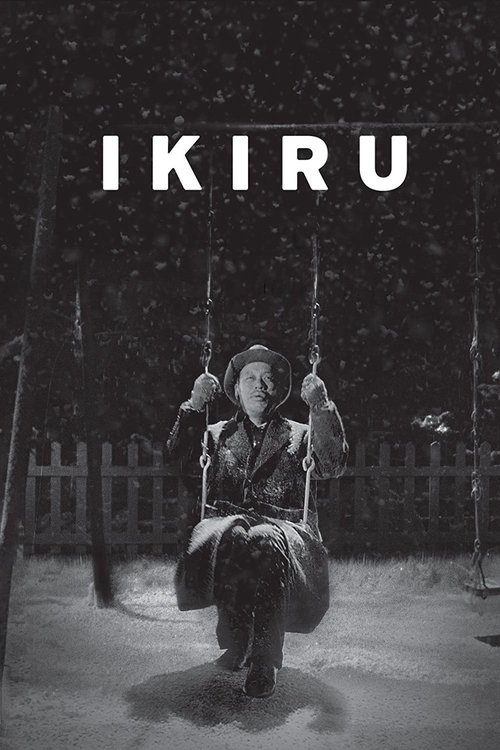
Ikiru - Review
Ikiru: A Profound Meditation on Life and Bureaucracy
Akira Kurosawa's Ikiru (1952) is more than just a film; it's a cinematic experience that burrows deep into your soul and leaves you contemplating the very essence of existence. Released in post-war Japan, the film grapples with themes of mortality, purpose, and the crushing weight of bureaucratic indifference. It's a deeply moving and ultimately uplifting story about a man finding meaning in his final days, a testament to the human spirit's resilience in the face of overwhelming despair. Prepare to be captivated by its powerful narrative, stunning visuals, and unforgettable performances; Ikiru is a film that stays with you long after the credits roll.
Plot Analysis: A Journey from Despair to Purpose
The film opens with a stark declaration: Kanji Watanabe, a section chief in a municipal office, has stomach cancer and only a few months to live. Watanabe, played with heartbreaking nuance by Takashi Shimura, has spent the last thirty years of his life shuffling papers and rubber-stamping requests, a cog in a machine that seems to care little for the people it serves. Upon receiving his devastating diagnosis, Watanabe is initially paralyzed by fear and despair. He attempts to drown his sorrows in alcohol and fleeting pleasures, guided by a novelist he meets in a bar who shows him the superficial joys of Tokyo nightlife. This hedonistic pursuit, however, proves unsatisfying, leaving him feeling even more empty and lost.
A turning point arrives when Watanabe encounters a vibrant young woman, a former subordinate who has left the bureaucratic world to pursue a meaningful life making toys. Her infectious enthusiasm and genuine happiness spark something within him, a desire to leave a positive mark on the world. He becomes obsessed with a petition from a group of mothers requesting that a cesspool in their neighborhood be drained and replaced with a playground. Despite the bureaucratic hurdles and the apathy of his colleagues, Watanabe dedicates his remaining days to ensuring the playground's construction.
The second half of the film shifts perspective, focusing on the aftermath of Watanabe's death. His colleagues gather at his wake, initially attributing his dedication to the playground to simple ambition. However, as they piece together the events leading up to the park's completion, they begin to understand the profound transformation Watanabe underwent and the true meaning of his actions. The film culminates in a poignant scene where one of the bureaucrats, inspired by Watanabe's example, vows to change his own life and fight for the needs of the people. The ending, however, is ambiguous, suggesting the difficulty of breaking free from systemic inertia.
Character Analysis: Watanabe and the Weight of Bureaucracy
Kanji Watanabe: Watanabe is the heart and soul of Ikiru. Shimura's portrayal is masterful, capturing the character's initial passivity, his subsequent despair, and his ultimate determination with remarkable sensitivity. He embodies the everyman, someone who has allowed life to pass him by, only to realize the preciousness of time when faced with his own mortality. Watanabe's journey is one of profound self-discovery, as he transitions from a passive observer to an active participant in his own life, even in its final moments. His transformation is not miraculous; it's a gradual process of awakening, driven by a deep-seated need to find meaning and purpose.
The Young Woman (Toyo Odagiri): While her screen time is relatively limited, the young woman played by Miki Odagiri is a crucial catalyst in Watanabe's transformation. She represents the vitality and joy that Watanabe has long suppressed. Her genuine enthusiasm for life and her commitment to meaningful work serve as a stark contrast to the bureaucratic stagnation that has defined Watanabe's existence. She is not merely a plot device; she embodies the possibility of a fulfilling life outside the confines of the office.
Watanabe's Colleagues: The supporting characters, Watanabe's colleagues, are brilliantly portrayed as apathetic and self-serving bureaucrats. They are more concerned with maintaining the status quo than with addressing the needs of the people they are supposed to serve. Their initial misunderstanding of Watanabe's motivations highlights the pervasive cynicism and lack of empathy within the bureaucratic system. However, their eventual realization of Watanabe's true intentions offers a glimmer of hope, suggesting the possibility of change, even within the most entrenched institutions.
Direction and Cinematography: Kurosawa's Masterful Touch
Akira Kurosawa's direction in Ikiru is nothing short of masterful. He employs a variety of cinematic techniques to enhance the film's emotional impact and thematic resonance. The film's structure, with its flashback sequences and shifts in perspective, is unconventional but highly effective in revealing the complexities of Watanabe's character and the bureaucratic system. Kurosawa's use of long takes, particularly in the scenes depicting Watanabe's bureaucratic struggles, emphasizes the monotony and inefficiency of the system. He also utilizes close-ups to capture Watanabe's emotional turmoil, allowing the audience to connect with his inner struggles on a deeply personal level.
The cinematography, primarily by Asakazu Nakai, is equally impressive. The film is shot in stark black and white, which contributes to its somber and realistic tone. The use of light and shadow is particularly effective in creating a sense of atmosphere and highlighting the emotional states of the characters. The visuals are often symbolic, such as the repeated shots of the decaying cesspool, which represent the moral decay of the bureaucratic system. The playground, in contrast, is depicted as a symbol of hope and renewal.
Performances: Shimura's Unforgettable Portrayal
Takashi Shimura's performance as Kanji Watanabe is the cornerstone of Ikiru. It is a truly unforgettable portrayal, capturing the character's vulnerability, his despair, and his ultimate triumph with remarkable depth and sensitivity. Shimura's subtle gestures, his expressive eyes, and his understated delivery convey the weight of Watanabe's emotional burden and the profound transformation he undergoes. He manages to make Watanabe both relatable and inspiring, a testament to his exceptional acting skills. The supporting cast is equally strong, delivering nuanced performances that contribute to the film's overall realism and emotional impact.
Themes and Messages: Mortality, Purpose, and Bureaucratic Indifference
Ikiru is a film rich in thematic depth, exploring universal themes of mortality, purpose, and the human condition. The film's central theme is the importance of finding meaning in life, even in the face of death. Watanabe's journey is a powerful reminder that it is never too late to make a difference and that even the smallest acts of kindness can have a profound impact. The film also critiques the dehumanizing effects of bureaucracy, highlighting the apathy and inefficiency that can stifle individual initiative and prevent meaningful change. It questions the value of a life spent passively following orders without questioning the purpose or consequences of one's actions.
The film also touches on the theme of legacy. Watanabe, initially concerned with his own mortality, ultimately finds solace in creating something that will outlive him, a lasting contribution to his community. The playground becomes a symbol of his legacy, a testament to his dedication and his commitment to improving the lives of others. The film suggests that true fulfillment comes not from material possessions or fleeting pleasures, but from making a positive impact on the world.
Comparison to Other Films and Works
Ikiru can be compared to other films that explore themes of mortality and the search for meaning, such as Ingmar Bergman's The Seventh Seal (1957) and Hector Babenco's Kiss of the Spider Woman (1985). However, Ikiru distinguishes itself through its focus on the everyday struggles of an ordinary man and its critique of bureaucratic indifference. While Bergman's film explores existential questions through allegorical imagery, and Babenco's focuses on the relationship between two prisoners, Kurosawa's film is grounded in the realities of post-war Japan and the challenges of navigating a complex and often uncaring bureaucratic system.
Within Kurosawa's own filmography, Ikiru shares similarities with films like Rashomon (1950) and Seven Samurai (1954) in its exploration of human nature and its use of unconventional narrative structures. However, Ikiru is arguably more introspective and emotionally resonant than these earlier works. While Rashomon examines the subjectivity of truth, and Seven Samurai focuses on the heroic actions of a group of warriors, Ikiru delves into the inner life of a single individual and his struggle to find meaning in a seemingly meaningless existence. The film also showcases Kurosawa's recurring theme of the individual versus the system, a conflict that is central to many of his films.
Positive Aspects and Constructive Criticism
Ikiru is a film of immense power and beauty. Its strengths lie in its compelling narrative, its masterful direction, its stunning cinematography, and its unforgettable performances, particularly that of Takashi Shimura. The film's exploration of universal themes of mortality, purpose, and bureaucratic indifference resonates deeply with audiences, making it a timeless and enduring work of art. The film's ability to evoke a wide range of emotions, from despair to hope, is a testament to its emotional depth and its profound understanding of the human condition.
However, the film is not without its flaws. Some viewers may find the second half of the film, which focuses on the aftermath of Watanabe's death, to be somewhat less engaging than the first half. The shift in perspective can feel jarring, and the pacing can be slow at times. Additionally, the film's critique of bureaucracy, while powerful, can be somewhat heavy-handed. The portrayal of Watanabe's colleagues as uniformly apathetic and self-serving can feel somewhat simplistic, although it serves to highlight the systemic problems that the film critiques.
Another minor criticism is the length of the film. At over two hours, Ikiru requires patience from the viewer. While every scene contributes to the overall narrative and thematic resonance, some scenes could potentially be trimmed without significantly detracting from the film's impact.
Conclusion and Rating
Despite its minor flaws, Ikiru remains a cinematic masterpiece, a profound and deeply moving exploration of life, death, and the search for meaning. Akira Kurosawa's masterful direction, Takashi Shimura's unforgettable performance, and the film's powerful themes make it a truly unforgettable experience. It's a film that challenges us to examine our own lives and to consider the legacy we will leave behind. Ikiru is not just a film to be watched; it's a film to be lived with, to be contemplated, and to be cherished. It's a powerful reminder that even in the face of death, life can be meaningful and that even the smallest acts of kindness can have a profound impact.
Rating: 9.5/10