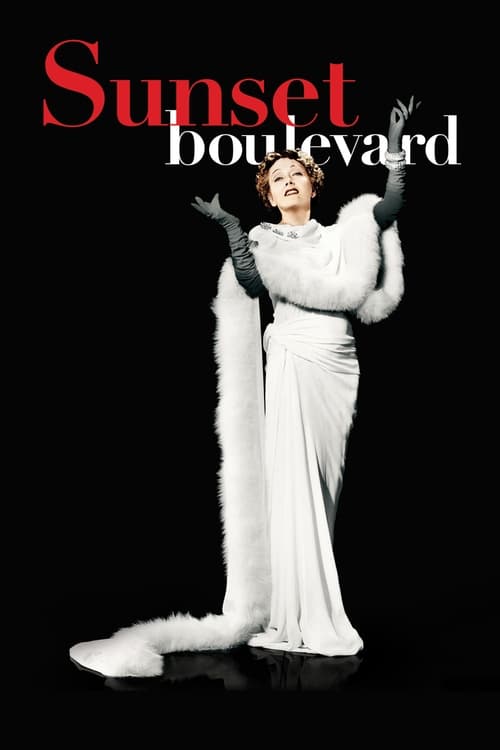
Sunset Boulevard - Review
Sunset Boulevard: A Glimpse into Hollywood's Dark Heart
Sunset Boulevard, Billy Wilder's 1950 masterpiece, isn't just a film; it's a haunting premonition, a cynical love letter (or perhaps a hate mail) to the dream factory that chews up and spits out its inhabitants. With its chilling narrative, unforgettable characters, and stark black-and-white cinematography, it remains a timeless classic, a cautionary tale about ambition, delusion, and the corrosive power of fame. From its opening shot of a floating corpse in a swimming pool to its iconic final scene, Sunset Boulevard grips you with its morbid beauty and refuses to let go.
Plot: A Descent into Madness
The film's plot unfolds through the narration of Joe Gillis (William Holden), a down-on-his-luck screenwriter desperately trying to escape his mounting debts. He stumbles upon a decaying mansion on Sunset Boulevard and encounters Norma Desmond (Gloria Swanson), a forgotten silent film star clinging to the remnants of her past glory. Mistaking Joe for an animal undertaker (the car he's driving), she hires him to rewrite a grandiose screenplay she believes will be her triumphant return to the silver screen. Joe, initially seeing this as a temporary solution to his financial woes, becomes increasingly entangled in Norma's delusional world, becoming her gigolo and prisoner within her crumbling kingdom. As Joe tries to rekindle his writing career with a younger woman, Betty Schaefer (Nancy Olson), Norma's grip tightens, leading to a tragic and inevitable climax.
Wilder masterfully crafts a narrative that is both suspenseful and deeply tragic. The film's opening sets the tone, immediately informing the audience of Joe's fate, creating a sense of impending doom that permeates every scene. The gradual escalation of Norma's obsession and Joe's growing desperation are expertly paced, building to a crescendo of madness and violence. The plot is not simply a story of a faded star; it's a commentary on the ruthless nature of Hollywood, the fleeting nature of fame, and the devastating consequences of clinging to an illusion.
Characters: Shadows of the Past
Norma Desmond: The Fallen Idol
Gloria Swanson's portrayal of Norma Desmond is nothing short of iconic. She embodies the character with a chilling blend of vanity, desperation, and madness. Norma is a woman trapped in time, unable to accept her obsolescence. She lives in a world of her own creation, surrounded by relics of her past and fueled by the unwavering belief that she is still a star. Swanson, herself a former silent film star, brings a unique authenticity to the role, drawing upon her own experiences to create a character that is both tragic and terrifying. Her dramatic expressions, flamboyant gestures, and haunting pronouncements ("I am big. It's the pictures that got small!") are etched into cinematic history.
Joe Gillis: The Cynical Observer
William Holden's Joe Gillis is the film's cynical narrator and the audience's entry point into Norma's world. He is a man driven by ambition but disillusioned by Hollywood's broken promises. Joe is not a particularly virtuous character; he is opportunistic and willing to compromise his integrity for financial gain. However, he is also a victim of circumstance, caught in a web of Norma's making. Holden's performance is nuanced, capturing Joe's wit, weariness, and eventual regret. He provides a crucial counterpoint to Norma's extravagance, offering a grounded perspective on the absurdity of her world.
Max von Mayerling: The Loyal Servant
Erich von Stroheim, another silent film legend, plays Max von Mayerling, Norma's loyal butler and former director. Max is a fascinating and complex character, a man who has sacrificed his own career and identity to serve Norma. He is her protector, her enabler, and her only link to the past. Max's devotion to Norma borders on the obsessive, and his backstory (revealed later in the film) adds another layer of tragedy to the narrative. Von Stroheim's performance is understated but powerful, conveying Max's deep-seated loyalty and the unspoken pain of his unfulfilled potential.
Betty Schaefer: The Hopeful Idealist
Nancy Olson's Betty Schaefer represents a glimmer of hope in the film's otherwise bleak landscape. She is a young, aspiring screenwriter with a genuine passion for storytelling and a refreshing naiveté about Hollywood. Betty's relationship with Joe provides a contrast to his entanglement with Norma, offering him a chance at redemption and a glimpse of a future free from Norma's influence. While her character is less developed than the others, Betty serves as a symbol of the potential for genuine creativity and human connection in a world often dominated by superficiality and exploitation.
Direction: Wilder's Masterful Touch
Billy Wilder's direction of Sunset Boulevard is nothing short of masterful. He creates a visually stunning and emotionally resonant film that is both a compelling narrative and a scathing critique of Hollywood. Wilder's use of flashbacks, voiceover narration, and dramatic lighting contributes to the film's atmosphere of suspense and intrigue. He expertly balances the film's dark humor with its tragic themes, creating a tone that is both cynical and deeply moving.
Wilder's attention to detail is evident in every aspect of the film, from the meticulously designed sets to the carefully chosen costumes. He uses these elements to create a sense of authenticity and to immerse the audience in Norma's decaying world. The film's pacing is also expertly controlled, building gradually to its shocking climax.
Furthermore, Wilder's casting choices are inspired. By casting former silent film stars like Swanson and von Stroheim, he adds another layer of meta-commentary to the film, blurring the lines between fiction and reality. This casting choice reinforces the film's themes of obsolescence and the fleeting nature of fame.
Cinematography: Shadows and Light
John F. Seitz's cinematography is crucial to the film's overall impact. The stark black-and-white photography enhances the film's atmosphere of decay and despair. Seitz uses dramatic lighting to create shadows and highlights, emphasizing the characters' emotional states and the film's themes of illusion and reality. The use of light and shadow also contributes to the film's sense of claustrophobia, trapping the characters within Norma's mansion and within their own delusions.
The film's opening scene, with Joe's body floating in the pool, is a visual masterpiece. The stark contrast between the darkness of the pool and the bright lights of the mansion creates a sense of unease and foreshadows the tragic events to come. Throughout the film, Seitz uses innovative camera angles and compositions to create a sense of dynamism and visual interest.
Performances: A Symphony of Talent
The performances in Sunset Boulevard are uniformly excellent. Gloria Swanson's Norma Desmond is a tour de force, a performance that has cemented her place in cinematic history. William Holden's Joe Gillis is equally compelling, providing a nuanced and cynical perspective on Hollywood's dark side. Erich von Stroheim's Max von Mayerling is a masterclass in understated acting, conveying the character's deep-seated loyalty and unspoken pain. Nancy Olson's Betty Schaefer provides a refreshing contrast to the film's cynicism, offering a glimmer of hope and idealism.
The supporting cast is also outstanding, adding depth and texture to the film's world. Jack Webb's portrayal of Artie Green, a fellow screenwriter, provides a glimpse into the struggles of aspiring artists in Hollywood. Fred Clark's Sheldrake, a cynical studio executive, embodies the ruthless nature of the film industry.
Themes and Messages: The Price of Fame
Sunset Boulevard explores several important themes, including:
- The Illusion of Fame: The film exposes the superficiality and fleeting nature of fame, highlighting the devastating consequences of clinging to an illusion of past glory. Norma Desmond is a cautionary tale, a woman who has allowed her identity to be consumed by her former stardom, unable to accept her obsolescence.
- The Corrosive Power of Ambition: Joe Gillis's ambition leads him down a dangerous path, compromising his integrity and ultimately costing him his life. The film suggests that the pursuit of fame and fortune can corrupt even the most well-intentioned individuals.
- The Exploitation of Talent: Hollywood is portrayed as a ruthless industry that exploits and discards talent without remorse. Norma Desmond is a victim of this system, forgotten and abandoned by the very industry that once celebrated her.
- The Power of Delusion: The film explores the psychological impact of delusion, showing how it can distort reality and lead to tragic consequences. Norma Desmond's delusional belief in her own continued stardom is the driving force behind her actions.
- The Nature of Reality vs. Perception: The film repeatedly questions the nature of reality. Norma lives in a world of her own making, meticulously crafting a perception of herself that is far removed from the truth. This theme is reinforced by the film's use of flashbacks and voiceover narration, which create a sense of subjectivity and unreliability.
The film's message is a cautionary one, warning against the dangers of chasing fame and fortune at any cost. It suggests that true fulfillment lies in genuine human connection and creative expression, rather than in the fleeting adoration of the masses.
Comparisons: Echoes of the Past
Sunset Boulevard can be compared to other films that explore the dark side of Hollywood, such as The Bad and the Beautiful (1952) and What Ever Happened to Baby Jane? (1962). Like Sunset Boulevard, these films offer a cynical and unflattering portrayal of the film industry, exposing its ruthlessness and its tendency to exploit and discard talent.
In terms of Billy Wilder's other works, Sunset Boulevard shares thematic similarities with Ace in the Hole (1951), another cynical and morally ambiguous film that explores the dark side of human nature. Both films feature protagonists who are willing to compromise their integrity for personal gain, and both offer a bleak and unflinching portrayal of American society.
The casting of Gloria Swanson and Erich von Stroheim adds another layer of intertextuality to the film. Both actors were prominent figures in the silent film era, and their presence in Sunset Boulevard reinforces the film's themes of obsolescence and the fleeting nature of fame. Their real-life experiences lend authenticity and poignancy to their performances, blurring the lines between fiction and reality.
Positive Aspects and Constructive Criticism
Sunset Boulevard is a cinematic masterpiece that excels in virtually every aspect. Its strengths include:
- Compelling Narrative: The film's plot is gripping and suspenseful, drawing the audience into Norma Desmond's world and building to a shocking climax.
- Iconic Performances: Gloria Swanson's Norma Desmond is one of the most memorable and iconic performances in cinematic history. William Holden's Joe Gillis is equally compelling, and Erich von Stroheim's Max von Mayerling is a masterclass in understated acting.
- Masterful Direction: Billy Wilder's direction is flawless, creating a visually stunning and emotionally resonant film.
- Stunning Cinematography: John F. Seitz's black-and-white cinematography enhances the film's atmosphere of decay and despair.
- Thought-Provoking Themes: The film explores important themes about fame, ambition, and the human condition.
However, even a masterpiece can be subject to some minor criticisms:
- Betty Schaefer's Character: While Nancy Olson delivers a fine performance, Betty Schaefer's character could have been more fully developed. Her role sometimes feels more functional than integral to the deeper themes.
- Pacing in the Middle Section: The pacing in the middle section of the film, particularly during some of Joe and Norma's more mundane interactions, could have been slightly tighter. While these scenes are important for establishing their relationship, they occasionally drag.
These criticisms are minor, however, and do not detract significantly from the film's overall impact.
Conclusion
Sunset Boulevard is a timeless classic that continues to resonate with audiences today. Its chilling narrative, unforgettable characters, and stark black-and-white cinematography make it a truly unforgettable cinematic experience. Billy Wilder's masterpiece is a cautionary tale about ambition, delusion, and the corrosive power of fame, a film that will stay with you long after the credits roll. It's a must-see for any serious film enthusiast.
Rating: 10/10