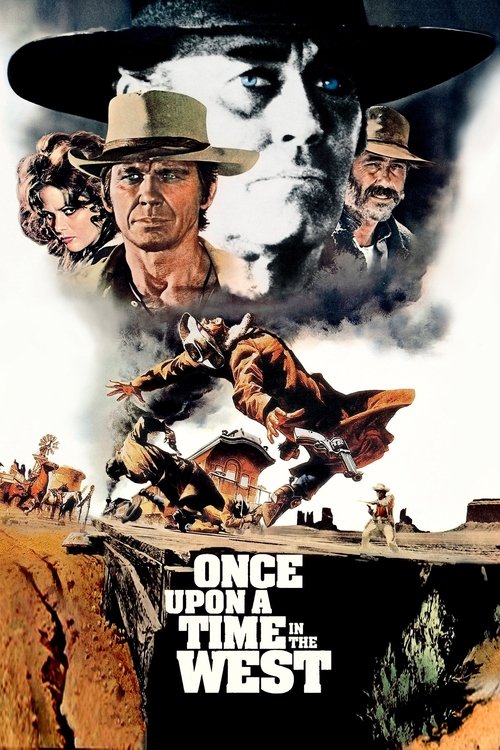
Once Upon a Time in the West - Review
Once Upon a Time in the West: A Symphony of Silence and Violence
Sergio Leone's Once Upon a Time in the West, released in 1968, isn't just a Western; it's an operatic elegy for a dying frontier. It's a film that unfolds with the deliberate pace of a sundial, allowing its characters and landscapes to breathe, to speak volumes without uttering a word. More than half a century later, it remains a towering achievement, a landmark in cinematic history that continues to resonate with its profound themes, unforgettable characters, and breathtaking visuals. But is it a flawless masterpiece? Let's delve into the dusty heart of this iconic film.
Plot: A Slow Burn of Betrayal and Progress
The story, on the surface, is deceptively simple. Jill McBain (Claudia Cardinale), a former prostitute from New Orleans, arrives in the dusty town of Flagstone, Arizona, anticipating a new life with her husband, Brett McBain, and his children. However, she discovers that they have all been brutally murdered by Frank (Henry Fonda), a ruthless killer working for railroad baron Morton (Gabriele Ferzetti), who wants to acquire the McBain's strategically located land, Sweetwater, which controls the only water source for miles. Enter Harmonica (Charles Bronson), a mysterious gunslinger with a haunting past and a penchant for playing his harmonica at crucial moments, and Cheyenne (Jason Robards), an outlaw with a surprising code of honor, both of whom become entangled in Jill's fight for survival and revenge.
The plot unfolds with a deliberate, almost glacial, pace. Leone masterfully uses silence and lingering shots to build tension and suspense. The opening sequence, a near-wordless standoff at a desolate train station, is a masterclass in cinematic storytelling, establishing the film's tone and introducing its key themes. The deliberate pacing, however, can be a point of contention for some viewers. While it allows for deep character development and atmospheric immersion, it can also feel slow and meandering at times, particularly for audiences accustomed to faster-paced narratives.
Characters: Icons Forged in the Crucible of the West
Harmonica: The Silent Avenger
Charles Bronson's Harmonica is the archetypal Western anti-hero: stoic, enigmatic, and driven by a deep-seated desire for revenge. He speaks sparingly, letting his actions and the mournful sound of his harmonica do the talking. His backstory, revealed gradually throughout the film, adds layers of complexity to his character, transforming him from a simple gunslinger into a figure of tragic destiny. Bronson's performance is perfectly understated, his weathered face and piercing eyes conveying a wealth of emotion without a single word.
Jill McBain: From Prostitute to Pioneer
Claudia Cardinale delivers a powerful and nuanced performance as Jill McBain. Initially presented as a naive woman seeking a better life, Jill quickly proves to be resilient and resourceful. She navigates the treacherous landscape of the West with intelligence and determination, transforming from a victim into a survivor. Cardinale imbues Jill with a vulnerability and strength that makes her one of the most compelling female characters in Western cinema. Her journey is one of adaptation and empowerment, a testament to the human spirit's ability to endure even in the face of unimaginable tragedy.
Frank: The Face of Evil
Henry Fonda's portrayal of Frank is a shocking departure from his previous roles as a virtuous and idealistic hero. He embodies pure, unadulterated evil, a cold-blooded killer devoid of remorse. Leone deliberately cast Fonda against type to subvert audience expectations and highlight the dark underbelly of the American West. Frank is not simply a villain; he is a symbol of the ruthless ambition and violence that fueled the expansion of the railroad and the destruction of the frontier. Fonda's performance is chillingly effective, making Frank one of the most memorable villains in cinematic history.
Cheyenne: The Noble Outlaw
Jason Robards' Cheyenne is a more complex and sympathetic character. He is an outlaw, but he possesses a strong sense of honor and loyalty. He forms an unlikely bond with Jill and Harmonica, offering them his protection and assistance. Cheyenne represents a dying breed of Western outlaw, one who adheres to a personal code of ethics even while operating outside the law. Robards brings a charismatic and roguish charm to the role, making Cheyenne a memorable and likable character.
Morton: The Crippled Visionary
Gabriele Ferzetti's Morton is the ambitious railroad tycoon, crippled both physically and morally. He dreams of connecting the East and West coasts, but his relentless pursuit of progress comes at a terrible cost. Morton represents the destructive forces of industrialization and the erosion of traditional Western values. While he is a villain, he is also a complex and tragic figure, driven by a vision that ultimately consumes him. Ferzetti portrays Morton with a quiet intensity, capturing the character's ambition and vulnerability.
Direction: Leone's Masterful Hand
Sergio Leone's direction is the driving force behind Once Upon a Time in the West. He employs a distinctive style characterized by long, lingering shots, extreme close-ups, and deliberate pacing. He uses silence as a weapon, building tension and suspense through the absence of dialogue. Leone's visual storytelling is unparalleled, creating a world that is both beautiful and brutal. His mastery of framing and composition is evident in every shot, transforming the vast landscapes of the American West into a character in its own right.
Leone's signature style, often referred to as the "Spaghetti Western" aesthetic, is on full display in Once Upon a Time in the West. He elevates the Western genre to an operatic level, imbuing it with a sense of grandeur and tragedy. His attention to detail is meticulous, from the costumes and sets to the sound design and music. Every element of the film is carefully crafted to create a cohesive and immersive experience.
However, Leone's deliberate pacing and emphasis on visual storytelling can also be seen as a drawback. Some critics have argued that the film is too long and self-indulgent, that it sacrifices narrative momentum for stylistic flourishes. While the film's length and pacing may not appeal to all viewers, they are essential to Leone's vision and contribute to its unique atmosphere and impact.
Cinematography: A Visual Poem of the West
Tonino Delli Colli's cinematography is simply breathtaking. He captures the vastness and beauty of the American West with stunning clarity and detail. He uses natural light to create a sense of realism and authenticity, while also employing dramatic shadows to heighten the tension and suspense. Delli Colli's use of wide shots and extreme close-ups is masterful, allowing the audience to fully appreciate the scale of the landscape and the nuances of the characters' emotions.
The film's color palette is rich and vibrant, contrasting the warm tones of the desert with the cool blues of the sky. Delli Colli's use of color enhances the film's visual impact and contributes to its overall atmosphere. The cinematography is not merely a technical achievement; it is an integral part of the film's storytelling, conveying emotion and meaning through visual imagery.
Performances: A Symphony of Talent
The performances in Once Upon a Time in the West are universally excellent. Each actor embodies their character with conviction and nuance, bringing them to life in a way that is both believable and memorable. The chemistry between the actors is palpable, creating a dynamic and engaging ensemble. The casting choices are inspired, particularly the decision to cast Henry Fonda as the villainous Frank, a move that subverted audience expectations and added a layer of intrigue to the character.
Charles Bronson delivers a career-defining performance as Harmonica, embodying the character's stoicism and mystery with understated grace. Claudia Cardinale is equally impressive as Jill McBain, portraying her transformation from naive newcomer to resilient survivor with sensitivity and strength. Jason Robards brings a roguish charm to the role of Cheyenne, while Gabriele Ferzetti captures the ambition and vulnerability of the crippled railroad baron Morton. The supporting cast is also excellent, contributing to the film's overall sense of realism and authenticity.
Themes and Messages: A Requiem for the Frontier
Once Upon a Time in the West is a film rich in themes and messages. It explores the clash between progress and tradition, the destructive forces of industrialization, and the erosion of traditional Western values. The film also examines the nature of revenge, the complexities of human relationships, and the enduring power of the human spirit. The themes of loss, betrayal, and redemption are woven throughout the narrative, adding depth and complexity to the characters and their motivations.
The film can be interpreted as a metaphor for the changing landscape of the American West, as the railroad encroaches upon the traditional way of life and transforms the frontier into a more civilized and industrialized society. The characters represent different aspects of this transition, from the stoic gunslinger who embodies the old West to the ruthless railroad baron who represents the forces of progress. The film ultimately suggests that progress comes at a cost, and that the pursuit of wealth and power can lead to destruction and despair.
Comparison to Other Films
Once Upon a Time in the West is often compared to other Westerns, particularly those directed by John Ford and Howard Hawks. However, Leone's film is distinct in its stylistic approach and thematic concerns. While Ford and Hawks often romanticized the American West, Leone presents a more cynical and morally ambiguous vision. His film is less concerned with celebrating the virtues of the frontier and more focused on exploring its darker aspects, such as violence, greed, and corruption.
The film also shares similarities with Leone's other Spaghetti Westerns, such as A Fistful of Dollars, For a Few Dollars More, and The Good, the Bad and the Ugly. However, Once Upon a Time in the West is arguably his most ambitious and complex film, both in terms of its narrative scope and its thematic depth. It is a more mature and contemplative work than his earlier films, reflecting a greater understanding of the Western genre and its potential for exploring universal human themes.
Positive Aspects
- Stunning cinematography and visual storytelling
- Unforgettable characters and performances
- Masterful direction by Sergio Leone
- Rich and complex themes
- Iconic score by Ennio Morricone
Constructive Criticism
- Deliberate pacing may not appeal to all viewers
- Some may find the film overly long and self-indulgent
- The plot, while engaging, can feel somewhat simplistic at times
Conclusion
Once Upon a Time in the West is a towering achievement in cinematic history, a masterpiece of the Western genre that continues to resonate with its profound themes, unforgettable characters, and breathtaking visuals. While its deliberate pacing and length may not appeal to all viewers, its artistic merits are undeniable. It's a film that demands patience and attention, but rewards viewers with a rich and immersive experience that will stay with them long after the credits roll. It's a requiem for a dying era, a testament to the power of the human spirit, and a reminder that even in the most brutal of landscapes, hope and redemption can still be found.
Rating: 9.5/10