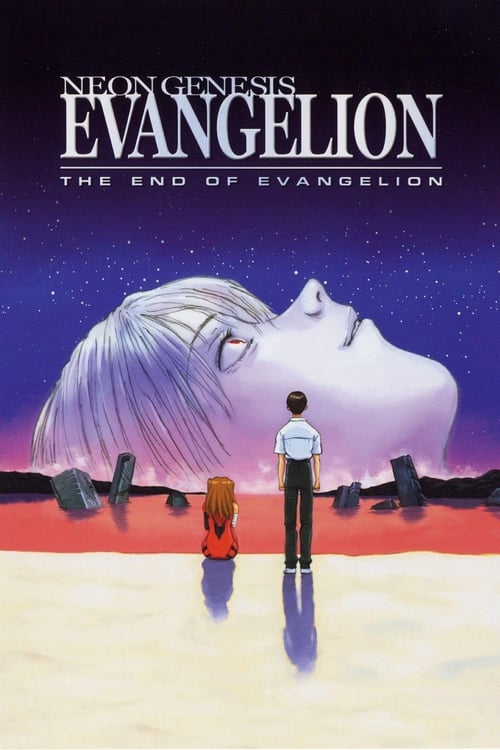
Neon Genesis Evangelion: The End of Evangelion - Review
Neon Genesis Evangelion: The End of Evangelion - A Descent into Existential Terror and Cathartic Nihilism
Neon Genesis Evangelion: The End of Evangelion, released in 1997, isn't just a film; it's an experience. A harrowing, beautiful, and deeply unsettling experience that claws its way into your psyche and lingers long after the credits roll. Conceived as an alternate ending to the original anime series after fan backlash regarding its abstract and psychologically focused final two episodes, End of Evangelion delivers a visceral and brutally honest conclusion to the saga of Shinji Ikari and the fight against the Angels. Prepare to confront not only giant robots and apocalyptic scenarios, but also the darkest corners of the human condition, all rendered with a visual artistry that is both breathtaking and deeply disturbing.
Plot: A Symphony of Destruction and Despair
End of Evangelion picks up where the anime series began to diverge, thrusting us into a world teetering on the brink of total annihilation. SEELE, the shadowy organization pulling the strings behind NERV, launches a full-scale assault on NERV headquarters, determined to initiate the Human Instrumentality Project and merge all of humanity into a single, unified being. Gendo Ikari, Shinji's estranged and enigmatic father, has his own agenda, seeking to reunite with his deceased wife, Yui, through the Instrumentality Project. Meanwhile, Shinji, still reeling from the events of the series and crippled by his crippling self-doubt and fear of connection, must confront his own personal demons while the world crumbles around him.
The film is essentially divided into two parts. The first is a relentless and brutal depiction of the attack on NERV. We witness the systematic dismantling of the organization, the desperate attempts of Misato Katsuragi and the remaining NERV personnel to protect Shinji, and the horrifying consequences of SEELE's ruthless efficiency. This segment is a masterclass in tension and suspense, punctuated by moments of shocking violence and profound sadness. The second part delves into the Instrumentality Project itself, a surreal and psychologically charged exploration of Shinji's inner turmoil and his ultimate decision regarding the fate of humanity. This section is far more abstract and symbolic, relying heavily on visual metaphors and dreamlike sequences to convey its complex themes.
The pacing is deliberately uneven. The first half is a frenetic rollercoaster of action and suspense, while the second half slows down considerably, allowing for introspection and philosophical contemplation. This shift in pacing mirrors Shinji's own journey, as he transitions from a passive observer to an active participant in the unfolding events. The plot, while seemingly straightforward on the surface (stop the bad guys, save the world), is layered with complex motivations, hidden agendas, and philosophical undercurrents that demand careful attention and repeated viewings.
Characters: Broken Souls in a Broken World
The characters of Evangelion are arguably its greatest strength, and End of Evangelion pushes them to their absolute breaking points. Shinji Ikari, the perpetually conflicted protagonist, is at the heart of the film's emotional core. His crippling anxiety, his fear of intimacy, and his overwhelming sense of inadequacy are all amplified to excruciating levels. We witness his descent into despair as he grapples with the weight of his responsibilities and the crushing realization that his actions have devastating consequences.
Asuka Langley Soryu, the fiery and fiercely independent Second Child, is subjected to arguably the most brutal and disturbing sequence in the entire film. Her pride and confidence shattered, she is forced to confront her own vulnerabilities and the trauma that has shaped her personality. Her arc in End of Evangelion is a harrowing exploration of mental breakdown and the devastating effects of isolation.
Misato Katsuragi, the pragmatic and compassionate NERV operations director, serves as a surrogate mother figure to Shinji. Her dedication to protecting him and her unwavering commitment to her duty are tested to the limit as she fights to survive the attack on NERV. Her final moments are both heartbreaking and heroic, solidifying her as one of the most compelling characters in the series.
Gendo Ikari, the cold and calculating commander of NERV, remains an enigma throughout the film. His motivations are shrouded in secrecy, and his actions are often driven by a desire to reunite with his deceased wife. His portrayal in End of Evangelion further explores the depths of his obsession and the lengths to which he is willing to go to achieve his goals.
Rei Ayanami, the mysterious and ethereal First Child, plays a pivotal role in the Instrumentality Project. Her connection to Lilith and her ambiguous nature make her a central figure in the film's philosophical themes. Her actions ultimately determine the fate of humanity, and her motivations remain open to interpretation.
Each character is flawed, complex, and deeply human, despite the fantastical setting and the presence of giant robots. Their struggles with identity, connection, and purpose resonate deeply with viewers, making them incredibly relatable and emotionally engaging.
Direction: Anno's Masterful Descent into Madness
Hideaki Anno's direction in End of Evangelion is nothing short of masterful. He seamlessly blends visceral action sequences with moments of profound psychological introspection, creating a film that is both exhilarating and deeply unsettling. His use of unconventional camera angles, jarring cuts, and surreal imagery creates a sense of unease and disorientation, mirroring the mental state of the characters.
Anno's willingness to push boundaries and challenge conventions is evident throughout the film. He utilizes a variety of techniques, including live-action footage, animation cels, and abstract imagery, to create a visual tapestry that is both beautiful and disturbing. His use of silence and ambient noise is particularly effective in creating a sense of tension and dread.
End of Evangelion is a deeply personal film for Anno, reflecting his own struggles with depression and his anxieties about the future. He infuses the film with his own unique vision, creating a work that is both challenging and deeply rewarding. His direction is uncompromising and unflinching, refusing to shy away from the darker aspects of the human condition.
Cinematography: A Visual Feast of Destruction and Beauty
The cinematography in End of Evangelion is stunning. The film is visually striking, with its vibrant colors, dynamic compositions, and breathtaking animation. The battle sequences are particularly impressive, with their fluid movements, explosive effects, and sense of scale.
The film's use of light and shadow is also noteworthy. The dark and claustrophobic interiors of NERV contrast sharply with the bright and expansive landscapes of the outside world, creating a sense of isolation and confinement. The use of shadows is particularly effective in creating a sense of dread and unease.
The film's visual style is heavily influenced by anime and manga, but it also incorporates elements of live-action filmmaking. This blend of styles creates a unique and visually arresting aesthetic that is both familiar and unsettling.
The use of symbolism is also prevalent throughout the film. Visual motifs, such as crosses, spirals, and eyes, are used to convey deeper meanings and to reinforce the film's themes. The cinematography is not just visually appealing; it is also deeply meaningful, adding layers of complexity to the film's narrative.
Performances: Raw Emotion and Vulnerability
The voice acting performances in End of Evangelion are exceptional. The Japanese voice cast delivers raw and emotionally charged performances that perfectly capture the characters' inner turmoil. Megumi Ogata's portrayal of Shinji Ikari is particularly noteworthy, conveying his vulnerability, his fear, and his ultimate resolve with remarkable depth.
Yuko Miyamura's performance as Asuka Langley Soryu is equally impressive, capturing her fiery spirit and her underlying vulnerability. Her screams of anguish and her moments of quiet despair are particularly haunting.
Kotono Mitsuishi's performance as Misato Katsuragi is both strong and compassionate, conveying her unwavering commitment to her duty and her deep affection for Shinji. Her final moments are particularly poignant.
The English dub, while not quite as nuanced as the Japanese original, is still commendable. The voice actors capture the essence of the characters and deliver convincing performances that enhance the film's emotional impact.
The performances in End of Evangelion are not just about delivering lines; they are about conveying the characters' inner thoughts and feelings through their voices. The actors imbue their characters with a sense of humanity and vulnerability that makes them incredibly relatable and emotionally engaging.
Themes and Messages: Existentialism, Isolation, and the Search for Meaning
End of Evangelion is a film that grapples with profound and complex themes, including existentialism, isolation, the search for meaning, and the nature of humanity. The film explores the idea that life is inherently meaningless and that individuals must create their own purpose in a chaotic and indifferent universe.
Isolation is a recurring theme throughout the film. The characters are all isolated from one another, both physically and emotionally. They struggle to connect with others and to form meaningful relationships. This isolation is a major source of their pain and suffering.
The film also explores the search for meaning in a world that often seems devoid of purpose. The characters are all searching for something to believe in, something to give their lives meaning. Some find solace in religion, others in duty, and others in relationships. However, the film suggests that there is no easy answer to this question and that each individual must find their own path.
The nature of humanity is another central theme. The film questions what it means to be human and whether humanity is inherently good or evil. The Instrumentality Project is presented as a potential solution to the problems of humanity, but it also raises troubling questions about the value of individuality and free will.
Ultimately, End of Evangelion is a film about the human condition. It is a film that explores the depths of human suffering, but it also offers a glimmer of hope. The film suggests that even in the face of overwhelming despair, there is still the possibility of connection, meaning, and ultimately, redemption.
Comparison to Other Films and Works
End of Evangelion is a unique and groundbreaking film, but it shares thematic and stylistic similarities with other works of science fiction and anime. Its exploration of existential themes and its bleak depiction of the future are reminiscent of films like Blade Runner and Akira.
Its use of giant robots and its focus on the psychological impact of war are similar to other mecha anime series, such as Mobile Suit Gundam and Macross. However, Evangelion distinguishes itself from these series through its more complex characters, its more philosophical themes, and its more experimental visual style.
End of Evangelion can also be compared to Hideaki Anno's other works, such as His and Her Circumstances and Shin Godzilla. These works share Anno's signature style, which is characterized by its blend of realism, surrealism, and psychological introspection. They also share his interest in exploring the human condition and his willingness to challenge conventions.
Compared to the original series ending, End of Evangelion provides a more concrete and visually impactful resolution, even if it remains open to interpretation. It addresses fan criticisms of the original ending's abstract nature by delivering a more visceral and action-packed conclusion, while still retaining the series' core themes and psychological depth.
Positive Aspects
- Visually Stunning: The animation is breathtaking, with dynamic action sequences and surreal imagery.
- Emotionally Resonant: The characters are complex and relatable, and their struggles resonate deeply with viewers.
- Thematically Rich: The film explores profound and complex themes, such as existentialism, isolation, and the search for meaning.
- Masterful Direction: Hideaki Anno's direction is uncompromising and unflinching, creating a film that is both challenging and deeply rewarding.
- Powerful Performances: The voice acting performances are exceptional, conveying the characters' inner turmoil with remarkable depth.
Constructive Criticism
- Overwhelmingly Depressing: The film's bleak and nihilistic tone may be too much for some viewers.
- Abstract and Confusing: The film's complex themes and surreal imagery can be difficult to understand.
- Disturbing Content: The film contains graphic violence and disturbing imagery that may be upsetting to some viewers.
- Pacing Issues: The film's uneven pacing may be jarring for some viewers. The shift from intense action to introspective character study might not appeal to all.
- Reliance on Prior Knowledge: Viewers unfamiliar with the original anime series may find the film difficult to follow.
Conclusion
Neon Genesis Evangelion: The End of Evangelion is not an easy film to watch. It is challenging, disturbing, and often deeply depressing. However, it is also a masterpiece of animation, a profound exploration of the human condition, and a truly unforgettable cinematic experience. It's a film that stays with you long after the credits roll, prompting reflection on life, death, and everything in between. While its bleakness may not be for everyone, its artistic merit and thematic depth are undeniable.
If you are prepared to confront your own anxieties and to delve into the darkest corners of the human psyche, then End of Evangelion is a film that you will not soon forget. It's a challenging, rewarding, and ultimately cathartic experience that deserves its place among the greatest anime films of all time.