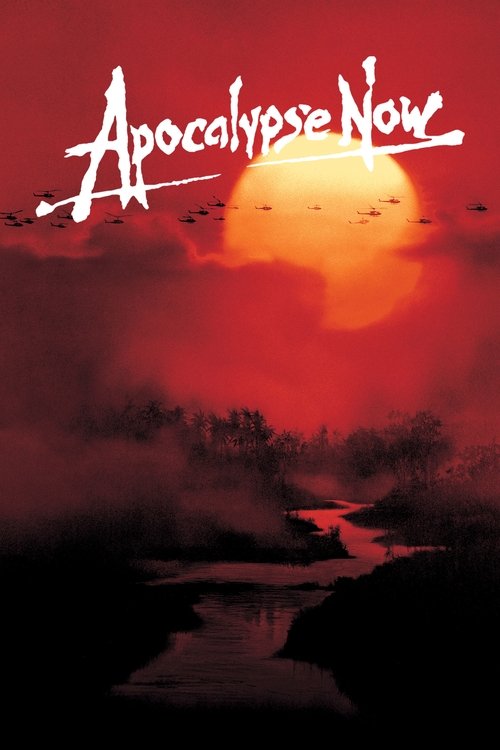
Apocalypse Now - Review
Apocalypse Now: A Descent into Madness and the Heart of Darkness
Francis Ford Coppola's Apocalypse Now, released in 1979, isn't just a war film; it's an experience. It's a visceral, hallucinatory journey into the depths of the Vietnam War and the even darker recesses of the human psyche. More than four decades after its release, it remains a towering achievement, a cinematic landmark that continues to provoke, disturb, and fascinate. From its troubled production to its enduring legacy, Apocalypse Now stands as a testament to the power of cinema to confront uncomfortable truths and explore the limits of human endurance.
A Plot as Ominous as the Jungle
The plot, loosely based on Joseph Conrad's novella Heart of Darkness, centers on Captain Benjamin L. Willard (Martin Sheen), a troubled and disillusioned Army officer tasked with a clandestine mission: to journey up the Nung River into Cambodia and assassinate Colonel Walter E. Kurtz (Marlon Brando), a decorated Green Beret who has seemingly gone rogue, commanding his own army of Montagnard tribesmen and conducting unsanctioned, brutal operations.
Willard's journey is not just physical; it's a descent into a moral and psychological abyss. Each encounter along the river, from the reckless air cavalry attack led by Lieutenant Colonel Bill Kilgore (Robert Duvall) to the surreal French plantation clinging to a bygone era, chips away at Willard's sanity and forces him to confront the absurdity and horror of the war. The closer he gets to Kurtz, the more he questions the very nature of good and evil, sanity and madness.
The film's structure is episodic, almost dreamlike. Each stop along the river presents a self-contained vignette, a microcosm of the war's madness. This fragmented approach mirrors Willard's own fractured mental state and the chaotic reality of the conflict. The pacing is deliberate, allowing the atmosphere to build and the tension to simmer, culminating in the unsettling confrontation with Kurtz.
Characters: Mirrors Reflecting the War's Deformity
Apocalypse Now boasts a cast of unforgettable characters, each representing a different facet of the war's corrosive influence.
Captain Benjamin L. Willard (Martin Sheen)
Willard is the film's anchor, the audience's guide through the madness. He's a seasoned soldier, hardened by combat but haunted by his experiences. Sheen's performance is masterful, conveying Willard's growing disillusionment and inner turmoil with a quiet intensity. He is the observer, the recorder, and ultimately, the executioner of Kurtz's twisted vision.
Lieutenant Colonel Bill Kilgore (Robert Duvall)
Kilgore is arguably the most iconic character in the film, a surfing-obsessed, war-loving commander who embodies the absurdity and brutality of the American military presence in Vietnam. Duvall's performance is electrifying, capturing Kilgore's manic energy and his complete detachment from reality. His famous line, "I love the smell of napalm in the morning," has become a chilling symbol of the war's dehumanizing effects.
Colonel Walter E. Kurtz (Marlon Brando)
Kurtz is the enigmatic figure at the heart of the film, a brilliant but broken man who has retreated into the jungle to build his own kingdom of fear and control. Brando's performance, though controversial due to his weight and improvisational style, is undeniably powerful. He portrays Kurtz as a complex and contradictory figure, a philosophical madman who has seen too much and been driven to the brink of sanity. His monologues, delivered in hushed tones, are chilling pronouncements on the nature of war, morality, and the human condition.
The Crew of the Patrol Boat
The crew of the patrol boat – Chief (Albert Hall), Lance (Sam Bottoms), Chef (Frederic Forrest), and Clean (Laurence Fishburne) – represent a cross-section of American youth caught up in the war. Each character embodies a different response to the trauma they experience, from Chief's stoic resolve to Lance's drug-induced detachment and Chef's growing paranoia. Their journey is a microcosm of the larger war, a story of innocence lost and sanity shattered.
Coppola's Vision: Directing the Madness
Francis Ford Coppola's direction is nothing short of masterful. He creates a cinematic experience that is both visually stunning and deeply disturbing. He uses long takes, immersive sound design, and hallucinatory imagery to transport the audience into the heart of the jungle and the minds of his characters.
Coppola's genius lies in his ability to capture the chaos and absurdity of the war without romanticizing or glorifying it. He doesn't shy away from the violence and brutality, but he also explores the psychological toll that the war takes on those who fight in it. He creates a world that is both real and surreal, a nightmare landscape where the line between sanity and madness blurs.
The film's production was famously fraught with difficulties, including typhoons, Marlon Brando's weight gain and improvisational demands, and Martin Sheen's near-fatal heart attack. These challenges, however, seem to have contributed to the film's raw, visceral power. The chaos and uncertainty of the production mirrored the chaos and uncertainty of the war itself, resulting in a film that feels both authentic and deeply personal.
Cinematography: Painting a Portrait of Hell
Vittorio Storaro's cinematography is breathtaking. He uses light and shadow to create a visually stunning and emotionally resonant landscape. The jungle is both beautiful and menacing, a place of vibrant life and lurking danger. The use of color is particularly striking, with fiery reds and oranges dominating the battle scenes and cool blues and greens creating a sense of unease and isolation in the jungle interiors.
Storaro's camera work is fluid and dynamic, moving seamlessly between sweeping aerial shots and intimate close-ups. He captures the scale of the war and the intimacy of the human experience with equal skill. The film's visual style is both realistic and dreamlike, reflecting the subjective experience of the characters and the hallucinatory nature of the war.
The use of silhouettes and shadows is particularly effective in creating a sense of mystery and dread, especially in the scenes involving Kurtz. Storaro's cinematography contributes significantly to the film's overall atmosphere of unease and impending doom.
Performances: Actors Lost in the Labyrinth
The performances in Apocalypse Now are uniformly excellent. Martin Sheen delivers a career-defining performance as Willard, conveying the character's inner turmoil and growing disillusionment with remarkable subtlety and power. Robert Duvall is unforgettable as Kilgore, capturing the character's manic energy and his complete detachment from reality. Marlon Brando, despite his controversial behavior on set, delivers a mesmerizing performance as Kurtz, embodying the character's complexity and his descent into madness.
The supporting cast is equally strong, with Albert Hall, Sam Bottoms, Frederic Forrest, and Laurence Fishburne all delivering memorable performances as the crew of the patrol boat. Each actor brings a unique perspective to their role, contributing to the film's overall sense of realism and authenticity.
The actors fully inhabit their roles, immersing themselves in the physical and psychological landscape of the war. Their performances are raw, honest, and deeply affecting, adding to the film's overall emotional impact.
Themes and Messages: Unveiling the Darkness Within
Apocalypse Now is a film rich in themes and messages. It explores the nature of war, the limits of human sanity, the corrupting influence of power, and the search for meaning in a meaningless world.
The Absurdity of War
The film portrays the Vietnam War as a chaotic and senseless conflict, driven by political agendas and fueled by human folly. The characters are caught in a web of violence and destruction, struggling to make sense of a world that has lost all meaning. The film questions the very purpose of war, exposing its inherent brutality and its devastating impact on both soldiers and civilians.
The Descent into Madness
The film explores the psychological toll that war takes on those who fight in it. Willard's journey is a descent into madness, as he witnesses the horrors of war and confronts the darkness within himself. Kurtz represents the ultimate expression of this madness, a man who has been driven to the brink of sanity by his experiences and has retreated into a world of his own making.
The Corrupting Influence of Power
The film suggests that power corrupts, and absolute power corrupts absolutely. Kurtz's descent into madness is fueled by his unchecked power and his belief that he is above the law. He creates a cult of personality around himself, demanding absolute obedience from his followers and ruling with an iron fist. The film warns against the dangers of unchecked power and the potential for abuse that it creates.
The Search for Meaning
The characters in Apocalypse Now are all searching for meaning in a world that seems to have lost all meaning. Willard seeks to understand Kurtz and his motivations, while Kurtz seeks to create a new world order based on his own twisted vision. The film suggests that the search for meaning is a fundamental human drive, but that it can also lead to madness and destruction.
Ultimately, Apocalypse Now is a cautionary tale about the dangers of war, the limits of human sanity, and the corrupting influence of power. It is a film that challenges viewers to confront uncomfortable truths and to question the very nature of good and evil.
Comparisons: Echoes of Conrad and Beyond
Apocalypse Now is inextricably linked to Joseph Conrad's Heart of Darkness, sharing its central premise of a journey upriver to confront a mysterious and powerful figure. However, Coppola's film transcends a simple adaptation, transforming Conrad's colonial critique into a searing indictment of the Vietnam War and American imperialism.
Compared to other Vietnam War films like Platoon or Full Metal Jacket, Apocalypse Now is less concerned with depicting specific battles or the realities of combat. Instead, it focuses on the psychological and moral impact of the war, creating a surreal and hallucinatory experience that is more akin to a nightmare than a documentary.
In terms of Coppola's own filmography, Apocalypse Now can be seen as a companion piece to The Godfather and The Conversation, exploring themes of power, corruption, and the moral compromises that individuals make in the pursuit of their goals. Like those films, Apocalypse Now is a visually stunning and emotionally resonant work that leaves a lasting impression on the viewer.
Positive Aspects: A Cinematic Triumph
Apocalypse Now is a cinematic triumph on almost every level. The direction is masterful, the cinematography is breathtaking, the performances are outstanding, and the themes are profound and thought-provoking. The film is a visceral and immersive experience that stays with the viewer long after the credits have rolled.
The film's technical achievements are particularly impressive, especially considering the challenges of the production. The sound design is groundbreaking, creating a sense of immersion and realism that is unmatched in other war films. The visual effects are equally stunning, seamlessly blending practical effects with CGI to create a world that is both believable and surreal.
Apocalypse Now is a film that rewards repeated viewings, revealing new layers of meaning and complexity with each subsequent watch. It is a true masterpiece of cinema, a film that will continue to be studied and admired for generations to come.
Constructive Criticism: Imperfections in the Jungle
While Apocalypse Now is undeniably a masterpiece, it is not without its flaws. Some critics have argued that the film is overly long and self-indulgent, particularly the extended scenes at the French plantation. Others have criticized Marlon Brando's performance as Kurtz, arguing that his weight and improvisational style detract from the character's mystique.
The pacing of the film can also be uneven at times, with some scenes feeling rushed and others dragging on for too long. The film's ending, while powerful and unsettling, can also be seen as ambiguous and unsatisfying.
Furthermore, the film's portrayal of the Vietnamese people has been criticized as being stereotypical and one-dimensional. While the film is primarily focused on the experiences of the American soldiers, it could have benefited from a more nuanced and complex portrayal of the Vietnamese perspective.
However, these criticisms are relatively minor in the context of the film's overall achievement. Apocalypse Now is a flawed masterpiece, but it is a masterpiece nonetheless.
Conclusion: A Timeless Masterpiece
Apocalypse Now is more than just a movie; it's a visceral, unforgettable journey into the heart of darkness. It's a film that challenges us to confront the uncomfortable truths about war, power, and the human condition. Despite its flaws, it remains a towering achievement in cinematic history, a testament to the power of film to provoke, disturb, and enlighten.
For its masterful direction, stunning cinematography, unforgettable performances, and profound themes, I give Apocalypse Now a rating of: