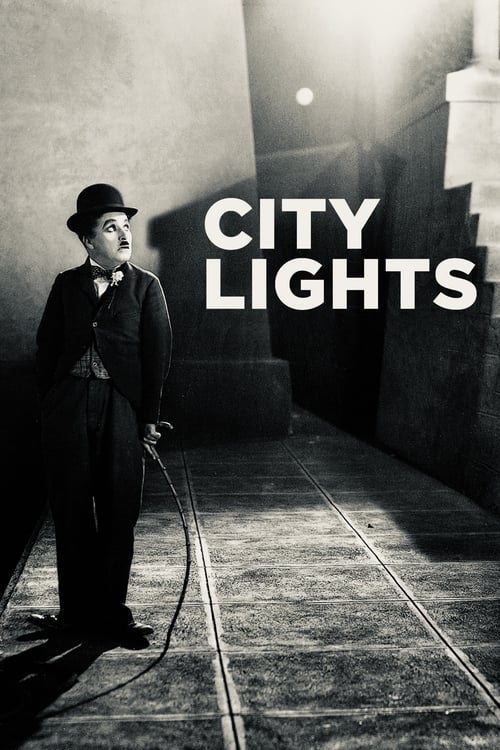
City Lights - Review
A Timeless Masterpiece: A Review of Charlie Chaplin's "City Lights"
Charlie Chaplin's "City Lights," released in 1931, is more than just a film; it's a poignant symphony of laughter and tears, a testament to the enduring power of love and compassion, and a defiant act of artistry in the face of the burgeoning talkie era. While many filmmakers were eagerly embracing sound, Chaplin doubled down on silent cinema, proving that emotions transcend language and that visual storytelling, when executed with genius, can be infinitely more powerful. "City Lights" isn't just a comedy, a drama, or a romance; it’s a profound exploration of the human condition, told through the lens of Chaplin's iconic Tramp. Prepare to be moved, to be challenged, and to be utterly captivated by this cinematic treasure.
Plot: A Simple Story, Profoundly Told
The plot of "City Lights" is deceptively simple. The Tramp, a lovable vagrant, encounters a beautiful blind flower girl selling blossoms on a street corner. He is instantly smitten, captivated by her beauty and her gentle spirit. The girl, however, mistakes him for a wealthy gentleman, an assumption he does nothing to correct. Simultaneously, the Tramp repeatedly encounters a millionaire who, in his drunken stupor, declares the Tramp his best friend, showering him with affection and access to his opulent world. However, when sober, the millionaire fails to recognize the Tramp. This on-again, off-again friendship becomes the catalyst for the Tramp's attempts to help the flower girl. He learns of a potential cure for her blindness but lacks the funds to finance it. Through a series of comedic misadventures, including a boxing match, the Tramp manages to secure the money, anonymously providing it to the flower girl. He is later arrested for theft. Upon his release, he is a changed man, weathered and weary. The flower girl, now cured and running a flower shop, remembers the kind gentleman who helped her. Their paths cross again, leading to a poignant and unforgettable final scene.
Characters: Embodying Universal Archetypes
The strength of "City Lights" lies not just in its narrative, but in the deeply resonant characters that populate it. Chaplin masterfully crafts characters that are both unique and universally relatable.
The Tramp: The Embodiment of Compassion
The Tramp, played by Chaplin himself, is the heart and soul of the film. He is the quintessential underdog, a symbol of resilience, optimism, and unwavering kindness. He is poor, often hungry, and constantly facing adversity, yet he never loses his capacity for love and compassion. His infatuation with the flower girl is not driven by lust or self-interest, but by a genuine desire to alleviate her suffering and bring joy into her life. The Tramp's actions, particularly his willingness to sacrifice his own well-being for the sake of the flower girl, speak volumes about his inherent goodness. He is a flawed character, prone to slapstick antics and moments of desperation, but his underlying humanity shines through, making him an enduring and beloved figure.
The Flower Girl: Innocence and Hope
Virginia Cherrill's portrayal of the blind flower girl is equally compelling. She embodies innocence, vulnerability, and a quiet strength. Despite her disability, she maintains a positive outlook and a gentle demeanor. Her blindness serves as a metaphor for the societal blindness to the plight of the poor and marginalized. She sees the world not through her eyes, but through her heart, perceiving the Tramp as the kind and generous gentleman he pretends to be. Her eventual recovery of sight is not just a physical transformation, but a symbolic awakening to the realities of the world, both beautiful and cruel.
The Millionaire: A Study in Contradiction
Harry Myers delivers a memorable performance as the eccentric millionaire. He is a complex and contradictory character, oscillating between suicidal despair and drunken exuberance. His friendship with the Tramp is entirely conditional, dependent on his level of intoxication. When sober, he is oblivious to the Tramp's existence, highlighting the superficiality and fleeting nature of wealth and privilege. The millionaire serves as a satirical commentary on the upper class, exposing their detachment from the struggles of ordinary people. His character also underscores the theme of appearances versus reality, as he is perceived as successful and fortunate, yet he is deeply unhappy and prone to self-destruction.
Direction and Cinematography: Silent Storytelling at its Finest
Chaplin's direction in "City Lights" is nothing short of masterful. He seamlessly blends comedy and drama, creating a film that is both hilarious and deeply moving. His use of visual gags, physical comedy, and expressive body language is impeccable. He understands the power of silence, allowing the actors' performances and the carefully crafted visuals to convey the story's emotional depth.
The cinematography, while simple by modern standards, is remarkably effective. Chaplin uses light and shadow to create atmosphere and enhance the emotional impact of the scenes. The camera angles are carefully chosen to emphasize the characters' emotions and their relationships to one another. The use of close-ups, particularly during the final scene, allows the audience to connect with the characters on a deeply personal level. The film's visual style is timeless, proving that technical sophistication is not a prerequisite for artistic brilliance.
Performances: A Symphony of Emotion
The performances in "City Lights" are universally excellent. Chaplin's portrayal of the Tramp is iconic, a masterclass in physical comedy and subtle emotional expression. He conveys a range of emotions, from joy and hope to sadness and despair, with remarkable nuance and depth. Virginia Cherrill delivers a touching and believable performance as the flower girl, capturing her innocence and vulnerability with grace. Harry Myers is brilliant as the millionaire, perfectly embodying the character's eccentricities and contradictions. The supporting cast is equally strong, contributing to the film's overall sense of realism and authenticity.
Themes and Messages: Love, Compassion, and Social Commentary
"City Lights" is rich in thematic depth, exploring universal themes of love, compassion, social inequality, and the power of appearances. The film's central message is the importance of kindness and empathy, even in the face of adversity. The Tramp's unwavering devotion to the flower girl, despite his own struggles, is a testament to the transformative power of love. The film also offers a scathing critique of social inequality, exposing the vast disparity between the rich and the poor. The millionaire's indifference to the Tramp when sober highlights the callousness of the upper class towards the less fortunate. The theme of appearances versus reality is also prominent, as the flower girl mistakes the Tramp for a wealthy gentleman, and the millionaire's outward success masks his inner turmoil.
Comparison to Other Films and Chaplin's Previous Works
"City Lights" stands as a unique achievement in Chaplin's filmography. While many of his previous works, such as "The Kid" (1921) and "The Gold Rush" (1925), also blended comedy and drama, "City Lights" achieves a greater level of emotional depth and thematic complexity. Its release during the transition to sound film makes it particularly significant. Chaplin resisted the trend, choosing to remain silent, demonstrating his belief in the power of visual storytelling. Compared to other silent comedies of the era, such as those by Buster Keaton and Harold Lloyd, "City Lights" is more overtly sentimental and emotionally resonant. While Keaton and Lloyd excelled at elaborate physical gags and daredevil stunts, Chaplin focused on character development and emotional nuance. "City Lights" paved the way for later films that explored similar themes of love, loss, and social injustice, such as Vittorio De Sica's "Bicycle Thieves" (1948) and Akira Kurosawa's "Ikiru" (1952).
Positive Aspects: A Triumph of Silent Cinema
"City Lights" is a triumph on virtually every level. Chaplin's direction is impeccable, his performance is iconic, and the story is both hilarious and deeply moving. The film's visual style is timeless, and its themes are as relevant today as they were in 1931. The blending of comedy and drama is seamless, creating a film that is both entertaining and thought-provoking. The characters are richly drawn and universally relatable, and the film's message of love, compassion, and social justice is both powerful and inspiring. The final scene is one of the most unforgettable in cinematic history, a poignant and bittersweet moment that perfectly encapsulates the film's emotional core.
Constructive Criticism: Minor Imperfections in a Masterpiece
While "City Lights" is undoubtedly a masterpiece, it is not without its minor imperfections. Some viewers may find the pacing to be slightly uneven, with certain scenes feeling longer than necessary. The slapstick comedy, while often hilarious, can occasionally feel a bit repetitive or out of place. The character of the millionaire, while entertaining, can sometimes come across as a caricature. However, these minor flaws are easily forgiven in light of the film's overall brilliance and emotional impact. The length of the boxing scene could be trimmed to keep the momentum of the film flowing better.
Conclusion: An Enduring Legacy
"City Lights" is a timeless masterpiece that continues to resonate with audiences today. It is a testament to the power of silent cinema, a celebration of love and compassion, and a poignant commentary on social inequality. Charlie Chaplin's genius is on full display in this film, from his direction and performance to his writing and musical score. "City Lights" is not just a film; it is an experience, a journey into the heart of humanity. It is a film that will make you laugh, make you cry, and make you think. It is a film that will stay with you long after the credits have rolled. It is a film that deserves to be seen and appreciated by generations to come.