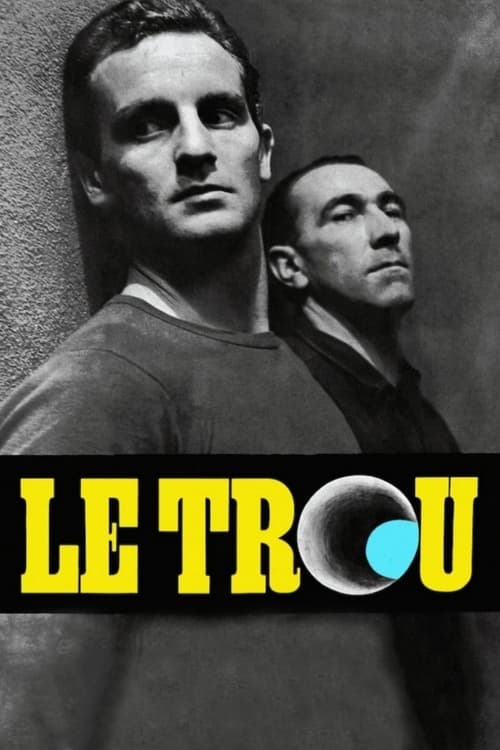
Le Trou - Review
A Riveting Descent into Desperation: A Review of Jacques Becker's "Le Trou"
Jacques Becker's Le Trou (The Hole), released in 1960, isn't just a prison escape film; it's a masterclass in tension, realism, and the exploration of human connection under extreme duress. Stripped of Hollywood glamour and narrative shortcuts, the film offers a visceral and claustrophobic experience that lingers long after the credits roll. More than six decades later, Le Trou remains a benchmark for the genre, a testament to the power of minimalist storytelling and authentic performances. This review delves into the film's intricate plot, compelling characters, masterful direction, stunning cinematography, and the profound themes it explores, ultimately arguing that Le Trou is a cinematic masterpiece deserving of its enduring reputation.
Plot: A Slow Burn of Hope and Uncertainty
The film's plot, on the surface, is deceptively simple. Claude Gaspard (Marc Michel), a newly transferred inmate, is placed in a cell with four other men: Manu (Philippe Leroy), Roland (Jean Keraudy), Geo (Michel Constantin), and Vosselin (Raymond Meunier). He quickly learns that these men are meticulously planning an escape, digging a tunnel beneath the floor of their cell. Faced with the dilemma of whether to trust Gaspard, the group ultimately decides to bring him into the fold, sharing their painstakingly crafted plan. What follows is a tense and methodical depiction of their efforts, fraught with setbacks, near-discoveries, and the ever-present threat of betrayal.
Becker masterfully employs a slow-burn approach, allowing the tension to build gradually. The film meticulously details the physical labor involved in the escape, from the initial chipping away at the concrete floor with a sharpened bedpost to the arduous process of navigating the labyrinthine sewers. This realistic portrayal of the escape's practical challenges, combined with the characters' palpable anxiety, creates a gripping atmosphere that keeps the viewer constantly on edge. The narrative's strength lies not in elaborate plot twists but in the raw, unadorned depiction of the prisoners' struggle for freedom.
The introduction of Gaspard is a crucial turning point. His presence injects an element of uncertainty and potential betrayal into the narrative. The film skillfully utilizes this ambiguity, keeping the audience guessing about Gaspard's true intentions until the very end. This adds another layer of suspense to an already tense situation, making the film all the more compelling.
Characters: A Study in Contrasting Personalities
Le Trou boasts a cast of characters who feel remarkably authentic, largely due to Becker's decision to cast non-professional actors, many of whom were actual former convicts. This casting choice lends a palpable sense of realism to their performances, making their struggles and motivations all the more believable.
- Manu (Philippe Leroy): The de facto leader of the group, Manu is resourceful, determined, and possesses a quiet strength that inspires confidence in his fellow inmates. He is the driving force behind the escape, meticulously planning and overseeing every aspect of the operation.
- Roland (Jean Keraudy): A skilled craftsman, Roland is responsible for much of the physical labor involved in the escape. He is a man of few words, but his dedication and reliability are invaluable to the group.
- Geo (Michel Constantin): The muscle of the group, Geo is a physically imposing figure who provides the brute force needed to overcome obstacles. He is fiercely loyal and protective of his friends.
- Vosselin (Raymond Meunier): The oldest and perhaps most vulnerable member of the group, Vosselin provides a sense of perspective and acts as a moral compass. He is constantly worried about the risks they are taking but remains committed to the escape.
- Claude Gaspard (Marc Michel): The newcomer, Gaspard, is an enigma. His reasons for being imprisoned are initially unclear, and his behavior is often ambiguous, making it difficult to discern his true intentions. He represents the element of uncertainty that threatens to unravel the entire plan.
The film excels at portraying the complex dynamics between these characters. Their interactions are often terse and utilitarian, reflecting the harsh realities of prison life. However, beneath the surface lies a deep sense of camaraderie and mutual reliance. They are bound together by their shared desire for freedom and their willingness to risk everything to achieve it. The film explores the nuances of trust, loyalty, and the bonds that can form between individuals facing extreme adversity.
Direction: Masterful Minimalism and Authentic Detail
Jacques Becker's direction in Le Trou is nothing short of masterful. He eschews flashy camera movements and dramatic flourishes in favor of a minimalist and realistic approach. The film's power lies in its meticulous attention to detail and its unwavering commitment to portraying the escape attempt in a believable manner.
Becker's use of long takes and static camera shots allows the audience to fully immerse themselves in the characters' environment and experience the slow, grinding nature of their work. He avoids sensationalizing the escape, instead focusing on the practical challenges and the psychological toll it takes on the prisoners. This understated approach creates a sense of authenticity that is rare in prison escape films.
The director's decision to cast non-professional actors also contributes to the film's realism. Becker worked closely with his cast to elicit natural and believable performances. He encouraged them to draw on their own experiences and emotions, resulting in a portrayal of prison life that feels raw and unvarnished.
Becker also uses sound design to great effect, amplifying the tension and claustrophobia. The constant dripping of water, the scraping of metal against concrete, and the muffled sounds of the outside world create a sense of unease and isolation. The absence of a traditional musical score further enhances the film's realism, allowing the audience to fully focus on the characters and their struggle.
Cinematography: Black and White Beauty in Confined Spaces
Ghislain Cloquet's black and white cinematography is a crucial element of Le Trou's visual power. The stark contrast between light and shadow emphasizes the claustrophobic nature of the prison environment and the characters' emotional states. The film's visual style is both elegant and gritty, capturing the beauty and brutality of prison life.
Cloquet's use of lighting is particularly effective. He often uses low-key lighting to create a sense of darkness and uncertainty, reflecting the prisoners' precarious situation. The shafts of light that penetrate the cell from the outside world offer a fleeting glimpse of hope, but also serve as a reminder of their confinement.
The camera angles and compositions are carefully chosen to enhance the film's tension and claustrophobia. Cloquet often uses close-ups to focus on the characters' faces, revealing their anxiety and determination. He also employs wide shots to emphasize the smallness of the cell and the vastness of the sewer system, highlighting the enormity of the task facing the prisoners.
The black and white cinematography also lends a timeless quality to the film. It transcends the specific historical context of the story, making it feel relevant and resonant even today.
Performances: Raw Authenticity and Quiet Intensity
As mentioned earlier, the decision to cast non-professional actors was a stroke of genius. The performances in Le Trou are remarkably authentic and understated. The actors inhabit their roles with a naturalness that is rarely seen in mainstream cinema.
Philippe Leroy delivers a particularly compelling performance as Manu, the leader of the group. He portrays Manu as a man of quiet strength and unwavering determination. His performance is all the more impressive considering that he had no prior acting experience. Jean Keraudy, Michel Constantin, and Raymond Meunier also deliver memorable performances as Roland, Geo, and Vosselin, respectively. They bring a sense of realism and vulnerability to their roles, making their characters relatable and sympathetic.
Marc Michel, the only professional actor in the cast, is perfectly cast as Claude Gaspard. He embodies the character's ambiguity and uncertainty, keeping the audience guessing about his true intentions until the very end. His performance is subtle and nuanced, adding another layer of complexity to the film.
The strength of the performances lies in their lack of affectation. The actors don't try to overact or embellish their roles. They simply embody the characters and let the story unfold naturally. This understated approach is what makes the performances so believable and impactful.
Themes and Messages: Freedom, Trust, and the Human Spirit
Le Trou explores a number of profound themes, including the yearning for freedom, the importance of trust, and the resilience of the human spirit. The film is a powerful indictment of the dehumanizing effects of imprisonment and a celebration of the human capacity for hope and perseverance.
The desire for freedom is the driving force behind the entire film. The prisoners are willing to risk everything to escape their confinement and reclaim their lives. The film portrays freedom not just as a physical state but as a state of mind. The prisoners yearn for the ability to make their own choices and control their own destinies.
Trust is another crucial theme. The prisoners must learn to trust each other if they are to succeed in their escape attempt. However, trust is a fragile commodity in prison, where betrayal is a constant threat. The film explores the challenges of building and maintaining trust in a hostile environment.
The film also celebrates the resilience of the human spirit. Despite the daunting odds and the constant setbacks, the prisoners never give up hope. They are driven by a deep-seated belief in their own ability to overcome adversity. The film is a testament to the power of the human spirit to endure even in the face of seemingly insurmountable challenges.
Furthermore, the film subtly critiques the justice system and the conditions of imprisonment. While not explicitly stated, the film implies that the prisoners are victims of a system that has failed them. The harsh conditions of their confinement and the lack of opportunities for rehabilitation contribute to their desperation and their willingness to risk everything for freedom.
Comparison to Other Films and Becker's Oeuvre
Le Trou stands out from other prison escape films due to its realism, its minimalist style, and its focus on character development. Films like The Great Escape (1963) and Escape from Alcatraz (1979) are more action-oriented and rely on elaborate plot twists and daring stunts. Le Trou, on the other hand, is more concerned with the psychological and emotional toll of imprisonment and the practical challenges of escape.
In comparison to Becker's other works, Le Trou shares a similar focus on realism and character-driven storytelling. His earlier films, such as Casque d'Or (1952) and Touchez Pas au Grisbi (1954), are also known for their understated style and their authentic portrayals of French society. However, Le Trou is arguably Becker's most accomplished and influential film, showcasing his mastery of minimalist filmmaking and his ability to create compelling drama from seemingly simple situations.
It could also be compared to Robert Bresson's work, particularly A Man Escaped (1956), in its realistic and methodical depiction of a prison escape. However, Bresson's film is more overtly spiritual and focuses on the protagonist's internal struggle, while Le Trou is more concerned with the dynamics between the characters and the practical challenges of the escape.
Positive Aspects and Constructive Criticism
Le Trou's strengths are undeniable. Its realism, its compelling characters, its masterful direction, and its stunning cinematography all contribute to its enduring appeal. The film is a masterclass in tension and suspense, keeping the audience on the edge of their seats from beginning to end. The performances are uniformly excellent, and the film's themes are both profound and timeless.
However, the film is not without its minor flaws. Some viewers may find the slow pace to be off-putting. The film takes its time to develop the characters and the plot, and there are long stretches of silence and minimal action. While this contributes to the film's realism, it may not appeal to viewers who are looking for a more fast-paced and action-packed experience.
Additionally, the ending of the film may be seen as somewhat abrupt and ambiguous. While this ambiguity adds to the film's realism, it may also leave some viewers feeling unsatisfied. The film doesn't offer a clear resolution to the characters' fates, leaving the audience to ponder the consequences of their actions.
Finally, while the lack of a musical score enhances the film's realism, some viewers may find it to be somewhat sterile and emotionally detached. A subtle musical score could have added another layer of emotional depth to the film, without detracting from its overall realism.
Conclusion and Rating
Despite these minor criticisms, Le Trou remains a cinematic masterpiece. Its realism, its compelling characters, its masterful direction, and its stunning cinematography make it a truly unforgettable experience. The film is a powerful exploration of freedom, trust, and the resilience of the human spirit. It is a must-see for any serious film enthusiast.
Rating: 9.5/10