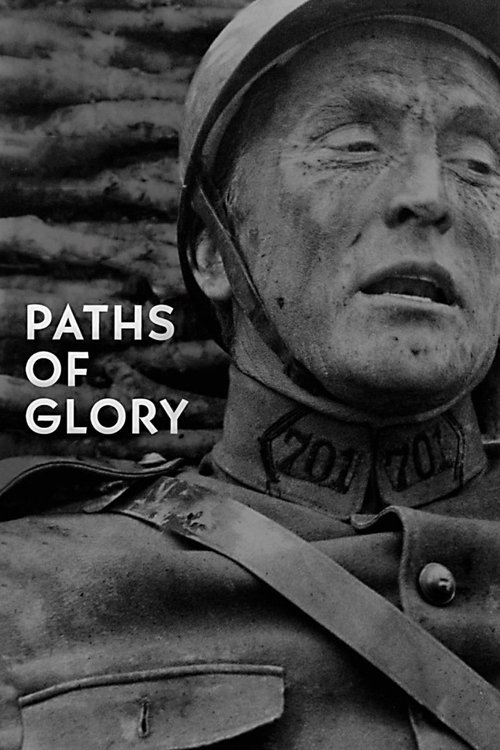
Paths of Glory - Review
Paths of Glory: A Timeless Indictment of War's Absurdity
Stanley Kubrick’s Paths of Glory, released in 1957, isn't just a war film; it's a searing indictment of the dehumanizing effects of power, the futility of blind obedience, and the grotesque absurdity of war itself. More than six decades after its release, the film continues to resonate with a chilling relevance, its stark portrayal of injustice and the cost of human life echoing across generations. This isn't a tale of heroic battles or triumphant victories; it's a harrowing depiction of the battlefield as a stage for political maneuvering and the common soldier as a pawn in a deadly game orchestrated by detached, ambitious generals. Get ready to delve into a cinematic masterpiece that will leave you questioning the very nature of glory and the price we pay for it.
Plot Summary: A Descent into Moral Bankruptcy
The film is set in the trenches of World War I, France, 1916. General Mireau, a man consumed by ambition and the desire for promotion, orders his troops to attack an impregnable German position known as the "Anthill." Colonel Dax, a lawyer in civilian life and a man of integrity, commands the regiment tasked with this suicidal mission. Dax knows the attack is doomed to fail, but he is compelled to obey orders. As expected, the assault is a catastrophic failure, with the French soldiers mowed down by relentless German fire.
Furious at the perceived cowardice of his men, General Mireau demands that 100 soldiers be court-martialed and executed as an example to others. His subordinate officers, however, convince him to reduce the number to three, chosen seemingly at random. These three men – Corporal Paris, Private Arnaud, and Private Ferol – are selected as scapegoats to cover up Mireau's own disastrous planning and the army's overall failings. Colonel Dax, appalled by this injustice, volunteers to defend them in a court-martial that is rigged from the start. The trial is a farcical charade, with the prosecution presenting fabricated evidence and denying the defense any real opportunity to challenge the charges. The outcome is predetermined: the three men are found guilty and sentenced to death by firing squad. The film culminates in their execution, a grim and haunting sequence that underscores the tragic consequences of unchecked power and the callous disregard for human life.
Characters: Faces of War and Morality
Paths of Glory features a cast of characters whose motivations and moral compasses are sharply contrasted, highlighting the film's central themes.
Colonel Dax (Kirk Douglas): The Voice of Reason and Justice
Kirk Douglas delivers a powerful and nuanced performance as Colonel Dax. He embodies the film's moral center, a man torn between his duty to his country and his unwavering belief in justice. Dax is not a naive idealist; he understands the realities of war, but he refuses to compromise his principles. He is a strong leader, respected by his men, but also a realist who sees the futility of the Anthill assault. His decision to defend the three soldiers is driven by his disgust at the blatant injustice he witnesses. Douglas portrays Dax with a compelling blend of stoicism, anger, and compassion, making him a truly unforgettable character.
General Mireau (George Macready): The Embodiment of Ambition and Cruelty
George Macready is chillingly effective as General Mireau, a man whose ambition knows no bounds. He is completely detached from the realities of the battlefield, viewing his soldiers as expendable pieces in a larger game. Mireau is driven by a thirst for glory and promotion, and he is willing to sacrifice anything, including the lives of his men, to achieve his goals. Macready portrays Mireau as cold, calculating, and utterly ruthless, making him a truly repulsive figure. His performance highlights the dangers of unchecked power and the corrupting influence of ambition.
Corporal Paris (Ralph Meeker), Private Arnaud (Timothy Carey), and Private Ferol (Joe Turkel): The Scapegoats
These three characters represent the ordinary soldiers caught in the gears of the war machine. They are not heroes or villains; they are simply men trying to survive in a brutal and unforgiving environment. Corporal Paris is a cynical veteran, hardened by his experiences. Private Arnaud is a simple-minded man who is easily manipulated. Private Ferol is a devout Catholic, terrified by the prospect of death. Their vulnerability and innocence make their fate all the more tragic. Their performances are understated but powerful, reminding us of the human cost of war.
Major Saint-Auban (Richard Anderson): The Obedient Follower
Major Saint-Auban represents the type of officer who blindly follows orders, regardless of their morality. He's not necessarily evil, but his unquestioning obedience makes him complicit in the injustice. He is the perfect instrument for Mireau's schemes, highlighting the dangers of unthinking obedience within a hierarchical structure.
Direction and Cinematography: A Masterclass in Visual Storytelling
Stanley Kubrick's direction is masterful, creating a claustrophobic and oppressive atmosphere that perfectly reflects the psychological toll of war. His use of long takes, tracking shots, and dramatic lighting creates a sense of unease and tension that permeates the entire film. The camera becomes an active participant, witnessing the horrors of the battlefield and the machinations of the powerful.
The film's cinematography, by Georg Krause, is equally impressive. The stark black and white photography emphasizes the harsh realities of trench warfare, stripping away any romantic notions of glory or heroism. The battle scenes are particularly striking, with the camera following the soldiers as they struggle through the mud and barbed wire, exposing them to constant enemy fire. The contrast between the claustrophobic trenches and the opulent chateau where the generals reside further highlights the vast gulf between those who fight the war and those who profit from it.
Kubrick's use of composition is also noteworthy. He frequently uses symmetrical framing to create a sense of order and control, but this order is always undermined by the chaos and violence of war. He also uses close-ups to reveal the characters' emotions, allowing us to connect with them on a personal level. One particularly memorable scene is the long tracking shot through the trenches before the attack, which builds suspense and conveys the sense of impending doom.
Performances: A Stellar Ensemble Cast
The performances in Paths of Glory are uniformly excellent. Kirk Douglas delivers one of the finest performances of his career as Colonel Dax, conveying the character's intelligence, integrity, and moral outrage. George Macready is equally impressive as General Mireau, creating a truly despicable villain. The supporting cast is also superb, with Ralph Meeker, Timothy Carey, and Joe Turkel delivering memorable performances as the three soldiers condemned to death.
The performances are all the more remarkable because they are so naturalistic. The actors avoid melodrama and histrionics, instead portraying their characters with a quiet dignity and realism. This makes the film all the more powerful and emotionally resonant.
Themes and Messages: Exposing the Folly of War
Paths of Glory explores a number of important themes, including:
The Dehumanizing Effects of War
The film portrays war as a brutal and dehumanizing experience that strips away the soldiers' individuality and reduces them to mere cogs in a machine. The trenches are depicted as a hellish landscape of mud, blood, and death, where men are forced to live in constant fear and deprivation. The film also shows how war can corrupt the minds of those in power, turning them into callous and ruthless individuals who are willing to sacrifice anything to achieve their goals.
The Abuse of Power
The film is a powerful indictment of the abuse of power by those in authority. General Mireau's decision to court-martial and execute the three soldiers is a blatant example of injustice, motivated by his own ambition and desire to avoid blame for the failed attack. The film shows how power can corrupt even those who start out with good intentions, and how important it is to hold those in power accountable for their actions.
The Futility of Blind Obedience
The film questions the value of blind obedience to authority. Colonel Dax is torn between his duty to his country and his conscience, and he ultimately chooses to stand up for what he believes is right, even if it means disobeying orders. The film suggests that it is important to question authority and to resist orders that are unjust or immoral.
The Inherent Injustice of War
Ultimately, Paths of Glory argues that war itself is inherently unjust. The film shows how war can lead to the deaths of innocent people, the destruction of communities, and the erosion of moral values. It is a powerful anti-war statement that continues to resonate today.
Comparison to Other Films and Kubrick's Work
Paths of Glory can be compared to other anti-war films such as All Quiet on the Western Front (1930) and Apocalypse Now (1979). Like these films, Paths of Glory exposes the horrors of war and questions the glorification of violence. However, Paths of Glory is unique in its focus on the political and legal aspects of war, highlighting the injustice and corruption that can occur within the military system.
Within Kubrick's own filmography, Paths of Glory can be seen as a precursor to his later works, such as Dr. Strangelove (1964) and Full Metal Jacket (1987). These films share a similar anti-war sentiment and a cynical view of authority. Dr. Strangelove, in particular, shares the satirical edge present, albeit more subtly, in Paths of Glory, exposing the absurdity of Cold War politics.
Compared to Full Metal Jacket, Paths of Glory is more focused on the systemic issues within the military hierarchy rather than the individual psychological breakdown of soldiers. While Full Metal Jacket explores the dehumanizing effects of boot camp and combat, Paths of Glory focuses on the moral bankruptcy of those in command.
Positive Aspects and Constructive Criticism
Positive Aspects:
- Powerful Anti-War Message: The film's unwavering commitment to exposing the futility and injustice of war is its greatest strength.
- Exceptional Performances: The entire cast delivers outstanding performances, bringing depth and nuance to their characters.
- Masterful Direction and Cinematography: Kubrick's direction and Krause's cinematography create a visually stunning and emotionally impactful film.
- Thought-Provoking Themes: The film raises important questions about power, obedience, and the nature of justice.
- Timeless Relevance: The film's themes continue to resonate today, making it a timeless classic.
Constructive Criticism:
- Limited Female Representation: The film is primarily focused on the male experience of war, with very few female characters. While this reflects the historical context, it does limit the film's perspective. The final scene with the German singer provides a glimmer of hope and humanity, but it feels somewhat tacked on and doesn't fully address the lack of female voices.
- Pacing: While the film is generally well-paced, some viewers may find the courtroom scenes to be somewhat slow and repetitive. However, this deliberate pacing is likely intended to emphasize the tedious and farcical nature of the trial.
- Subtlety: While generally a strength, the film's message, at times, borders on being too on-the-nose, especially in the dialogue between Dax and Mireau. A little more subtlety could have enhanced the film's impact.
Conclusion: A Masterpiece of Anti-War Cinema
Paths of Glory is a powerful and unforgettable film that continues to resonate with audiences today. Stanley Kubrick's masterful direction, the stellar performances of the cast, and the film's thought-provoking themes combine to create a truly exceptional work of art. It is a searing indictment of war, a condemnation of injustice, and a reminder of the importance of standing up for what is right, even in the face of overwhelming opposition. While the film has minor flaws, its overall impact is undeniable. It's a film that demands to be seen and discussed, a testament to the enduring power of cinema to challenge our assumptions and provoke critical thought. Paths of Glory is not just a great war film; it's a great film, period.