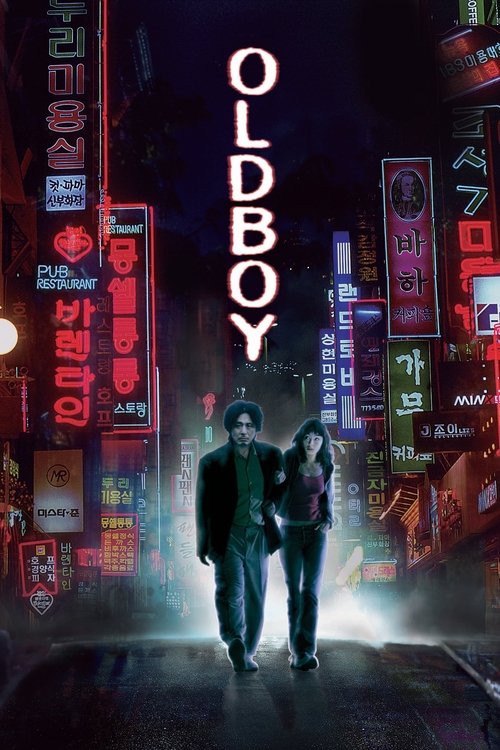
Oldboy - Review
Oldboy: A Masterpiece of Revenge and Moral Ambiguity
Park Chan-wook's Oldboy, released in 2003, isn't just a film; it's an experience. It's a visceral, disturbing, and ultimately unforgettable journey into the depths of human depravity and the corrosive power of revenge. From its shocking opening to its devastating conclusion, Oldboy grips you with its unflinching portrayal of violence, betrayal, and the search for truth in a world shrouded in lies. It’s a film that lingers long after the credits roll, prompting introspection and challenging your perceptions of morality. This isn't a movie for the faint of heart, but for those willing to confront its darkness, Oldboy offers a profound and unsettling exploration of the human condition.
Plot: A Twisted Labyrinth of Revenge
The film opens with Oh Dae-su (Choi Min-sik), a seemingly ordinary, drunken businessman, being inexplicably kidnapped and imprisoned in a dingy, windowless room for fifteen years. He has no idea why he's there or who is responsible. His only contact with the outside world is a television set that informs him of his wife's murder, for which he is framed. This fuels his burning desire for revenge. He spends his years in captivity exercising, honing his fighting skills, and meticulously plotting his retribution.
Suddenly, without explanation, Dae-su is released, given money, a cell phone, and a new set of clothes. He receives a challenge: find out why he was imprisoned within five days, or the secret he desperately seeks to uncover will be revealed to everyone. He is immediately thrust into a world that has moved on without him, a world where his familiar landmarks have been replaced by modern architecture and unfamiliar faces. Guided by fragments of memory and a relentless determination, Dae-su embarks on a desperate quest for answers.
His journey leads him to Mi-do (Kang Hye-jung), a young sushi chef who becomes his unlikely ally and lover. Together, they navigate a treacherous landscape of gangsters, corrupt officials, and shadowy figures, each encounter bringing Dae-su closer to the truth, but also deeper into a web of deceit and manipulation. As he unravels the mystery of his imprisonment, he uncovers a shocking secret that shatters his world and forces him to confront the devastating consequences of his past actions.
The plot is a masterclass in suspense and misdirection. Park Chan-wook expertly manipulates the audience, feeding them clues while simultaneously obscuring the true nature of the conspiracy. The pacing is relentless, keeping you on the edge of your seat as Dae-su races against time to uncover the truth. The narrative is not linear, employing flashbacks and dream sequences to create a sense of disorientation and ambiguity, mirroring Dae-su's own fractured state of mind.
Characters: Driven by Obsession and Trauma
Oh Dae-su (Choi Min-sik): Dae-su is the heart and soul of Oldboy. Choi Min-sik delivers a powerhouse performance, portraying the character's transformation from a drunken everyman to a vengeful force of nature. His eyes convey a range of emotions, from despair and rage to confusion and vulnerability. He is a flawed protagonist, haunted by his past mistakes, and driven by a primal need for retribution. His years of isolation have stripped him of his humanity, turning him into a brutal and single-minded instrument of vengeance. Yet, beneath the hardened exterior, there are glimpses of the man he once was, a man capable of love and compassion. Choi Min-sik's portrayal of Dae-su is both terrifying and deeply sympathetic, making him one of the most memorable characters in cinematic history.
Lee Woo-jin (Yoo Ji-tae): Woo-jin is the enigmatic antagonist of the film. He is a man consumed by a lifelong obsession with revenge, meticulously orchestrating Dae-su's imprisonment and subsequent release. Yoo Ji-tae delivers a chilling performance, portraying Woo-jin as a calm, collected, and utterly ruthless manipulator. He is a master of disguise, both literally and figuratively, hiding his true intentions behind a facade of politeness and sophistication. Woo-jin's motivations are complex and deeply personal, rooted in a childhood trauma that has warped his perception of reality. He sees himself as a righteous avenger, punishing Dae-su for a perceived wrong. His intelligence and meticulous planning make him a formidable opponent, and his unwavering commitment to his twisted vision makes him a truly terrifying villain.
Mi-do (Kang Hye-jung): Mi-do is a young sushi chef who becomes entangled in Dae-su's quest for revenge. She is initially drawn to his vulnerability and his unwavering determination, but she soon discovers the darkness that lies beneath the surface. Kang Hye-jung portrays Mi-do as a strong and independent woman who is not afraid to challenge Dae-su's actions. She is a source of compassion and humanity in a world filled with violence and despair. Mi-do's relationship with Dae-su is complex and fraught with danger, as she becomes both his ally and his potential victim. Her character serves as a moral compass, questioning the justification of Dae-su's revenge and highlighting the devastating consequences of his actions.
The supporting characters, while less prominent, are equally well-developed and contribute to the film's overall atmosphere of unease and uncertainty. From the mysterious hypnotist to the loyal but conflicted gangster, each character adds another layer to the intricate web of deceit and manipulation.
Direction and Cinematography: A Visual Feast of Violence and Beauty
Park Chan-wook's direction is nothing short of masterful. He creates a visually stunning and emotionally charged film that is both brutal and beautiful. His use of long takes, unconventional camera angles, and striking color palettes creates a unique and unforgettable cinematic experience.
The film's cinematography, by Kim Hyung-koo, is a crucial element in its success. The use of vibrant colors, particularly red and green, creates a sense of heightened reality and underscores the film's themes of passion, violence, and decay. The camera work is dynamic and expressive, often mirroring Dae-su's emotional state. The famous hallway fight scene, filmed in a single, unbroken shot, is a testament to the film's technical brilliance and its visceral impact.
The film's visual style is not merely aesthetic; it is integral to the storytelling. The claustrophobic setting of Dae-su's prison reflects his psychological state, while the vibrant colors of the outside world contrast sharply with the drabness of his captivity. The use of slow motion and stylized violence adds a layer of surrealism to the film, blurring the lines between reality and fantasy.
Park Chan-wook also employs a variety of cinematic techniques to create a sense of unease and disorientation. Flashbacks are used to reveal fragments of Dae-su's past, gradually piecing together the puzzle of his imprisonment. Dream sequences are used to explore his subconscious fears and desires. The film's sound design is equally effective, creating a cacophony of noises that heighten the sense of tension and paranoia.
Performances: A Masterclass in Acting
The performances in Oldboy are uniformly excellent. Choi Min-sik's portrayal of Oh Dae-su is a tour de force, conveying the character's physical and emotional transformation with remarkable skill. Yoo Ji-tae is equally impressive as Lee Woo-jin, creating a villain who is both chilling and sympathetic. Kang Hye-jung delivers a nuanced performance as Mi-do, bringing a sense of humanity and vulnerability to the film. The supporting cast is also strong, adding depth and complexity to the narrative.
Choi Min-sik's performance is particularly noteworthy. He underwent a rigorous physical transformation for the role, losing weight and training in martial arts to convincingly portray Dae-su's journey from a drunken businessman to a hardened warrior. He also captures the character's emotional turmoil with remarkable subtlety, conveying his rage, despair, and confusion through his eyes and body language. His performance is a masterclass in acting, earning him widespread critical acclaim and solidifying his reputation as one of the greatest actors of his generation.
Yoo Ji-tae's portrayal of Lee Woo-jin is equally impressive. He captures the character's cold and calculating demeanor with chilling accuracy, making him a truly formidable opponent for Dae-su. He also manages to convey the character's underlying pain and vulnerability, hinting at the childhood trauma that has shaped his twisted worldview. His performance is both terrifying and strangely sympathetic, making him one of the most memorable villains in cinematic history.
Themes and Messages: Revenge, Redemption, and the Cycle of Violence
Oldboy is a film that explores a multitude of complex themes, including revenge, redemption, and the cycle of violence. The film raises profound questions about the nature of justice, the consequences of our actions, and the limits of human endurance.
The central theme of the film is revenge. Dae-su's quest for revenge consumes him, driving him to commit acts of violence and cruelty. However, as he gets closer to achieving his goal, he begins to question the true cost of his actions. He realizes that revenge is a double-edged sword, capable of destroying both the victim and the perpetrator. The film suggests that revenge is not a solution, but rather a perpetuation of violence and suffering.
The film also explores the theme of redemption. Despite his brutal actions, Dae-su is ultimately seeking redemption for his past mistakes. He wants to atone for the wrong he committed and to find a way to break the cycle of violence. However, the film suggests that redemption is not always possible, and that some wounds may never heal. Dae-su's final act, a desperate attempt to erase his memory, is a testament to the enduring power of guilt and shame.
The film also examines the destructive nature of secrets and lies. The truth that Woo-jin seeks to reveal shatters Dae-su's life, leading to unimaginable pain and suffering. The film suggests that secrets can be more dangerous than violence, and that the pursuit of truth can have devastating consequences.
Ultimately, Oldboy is a cautionary tale about the dangers of obsession and the corrosive power of revenge. It is a film that challenges us to confront our own capacity for violence and to question the morality of our actions.
Comparisons: A Unique Entry in the Revenge Genre
Oldboy can be compared to other films in the revenge genre, such as Death Wish, Kill Bill, and The Count of Monte Cristo. However, Oldboy stands apart from these films in its unflinching portrayal of violence, its complex characters, and its ambiguous moral message. While other revenge films often glorify violence and offer a clear sense of moral justice, Oldboy presents a more nuanced and disturbing vision of revenge, highlighting its destructive consequences and questioning the very notion of justice.
The film also shares thematic similarities with other works by Park Chan-wook, such as Sympathy for Mr. Vengeance and Lady Vengeance. These films, collectively known as the "Vengeance Trilogy," explore the themes of revenge, guilt, and redemption in a similar vein. However, Oldboy is arguably the most powerful and disturbing of the three films, due to its visceral violence, its shocking plot twists, and its unforgettable characters.
Choi Min-sik's performance can be compared to other iconic performances in the revenge genre, such as Charles Bronson in Death Wish and Uma Thurman in Kill Bill. However, Choi Min-sik's portrayal of Oh Dae-su is arguably more complex and nuanced than these other performances. He captures the character's physical and emotional transformation with remarkable skill, conveying his rage, despair, and confusion with equal intensity.
Positive Aspects: A Cinematic Triumph
Oldboy is a cinematic triumph on many levels. Its plot is intricate and suspenseful, its characters are complex and compelling, its direction is masterful, its cinematography is stunning, and its performances are uniformly excellent. The film is a visual and emotional feast, offering a truly unforgettable cinematic experience.
The film's strengths lie in its ability to shock and disturb the audience while simultaneously provoking thought and introspection. It is a film that stays with you long after the credits roll, prompting you to question your own values and beliefs. It is a testament to the power of cinema to explore the darkest corners of the human psyche and to challenge our perceptions of morality.
The film's technical achievements are also noteworthy. The cinematography, editing, and sound design are all top-notch, creating a seamless and immersive cinematic experience. The hallway fight scene, in particular, is a masterpiece of filmmaking, showcasing the film's technical brilliance and its visceral impact.
Constructive Criticism: Minor Imperfections in a Masterpiece
While Oldboy is undeniably a masterpiece, it is not without its minor imperfections. Some viewers may find the film's violence excessive or gratuitous, while others may find its plot twists confusing or illogical. The film's ending, in particular, may be divisive, as it leaves the audience with a sense of ambiguity and uncertainty.
The film's pacing can also be uneven at times, with some scenes feeling rushed while others feel drawn out. The character of Mi-do, while well-acted, could have been developed further, giving her more agency in the narrative. Additionally, some may find the dubbing, if watching the film in a language other than Korean, to be slightly distracting.
However, these minor imperfections do not detract significantly from the film's overall impact. They are merely minor flaws in an otherwise brilliant and unforgettable cinematic achievement. The film's strengths far outweigh its weaknesses, making it a must-see for any serious film enthusiast.
Conclusion and Rating
Oldboy is a masterpiece of revenge cinema. It is a visually stunning, emotionally charged, and intellectually stimulating film that will stay with you long after the credits roll. Its unflinching portrayal of violence, its complex characters, and its ambiguous moral message make it a truly unforgettable cinematic experience. While not for the faint of heart, Oldboy is a must-see for anyone who appreciates challenging and thought-provoking cinema. It's a film that burrows under your skin and forces you to confront the darkness within yourself and the world around you.
Rating: 9.5/10